

The first bioartificial kidney developed by The Kidney Project earned a $650,000 prize from the KidneyX’s Artificial Kidney Prize. The man-made kidney technology is expected to be among the most promising solutions in today’s medical advancements that could end challenging kidney problems. Among the key interests of the bioartificial kidney is to implant the device on patients instead of treating them through dialysis machines and decrease the patients on the waiting lists of transplant procedures. The Kidney Project was led by UC San Francisco and Vanderbilt University Medical Center experts Shuvo Roy and William Fissel.
Continue reading… “First Prototype Bioartificial Kidney Successful: Man-Made Organ May Solve Medical Problems, Giving Hope to Dialysis Patients”Cityhawk, An Electric Flying Car Without Wings That Already Takes To The Skies

Cityhawk: For about 4 years, we are seeing more and more ‘flying cars’. More and more companies, companies, projects that are with this concept underway. In some cases it is that literal concept, like the Klein Vision AirCar, a car with folding wings that can fly like a plane and be driven on the highway. In others, it’s basically a huge drone with seats. And in today’s case, a vehicle that looks like something out of an 80s Sci Fi film.
Continue reading… “Cityhawk, An Electric Flying Car Without Wings That Already Takes To The Skies”How Genetic Testing Will Create Personalized Therapeutics for Rare Diseases

“Personalized medicine represents a better paradigm in medicine than one-size-fits-all, trial-and-error, which is what most medicine is.”
For patients with rare symptoms, landing on a course of treatment often comes only after a long, winding road of doctor’s visits, consultations, lab work and experiments. It’s costly, emotionally turbulent, and tiresome.
It’s what many in the world of medicine call the “diagnostic odyssey,” referring to the time it takes from the initial onset of symptoms to final diagnosis. And it’s a path that, for the average patient, takes about 8 years.
“You go from doctor to doctor for years and years, and you don’t figure out what’s going on,” Edward Abraham, founder of the Personalized Medicine Coalition (PMC), an education and advocacy group, told Motherboard. “All of that is expensive.”
It’s a cycle Abraham’s group, which consists of both non- and for-profit organizations from across the healthcare industry, is striving to do away with. Their solution? Improving access to genetic testing to allow for the creation of personalized therapeutics.
The traditional approach to medicine, Abraham describes, is one-size-fits-all. When a patient presents a rare, difficult-to-diagnose symptom, their healthcare provider may try a slew of treatments with varying effectiveness, all of which have been developed to treat the largest number of patients at once, rather than to suit the needs of a specific individual.
With personalized medicine, hard-to-diagnose symptoms are inspected by going straight to the source — the human genome. With genetic sequencing, a sample of a patient’s DNA is taken through blood, skin, or tissue, for example. Then, their entire genetic code, all 3.2-billion base pairs, are analyzed for signs of mutations that may be causing a symptom or underlying disorder. With this information, a doctor is better equipped to search for a personalized treatment for an individual disorder, or to create one from scratch.
Continue reading… “How Genetic Testing Will Create Personalized Therapeutics for Rare Diseases”Airbus gears up for hydrogen jet as fuel of future edges closer to reality

According to Airbus, the moment of hydrogen is approaching rapidly. Guillaume Foley, chief executive officer of an airplane maker, has been talked about as a fuel for the future for years, but by the end of the decade the company will manufacture hydrogen-powered commercial airliners. He said he was ready to start.
European aerospace champions are skeptical among other industry leaders about how quickly gas can affect aviation emissions, but the 2035 will be the “ for hydrogen planes to go into service. I am more and more convinced that it is a fair and realistic perspective.
“You don’t have to change the laws of physics to deal with hydrogen. Hydrogen has three times the energy density of kerosene — [technically it] Foley told reporters at an Airbus event on sustainability in Toulouse.
Foley’s comments show Airbus’ growing confidence that it can tackle the complex engineering and safety challenges needed to make hydrogen-powered aircraft work. However, Foley warned that government and regulatory support would be needed.
Airbus needs to have “some degree of certainty” about the regulated environment and fuel availability by 2027/28, when the company must decide whether to invest billions of dollars in its new hydrogen airplane program. Said there is.
“this [decarbonisation] The challenge is not just for airplanes, but for getting the right fuel, the right hydrogen, at the right time, at the right place, at the right price, which aviation cannot manage on its own, “he said.
Foley’s remarks underscore the growing urgency of the aviation industry as it strives to reach its zero-emissions goal by 2050. Before the pandemic led to many landings of the world’s aircraft fleet, aviation accounted for about 2.4% of the world’s emissions.
Continue reading… “Airbus gears up for hydrogen jet as fuel of future edges closer to reality”Atari Founder Is Launching Augmented Reality NFTs on Ethereum

Nolan Bushnell’s NFT arcade cabinets can be viewed in 3D in your own home, plus there are some real-world perks attached.
ATARI’S PONG IS GETTING THE NFT TREATMENT.
In brief
- Nolan Bushnell, founder of Atari, will release NFTs based on classic arcade machines via MakersPlace.
- All of the NFTs let owners view the arcade machine in 3D via augmented reality technology.
As the founder of legendary video game company Atari, Nolan Bushnell helped bring arcade gaming to the masses. And now with the advent of NFTs, he plans to bring some of those formative early machines into homes as digital, augmented reality collectibles.
Today, Bushnell and NFT marketplace MakersPlace announced The Arcade OG Series, a set of Ethereum-based collectibles. An NFT is a token that can be used to prove ownership of a verifiably scarce digital item—in this case, a video clip displaying a 3D rendering of an Atari “Pong” or Syzygy (Bushnell’s Atari precursor) “Computer Space” arcade game cabinet.blob:
Each Arcade OG Series collectible is more than just a simple video clip, however: it also comes with an augmented reality experience that lets you view the 3D rendering of the arcade cabinet within any real-world space. Owners will be able to drop the digital cabinet into place and then walk around it, viewing it up-close from all angles.
Continue reading… “Atari Founder Is Launching Augmented Reality NFTs on Ethereum”Samsung wants to reverse engineer human brain and replicate it on 3D chip

Samsung has announced a new way to reverse engineer the human brain and mimic it with semiconductor chips. The world’s biggest memory chip maker has collaborated with Harvard University researchers to share a new approach that takes the world one step closer to making neuromorphic chips.
Harvard scholars and Samsung engineers have published a new perspective paper titled ‘Neuromorphic electronics based on copying and pasting the brain’ on Nature Electronics.
Continue reading… “Samsung wants to reverse engineer human brain and replicate it on 3D chip”Mexico Is Sending Game-Changing Robotic Vehicles to Explore Resources on the Moon

Mexico is one of the latest countries to join the space industry, with an ambitious project. Together with Airbus, the Mexican Space Agency (AEM) and local startup Dereum Labs are launching a groundbreaking Mexican In-Situ Resources Utilization (ISRU) Program for lunar extraction. 7 photos
“In a few years, the industries that today are not related to space will be doing business on the Moon, Mars and beyond” said the CEO of Dereum Labs, Carlos Mariscal. In order to get there, we must be able to sustain long-term living on the moon. If other new projects focus on developing “gas stations” in space, this innovative Mexican initiative takes thing even further.
What if we could obtain resources such as oxygen, water and fuel right there, on the moon, instead of having to transport them from the Earth? Through advanced technologies, they could be extracted from the moon’s surface layer, known as regolith. The demonstration concept of this new program is an end-to-end process that goes from regolith identification, to extraction of resources.
Continue reading… “Mexico Is Sending Game-Changing Robotic Vehicles to Explore Resources on the Moon”PizzaHQ’s Founders Are Building a Robot-Powered Pizza Chain of the Future

by Michael Wolf
Darryl Dueltgen and Jason Udrija had a choice: Expand their successful New Jersey pizza restaurant brand called Pizza Love, or start a tech-powered pizza concept that could change the pizza industry.
They decided to start a revolution.
“We’ve put a lot of time into building a labor-reduced, tech-driven concept that we believe will revolutionize the pizza industry,” said Udrija, who cofounded PizzaHQ alongside partners Dueltgen and Matt Bassil.
According to Udrija, PizzaHQ will utilize robotics and other technology to create a more affordable pizza (“almost a 50% lower price point”) while using the same recipe and high-quality ingredients of the pies made at their dine-in restaurant.
“Our POS will directly inject the customer order into the Picnic system,” said Udrija. “The Picnic conveyer feeds straight into our ovens and then gets cut and boxed before pick up for delivery.”
Once the pizza is boxed, it’s loaded into delivery vans and distributed to heated pickup lockers around Totowa, New Jersey, a borough about thirty minutes north of Newark. Customers will be able to track their delivery and will scan a QR code to pick up the pizza waiting for them in a locker. Third party delivery partners like UberEats will also be able to pick up orders from the pickup lockers and deliver to customers.
Continue reading… “PizzaHQ’s Founders Are Building a Robot-Powered Pizza Chain of the Future”Blockchain will transform government services, and that’s just the beginning

Governments will not only use blockchain for fundamental services such as identity and voting but as a framework for economic growth.
Governments are tasked with bringing fair and efficient services to the public. Unfortunately, providing transparency and accountability often results in a reduction in efficiency and effectiveness or vice versa. Governments are usually forced to choose to improve one at the cost of the other. On rare occasions, technology comes along that enables governments to improve fairness and efficiency.
The move from paper-based record keeping to computer databases was one such technology. The internet was another. Blockchain is the next. Like the internet before it, blockchain will not only improve how the public interacts with government services, it will have broad economic and social implications.
Continue reading… “Blockchain will transform government services, and that’s just the beginning”Google Launches Voice Payment for Gas and Reveals Honda Integration Deal in Flurry of Upgrades

Drivers using Android Auto can ask Google Assistant to pay for the fuel at tens of thousands of gas stations around the United States. The voice payment option is one of a swath of new features and updates to Google’s vehicular AI. The upgrades came with the news that Honda will build Google into its cars starting in 2022 as part of a new partnership.
Continue reading… “Google Launches Voice Payment for Gas and Reveals Honda Integration Deal in Flurry of Upgrades”Wireless E-Tattoo for Pneumonia Aims to Transform Patient Monitoring
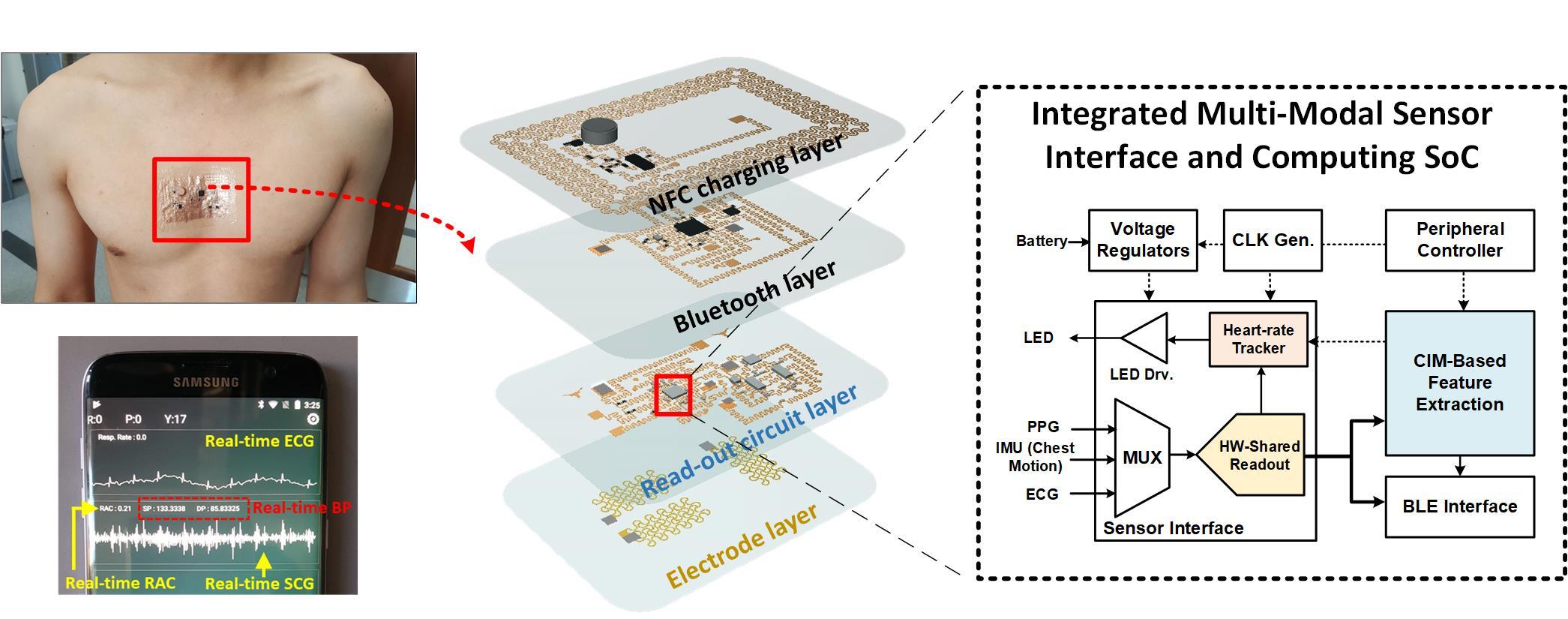
Pneumonia has emerged as a life-threatening complication of COVID-19, accounting for nearly half of all patients who have died from the novel coronavirus in the U.S. since the beginning of the pandemic. Even before the onset of the COVID-19 pandemic, pneumonia was responsible for more than 43,000 deaths in 2019.
Monitoring pneumonia remains a challenge because it manifests itself differently in almost every patient and can develop in any patient infected by coronavirus. The Georgia Institute of Technology is part of a team of engineers, data scientists, and medical clinicians led by the Cockrell School of Engineering at The University of Texas at Austin that has been awarded a grant from the National Science Foundation’s ASCENT program. The purpose of this project is to develop a wearable device for patients with pneumonia, allowing medical personnel to track their progress remotely and use data to predict how their condition may change.
This project combines state-of-the-art technology across wearable devices, integrated circuits and machine learning. And the larger goal is to develop ways to safely monitor patients remotely and maintain high-quality care, wherever they are.
Continue reading… “Wireless E-Tattoo for Pneumonia Aims to Transform Patient Monitoring”Could Utopian Telosa Be the Future of Cities?

Real estate has long been the go-to investment for those looking to build long-term wealth for generations.
If you find yourself imagining what it would be like to build a city, you might play SimCity or other video games like it. But if you’re a billionaire, you don’t have to just pretend; you could actually do it.
In fact, the new thing for the modern-day titans of industry seems to be city planning — Bill Gates plans to build a 24,000-acre smart city in a remote part of Arizona, and Jeffrey Berns, a cryptocurrency millionaire, is planning a city on 67,000 acres in the Nevada desert.
The latest announcement comes from billionaire Marc Lore, former Walmart CEO and creator of Jet.com, (the sale of which made him a billionaire). Lore is planning a city of his own, likely in another desert locale, or in Lore’s words, a place “where the land [is] worth nothing, or very little.”
Besides building a futuristic city, Lore’s other plans to keep him busy after his Walmart retirement include advising start-ups and working on a reality TV show.
Continue reading… “Could Utopian Telosa Be the Future of Cities?”