When Brilliant Plans Meet Messy Reality: What “Solve Everything” Gets Right and Wrong About Our AI Future

By Futurist Thomas Frey

The Blueprint That Promises Everything

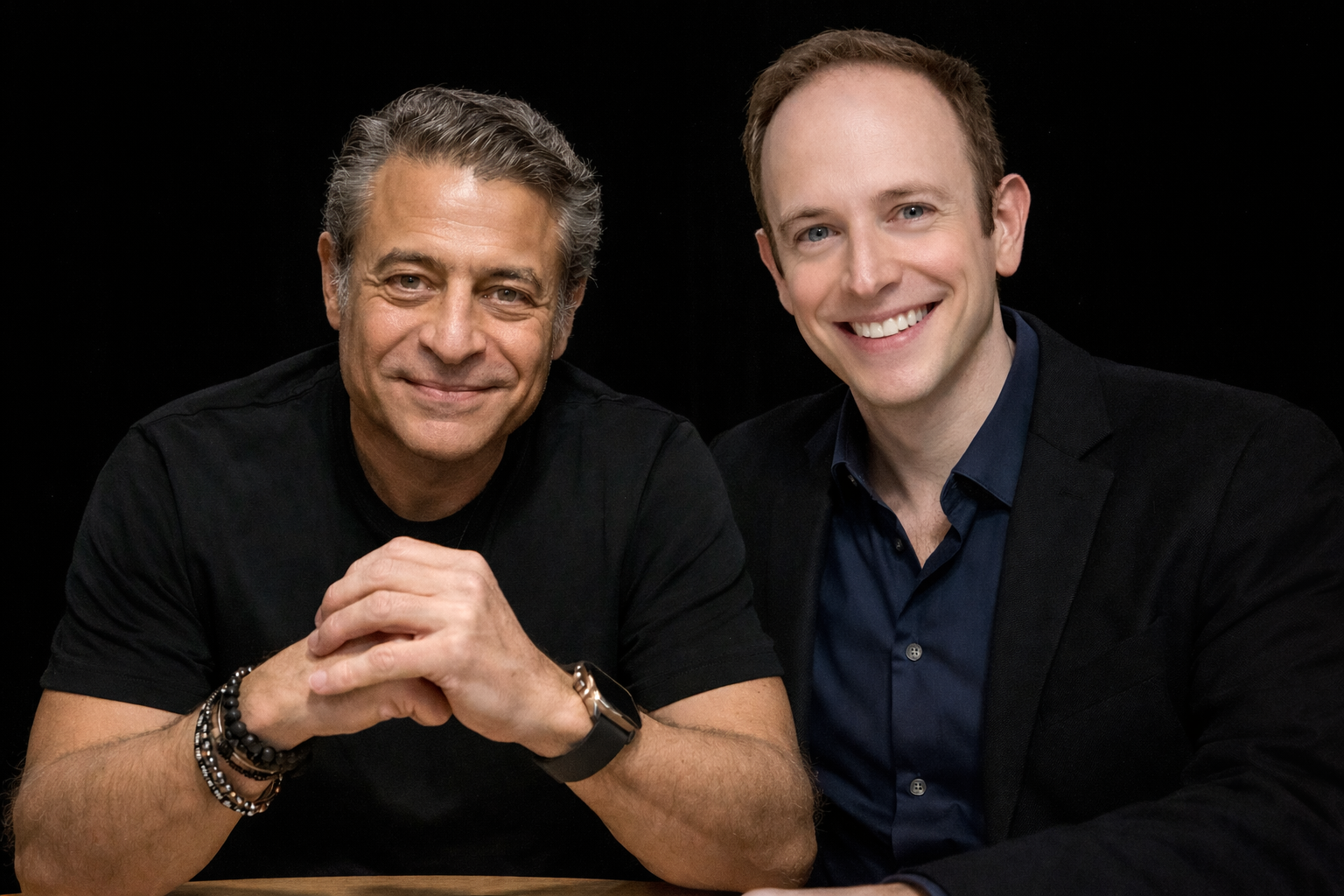
Peter Diamandis and Alexander Wissner-Gross just released “Solve Everything: Achieving Abundance by 2035″—a comprehensive blueprint for using AI to systematically solve nearly every major human challenge within a decade. Their central thesis: superintelligence is no longer a question of “if” but of “where we point it.”

They introduce frameworks like the “Industrial Intelligence Stack” for converting real-world problems into solvable systems. They outline 15 ambitious “Moonshots” from organ abundance to clean energy to orbital debris removal.

I’m a fan of both authors. The framework represents sophisticated thinking about AI’s potential. But when people get involved, even brilliant plans go sideways. Technology deploys into human systems filled with politics, incentives, and messy realities that resist elegant frameworks.

Let me take this vision seriously while examining it from the human perspective the blueprint sometimes overlooks.

Continue reading… “When Brilliant Plans Meet Messy Reality: What “Solve Everything” Gets Right and Wrong About Our AI Future”

How the end of Moore’s Law will usher in a new era in computing

2D1DBF3B-FFB3-4732-98F1-6F7CF18D39B9

Will the next evolution of technology super power our computers?

In 1965 Gordon Moore, the founder of Intel, predicted that the number of components that could fit on a microchip would double every year for the next decade.

Moore revised his prediction in 1975 to a doubling of components every two years – a prophecy that remained true for another four decades.

The ramifications on the world of technology and, by extension, society itself of what is now known as “Moore’s Law” have proven immeasurable.

The doubling of transistors – semi-conductor devices that switch electronic signals and power – meant that technology would become exponentially more powerful, smaller and cheaper.

Continue reading… “How the end of Moore’s Law will usher in a new era in computing”

Artificial synapse bridges the gap to brainier computers

The human brain is nature’s most powerful processor, so it’s not surprising that developing computers that mimic it has been a long-term goal. Neural networks, the artificial intelligence systems that learn in a very human-like way, are the closest models we have, and now Stanford scientists have developed an organic artificial synapse, inching us closer to making computers more efficient learners.

Continue reading… “Artificial synapse bridges the gap to brainier computers”

This is the dawn of the age of artificial intelligence

bionic man

We’re going to see artificial intelligence do more and more.

We have seen a lot of advances in the past few years. We have seen cars that drive themselves, humanoid robots, speech recognition and synthesis systems, 3D printers, Jeopardy!-champion computers. These aren’t even the crowning achievements of the computer era. They’re the warm-up acts. As we move deeper into the second machine age we’ll see more and more such wonders, and they’ll become more and more impressive.


Continue reading… “This is the dawn of the age of artificial intelligence”

Will the Internet of Thing replace the web?

Apple stores can already pinpoint your location with unprecedented accuracy.

2014 will be the year that the “internet of things”—that effort to remotely control every object on earth—becomes visible in our everyday lives. But most of us don’t recognize just how far the internet of things will go, from souped-up gadgets that track our every move to a world that predicts our actions and emotions.

Continue reading… “Will the Internet of Thing replace the web?”

Why computing will never be limited by Moore’s Law

 Silicon-based transistors must be powered all the time.

Experts predict that in less than 20 years we will reach the physical limit of how much processing capability can be squeezed out of silicon-based processors in the heart of our computing devices. But a recent scientific finding that could completely change the way we build computing devices may simply allow engineers to sidestep any obstacles.


Continue reading… “Why computing will never be limited by Moore’s Law”

Top 15 emerging technology trends: Forrester

“We went a level deeper in our research by examining how today’s hot technology create platforms for future disruption,” analyst Bryan Hopkins writes.

Forrester, a research firm, understands that everyone who’s been listening  knows that mobile, social, cloud, and data are big freight trains of change that are blowing up old business models and old business practices.


Continue reading… “Top 15 emerging technology trends: Forrester”

Aakash 2 – The $20 tablet that could transform computing as we know it

Suneet Tuli with the Aakash 2 tablet.

The 44-year-old CEO of UK/Canadian/Indian startup Datawind, Suneet Tuli, is having a taxing day.  He says he is “underwater”  as he struggles to find a cell signal outside a restaurant in Mumbai. On Sunday Nov. 11, the president of India, Pranab Mukherjee, will unveil the seven-inch Aakash 2 tablet computer Tuli’s company is selling to the government for distribution to 100,000 university students and professors. (If things go well, the government plans to order as many as 5.86 million.) In the meantime, Tuli is deluged with calls from reporters, and every day his company receives thousands of new orders for the commercial version of the Aakash 2. Already, he’s facing a backlog of four million unfulfilled pre-orders.


Continue reading… “Aakash 2 – The $20 tablet that could transform computing as we know it”

Discover the Hidden Patterns of Tomorrow with Futurist Thomas Frey
Unlock Your Potential, Ignite Your Success.

By delving into the futuring techniques of Futurist Thomas Frey, you’ll embark on an enlightening journey.

Learn More about this exciting program.