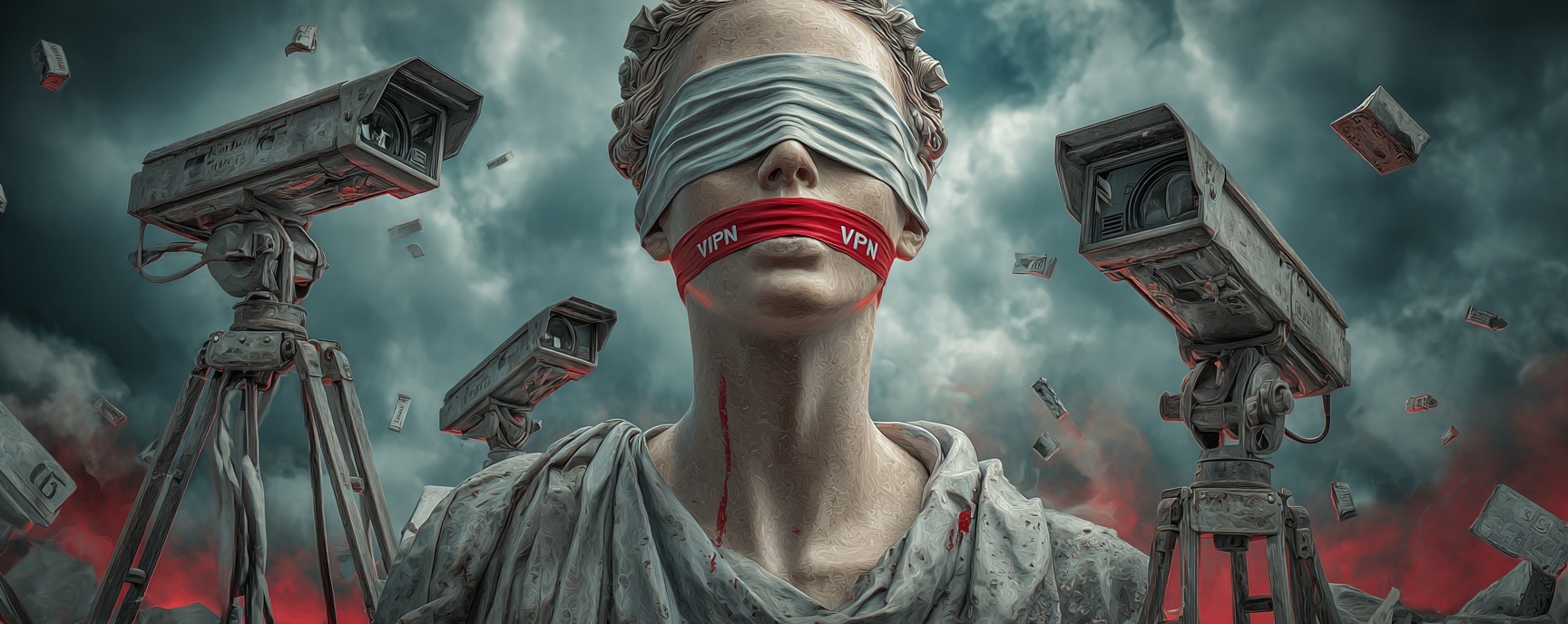
Truth Fatigue: Looking Back from 2035 at the Big Lies We Believed in 2025

By Futurist Thomas Frey

When We Stopped Caring What Was Real

By 2035, historians will mark 2025 as the year society collectively hit the wall—the moment when truth became so expensive to verify and lies became so cheap to produce that people simply gave up trying to tell them apart.

They’ll call it “Truth Fatigue”: that weary collective sigh when endless debunkings, deepfake floods, and contradictory “facts” left people too drained to care about what’s real anymore. It wasn’t just information overload. It was the exhaustion of constantly re-verifying reality in a world where seeing wasn’t believing, and every institution had skin in the game of narrative control.

Looking back from 2035, with AI-driven verification, massive-scale data cross-referencing, and real-time simulation having stripped away many comforting narratives, certain lies will stand out as particularly egregious—not because they were uniquely deceptive, but because AI exposed them so decisively.

Here are the big lies of 2025 that shaped the decade of exhaustion that followed.

Continue reading… “Truth Fatigue: Looking Back from 2035 at the Big Lies We Believed in 2025”


The Privacy Crisis Nobody Sees Coming: Why Your Thoughts Are the Next Data Goldmine

By Futurist Thomas Frey

The Most Intimate Data You Never Consented to Share

Here’s a scenario that should terrify you: you’re wearing your fitness watch, scrolling through social media on your phone, maybe using VR goggles for a quick gaming session. Nothing unusual. Except every one of those devices is quietly collecting data about your brain activity, emotional state, stress levels, attention patterns, and cognitive load. And you have no idea it’s happening.

Welcome to the neural data revolution — the next frontier in privacy invasion that makes Facebook’s data collection look quaint by comparison.

We’re not talking about distant science fiction. Major tech companies are already embedding neural sensors into everyday devices. Meta’s AI glasses use electromyography sensors. Apple’s Vision Pro integrates eye-tracking with biometric sensors. Apple has patented EEG-enabled AirPods. Your smartwatch monitors heart rate variability that reveals your emotional states. Your fitness tracker knows when you’re stressed before you do.

The neurotechnology market is exploding — from $9.8 billion in 2022 to a projected $17.1 billion in 2026. Over one in five Americans already wear devices that continuously monitor physiological signals that can infer mental states. And almost none of them understand what they’ve consented to.

Continue reading… “The Privacy Crisis Nobody Sees Coming: Why Your Thoughts Are the Next Data Goldmine”

Sorry, Conspiracy Theorists: Your Alien Neighbors Would Look Nothing Like You

By Futurist Thomas Frey

The Most Popular Bad Idea in Human History

Let’s talk about aliens walking among us.

You’ve seen the posts. You’ve heard the theories. A suspiciously calm coworker who never seems cold. A celebrity who hasn’t aged since 1987. A politician giving a press conference who blinks at slightly the wrong frequency. The internet has decided: aliens are here, they look just like us, and they’re hiding in plain sight.

I hate to be the one to break this to you.

But if a person were born on another planet — any other planet, literally anywhere else in the universe — the chances of them looking like you are so vanishingly small that “practically zero” is being generous. We’re talking about odds that make winning the lottery while being struck by lightning while finding a parking spot in Manhattan look like a sure thing.

Let me explain why, and I promise it’ll ruin every alien conspiracy theory you’ve ever enjoyed.

Continue reading… “Sorry, Conspiracy Theorists: Your Alien Neighbors Would Look Nothing Like You”

10 Prop Bets on the Future: Would You Wager on These by 2040?

By Futurist Thomas Frey

The Best Way to Test What You Really Believe

Anyone can say they believe something will happen. But put money on it? Now you’re serious.

Prop bets started in sports. Instead of just picking who wins the game, you bet on specific things that happen inside the game. Will the first score be a touchdown or a field goal? Will the quarterback throw for more than 300 yards? These side bets make you think harder and commit to specifics.

So here’s my challenge: I’ve put together 10 prop bets on future technology. Each one is a specific outcome with a specific deadline—somewhere between 2030 and 2040. Some feel like sure things. Some feel far-fetched. All of them are more possible than most people realize.

Read through them. Decide which ones you’d bet on. The bets you’re willing to make reveal what you actually believe about where the world is going.

Continue reading… “10 Prop Bets on the Future: Would You Wager on These by 2040?”

The Awakening Series Part 17: Student Loans—The Debt Trap Design

By Futurist Thomas Frey

Americans owe approximately $1.7 trillion in student loan debt—more than credit card debt, more than auto loans, second only to mortgages. Over 43 million borrowers carry an average debt of $37,000. Many have been paying for 10, 15, 20+ years and still owe more than they originally borrowed. Some will die with student debt still outstanding.

AI analysis of student loan origination, servicing, repayment, and outcomes is revealing something deeply troubling: a system deliberately designed to be confusing, to maximize fees and interest payments, and to keep borrowers in debt as long as possible. Where loan servicers profit from keeping people in default. Where schools raise tuition knowing students can borrow unlimited amounts. Where forgiveness programs reject 99% of applicants through technicalities. Where income-driven repayment plans are nearly impossible to navigate correctly.

The awakening in student loans isn’t about whether education has value—it obviously does. It’s about revealing that the student loan system has evolved into a debt trap that extracts wealth from borrowers while enriching servicers, schools, and investors, with minimal accountability for educational outcomes or employment prospects that would justify the debt burden.

Continue reading… “The Awakening Series Part 17: Student Loans—The Debt Trap Design”

The Awakening Series Part 2: Graft and Corruption—When the Small Stuff Adds Up to Everything

By Futurist Thomas Frey

When most people think of corruption, they picture dramatic scenes: briefcases full of cash, secret offshore accounts, conspiracies hatched in smoke-filled rooms. But the corruption that’s about to be exposed by AI isn’t primarily the Hollywood version. It’s far more mundane, far more pervasive, and in aggregate, far more costly.

It’s the systematic gaming of systems that nobody was watching closely enough. And AI is about to watch everything.

Continue reading… “The Awakening Series Part 2: Graft and Corruption—When the Small Stuff Adds Up to Everything”

When Everything Speaks: Talking to Conspiracy Theories, Recessions, and Your Own Lack of Motivation

By Futurist Thomas Frey

The Seductive Logic of Having a Conversation with Abstract Concepts

Can you talk to conspiracy theories? To economic recessions? To your own lack of motivation? What about contrails, unsolved crimes, the magnetosphere, or your personal biases?

The short answer: yes, if you’re willing to accept that you’re not actually talking to these things—you’re talking to AI models sophisticated enough to simulate their behavior, explain their mechanisms, and respond as if they were entities with agency.

The longer answer is more unsettling: we’re going to do this whether it’s philosophically coherent or not, because conversational interfaces are irresistibly compelling. And the results will range from genuinely helpful to dangerously misleading depending on what we’re trying to give voice to and why.

The concept of “talking to the defect”—using AI to transform complex systems into conversational partners—extends far beyond medicine. Any phenomenon that can be modeled can theoretically be given voice. But there’s a dangerous assumption embedded in this entire framework: that giving something a voice makes it more trustworthy, more comprehensible, more real.

Let me walk you through where conversational systems become transformative, where they become actively dangerous, and why we’re building the oracles first and planning to figure out the difference later.

Continue reading… “When Everything Speaks: Talking to Conspiracy Theories, Recessions, and Your Own Lack of Motivation”

The Global Checks-and-Balance Project: Mapping Power Against Its Counterweights

By Futurist Thomas Frey

Too many of the vital systems used to govern our world are left unchecked. Abuse of power is rampant in countries throughout the globe.

We talk about democracy, rule of law, and accountability. But in practice, most governmental, corporate, and institutional power operates with minimal oversight. Leaders make decisions affecting millions with no meaningful counterweight. Agencies regulate industries they’re supposed to oversee while being captured by those same industries. Courts enforce laws while being immune from the consequences of their errors.

Power accumulates. Checks erode. Balance disappears.

In a project that would propose to map systems against their associated checks-and-balance counterweights, we will begin to find a very revealing way of restructuring some of the world’s more egregious problem areas.

This isn’t abstract political theory. It’s practical systems analysis applied to governance: identify where power concentrates, measure what constrains it, and expose the gaps where abuse becomes inevitable.

Continue reading… “The Global Checks-and-Balance Project: Mapping Power Against Its Counterweights”

The Whole Earth Law Project: Why We Need a Global Repository of Every Law

By Futurist Thomas Frey

Very few countries have their laws posted in a central repository. In the U.S., the laws, rules, and regulations are so numerous and obscure that few people know what laws are governing them at any given moment.

Right now, you’re violating laws you don’t know exist. Not because you’re a criminal, but because the legal systems we live under have become so complex, so fragmented, and so inaccessible that comprehensive compliance is literally impossible.

Federal laws, state laws, county ordinances, city codes, HOA rules, professional regulations, industry standards—they overlap, contradict, and multiply faster than anyone can track. The average American unknowingly commits three felonies a day according to some legal scholars. Not intentionally. Just by living normal life in a system where nobody—not even lawyers—knows all the rules.

If a central “law repository” were created—and all laws should be public knowledge anyway—our global legal systems could move into a new era of transparency. Business people would be able to make conscious decisions about whether they want to do business in a certain country based on the number of laws they may have to contend with.

This isn’t a small problem. It’s undermining the entire concept of rule of law.

Continue reading… “The Whole Earth Law Project: Why We Need a Global Repository of Every Law”

When Forgetting Becomes Optional: The End of Human Memory Loss

By Futurist Thomas Frey

There’s a moment most of us know too well: standing in the kitchen, drawer half-open, completely blank on what you came for. Or that sickening realization that you forgot your mom’s birthday. Again.

By 2040, these moments won’t just be rare—they’ll feel quaintly obsolete, like missing a phone call because you were out of the house.

We’re approaching a peculiar threshold in human experience. For the first time in our species’ history, forgetting will become optional.

Continue reading… “When Forgetting Becomes Optional: The End of Human Memory Loss”

Beyond Unanswerable Questions: What Stumps the World When AI Can Answer Anything?

By Futurist Thomas Frey

For years, I’ve been known as the “unanswerable questions guy”—the person who asks questions that make people pause, scratch their heads, and admit they genuinely don’t know.

I’ve asked questions like “What comes after the Internet?” and “How many galaxies will humans eventually colonize?” Questions that neither science nor religion could definitively answer. Questions about managing systems that don’t exist yet, about unintended consequences we can’t foresee, about futures we can barely imagine.

But something fundamental has shifted. With AI, there are no questions that AI cannot answer. Some answers are speculative, some are wrong, some are poorly reasoned—but there are no “I don’t knows.” Ask an AI anything, and it will give you something.

So what’s the equivalent moving forward? What stumps the world when machines can generate plausible responses to anything we throw at them?

Continue reading… “Beyond Unanswerable Questions: What Stumps the World When AI Can Answer Anything?”

The Acceleration of Generations: Why Gen Alpha, Beta, and Gamma Will Rewrite Everything We Know

By Futurist Thomas Frey

We’re entering an era where generations don’t just differ—they inhabit completely different realities. The gap between a Baby Boomer and Gen Z is vast, but it’s nothing compared to what’s coming. Technology isn’t just changing how generations communicate; it’s fundamentally altering how quickly they evolve, what they value, and how they see the world. Let me explain why understanding this matters more than ever.

Continue reading… “The Acceleration of Generations: Why Gen Alpha, Beta, and Gamma Will Rewrite Everything We Know”
Discover the Hidden Patterns of Tomorrow with Futurist Thomas Frey
Unlock Your Potential, Ignite Your Success.

By delving into the futuring techniques of Futurist Thomas Frey, you’ll embark on an enlightening journey.

Learn More about this exciting program.