Self-driving robotaxis are taking off in China


By Michelle Toh, CNN Business 

self-driving-robotaxis-china

Hong Kong(CNN Business)The world has been inching toward fully autonomous cars for years. In China, one company just got even closer to making it a reality.

On Thursday, AutoX, an Alibaba (BABA)-backed startup, announced it had rolled out fully driverless robotaxis on public roads in Shenzhen. The company said it had become the first player in China to do so, notching an important industry milestone.

Previously, companies operating autonomous shuttles on public roads in the country were constrained by strict caveats, which required them to have a safety driver inside. h

This program is different. In Shenzhen, AutoX has completely removed the backup driver or any remote operators for its local fleet of 25 cars, it said. The government isn’t restricting where in the city AutoX operates, though the company said they are focusing on the downtown area.

Continue reading… “Self-driving robotaxis are taking off in China”
BMW Electrified Wingsuit lets you soar through the sky at 186 mph

BMW-electrified-wingsuit

Everyone wants to know what it’s like to fly, and the BMW Electrified Wingsuit brings that fantasy to life. This concept product allows you to soar through the sky at 186 mph without any restrictions while offering a compact and light design. To make this possible, the electric wingsuit boasts BMW technology and uses a chest-mounted rig for power. It offers 15 kW of grunt between two carbon impellers.

Continue reading… “BMW Electrified Wingsuit lets you soar through the sky at 186 mph”

The World’s First Nuclear Fusion Power Plant Is Coming


By Caroline Delbert fusion power plant

  • Like future Olympic Games, the first nuclear fusion power plant site is being chosen a decade in advance.
  • Coverage of fusion experiments ignores that these plants will also have staff, security, and more.
  • Fission likely causes far worse “meltdowns,” but there are still big safety questions to answer.

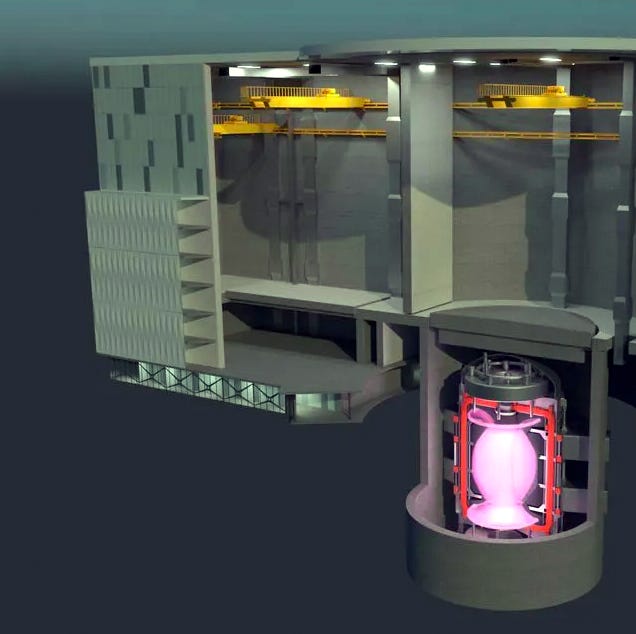
In the U.K., energy developers are making plans to choose a site for the world’s first fusion power plant. As with most fusion projects, this milestone is likely at least a decade away, and the site in question will be less than one half square mile—not exactly a high bar to clear, though complicated by its need to be adjacent to the existing grid. 

Continue reading… “The World’s First Nuclear Fusion Power Plant Is Coming”

Scientists Reverse the Aging Clock: Restore Age-Related Vision Loss Through Epigenetic Reprogramming

By HARVARD MEDICAL SCHOOL 

Advanced Vision Technology Concept
  • Proof-of-concept study represents first successful attempt to reverse the aging clock in animals through epigenetic reprogramming.
  • Scientists turned on embryonic genes to reprogram cells of mouse retinas.
  • Approach reversed glaucoma-induced eye damage in animals.
  • Approach also restored age-related vision loss in elderly mice.
  • Work spells promise for using same approach in other tissues, organs beyond the eyes.
  • Success sets stage for treatment of various age-related diseases in humans.

Harvard Medical School scientists have successfully restored vision in mice by turning back the clock on aged eye cells in the retina to recapture youthful gene function.

Continue reading… “Scientists Reverse the Aging Clock: Restore Age-Related Vision Loss Through Epigenetic Reprogramming”

Energy-generating synthetic skin for affordable prosthetic limbs and touch-sensitive robots


by University of Glasgow

Energy-generating-synthetic-skin

A new type of energy-generating synthetic skin could create more affordable prosthetic limbs and robots capable of mimicking the sense of touch, scientists say.

In an early-view paper published in the journal IEEE Transactions on Robotics, researchers from the University of Glasgow describe how a robotic hand wrapped in their flexible solar skinis capable of interacting with objects without using dedicated and expensive touch sensors.

Instead, the skin puts the array of miniaturized solar cells integrated on its soft polymer surface to a clever dual use. The cells generate enough energy to power the micro-actuators which control the hand’s movements, but they also provide the hand with its unique sense of ‘touch’ by measuring the variations in the solar cells’ output.

Continue reading… “Energy-generating synthetic skin for affordable prosthetic limbs and touch-sensitive robots”

NASA offers a $25,000 prize to help design unloading systems for the moon

Shane McGlaun 

NASA-$25,000-prize-moon-unloading

There are many challenges in front of the NASA Artemis mission that will put humans on the moon again for the first time in decades. While lots of aspects of the Artemis mission are still undecided, NASA is hard at work gathering data and companies to help it tackle obstacles to make the missions happen. The space agency recently offered a prize purse worth $25,000 to help design systems for astronauts to use for unloading cargo on the lunar surface.

The NASA Lunar Delivery Challenge$25,000 prize pool can be shared with up to six winning participants. NASA wants to help figure out how astronauts will unload supplies needed to build their base camp and conduct scientific experiments on the moon. Existing cargo unloading systems used on the Earth are too bulky for the moon and aren’t designed to be sent into space.

Continue reading… “NASA offers a $25,000 prize to help design unloading systems for the moon”

5 Major Shifts Needed Post-COVID-19 to Transform Education

BY MARK SIEGEL | AUGUST 12, 2020

MARK SIEGEL

As American educators battle the COVID-19 crisis, we are rightly recognizing that providing quality education faces incredible new challenges in the short and long term. As John Bailey writes in Education Next, “In planning to reopen, schools will be forced to question long-standing assumptions and develop strategies that can lead to building a better education system. The process can help to distinguish between the superfluous and the essential and build from those fundamentals.”

These transformational challenges do not allow us to return to previous, largely ineffective academic methodologies that have not allowed us to accomplish the goals we have for our students, nor do they call on us to believe that the best we can do is to merely cope through a temporary, hybrid system. Rather, they require us to rethink the future of education and radically improve our current system, a transformation that will include at least five major shifts to better serve all students.

Continue reading… “5 Major Shifts Needed Post-COVID-19 to Transform Education”

LG starts indoor robot delivery service trial

By Cho Mu-Hyun 

LG-indoor-robot-delivery
LG’s robots can get onto elevators on their own to deliver goods from a convenience store.

LG Electronics said on Monday it has begun trials for its indoor robot delivery service. 

The company’s service robots, called LG Cloi Servebot, will deliver products from convenience stores run by local store chain GS25 to anybody within LG Science Park, the company’s headquarters in Seoul. 

The robots can get onto elevators on their own to move between nine floors above ground and a basement level to deliver lunch boxes, sandwiches, and drinks, LG said.

Continue reading… “LG starts indoor robot delivery service trial”

Scientists reverse age-related vision loss, eye damage from glaucoma in mice

by Ryan Jaslow , Harvard Medical School

scientists-reverse-age-related-vision-loss-glaucoma
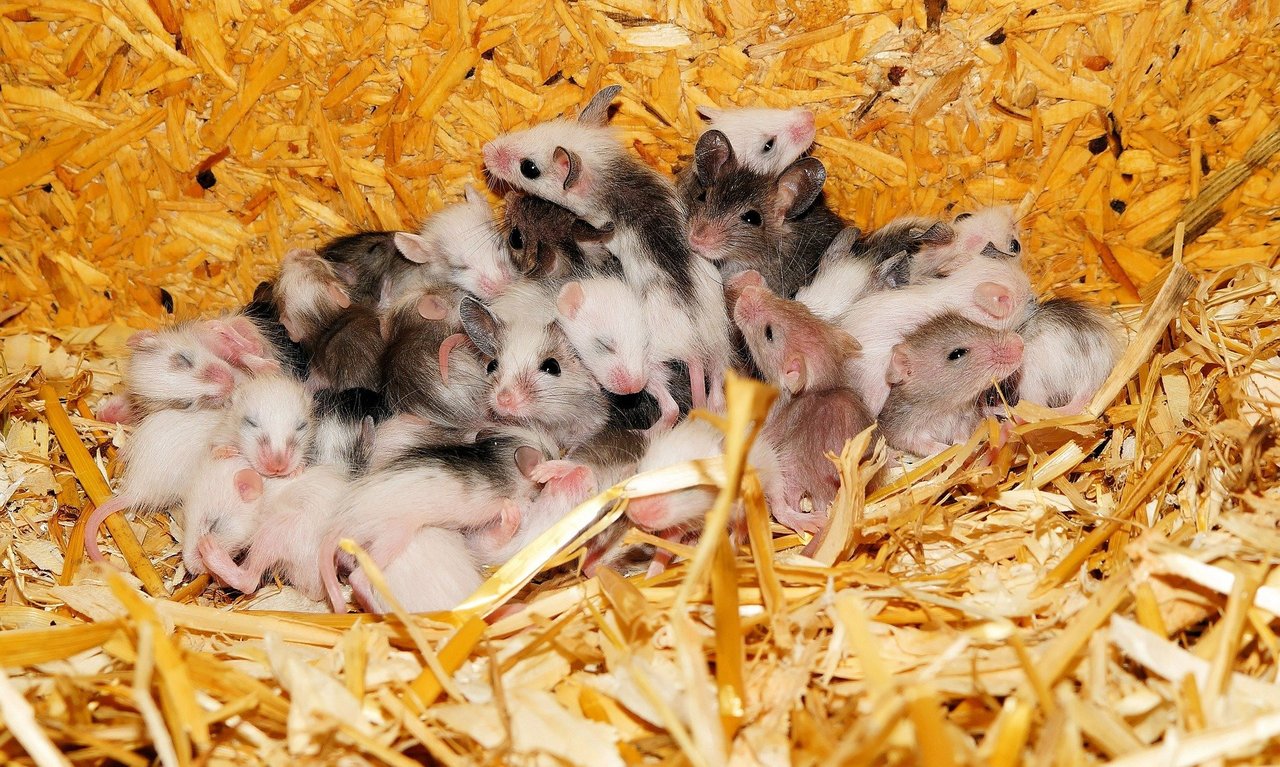
Harvard Medical School scientists have successfully restored vision in mice by turning back the clock on aged eye cells in the retina to recapture youthful gene function.

The team’s work, described Dec. 2 in Nature, represents the first demonstration that it may be possible to safely reprogram complex tissues, such as the nerve cells of the eye, to an earlier age.

In addition to resetting the cells’ aging clock, the researchers successfully reversed vision loss in animals with a condition mimicking human glaucoma, a leading cause of blindness around the world.

The achievement represents the first successful attempt to reverse glaucoma-induced vision loss, rather than merely stem its progression, the team said. If replicated through further studies, the approach could pave the way for therapies to promote tissue repair across various organs and reverse aging and age-related diseases in humans.

“Our study demonstrates that it’s possible to safely reverse the age of complex tissues such as the retina and restore its youthful biological function,” said senior author David Sinclair, professor of genetics in the Blavatnik Institute at Harvard Medical School, co-director of the Paul F. Glenn Center for Biology of Aging Research at HMS and an expert on aging.

Continue reading… “Scientists reverse age-related vision loss, eye damage from glaucoma in mice”

Air taxis could reduce fuel consumption, alleviate traffic congestion


by Jennifer J Burke , Oak Ridge National Laboratory

air-taxis-reduce-fuel-congestion
An ORNL model using air taxis on the heavily traveled route between downtown Los Angeles and Los Angeles International Airport revealed that fuel consumption is significantly reduced if even a small percentage of commuters switched to air taxis. Credit: Andy Sproles/ORNL, U.S. Dept. of Energy

If air taxis become a viable mode of transportation, Oak Ridge National Laboratory researchers have estimated they could reduce fuel consumption significantly while alleviating traffic congestion.

Air taxis, small aerial vehicles that provide point-to-point, on-demand travel, have proven to save time, but their impact on fuel use remains largely unquantified.

Continue reading… “Air taxis could reduce fuel consumption, alleviate traffic congestion”

Tesla truck with 1,000 kilometre-range: Tesla Semi out to prove Bill Gates wrong

tesla-truck-1,000-kilometer-range-semi
Bill Gates may have his doubts about battery powering heavy vehicles but Elon Musk is claiming Tesla Semi may eventually boast of a four-figure range.

Elon Musk recently highlighted that the upcoming Tesla Semi truck will work towards establishing an on-road range of around 1,000 kilometres, a claim – if proven true – that could contradict Bill Gates’ opinion of heavy battery-powered vehicles being rather unfeasible. The massive per-charge range on the Tesla Semi may be made possible by making use of in-house batteries being developed by the EV-maker.

Musk has been vocal about the range capabilities of its 36,000-kilo capacity vehicle with the initial figure pegged between 480 and 800 kilometres. This figure was ramped up to around 960 kilometres but now, the Tesla CEO is claiming that a 1,000 kilometre-range is also possible and that that could make the Semi a winner in long-haul journeys. “If you want, for long-range trucking, you can take the range up to, we think, easily 800 km, and we see a path over time to 1,000 km range for an heavy duty truck,” he was quoted as saying by Electrek.

Continue reading… “Tesla truck with 1,000 kilometre-range: Tesla Semi out to prove Bill Gates wrong”

Revolutionary CRISPR-based Genome Editing System Destroys Cancer Cells ‘Permanently’ in Lab

By Good News Network – Nov 29, 2020

crisps-based-genome-editing-destroys-cancer-cells
Cancer cell during cell division (Credit-National Institutes of Health)

Researchers at Tel Aviv University have demonstrated that the CRISPR genome editing system is very effective in treating metastatic cancers, a significant step on the way to finding a cure for cancer.

In a paper published this week, the researchers demonstrated a novel lipid nanoparticle-based delivery system that specifically targets cancer cells—and co-author Prof. Dan Peer said it’s the first study in the world to prove that the CRISPR/Cas9 can be used to treat cancer effectively in a living animal. “It must be emphasized that this is not chemotherapy. There are no side effects, and a cancer cell treated in this way will never become active again,” said Peer, the VP for R&D and Head of the Laboratory of Precision Nanomedicine at the Shmunis School of Biomedicine and Cancer Research. “The CRISPR genome editing technology, capable of identifying and altering any genetic segment, has revolutionized our ability to disrupt, repair or even replace genes in a personalized manner.

”Peer’s team that includes researchers from an Iowa company, Integrated DNA Technologies, and Harvard Medical School, chose two of the deadliest cancers: glioblastoma and metastatic ovarian cancer to examine the system’s feasibility. Glioblastoma is the most aggressive type of brain cancer, with a life expectancy of 15 months after diagnosis and a five-year survival rate of only 3%.

The researchers demonstrated that a single treatment with CRISPR-LNPs doubled the average life expectancy of mice with glioblastoma tumors, improving their overall survival rate by about 30%.Ovarian cancer is a major cause of death among women and the most lethal cancer of the female reproductive system. Despite progress in recent years, only a third of the patients survive this disease—but treatment with CRISPR-LNPs in mice with metastatic ovarian cancer boosted the overall survival rate of by a whopping 80%.

“Despite its extensive use in research, clinical implementation is still in its infancy because an effective delivery system is needed to safely and accurately deliver the CRISPR to its target cells,” Peer told Tel Aviv Universitynews. “The delivery system we developed targets the DNA responsible for the cancer cells’ survival. This is an innovative treatment for aggressive cancers that have no effective treatments today.”

Continue reading… “Revolutionary CRISPR-based Genome Editing System Destroys Cancer Cells ‘Permanently’ in Lab”
Discover the Hidden Patterns of Tomorrow with Futurist Thomas Frey
Unlock Your Potential, Ignite Your Success.

By delving into the futuring techniques of Futurist Thomas Frey, you’ll embark on an enlightening journey.

Learn More about this exciting program.