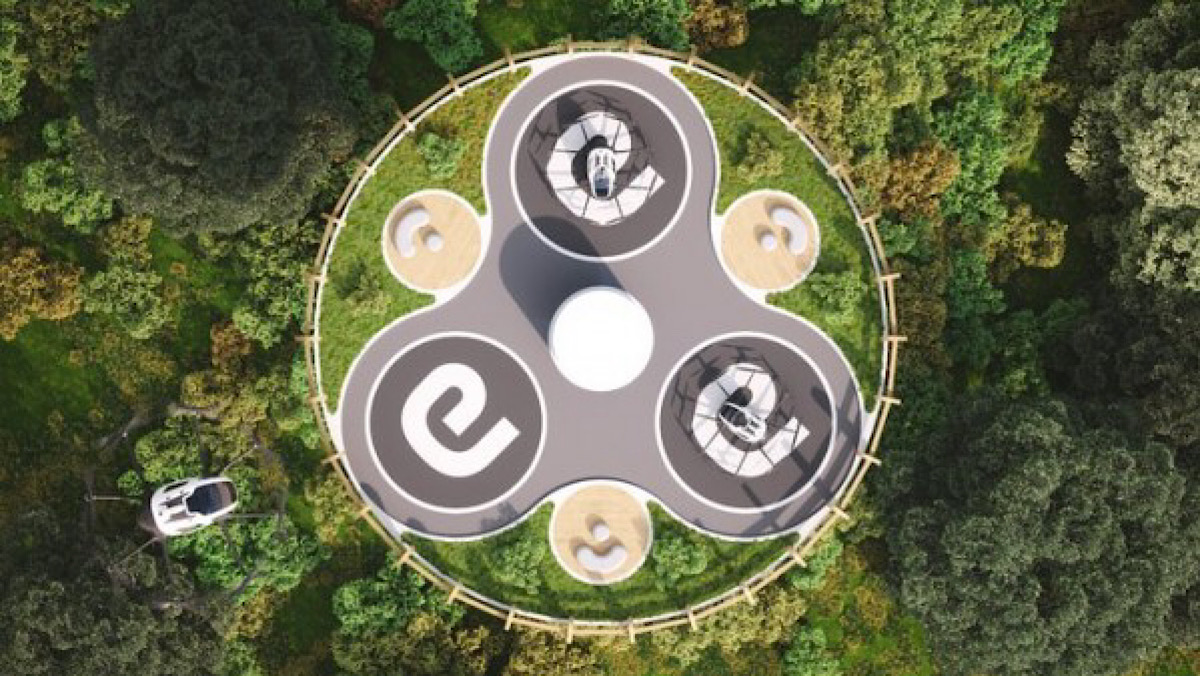
A groundbreaking concept proposes driverless air taxis lifting tourists to restaurants situated 100 feet off the ground – giving an unprecedented experience and view of the Italian wilderness around.
By Mark Bustos
Chinese unmanned aircraft company EHang Holdings are working with architects from the Rome, Italy-based Giancarlo Zema Design Group to turn this lofty vision into a reality. The 100-foot towers – dubbed “Vertiports” by the proponents – are designed to receive the driverless air taxis landing vertically on each roof.
Tourists who will go on the experience will be automatically carried to the raised restaurants. After the dining experience with a panoramic view of the Italian forests, tourists will be ushered by their self-driving vehicles in an equally scenic ride back to their nearby accommodations.
Instead of emerging from the coronavirus pandemic resilient to crisis and catastrophe, Stanford psychologist Jamil Zaki asks what if we grew stronger because of it?
BY MELISSA DE WITTE
With the end of the pandemic in sight and a longing to return to some resemblance of normalcy, Stanford psychologist Jamil Zakithinks the harrowing experience of the past year is a unique opportunity to reset people’s expectations about many aspects of society. Instead of simply returning to life before the pandemic, what if we could institute new personal and social norms that are more balanced, just and equitable?
Instead of emerging from the coronavirus pandemic merely resilient to crisis and catastrophe, Stanford psychologist Jamil Zaki asks what if we grew stronger because of it?
Zaki believes a concept psychologists call “growth through adversity” may be key to defining what this “new normal” could look like. Instead of resilience – which is about bouncing back from disaster, unchanged – growth through adversity is about finding ways to learn from those hardships and focus on what matters.
“Resilience is staying the course through a storm. Growth is charting a new course,” Zaki said.
He points out that even before the pandemic upended our lives, much of what was considered normal in society was deeply problematic: People had been reporting feeling lonelier and more isolated than ever before. Economic inequality between the rich and poor has been soaring at an alarming rate. And profound racial disparities have marred everything from employment to health and housing.
The pandemic didn’t create these problems. In some cases, it merely exposed them; in others, it exacerbated them.
“A stronger normal holds the adversity we’re going through now up as a mirror, one that can clarify what we’ve been neglecting all along,” said Zaki, associate professor of psychology in Stanford’s School of Humanities and Sciences.
We know it’s been a while, but do you remember bumping into colleagues in the office hallway, chatting about weekend plans or a big project you’re working on? Do you recall finding yourself in the right place at the right time, giving someone a missing piece of information or introducing a colleague to someone new? If you’re like many people, you may not have realized how much these conversations mattered until you found yourself working from home.
These informal interactions are key to what’s known as social capital — benefits people can get because of who they know. You rely on your social capital every time you’ve hit a dead end and someone pitched in to help you, even though they didn’t have to. It shows up when you need expertise and someone you’d only met once was able to offer it. You also help others build their social capital when you go above and beyond to support them with knowledge, mentoring, or kindness. And the reason you can turn to someone else and offer extra help is that you’ve built a base of familiarity and goodwill through these unplanned interactions that once filled our workdays.
A cheap, portable quantum computer, aimed at schools and colleges will be launched later this year.
A Chinese start-up has unveiled plans to sell a desktop quantum computer costing less than $5,000. The new portable device is one of a range called SpinQ, aimed at schools and colleges. It is made by the Shenzhen SpinQ Technology, based in Shenzhen, China.
This is not the company’s first quantum computer. Last year, it started selling a desktop quantum computer for around $50,000. The desk in question would need to be sturdy given that the device weighs a hefty 55kg (121 lbs)—about the weight of a small adult.
But the new machine will be simpler, more portable and cheaper. “This simplified version is expected to be released in the fourth quarter of 2021, such that it can be more affordable for most K-12 schools around the world,” say the team behind the device.
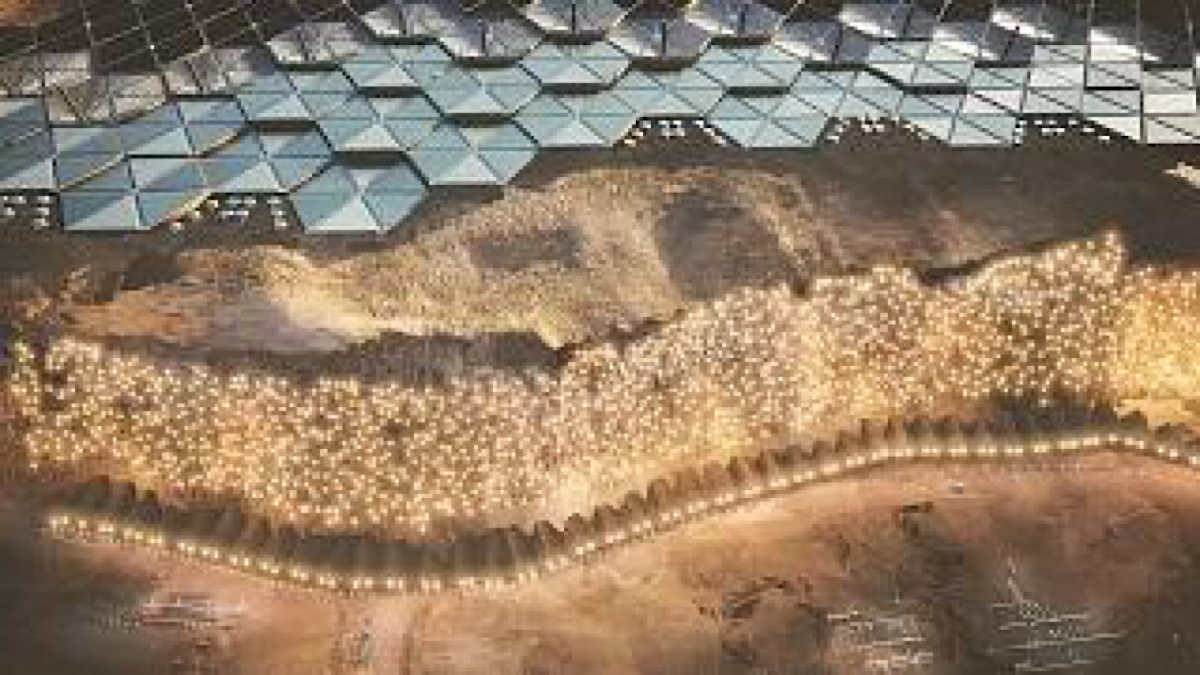
With plans for the first ‘Martian sustainable city’ ready to go, it’s now just a question of time before humans live on Mars.
The new design overall contains five cities – the capital is called Nüwa. The vertical city has homes, offices and green spaces, all built into the side of a cliff to protect inhabitants from atmospheric pressure and radiation.
The oxygen is largely produced by plants, food is 90 per cent plant-based and the energy comes from solar panels.
A California developer of flying taxis will become a publicly-traded company — and celebrated by unveiling its aircraft in action for the first time. Joby Aviation founder and CEO JoeBen Bevirt made the video announcement standing in front of the company’s aircraft — which proceeded to quietly start up its six rotors, lift a few feet off the ground, turn around and begin a slow ascent.
The company, one of the numerous would-be flying car startups around the world, operated quietly for nearly a decade before landing hundreds of millions in venture capital investment — including from Toyota, Intel, and JetBlue — in recent years. Late last year, the company acquired Uber’s flying car division, and soon, it will merge with a special purpose acquisition company in order to list its shares on the New York Stock Exchange.
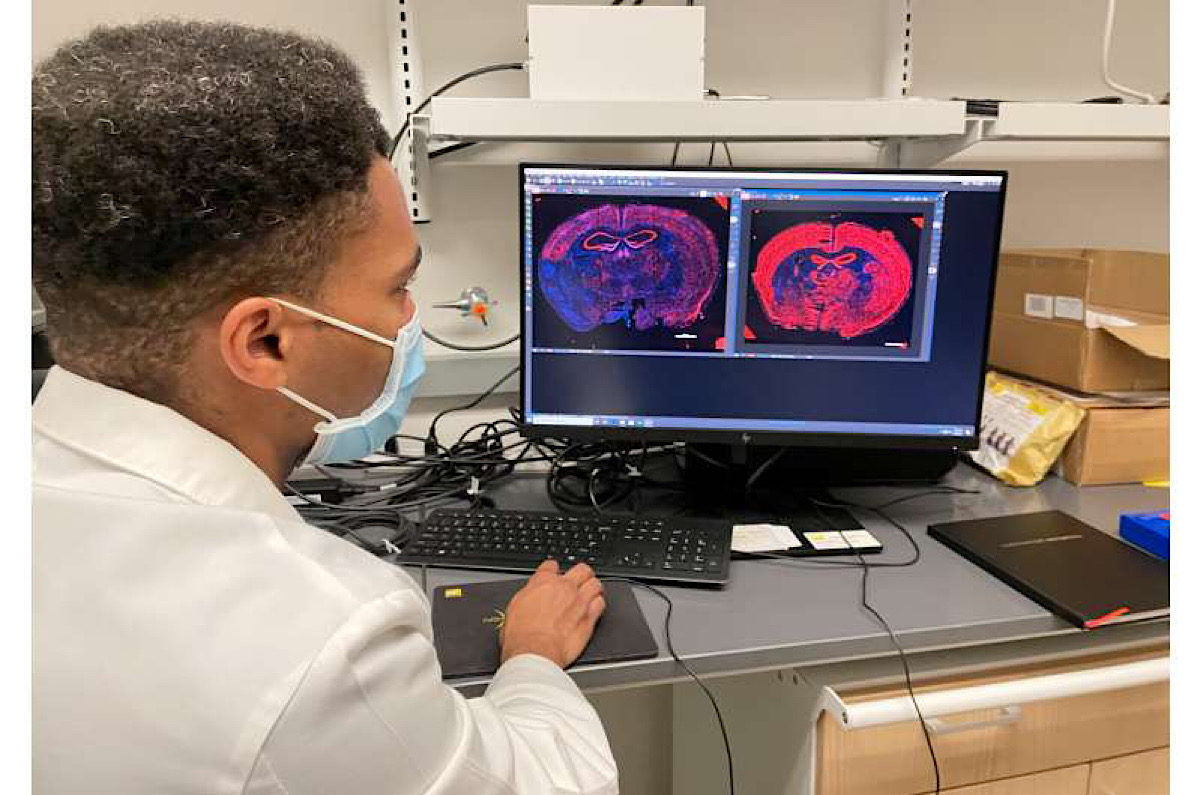
Graduate research associate Jordan Moore reviews brain MRI images of mice in the nanomedicine lab at The Ohio State University College of Medicine. In a new study, researchers demonstrate the potential of a new cell therapy to reverse damage from ischemic stroke by regrowing blood vessels and healthy brain tissue. Credit: The Ohio State University Wexner Medical Center
Most stroke victims don’t receive treatment fast enough to prevent brain damage. Scientists at The Ohio State University Wexner Medical Center, College of Engineering and College of Medicine have developed technology to “retrain” cells to help repair damaged brain tissue. It’s an advancement that may someday help patients regain speech, cognition and motor function, even when administered days after an ischemic stroke.
Engineering and medical researchers use a process created by Ohio State called tissue nanotransfection (TNT) to introduce genetic material into cells. This allows them to reprogram skin cells to become something different—in this case vascular cells—to help fix damaged brain tissue.
Study findings published online today in the journal Science Advances.
In this mouse study, cells were ‘pre-conditioned’ with specific genes and injected into the stroke-affected brains, where they promoted the formation of new blood vessels via reprogramming and the repair of damaged brain tissue.
“We can rewrite the genetic code of skin cells so that they can become blood vessel cells,” said Daniel Gallego-Perez, an assistant professor of biomedical engineering and surgery at Ohio State who is leading the research. “When they’re deployed into the brain, they’re able to grow new, healthy vascular tissue to restore normal blood supply and aid in the repair of damaged brain tissue.”
Researchers studied the process in mice and found that those treated with this innovative cell therapy regained 90% of their motor function. MRI scans showed damaged areas of the brain were repaired within a few weeks.
The European Space Agency (ESA) is working on a “digital twin” of Earth in the hopes of better understanding our planet’s past, present, and future. The project, first announced in September of last year, will deploy AI, as well as quantum computing, to build Earth’s digital doppelgänger in virtual space. And the scientists hope this Digital Twin Earth will help them forecast extreme, climate change-induced weather events.
Popular Mechanics reported on the digital Earth, which ESA scientists discussed during the agency’s 2020 Φ-week event. The scientists say their digital model will help humanity to “monitor the health of the planet,” as well as simulate the effects of human behavior on the environment.
The scientists are going to evolve the digital twin over the next decade, constantly feeding real-world data into the model; data that will come from the EU’s Copernicus program, which captures atmospheric data, such as air quality changes. They’ll then use neural networks (computer algorithms) to identify patterns in Earth’s weather systems, and hopefully begin making accurate predictions.
“Machine learning and artificial intelligence could improve the realism and efficiency of the Digital Twin Earth—especially for extreme weather events and numerical forecast models,” European Center for Medium-Range Weather Forecasts (ECMWF) Director General, Florence Rabier, said at the event. Rabier and her colleagues also noted that the satellites collecting the data for the models are deploying AI programs.