PRACTICAL POWER BEAMING GETS REAL

A power-beaming system developed by PowerLight Technologies conveyed hundreds of watts of power during a 2019 demonstration at the Port of Seattle. 

By PAUL JAFFE

A century later, Nikola Tesla’s dream comes true,

WIRES HAVE A LOT going for them when it comes to moving electric power around, but they have their drawbacks too. Who, after all, hasn’t tired of having to plug in and unplug their phone and other rechargeable gizmos? I

t’s a nuisance.Wires also challenge electric utilities: These companies must take pains to boost the voltage they apply to their transmission cables to very high values to avoid dissipating most of the power along the way.

And when it comes to powering public transportation, including electric trains and trams, wires need to be used in tandem with rolling or sliding contacts, which are troublesome to maintain, can spark, and in some settings will generate problematic contaminants.Many people are hungry for solutions to these issues—witness the widespread adoption over the past decade of wireless charging, mostly for portable consumer electronics but also for vehicles.

While a wireless charger saves you from having to connect and disconnect cables repeatedly, the distance over which energy can be delivered this way is quite short. Indeed, it’s hard to recharge or power a device when the air gap is just a few centimeters, much less a few meters. Is there really no practical way to send power over greater distances without wires?

To some, the whole notion of wireless power transmission evokes images of Nikola Tesla with high-voltage coils spewing miniature bolts of lightning. This wouldn’t be such a silly connection to make. Tesla had indeed pursued the idea of somehow using the ground and atmosphere as a conduit for long-distance power transmission, a plan that went nowhere.

But his dream of sending electric power over great distances without wires has persisted.To underscore how safe the system was, the host of the BBC science program “Bang Goes the Theory” stuck his face fully into a power beam.Guglielmo Marconi, who was Tesla’s contemporary, figured out how to use “Hertzian waves,” or electromagnetic waves, as we call them today, to send signals over long distances.

Continue reading… “PRACTICAL POWER BEAMING GETS REAL”

University Of Glasgow Experts Develop Smart Skin To Provide Robots Human-like Sensitivity

ROBOTS MIGHT SOON HAVE THEIR TOUCH-SENSITIVE GENERATION AS UNIVERSITY OF GLASGOW RESEARCHERS HAVE DEVELOPED A SMART ARTIFICIAL SKIN SENSITIVE TO TOUCH.

By Harsh Vardhan 

In a bid to create a new generation of smart robots with human-like sensitivity, a team of researchers from the University of Glasgow has developed what they call computational electronic skin (e-skin). This is basically a prototype of an artificial skin that uses a new type of processing system. In their official report, the experts noted that this system is based on “synaptic transistors, which mimic the brain’s neural pathways” that enable the robot to learn to feel the pain. https://www.youtube.com/embed/QP1nd6jq4L8?rel=0

The University of Glasgow even shared a video explaining the mechanism of the artificial e-skin. Notably, the robot hand in the explainer video showed a remarkable ability to learn to react to external stimuli.

Continue reading… “University Of Glasgow Experts Develop Smart Skin To Provide Robots Human-like Sensitivity”

‘Hope for a better solution’: Scientists make medical breakthrough using 3D-printed technology

Scientists have made a medical breakthrough using 3D-printed technology.

Doctors at a New York City-based biotech company called 3D Bio Theraputics said they have successfully implanted a 3D-printed ear onto a human patient that was made out of the patient’s own tissue.

According to them, this technology could change the lives of people with ears that are improperly formed.

“Microsia patients have very limited options and, for decades, have been hoping for a solution that delivers them natural, living tissue from their own cells, matching their other ears,” said CEO and founder Dr. Daniel Cohen.

Continue reading… “‘Hope for a better solution’: Scientists make medical breakthrough using 3D-printed technology”

3D printed, bioinspired heart valves: Scaffolds created by melt electrowriting aim to support new tissue formation

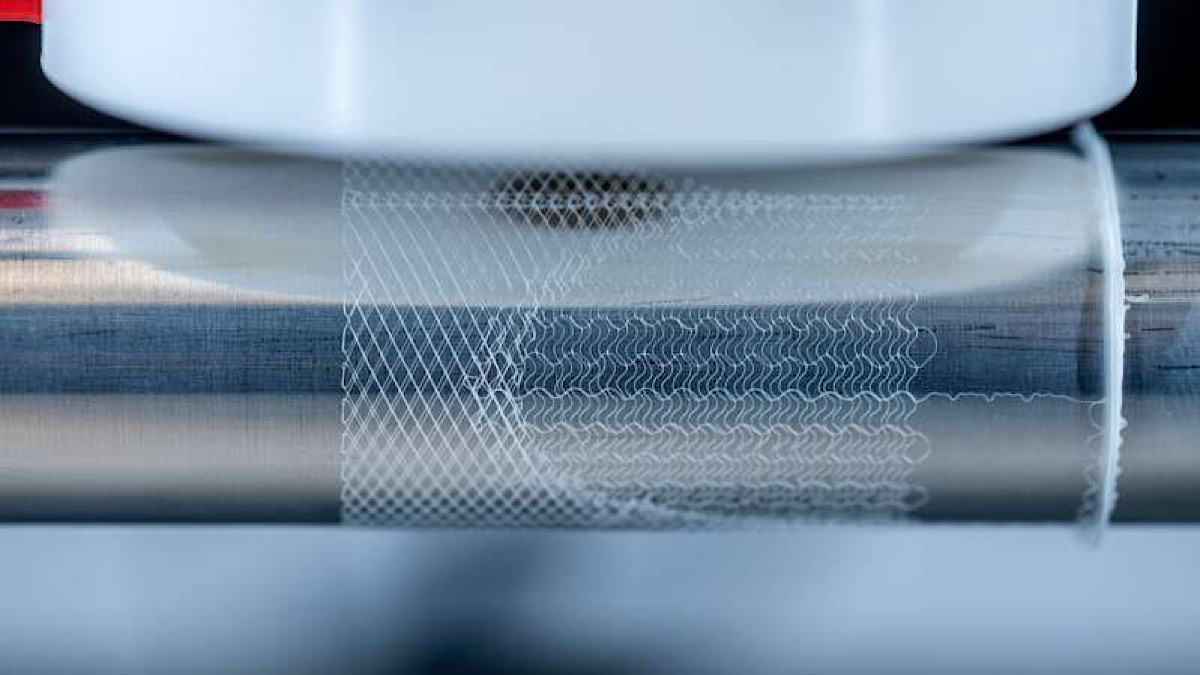
Close-up of a cylinder in a Melt Electrowriting system showing a printed heart valve scaffold. Credit: Andreas Heddergott / TUM

Researchers have developed 3D printed artificial heart valves designed to allow a patient’s own cells to form new tissue. To form these scaffolds using melt electrowriting—an advanced additive manufacturing technique—the team has created a new fabrication platform that enables them to combine different precise, customized patterns and hence to fine-tune the scaffold’s mechanical properties. Their long-term goal is to create implants for children that develop into new tissue and therefore last a lifetime.

In the human body, four heart valves ensure that blood flows in the correct direction. It is essential that heart valves open and close properly. To fulfill this function, heart valve tissue is heterogeneous, meaning that heart valves display different biomechanical properties within the same tissue.

A team of researchers working with Petra Mela, Professor of Medical Materials and Implants at the Technical University of Munich (TUM), and Professor Elena De-Juan Pardo from The University of Western Australia, have now, for the first time, imitated this heterogeneous structure using a 3D printing process called melt electrowriting. To do this, they have developed a platform that facilitates printing precise customized patterns and their combination, which enabled them to fine-tune different mechanical properties within the same scaffold.

Continue reading… “3D printed, bioinspired heart valves: Scaffolds created by melt electrowriting aim to support new tissue formation”

NASA chooses two companies to develop next-gen spacesuits

By Devindra Hardawar

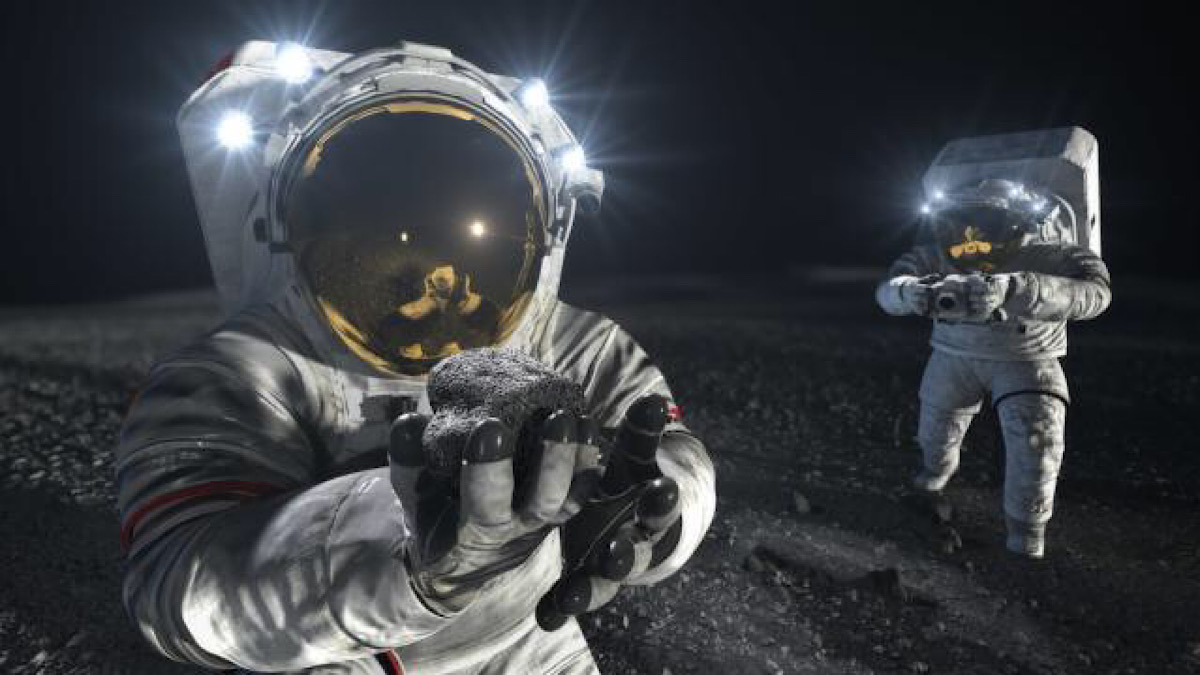
NASA’s going to need new suits to accompany astronauts to the Moon for its Artemis I mission, and now we know who’s going to be making them: Axiom Space and Collins Aerospace. The two companies will develop next-generation suits that’ll be used both for spacewalks on the ISS, in addition to Moon exploration. NASA says it has defined the technical and safety standards around the new “xEMU” equipment (Exploration Extravehicular Mobility Unit), but it’s up to these partners to deal with “design, development, qualification, [and] certification” as well as building the necessary support equipment.

Continue reading… “NASA chooses two companies to develop next-gen spacesuits”

Samsung to Build First Private 5G Commercial Network for Cloud-Based Autonomous Robots

Samsung has built the first private 5G commercial network for cloud-based autonomous robots. The Korean giant have collaborated with NAVER Cloud on Thursday to work on South Korea’s first private 5G network. Deployed at NAVER’s new second headquarters, Samsung’s network solution will support NAVER’s private 5G commercial service to power cloud-based autonomous mobile robots this month. The new service would allow autonomous robots to travel throughout NAVER’s headquarters in Seoul, assisting with package delivery, coffee delivery, and lunch box delivery to staff.

Quicker connectivity on smartphones has largely been used to stream video and surf social media, but Samsung has come up with a new use case. The headquarters, simply dubbed 1784, will begin by employing 40 robots that will move across three floors. By the end of the year, the idea is to have “hundreds of robots moving over the entire 36-floor skyscraper.”

Continue reading… “Samsung to Build First Private 5G Commercial Network for Cloud-Based Autonomous Robots”

This Solar Electric Vehicle Company That Beat Tesla In A Drag Race Has Over 22,000 Reservations

by Chris Katje

ZINGER KEY POINTS

The upcoming Aptera solar-powered electric vehicle is estimated to get between 250 and 1,000 miles of range.

As consumers adapt to electric vehicles, the use of solar power for charging could help differentiate Aptera.

A solar vehicle startup continues to see strong anticipation for its vehicle. Here’s a look at how the company’s reservations are shaping up.

What Happened: Aptera has more than 22,000 reservations for its solar electric vehicles, according to a report from InsideEVs.

The upcoming Aptera solar-powered electric vehicle is estimated to get between 250 and 1,000 miles of range.

Deliveries of the vehicle are expected to happen later this year with a cost ranging from $25,900 to $44,900.

The company sees building 10,000 vehicles by the end of 2022 with an eventual goal of production of 600,000 vehicles annually. Aptera believes demand could support the six-figure production target.

Continue reading… “This Solar Electric Vehicle Company That Beat Tesla In A Drag Race Has Over 22,000 Reservations”

Putting the metal to the pedal! Robotic taxi service gets green light to begin charging passengers for DRIVERLESS rides in San Francisco

By FIONA JACKSON

  • Regulators in California have approved the state’s first ever autonomous taxis
  • Robot cab company Cruise can now charge for driverless rides in San Francisco
  • They are confined to offer trips between 10pm and 6am in less congested areas
  • Previously it could only offer free rides to passengers without a backup driver 

We are one step closer to never having to parallel park again — as regulators in the US have given the green light to the first commercial fleet of driverless taxis in California. 

Robotic taxi service Cruise received approval to offer rides in San Francisco. 

It will be the first time an autonomous ride-hailing service in the state has been allowed to charge for rides that will have nobody else in them besides the passengers.

Continue reading… “Putting the metal to the pedal! Robotic taxi service gets green light to begin charging passengers for DRIVERLESS rides in San Francisco”

A world first: Human liver was treated in a machine and then successfully transplanted

Prof. Pierre-Alain Clavien and Prof. Philipp Dutkowski during the transplantation of the liver treated in the machine.

The Liver4Life research has developed a perfusion machine that makes it possible to implant a human organ into a patient after a storage period of three days outside a body. The machine mimics the human body as accurately as possible, in order to provide ideal conditions for human livers. A pump serves as a replacement heart, an oxygenator replaces the lungs and a dialysis unit performs the functions of the kidneys. In addition, numerous hormone and nutrient infusions perform the functions of the intestine and pancreas.

Like the diaphragm in the human body, the machine also moves the liver to the rhythm of human breathing. In January 2020, the multidisciplinary Zurich research team—involving the collaboration of University Hospital Zurich (USZ), ETH Zurich and the University of Zurich (UZH)—demonstrated for the first time that perfusion technology makes it possible to store a liver outside the body for several days.

Continue reading… “A world first: Human liver was treated in a machine and then successfully transplanted”

Scientists May Have Found a Way to Inject Oxygen Into The Bloodstream Intravenously

By DAVID NIELD

There are many illnesses and injuries, including COVID-19, where the body struggles to get the amount of oxygen into the lungs necessary for survival.

In severe cases, patients are put on a ventilator, but these machines are often scarce and can cause problems of their own, including infection and injury to the lungs.

Scientists may have now found a breakthrough, and it’s one that that could significantly impact how ventilators are used. 

In addition to traditional mechanical ventilation, there’s another technique called Extracorporeal Membrane Oxygenation (ECMO), where blood is carried outside the body so that oxygen can be added and carbon dioxide can be removed.

Thanks to a new discovery, oxygen may now be able to be added directly, and the patient’s blood can stay where it is. With a condition like refractory hypoxemia, which can be brought on by being on a ventilator, having this approach available could save lives.

“If successful, the described technology may help to avoid or decrease the incidence of ventilator-related lung injury from refractory hypoxemia,” the researchers write in their new paper.

Continue reading… “Scientists May Have Found a Way to Inject Oxygen Into The Bloodstream Intravenously”

Meet Frontier, The World’s Fastest Supercomputer That Will Solve Humanity’s Crises

By Bharat Sharma

The new “Frontier” supercomputer can clock in speeds up to 1.1 exaflops, faster than the next seven most powerful supercomputers on Earth combined.

Frontier is also the first supercomputer to break the exascale speed barrier (billion billion calculations per second), according to the Top500 list of world’s most powerful supercomputers

A new supercomputer is in town! The new “Frontier” supercomputer can clock in speeds up to 1.1 exaflops, faster than the next seven most powerful supercomputers on Earth combined – yes, it’s that fast! Frontier is also the first supercomputer to break the exascale speed barrier (billion billion calculations per second), according to the Top500 list of world’s most powerful supercomputers. 

Continue reading… “Meet Frontier, The World’s Fastest Supercomputer That Will Solve Humanity’s Crises”

Space Coin Project Launches ‘Space Travel for Everyone’

After several months of refinement and thorough smart contract auditing, Space Coin Project has announced the official launch of its ERC-20 token, SPJ. 

If you’ve ever looked into booking a space flight, you can immediately recognize the challenges. From extremely expensive flight tickets to limited seats on spaceships to bureaucracy, the barriers to entry are clearly high. With today’s stipulations, almost 99% of the world isn’t able to experience the thrill of space travel. 

These limitations birthed the idea of the Space Coin Project. Mr. Jason Chang (CEO, Space Coin Project), when asked about the motivation behind the creation of the all-new governance token said, “Our mission is to create a social movement with a decentralized organization at its core to represent the community of space enthusiasts around the world.” He further stated that the Space Coin Project aims to solve most of the major challenges associated with space travel by creating a decentralized system that gives everyone in the community a chance to purchase a ticket on a space flight. 

Continue reading… “Space Coin Project Launches ‘Space Travel for Everyone’”
Discover the Hidden Patterns of Tomorrow with Futurist Thomas Frey
Unlock Your Potential, Ignite Your Success.

By delving into the futuring techniques of Futurist Thomas Frey, you’ll embark on an enlightening journey.

Learn More about this exciting program.