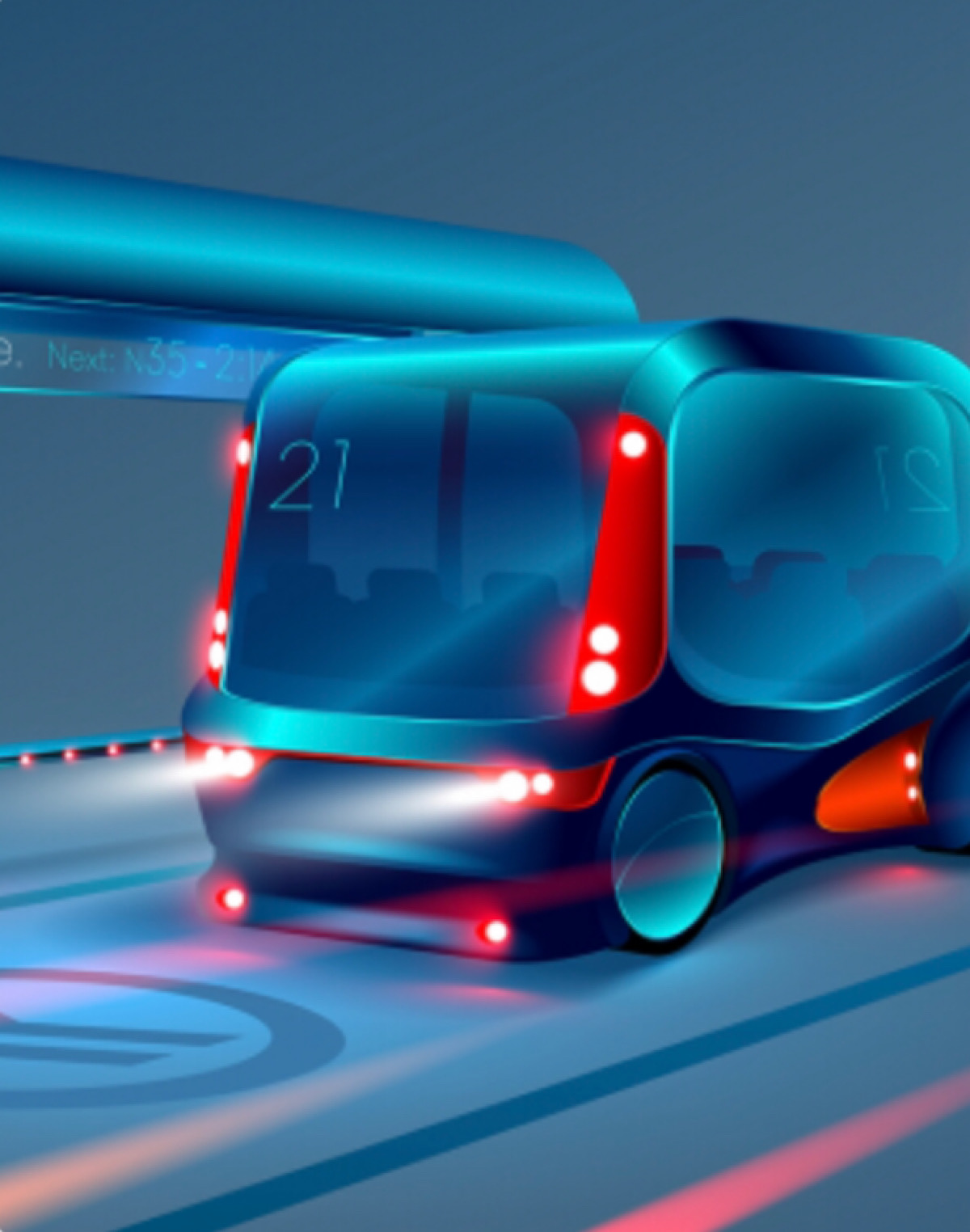
Self-driving buses, shuttles and delivery vans could hit UK roads

Kiera Sowery 

A £40m competition to kick-start commercial self-driving services, such as delivery vehicles and passenger shuttles, has been launched by Lord Grimstone, Minister for Investment. The funding could create tens of thousands of skilled jobs across the UK over the next decade.

The ‘Commercialising Connected and Automated Mobility’ competition will provide grants to help roll out commercial use self-driving vehicles across the UK from 2025, delivering convenience for consumers and making journeys safer, greener and more reliable.

The competition will help bring together companies and investors so that sustainable business models to be rolled out nationally and exported globally.

Types of self-driving vehicles that could be deployed include delivery vans, passenger buses, shuttles and pods, as well as vehicles that move people and luggage at airports and containers at shipping ports.

Minister for Investment Lord Grimstone said: “Self-driving vehicles have the potential to revolutionise people’s lives, whether its by helping to better connect people who rely on public transport with jobs, local shops, and vital services, or by making it easier for those who have mobility issues to order and access services conveniently.

“This funding will help unlock the incredible potential of this new and growing industry, building on the continued development of self-driving technology, attracting investment and helping make our transport cleaner, safer and more efficient.”

Continue reading… “Self-driving buses, shuttles and delivery vans could hit UK roads”

Israel tests AI-powered Floating Solar Panels

he new project is being carried out in collaboration with Israel’s national water provider, Mekorot.

By Dipayan Mitra

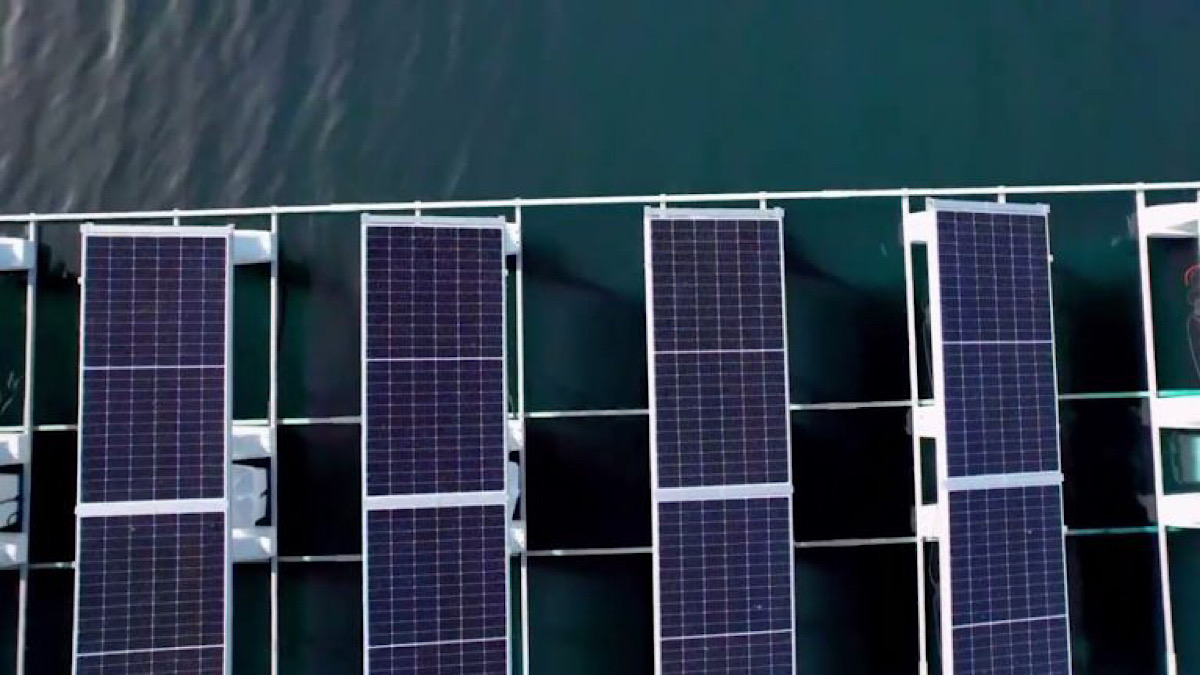
Israel announces that it plans to test a new artificial intelligence (AI)-powered floating solar panels system to generate clean energy, reports Nocamels. 

Developed by Israeli startup Xfloat, the solar photovoltaic (PV) system is meant to move and monitor the sun while floating on reservoir water. The company has developed an intelligent water management system that accurately tilts and tracks water loads and pumps. 

The data acquired from sensors is subsequently refined and directed to a knowledge-based machine learning process for PV performance prediction, and O&M. Countries across the globe are launching new initiatives to generate clean energy as a step to control global warming. 

Continue reading… “Israel tests AI-powered Floating Solar Panels”

Gene-edited super tomato may provide the vitamin punch to fight Alzheimer’s, Parkinson’s, and cancer

NORWICH, United Kingdom — A genetically engineered “super” tomato that may have the power to fight Alzheimer’s, Parkinson’s, and cancer has been created by British scientists. The modified fruit is packed with vitamin D — which also boosts bones, teeth, and muscles.

Estimates show more than four in 10 Americans may have a vitamin D deficiency, which can increase their risk of developing a host of illnesses. Now, a team at the John Innes Centre in Norwich has engineered a variety of tomato that produces more.

They used a gene editing technique known as CRISPR, enabling them to make precise changes in DNA at specific locations. The procedure blocked the action of an enzyme that normally converts the vitamin to cholesterol.

“We’ve shown that you can biofortify tomatoes with provitamin D3 using gene editing, which means tomatoes could be developed as a plant-based, sustainable source of vitamin D3,” says corresponding author Professor Cathie Martin in a media release.

“Forty percent of Europeans have vitamin D insufficiency and so do one billion people world-wide. We are not only addressing a huge health problem, but are helping producers, because tomato leaves which currently go to waste, could be used to make supplements from the gene-edited lines.”

Continue reading… “Gene-edited super tomato may provide the vitamin punch to fight Alzheimer’s, Parkinson’s, and cancer”

Tesla Considering 800-Volt Architecture For Cybertruck And Semi

Shifting smaller vehicles like the Model 3 and Y from 400 volts to 800 volts would make zero economic sense, Tesla execs say. 

By: Dan Mihalascu

Tesla’s Q1 2022 earnings call revealed plenty of positive updates from a financial and manufacturing perspective, and even when it comes to new products, with Elon Musk confirming that the dedicated robotaxi will enter production in 2024.

On the product side of things, the webcast’s Q&A session included a question on why Tesla avoids adopting an 800-volt architecture for its vehicles.

As it turns out, the EV maker is considering running some of its EVs on 800 volts, namely the Cybertruck and Semi. Why not more models, seeing as Tesla rivals such as the Porsche Taycan, Audi e-tron GT, Kia EV6, Hyundai Ioniq 5 and others use 800-volt architectures, not to mention the Lucid Air which runs on 900 volts?

Well, Tesla believes that the benefits of switching to 800 volts are massively outweighed by the overall cost of doing so. Tesla SVP of Powertrain and Energy Engineering, Andrew Baglino, noted that there is little incentive for the company to shift smaller vehicles like the Model 3 and Model Y on an 800-volt architecture.

Continue reading… “Tesla Considering 800-Volt Architecture For Cybertruck And Semi”

UCLan medical students to use VR technology in classroom

UCLan medical students using the new VR technology at the Burnley campus

Medical students will be using virtual reality headsets to diagnose heart attacks and treat sepsis from the comfort of the classroom.

The University of Central Lancashire will be introducing the technology to Preston, Burnley and Westlakes to allow medical students to diagnose heart attacks, treat sepsis and examine the respiratory system following the development of technology by UK-based Oxford Medical Simulation (OMS).

It allows students studying within UCLan’s School of Medicine to practise treating acutely unwell patients in a simulated, virtual environment without risking patients’ lives.

Continue reading… “UCLan medical students to use VR technology in classroom”

startup gatik says it will put self-driving trucks on the road in Kansas

May 19 (Reuters) – Autonomous delivery truck startup Gatik on Thursday said it will be putting its box trucks on the road in Kansas after state officials gave it and its partner and customer Walmart Inc (WMT.N) the go-ahead.

Kansas Governor Laura Kelly on Friday signed into law a bill permitting use of driverless vehicles in the state without a human safety driver behind the wheel.

Gatik’s head of policy, Richard Steiner, told Reuters in an interview the company would be “getting our trucks on the road now” in Kansas, but declined to comment on whether they would be making deliveries for Walmart or any other customer.

He said Gatik and Walmart held many conversations over the last year with Kansas legislators and law enforcement officials. The Teamsters union, a trial lawyers and a Kansas workers’ group had opposed the bill, citing issues such as insurance and liability requirements.

The Teamsters in a statement said the bill was rushed through, and that it allowed autonomous vehicles to operate “recklessly, risking the lives of our friends and neighbors, and upending the workforce as we know it.”

Continue reading… “startup gatik says it will put self-driving trucks on the road in Kansas”

SPACE MACHINES TO LAUNCH ITS OPTIMUS IN-SPACE ORBITAL TRANSFER VEHICLE

Australian in-space transportation provider, Space Machines Company (SMC) has secured the support of SpaceX as a launch partner to carry its Optimus Orbital Transfer Vehicle (OTV) to space as part of its April 2023 mission. 

SMC’s Optimus OTV is one of the largest commercial spacecraft designed and manufactured in Australia. 

The 2023 mission will demonstrate the 270 kg Optimus OTV’s ability to deliver in-space logistics services and will deploy solutions for foundation customers.

The Optimus spacecraft’s assembly and integration will occur at the Space Machines Company facility within the University of Technology Sydney’s (UTS) Tech Lab, and will demonstrate Australian sovereign access to space capability. 

With more than 6,000 active and inactive satellites in orbit, there will increasingly be a need for infrastructure and logistics services to support and manage exponential growth in satellites and debris, according to the company. 

CEO of Space Machines Company Rajat Kulshrestha said: “Logistics is the new frontier in space innovation. 

Continue reading… “SPACE MACHINES TO LAUNCH ITS OPTIMUS IN-SPACE ORBITAL TRANSFER VEHICLE”

Ep. 87 With Scott Ruoti

Youtube or on the Futurati Podcast website

Scott Ruoti is an assistant professor at the University of Tennessee, where he focuses on security and privacy, usability, and human-computer interaction. He takes a diverse and multidisciplinary approach in studying everything from optimized emailing systems to the distributed ledger, and we are thrilled to get his perspective on use cases for the blockchain.

Pairs Well With

Continue reading… “Ep. 87 With Scott Ruoti”

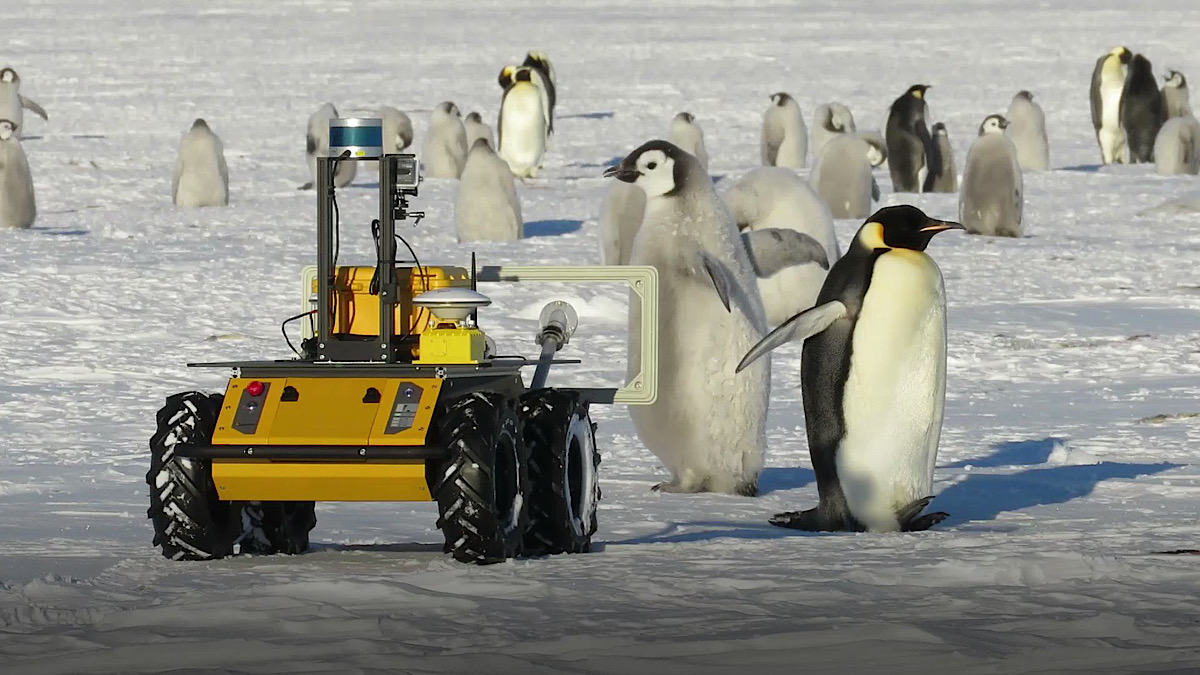
In Antarctica, a clunky robot has befriended a colony of penguins

ECHO is part of a scientific project studying climate change’s impact on emperor penguins.

By Teodosia Dobriyanova  

ECHO is a small yellow robot currently living with a colony of emperor penguins in Antarctica. The robot is part of a project by Woods Hole Oceanographic Institution studying climate change’s impact on the South Pole’s most iconic inhabitants. Physicist Daniel Zitterbart, who has been working alongside ecologist Céline Le Bohec, tells us about how ECHO works, what the project is trying to achieve, and his hopes for the future.

Continue reading… “In Antarctica, a clunky robot has befriended a colony of penguins”

3D printed bone implants give patient new lease of life after head injury

The implants were used for Lin’s cranioplasty surgery in July last year.

SINGAPORE (The Straits Times/Asia News Network): When Danny Lin fell in a carpark in November 2020, he injured his head so badly that he could remember only slipping into a coma for about 10 days.

The memory of how the incident happened was completely wiped clean.

“The next moment, when I woke up, the doctors told me that there was some swelling in my brain and that I needed a craniotomy,” the 46-year-old headhunter told The Straits Times.

A craniotomy is an operation which involves temporarily removing parts of the skull to ease pressure on the brain due to swelling or bleeding.

Recalling the first day Lin was admitted to hospital, his doctor, Assistant Professor Sein Lwin, a visiting consultant neurosurgeon at National University Hospital, said he found a small blood clot in the right side of the brain.

“He was slowly losing consciousness,” noted Prof Sein. “So we repeated the scan, and the clot grew bigger.”

This was because the swelling led to pressure building up within the brain, he added.

Bruises were also seen on both sides of the brain due to the impact of the injury, said Prof Sein.

To relieve this pressure, two bone flaps in the skull were removed to help reduce swelling.

Luckily for Lin, the swelling came down in about a week.

“Only 40 per cent of patients fully recover from such injuries and can resume normal activities, while the majority still end up bed-bound. So he’s really lucky,” said Prof Sein.

Continue reading… “3D printed bone implants give patient new lease of life after head injury”

Mitsubishi Electric develops technology for the freeform printing of satellite antennas in outer space

Mitsubishi Electric Corporation (TOKYO: 6503) reports that the company has developed an on-orbit additive-manufacturing technology that uses photosensitive resin and solar ultraviolet light for the 3D printing of satellite antennas in the vacuum of outer space.

The novel technology makes use of a newly developed liquid resin that was custom formulated for stability in vacuum. The resin enables structures to be fabricated in space using a low-power process that utilizes the sun’s ultraviolet rays for photopolymerization.

The technology specifically addresses the challenge of equipping small, inexpensive spacecraft buses with large structures, such as high-gain antenna reflectors, and enables on-orbit fabrication of structures that greatly exceed the dimensions of launch vehicle fairings.

Resin-based on-orbit manufacturing is expected to enable spacecraft structures to be made thinner and lighter than conventional designs, which must survive the stresses of launch and orbital insertion, thereby reducing both total satellite weight and launch costs.

Continue reading… “Mitsubishi Electric develops technology for the freeform printing of satellite antennas in outer space”

A CELLO-PLAYING ROBOT MAKES MUSIC WITH ITS HUMAN PROGRAMMER

by Melissa T. Miller

Swedish composer Fredrik Gran programs robotic arms to play bowed instruments like the cello and double bass. He also plays duets with the robots, blurring the lines between the musician and the music itself. The robot arms do make some mechanical noise as they move, but it blends into the sound of the instruments. The robots’ intended purpose is for automated assembly lines in the automotive, healthcare, or food industries, instead, here, they make music. 

All the movements the robots use to make music come from the same abilities they need for their day jobs. But it’s still remarkable to see it applied in this way. It’s automated, but the listener still feels a swell of emotions, and the robots seem to come alive as they play their instruments. We found out about these unique performances thanks to Laughing Squid.

Based on his social media feeds, Gran has experimented with many uses of robotic arms in music. He also uses them to create feedback effects, moving a microphone around other equipment. For a more intense performance of robot music, check out the Instagram video below.

Continue reading… “A CELLO-PLAYING ROBOT MAKES MUSIC WITH ITS HUMAN PROGRAMMER”
Discover the Hidden Patterns of Tomorrow with Futurist Thomas Frey
Unlock Your Potential, Ignite Your Success.

By delving into the futuring techniques of Futurist Thomas Frey, you’ll embark on an enlightening journey.

Learn More about this exciting program.