Solar hydropanel pulls 10 liters of clean drinking water out of the air per day

Solar-powered water extractor

By Derek Markham

By harvesting water vapor from the air and condensing it into liquid, atmospheric water generators can essentially pull water from the air, and these devices hold a lot of promise for providing an independent source of drinking water. And although drought-stricken regions and locations without safe or stable water sources are prime candidates for water production and purification devices such as those, residences and commercial buildings in the developed world could also benefit from their use, and they make a great fit for off-grid homes and emergency preparedness kits.

The statistics speak for themselves:

  • 40 percent of America’s 50,000 community water systems have had water quality violations, according to the EPA.
  • 15 percent of Americans still rely on wells as their main source of water. A full 50 percent of that water wouldn’t pass a quality test.
  • Over 450,000 California residents who are served by a Community Water System are subjected to water that is failing to meet the Safe Drinking Water Act.
  • Evidence shows that American households facing water insecurity and poor water quality are likely to have lower incomes and live in areas where infrastructure has been systemically underfunded.
  • 100 percent of California’s failing systems serve less than 100,000 people; 96.4 percent serve less than 10,000 people. Tulare County, where Allensworth is located, has largest number of systems without safe water. (Community Water Center’s Drinking Water Tool identifies exactly where communities have the environmental burden of no clean water and are also disadvantaged.)
  • The most common contaminants found in these water systems are arsenic, nitrate, lead, copper, Uranium, and E.Coli.
Continue reading… “Solar hydropanel pulls 10 liters of clean drinking water out of the air per day”

Osso VR nets $66 million for surgical training

San Francisco’s Osso VR collected $66 million in Series C funding led by Oak HC/FT, the parties tell Axios exclusively. 

Why it matters: Surgical training hasn’t evolved in 30-plus years, but Osso VR is looking to change that by empowering health care professionals with virtual reality. 

Training and assessing surgeons more efficiently can drive up the adoption of modern and hard-to-learn medtech, and democratize surgical education. 

“The innovation from the medical device industry is providing us an incredible opportunity to treat patients much more consistently and with optimized outcomes,” said Justin Barad, Osso’s co-founder and a practicing pediatric orthopedic surgeon. 

Continue reading… “Osso VR nets $66 million for surgical training”

Liverpool Hospital trials smart gloves to train surgeons

Liverpool Hospital is trialling smart gloves that are said to provide surgical trainees with instant and accurate feedback.

The surgical gloves, invented by engineers at Western Sydney University, have been built around low-cost sensors which can record hand movements in fine detail, giving trainee surgeons and their mentors actionable data to evaluate and improve on intricate surgical procedures.

The research team are working closely with surgeons and students at Liverpool Hospital to develop the technology, which will augment rather than replace traditional surgical training.

Dr Gough Lui, who led the work, believes the device could objectively measure the intricate hand manoeuvres of surgeons, allowing for clear and actionable feedback for trainees.

“Training surgeons in a more objective and evidence-based manner ensures evidence-based competency. Teachers will be able to give precise feedback on minute details post-surgery, and students can analyse their performance,” Dr Lui said.

Continue reading… “Liverpool Hospital trials smart gloves to train surgeons”

World’s longest 165-mile ‘drone superhighway’ proposed in the UK

By Ishveena Singh

A UK consortium has revealed its blueprint to build the world’s largest and longest “drone superhighway,” connecting towns and cities across the nation. The 165-mile (265 km) Project Skyway is being hailed as “the most ambitious transport project proposed for the UK since the advent of the railway network in the 18th century.”

Led by Unified Traffic Management (UTM) software provider Altitude Angel, the consortium says it would initially connect the Midlands with the Southeast to cover cities such as Reading, Oxford, Milton Keynes, Cambridge, Coventry, and Rugby. In the second phase of the project, the superhighway could be extended to Southampton on the south coast and Ipswich on the east coast.

The idea is to enable businesses in these regions to develop and grow through the commercialization of new drone-based products, processes, and services. However, a decision on whether the project would receive the green light is not expected for a few weeks at least.

But that’s not stopping Richard Parker, CEO and founder at Altitude Angel, from calling the proposed drone superhighway a harbinger of the second transport revolution in Britain. Here’s Parker:

Continue reading… “World’s longest 165-mile ‘drone superhighway’ proposed in the UK”

Leumi becomes the first Israeli bank to offer Bitcoin and Ethereum trading

 by Florence Muchai

  • Israeli`s Bank Leumi approves crypto trading.
  • Banks worldwide start to embrace crypto services and blockchain innovations.
  • Israel gears up for crypto adoption.

According to reports, Bank Leumi, an Israeli bank, will enable crypto trading and become the first in the country to allow such trading activity. On March 24, Pepper Invest, the bank’s digital platform, announced that it would collaborate with Paxos to provide the service. Bank Leumi is Israel’s second-largest financial bank after Bank Hapoalim. 

Continue reading… “Leumi becomes the first Israeli bank to offer Bitcoin and Ethereum trading”

MEET YOUR NEW DELIVERY DRIVER – A ROBOT THAT CAN STAND ON TWO LEGS AND CALL A LIFT

The future of delivery will see robots with brains downloaded into them. Incredible new scenes highlighting the tech show a robot standing on two legs – and calling itself an elevator.

The latest abilities of the ANYmal robot were showcased as a key part of tech giant NVIDIA’s Artificial Intelligence conference this week.

Nvidia CEO Jensen Huang kicked off GTC22 with a keynote speech presenting the latest breakthroughs in AI, data science, high-performance computing, and autonomous machines, featuring the wheeled-legged robot in the real and digital world.

He suggested robots would learn to walk and know their environment in the omniverse; a physically accurate virtual replica of real-world environments.

Mr Huang explained: “The trained AI brain is then downloaded into the physical robot. And since omniverse is physically accurate, the robot, after getting its bearings, should adopt the skills of its digital twin.”

Continue reading… “MEET YOUR NEW DELIVERY DRIVER – A ROBOT THAT CAN STAND ON TWO LEGS AND CALL A LIFT”

AI-Powered Robotic Workcell Optimizes Small Parcel Fulfillment

The INDUCT workcell will help parcel, post and e-commerce fulfillment companies alleviate capacity shortages and increase efficiency.

By Marina MayerKindred

Kindred Powered by Ocado Group announced plans to develop INDUCT, an artificial intelligence (AI)-powered robotic system designed to automate the small parcel induction process. 

“Kindred INDUCT is a highly-intelligent robotic system that modernizes induction processes so customers can meet the breakneck pace of consumer demand for e-commerce shipments,” says Marin Tchakarov, CEO of Kindred. “The proprietary Kindred CORE/AutoGrasp reinforcement learning platform is continuously improving, becoming smarter, faster and more efficient as it learns from millions of picks across our fleet of deployed robots every day.”

Continue reading… “AI-Powered Robotic Workcell Optimizes Small Parcel Fulfillment”

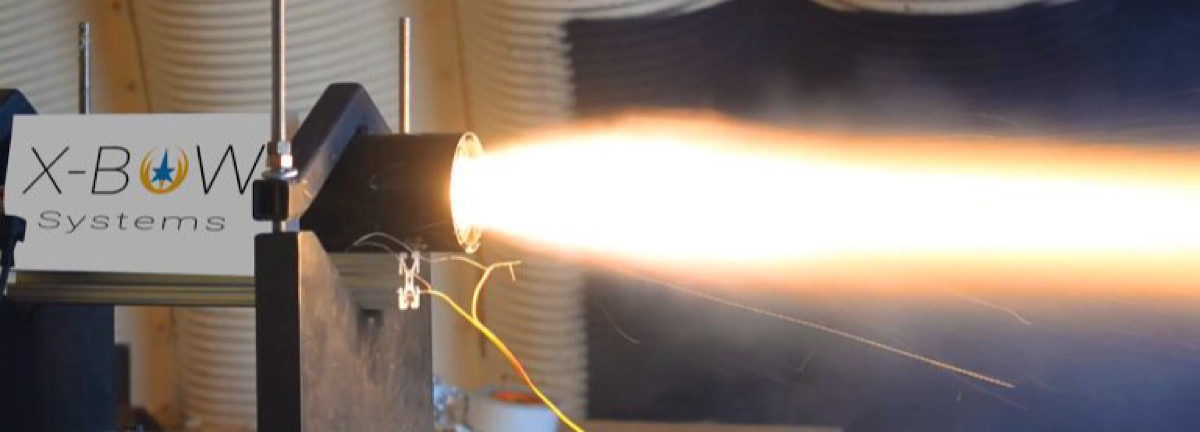
X-BOW EXITS STEALTH MODE WITH ITS 3D PRINTED ROCKET ENGINES

X-Bow testing one of its solid fuel rocket engines. Photo via X-Bow.

By KUBI SERTOGLU

X-Bow Launch Systems, a space technology 3D printing company, has exited stealth mode this week.

Originally founded in 2016, the New Mexico-headquartered startup specializes in the development of 3D printed solid fuels and rocket motors and has already created a lineup of small launch vehicles suitable for both orbital and suborbital launches.

Having already secured several contracts with U.S. government organizations, X-Bow’s existing customers include the Air Force Research Lab, AFWERX, Los Alamos National Lab, Sandia National Lab, and the Defense Research Projects Agency(DARPA).

Jason Hundley, CEO of X-Bow, said, “X-Bow is leveraging a unique combination of technologies with an improved manufacturing model to serve existing aerospace markets and enable new ones. Our breakthrough 3D printing technology is positioned to rapidly innovate the solid propulsion and energetics markets just as SpaceX revolutionized the launch market. Our mission is to modernize solid motor production through additive manufacturing while dramatically improving unit economics.”

Continue reading… “X-BOW EXITS STEALTH MODE WITH ITS 3D PRINTED ROCKET ENGINES”

SCIENTISTS SAY BRAIN IMPLANT LET COMPLETELY PARALYZED MAN COMMUNICATE AGAIN

“I MYSELF COULD NOT BELIEVE THAT THIS IS POSSIBLE.”

A 34-year-old paralyzed man who had even lost the ability to move his eyes due to amyotrophic lateral sclerosis (ALS), is able to communicate again through a brain implant.

Rather than the system tracking his eyes as with current-generation tech, The New York Times reports, the implant was able to pick up on the man imagining moving his eyes. It’s a notable neuroscience achievement that could give others in a similar locked-in state a way to express themselves again — though it’s not a perfect solution, and will require additional work before it can help others.

The results of the 2020 experiment conducted by Ujwal Chaudhary, a since retired biomedical engineer then at the University of Tübingen, Germany and co-author of a study about the project published in the journal Nature Communications this week, came as a shock.

“I myself could not believe that this is possible,” Chaudhary told the NYT.

Continue reading… “SCIENTISTS SAY BRAIN IMPLANT LET COMPLETELY PARALYZED MAN COMMUNICATE AGAIN”

Ep. 78 with Elaine PoFeldt

Watch our interview with Elaine Pofeldt on Youtube or listen on the Futurati Podcast.

Elaine Pofeldt is an independent journalist and speaker specializing in careers and entrepreneurship. In 2018 she published a well-received book called “The Million-Dollar, One-Person Business”, and today she’s joining us to discuss her newest book “Tiny Business, Big Money”.

Continue reading… “Ep. 78 with Elaine PoFeldt”

‘Groundbreaking moment’ UK to launch nuclear reactor in space to create unlimited energy

BRITAIN is poised to launch a nuclear fusion reactor into space by 2027, which could create limitless clean energy in a major breakthrough for the future of both interplanetary travel and energy security.

By JACOB PAUL

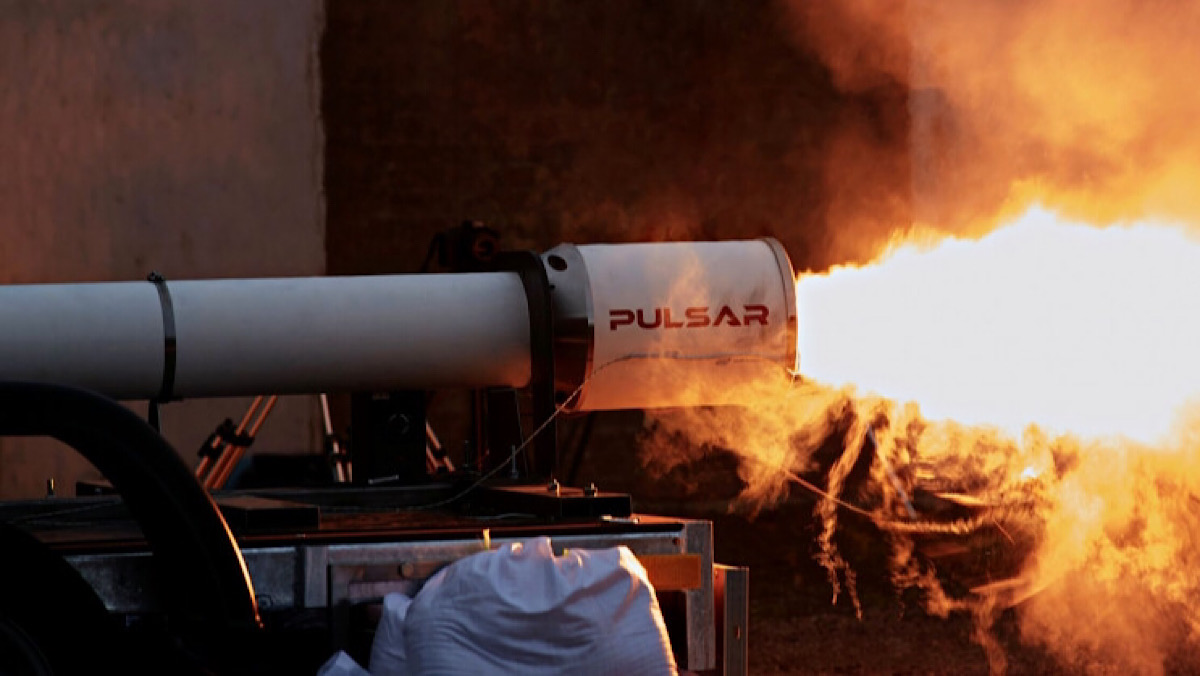
Pulsar Fusion Ltd, a UK nuclear fusion company based in Bletchley, is developing green rocket technology that could eventually send humans to distances further than our Solar System. Nuclear fusion is the energy process that powers the stars which scientists have been scrambling to create on Earth to produce unlimited supplies of low-carbon, low-radiation energy.

This could play an incredibly important role in the UK as the Government presses ahead with its net zero targets while seeking to slash its dependence on foreign imports.

Pulsar has claimed that this could be “the answer to the energy crisis”.

Bur Pulsar is also seeking to harness the process of nuclear fusion in space with its nuclear fusion reactors, which it says could enable rockets to access travel to planets beyond our solar system.

As fusion rocket technology only works in the vacuum of space, Pulsar has had to develop hybrid rocket engines, which it has been testing.

se lay the groundwork for the Pulsar’s hyper-speed propulsion engines, which could even slash the journey time from Earth to Mars by half, according to scientists.

According to Pulsar CEO Richard Dinan, the firm is looking to use this technology to launch its nuclear fusion reactors into space.

The first prototype for the propulsion engine is expected by 2025.

Continue reading… “‘Groundbreaking moment’ UK to launch nuclear reactor in space to create unlimited energy”
Discover the Hidden Patterns of Tomorrow with Futurist Thomas Frey
Unlock Your Potential, Ignite Your Success.

By delving into the futuring techniques of Futurist Thomas Frey, you’ll embark on an enlightening journey.

Learn More about this exciting program.