Adobe Unveils New Augmented Reality Shopping Tool

Adobe’s new tool will be launched at Adobe Summit this week

By Patrick Kulp

The prototype is designed to make it easier for consumers to picture products in their living space.

Adobe is debuting a new tech designed to make it easier for retailers to embed augmented reality (AR) shopping options into their websites.

The enterprise software giant announced a tool that allows consumers to point their phone at a product image on an ecommerce site—and then see the item rendered three-dimensionally in their living space. Adobe says the true-to-life size precision—and the ability to pull multiple products into the same view—set its AR service apart from others on the market.

The tool is still undergoing internal testing and is not yet available to outside retailers. Unveiled during the annual Adobe Summit this week, it comes after AR shopping saw a surge in popularity during the pandemic as virtual try-on—and other at-home product testing served as a substitute for store visits. 

Continue reading… “Adobe Unveils New Augmented Reality Shopping Tool”

NHS rolls out AI tool which detects heart disease in 20 seconds

Study found the machine analysis had superior precision to three clinicians.

By Tammy Lovell

The NHS has rolled out a new artificial intelligence (AI) tool which can detect heart disease in just 20 seconds while patients are in an MRI scanner. 

A British Heart Foundation (BHF) funded study published in the Journal of Cardiovascular Magnetic Resonance concluded the machine analysis had superior precision to three clinicians. It would usually take a doctor 13 minutes or more to manually analyse images after an MRI scan has been performed. 

The technology is being used on more than 140 patients a week at University College London (UCL) Hospital, Barts Heart Centre at St Bartholomew’s Hospital, and Royal Free Hospital. Later this year it will be introduced to a further 40 locations across the UK and globally.

Continue reading… “NHS rolls out AI tool which detects heart disease in 20 seconds”

This snake-like robot will search for water on the moon

The ouroboros—the ancient symbol of a snake swallowing its own tail—generally represents infinity and the natural, endless cycles of the universe.

By Northeastern University 

But for members of Northeastern’s Students for the Exploration and Development of Space club, the ouroboros-like design of their moon-destined robot is merely practical—the robot can slither like a desert snake across the loose soil of the moon and, when needed, connect head-to-tail to form a wheel that can tumble down the steep slopes of the moon’s craters.

Any metaphors for the unity of the solar system or the orbit of the moon around the Earth are happy coincidences.

The student-led team of 13 undergraduates recently won an award from NASA’s BIG Idea Challenge to further develop its design, which fulfilled this year’s competition requirements for robots that can traverse extreme terrains, such as the enormous craters on the moon’s south pole.

“We want to explore the Shackleton crater, which is massive—20 kilometers in diameter—because it might contain water,” says Matt Schroeter, the undergraduate bioengineering student who is leading the team.

“But if you want to send a robot into that crater, it needs to be really energy efficient because there’s no sunlight, no potential for solar energy.”

The tumbling-wheel design allows gravity to do most of the work on the way down to the base of the crater, saving most of the robot’s energy for the journey back. Once the robot is on level ground, it can unwind itself and resume slithering through the soil in search of water.

Continue reading… “This snake-like robot will search for water on the moon”

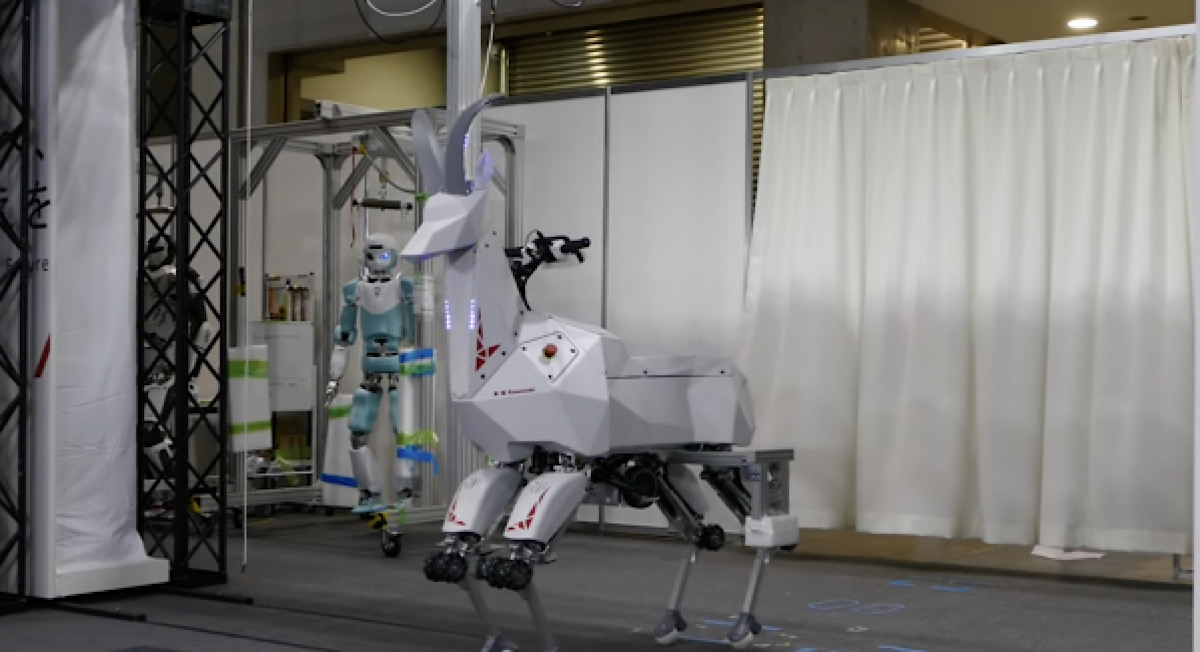
Kawasaki Bex: All-Electric Rideable Goat Robot That Can Carry 220 lbs. of Cargo, Fully Modular

KAWASAKI BEX: RIDEABLE GOAT FROM INTERNATIONAL ROBOT EXHIBITION

By Isaiah Richard

Kawasaki made a rideable electric goat, and the company released this for the world to see via the International Robot Exhibition in Tokyo, Japan. Instead of a bipedal human that resembles the method of humans by standing on their two feet, it stands on all fours. Unlike humans, the new Kawasaki Bex robot is a quadruped device that owners can modify to anything fully modular. 

According to an online video posted via YouTube by Kazumichi Maruyama, Kawasaki’s take on the IREX 2022 event in Tokyo is to bring a rideable goat as its latest innovation for mobile machines. The device resembles the Ibex, a wild goat usually found in mountainous regions of East Africa, North Africa, and Eurasia.

Kawasaki named this the “Bex” and is a quadruped robot that walks on all four legs and has been a long-term project from the company since 2015. The Bex came from the Kaleido Program. Its focus is to give the world a robot that can perform multiple tasks by carrying the load and transporting it, even for mountainous regions.

Continue reading… “Kawasaki Bex: All-Electric Rideable Goat Robot That Can Carry 220 lbs. of Cargo, Fully Modular”

Giant 180-ton robot trucks are mining gold

As global demand soars, extractive industries are embracing automation.

Written by Greg Nichols

A mining outfit in Australia is making a big bet on big robots. Following a recent proof of concept at a gold mine, mining contractor MACA will retrofit a fleet of 100 very large vehicles to create one of the largest autonomous heavy equipment fleets in the world.

This is a pretty significant rollout and a proverbial canary in the gold mine for the sector’s broader automation ambitions. With the world hungrier than ever for precious and rare earth metals, technology is increasingly called on to make mining operations more efficient and cost-effective while unlocking increasingly scarce resources.

Powering the new rollout is autonomous heavy equipment company SafeAI and its Australian partner, Position Partners. This new generation of autonomous heavy vehicle technology is a major upgrade from the first generation retrofits, which had limited onboard processing power and took a long time to see ROI in most cases. Early versions of autonomous vehicle technology in the sector also operated with closed legacy systems, preventing mixed fleets from communicating. Industries like mining have had this tech for 20 years now, but the lack of accessibility means it hasn’t really taken off yet.

Autonomy 2.0 is changing that. AI-powered and armed with multimodal sensors (lidar, radar, camera), these new systems have significant onboard processing power to reduce network reliance and enable fast decisions. It’s also open, interoperable, and vehicle-agnostic — meaning tech like SafeAI’s retrofit autonomy can be applied to any vehicle, at pretty much any age from any manufacturer.

Continue reading… “Giant 180-ton robot trucks are mining gold”

New funding to help develop space power station and create water hunting robot

New funding will help develop space power station and create water hunting robots

By Nina Massey

Projects include Rolls-Royce developing a power station for space that could allow water and breathable oxygen to be generated.

British space technology could help develop a power station in space, create a robot to hunt for oxygen and water in lunar rocks and tackle issues such as the delay in communication between Earth and Mars.

New funding will pave the way for pioneering approaches to energy, communication and resources, thanks to projects from the UK Space Agency (UKSA).

The projects include Rolls-Royce developing a power station for space that could allow water and breathable oxygen to be generated.

In addition to discovery breakthroughs, these projects will also ensure that people here on Earth benefit from new technology, including micro-reactor technology with the potential to support our net zero commitments

Another will develop new technology that can withstand the high radiation levels on Mars, while a third will build a communications tool for astronauts to tackle the delay in conversations between Mars and Earth.

Continue reading… “New funding to help develop space power station and create water hunting robot”

Salcit Technologies Researchers use AI to detect Lung Disease with a Single Cough

The validation and pilot deployment of this technology has demonstrated encouraging results for COVID-19, with over 95 percent sensitivity under laboratory circumstances. 

By Dipayan Mitra

India researchers from Salcit Technologies have developed a novel application that uses artificial intelligence (AI) technology named Swaasa to detect lung diseases in humans with a single cough. 

The highly accessible smartphone application listens to the coughs of humans to accurately detect the condition they are suffering from. 

Center for Cellular and Molecular Platforms (C-CAMP) teamed with technical, clinical, and health systems expertise through Andhra Medical College and PATH, an international non-profit organization based in Seattle, US, to extend the capabilities of the AI platform and enable it in detecting COVID-19 along with tuberculosis as part of a consortium project financed by the FDCO. 

“After the success of the UK-India Astra-Zeneca vaccine collaboration, our bilateral health tech partnership goes from strength to strength with this AI solution,” said Dr. Andrew Fleming. 

Continue reading… “Salcit Technologies Researchers use AI to detect Lung Disease with a Single Cough”

Holoride’s in-car VR tech arrives in Audi vehicles this summer | Engadget

Virtual reality is coming to Audi vehicles. On Saturday, the automaker announced it would support Holoride’s in-car VR technology starting this summer.

In June, select Audi models with the company’s MIB 3 infotainment system, including the A4, A6, A8, Q5 and , will ship with the necessary software to sync with Holoride-compatible headsets, with the company planning to support the feature first in Germany, the UK and US before making it available in other markets.

Continue reading… “Holoride’s in-car VR tech arrives in Audi vehicles this summer | Engadget”

Einride Unveils World’s First Remote Pod Operator of Autonomous, Electric Vehicle Fleet

The Einride Pod makes shipping safer and cleaner with electric power, advanced autonomous technology and remote operation capability.

  • Long-time trucking veteran will be first in new job that will revolutionize autonomous shipping industry
  • Creates an entirely new type of shipping job, one that will allow for more regulated working conditions compared to conventional trucking and solve for the global shortage of trucking resources
  • By keeping humans in the loop, a team of Einride Remote Pod Operators, will ensure safe scaling of autonomous shipping solutions across current and future customer operations

AUSTIN, Texas–(BUSINESS WIRE)–Swedish freight technology company Einride announced today at SXSW the official introduction of the world’s first Remote Pod Operator, a role that has been fulfilled with the hiring of long-time trucking veteran Tiffany Heathcott. The position will shift how humans play a role in the increasing prioritization of autonomous vehicles in the freight industry, enabling a strong safety case that is scalable from day one for shippers looking to automate their shipping fleets.

Continue reading… “Einride Unveils World’s First Remote Pod Operator of Autonomous, Electric Vehicle Fleet”

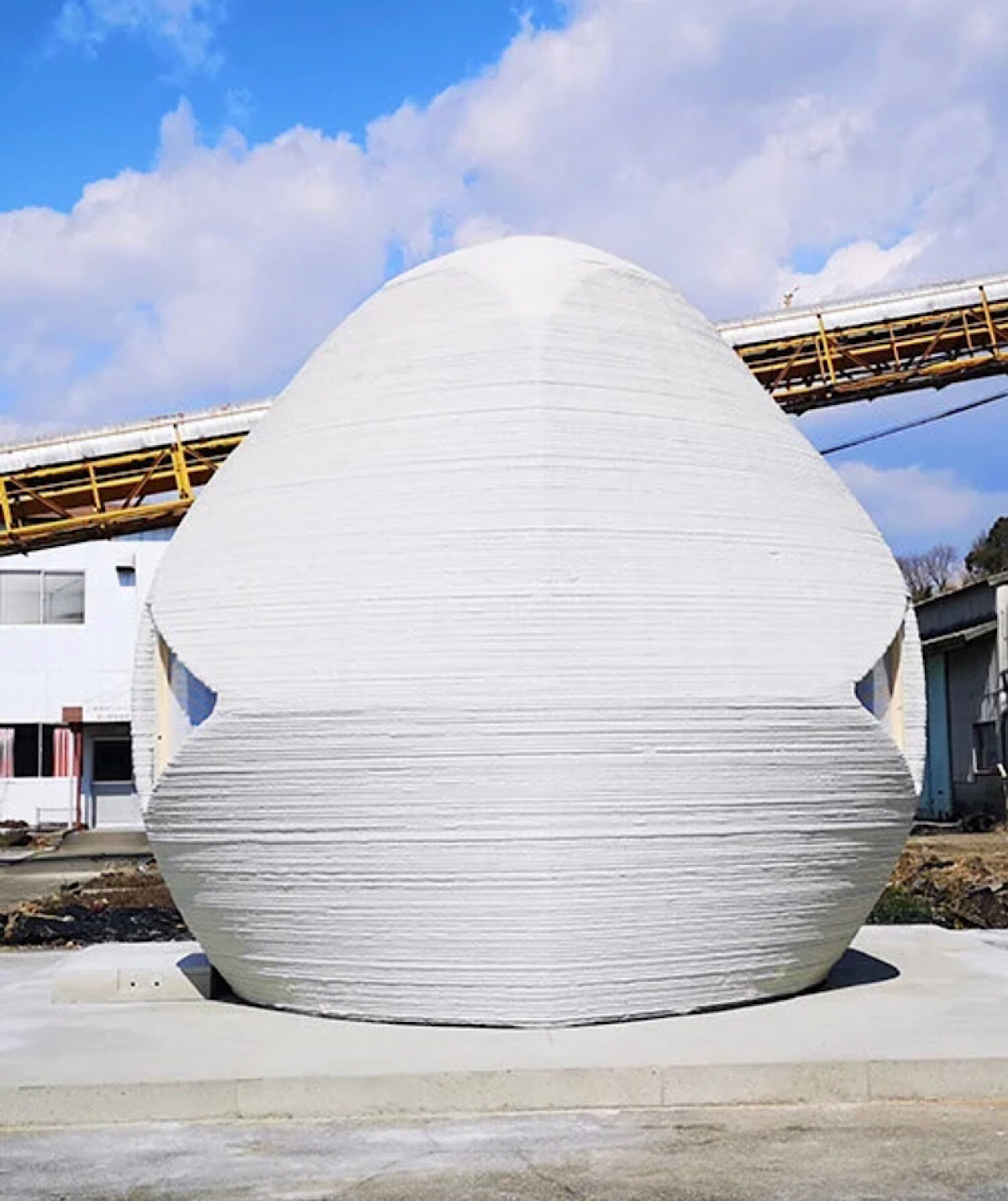
japanese company serendix is 3D-printing houses in less than 24 hours

IT TOOK SERENDIX JUST 23 HOURS AND 12 MINUTES TO COMPLETE THE 3D-PRINTED HOUSE

Serendix has completed japan’s first 3D-printed house is just 23 hours and 12 minutes. the japanese company first unveiled the sphere — a 3D-printed home design — in earlier 2021, stating it could be constructed in a day for under 3 million yen (approx. $25.500 USD). a year later, the company has met its goal.

‘the skeleton weighed about 20 tons, and its assembly was completed in 3 hours,’ said the official release. ‘housing construction such as waterproofing and openings was completed in just 23 hours and 12 minutes. as a result, we achieved the development goal of serendix, which was to create a house in 24 hours.’

Continue reading… “japanese company serendix is 3D-printing houses in less than 24 hours”

Space factory startup aims for first UK launch

Space factory startup aims for first UK launch

By Nick Flaherty

Startup Space Forge is aiming to launch the first satellite from the UK later this year.

The company is developing a re-usable satellite that can be used to build materials in microgravity in orbit and return it to Earth safely.

The ForgeStar satellite will be launched as part of a joint UK-US mission with Virgin Orbit to open the country’s first domestic spaceport in summer 2022 from Spaceport Cornwall in Newquay. This will use a launcher mounted on a Boeing 747 taking off from a traditional runway.

ForgeStar can also be deployed from conventional launchers, and the first launch will be used to test the return from space technology. This includes Aether, a predictive analytic tool that is ten times better at providing satellite and space body re-entry landing locations. The company is also working with EDA vendor Ansys on modelling tools.

Continue reading… “Space factory startup aims for first UK launch”

Futurati Podcast with Samo Burja

Watch our interview with Samo Burja on Youtube.

Samo Burja is a sociologist and the founder of Bismarck Analysis, a firm that analyzes institutions, from governments to companies. His research work focuses on the causes of societal decay and flourishing and he writes on history, epistemology and strategy.

Related

Continue reading… “Futurati Podcast with Samo Burja”
Discover the Hidden Patterns of Tomorrow with Futurist Thomas Frey
Unlock Your Potential, Ignite Your Success.

By delving into the futuring techniques of Futurist Thomas Frey, you’ll embark on an enlightening journey.

Learn More about this exciting program.