Elon Musk’s Starlink constellation may well destabilize the world of telecom

By  Olivier Pinaud and  Alexandre Piquard

In Depth’Race to the Stars’ (2/4). Starlink’s promise of fast internet access everywhere on the planet poses a threat to telecom operators. Though they stay quiet, their radars have spotted the rockets, and some shots have already been fired.

Is Elon Musk threatening to bring the sky down on the heads of telecom operators? By promising Internet access everywhere on the planet thanks to his Starlink satellite constellation, the US entrepreneur is turning their world upside down. Going online by pointing a dish at a satellite is not a revolutionary idea: the first mass-market satellite internet connections date back to 2008. But their speed could not compete with wired (ADSL and fiber) or cellular (4G and 5G) connections.

In contrast, Starlink’s satellites, positioned in low Earth orbit (at an altitude of 550 kilometers) and no longer in geostationary position (36,000 kilometers), are reversing the balance of power: their theoretical data transmission rate compares favorably with a very good 4G network. Most importantly, the speed of data communication between Earth and space (latency) is 50 times faster than that of conventional satellites and supports applications such as video calls or network games.

Continue reading… “Elon Musk’s Starlink constellation may well destabilize the world of telecom”

New 3D-printing ink could make lab-grown meat much cheaper to produce

Appearances of cultured meat models without and with treatment of natural food coloring (beet) CREDIT: Jie Sun (Xi’an Jiaotong-Liverpool University)

by John Anderer

SUZHOU, China — Lab-grown, or cultured, meats represent a promising, more environmentally friendly alternative to actual meat from livestock, but high production costs have hindered its widespread use. Now, however, research out of Singapore and China reports the discovery of a way to use food waste to make cultured meat, which would reduce production costs considerably.

Cultured meat is made using animal muscle stem cells grown on a scaffold, which improves the environment for the cells by enabling transport of nutrients and allowing for the generation of texture and structure. Without this approach, the meat is more likely to end up resembling lumpy mashed potatoes.

Unique scaffolds can be created using an emerging 3D-printing technology known as Electrohydrodynamic (EHD) printing. These scaffolds become part of the meat product, so they have to be edible themselves, and are thus usually made using animal products such as gelatin and collagen, or synthetic materials. This is expensive to produce. Establishing a more affordable way to create edible inks for printing would be a major boon for the cultured meat movement.

Continue reading… “New 3D-printing ink could make lab-grown meat much cheaper to produce”

How all-electric, self-driving Clearbot helps tackle ocean plastic pollution in Asia

Clearbots has operations in India and Hong Kong and is looking to expand to the Philippines, Indonesia and Singapore soon

By Sainul Abudheen

A few years ago, Sidhant Gupta, an ocean lover, and Utkarsh Goel, a techie, visited Bali, Indonesia, as part of their course at the University of Hong Kong. Miffed by the growing the ocean plastic pollution in the archipelago, a top contributor to global plastic pollution, the duo decided to leverage their technical expertise to tackle it.

Over 300 million tons of plastic are produced every year, of which about 14 million tons end up in the ocean every year. Plastic makes up 80 per cent of all marine debris. While many solutions are available to address this problem, they are grossly inadequate.

“Existing solutions are slow, with some communities still using paddle boats and diesel-powered boats for fishing trash. We realised technologies like Artificial Intelligence could address this problem effectively.”

This led the duo to start Clearbot in 2019.

Clearbot is a remotely operated vehicle designed to perform various tasks in the marine sector, including data collection, site monitoring, marine pollution cleaning, and goods delivery. Powered by an electric motor, it can complete these tasks without human intervention.

Continue reading… “How all-electric, self-driving Clearbot helps tackle ocean plastic pollution in Asia”

Miniature Robots to Patrol the Pipe Network to Prevent Leaks

ROBOTIC WATER PIPES FROM ICAIR COULD PROTECT BILLIONS OF LITERS FROM LEAKING

By Madhurjya Chowdhu

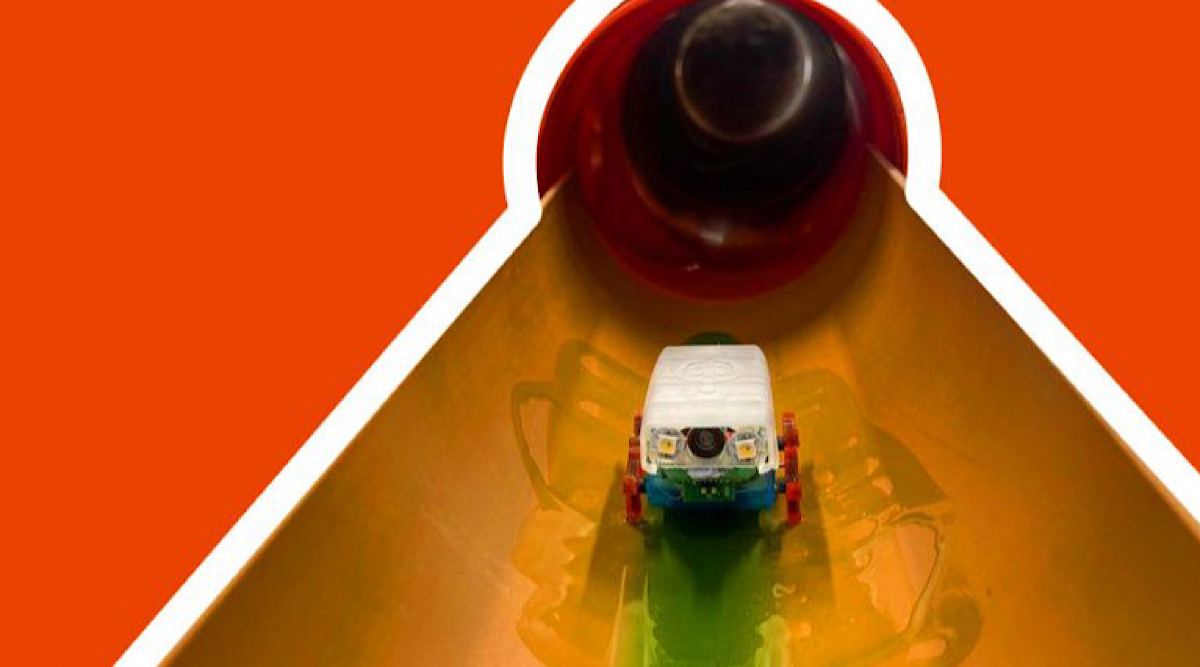
The University of Sheffield’s Integrated Civil and Infrastructure Research Centre (ICAIR) is testing a new generation of subterranean robotic pipe patrollers. Pipebots are tiny, mobile robots with all-terrain legs and cameras for eyes. They are being created in coordination with the water sector to inspect pipes and detect flaws and cracks before they become leaks.

According to Ofwat, the economic regulator for the water industry, about three billion liters of water are lost through leaks every day in England and Wales hundreds of thousands of kilometers of water pipe. Miniature robots have now been created by engineers to patrol the pipe network, look for problems, and stop leaks. Without robotics, they claim that maintaining the network will be “impossible.” According to the water industry’s trade group Water UK, businesses are already “spending billions” in reducing leakage. However, a recent Ofwat assessment emphasized that water providers had not made enough investments. By not investing enough in upgrades, it cited a number of them as “letting down customers and the environment.” In response, Water UK stated that leakage had reached “its lowest level since privatization.” Leaks are a common and challenging issue: In the UK, millions of properties are supplied with water by hundreds of thousands of kilometers of pipe that are in various states of repair and age.

Continue reading… “Miniature Robots to Patrol the Pipe Network to Prevent Leaks”

‘Mind-boggling’ alloy is Earth’s toughest material, even at extreme temperatures

Microscopy images showing the path of a fracture and crystal structure deformation in a cobalt, chromium and nickel alloy during stress testing at -424 degrees F. 

By Robert Lea

A metallic alloy of chromium, cobalt, and nickel is over 100 times tougher than graphene and gets even more resistant to damage at extremely low temperatures.

Researchers have proven that a metallic alloy of chromium, cobalt and nickel is officially the toughest material on Earth — more than 100 times tougher than the wonder material graphene.

In a new study published Dec. 1 in the journal Science, researchers subjected the ultra-tough alloy to extremely cold temperatures, in order to test how fracture-resistant the material is. Scientists have known for years that this alloy is one tough cookie — however, to the team’s surprise, the alloy only became tougher and more resistant to cracks as temperatures plummeted. 

This super-resistance to fracture is in stark contrast to most materials, which only become more brittle in freezing temperatures, according to the study authors.

“People talk about the toughness of graphene, and that is measured at just 4 megapascals per meter,” study co-author Robert Ritchie), a professor of engineering at the University of California Berkeley and senior faculty scientist at the Lawrence Berkeley National Laboratory, told Live Science. “The toughness of aluminum alloys used in aircraft is 35 megapascals per meter. This material has a toughness of 450 to 500 megapascals per meter… these are mind-boggling numbers.” 

The potential applications of such a tough material range from space infrastructure to fracture-resistant containers for clean energy uses here on Earth. However, Ritchie noted, two of the alloy’s three elements (nickel and cobalt) are prohibitively expensive, limiting the alloy’s usefulness to the laboratory for the foreseeable future.

Continue reading… “‘Mind-boggling’ alloy is Earth’s toughest material, even at extreme temperatures”

Pig-turned-humanlike livers will help more than 105,000 people waiting for a transplant: New process replaces animal cells with human’s to regrow the organ

By STACY LIBERATORE

  • US laboratory has transformed a pig liver into a human organ that could save hundreds of thousands of lives
  • The team washes away animal cells in the livers and replaces them with human cells, which they say tricks the body into thinking it is a human liver
  • This method could be tested in human trials next year 

Scientists are in a race against time to perfect a process that transforms pig livers into human organs that could save the 105,000 people waiting for transplants. 

A team at a Miromatrix laboratory in Minneapolis is working on a method that completely washes away the animal cells in the organ, leaving behind a rubbery honeycomb structure.

Human liver cells are then oozed back into the liver, filling in the nooks and crannies to restart the organ’s functions. 

Continue reading… “Pig-turned-humanlike livers will help more than 105,000 people waiting for a transplant: New process replaces animal cells with human’s to regrow the organ”

World’s biggest cultivated meat factory is being built in the U.S.

It will be able to produce 22 million pounds of cultivated meat annually. 

By Kristin House

KEY TAKEAWAYS

  • Cultivated meat is produced by combining muscle cells, extracted from living animals, with substances that help the cells grow. The mixture is then placed inside in a machine called a “bioreactor,” which provides the ideal conditions for the cells to multiply. 
  • Because cultivated meat is molecularly identical to the kind that comes from whole animals, it has the same flavor.  
  • For cultivated meat to have any real impact on the meat industry, though, the companies making it need to get costs down — for instance, by scaling up production.  

Share World’s biggest cultivated meat factory is being built in the U.S. on Facebook Share World’s biggest cultivated meat factory is being built in the U.S. on Twitter Share World’s biggest cultivated meat factory is being built in the U.S. on LinkedIn 

Israeli startup Believer Meats has begun construction on the world’s biggest cultivated meat factory — and once it’s up and running, the US-based facility will be able to produce at least 22 million pounds of meat annually.

The challenge: Cultivated meat is produced by combining muscle cells, extracted from living animals, with substances that help the cells grow. The mixture is then placed inside in a machine called a “bioreactor,” which provides the ideal conditions for the cells to multiply.

Continue reading… “World’s biggest cultivated meat factory is being built in the U.S.”

Cell-Based Meat Will Be Sold At A Butchery For The First Time Ever

Singapore continues to lead the progress of cell-based meat

BY AMY BUXTON

Cell-based meat – also known as cultured, cultivated, or sometimes slaughter-free meat – will soon be available to buy at a butcher’s shop for the first time.

The breakthrough launch is taking place in Singapore. There, Huber’s Butchery has partnered with food tech company Eat Just. It has done so in order to sell its GOOD Meat-branded chicken. 

According to GOOD Meat, which Eat Just launched in 2016, its cultured products are “real meat, made without tearing down a forest or taking a life.” 

Singapore remains the only country in the world to approve cell-based meat to be sold and served to the public. However, these have previously been facilitated by limited food service locations only, including fine-dining restaurants and hawker centers. Eat Just also partnered with one of Asia’s largest food delivery platforms, foodpanda.

Now, butcher’s shops appear open to the idea of including cultivated products in their display cases, alongside traditionally produced meat.

Continue reading… “Cell-Based Meat Will Be Sold At A Butchery For The First Time Ever”

Vueron Technology to Provide Self-Driving Trucks for One of South Korea’s Biggest Cold-Chain Providers

Vueron Technology did not share many details about the partnership, but noted it will help bring added sustainability through the transportation process. 

Vueron Technology has partnered with Teamfresh, one of South Korea’s biggest cold-chain logistics providers, and will supply it with its self-driving trucks.

The Seoul, South Korea-based company offers several vision products. The company said VueOne is its flagship product and uses only one lidar sensor to help autonomous vehicles detect obstacles. VueTwo is used for IoT applications and smart city applications for safety and security purposes. Vueron added that it works with automotive OEMs and Tier-1s.

Earlier this year, the company was approved for LiDAR-only autonomous vehicle testing permits in California.

“Through its innovative LiDAR-based solution, Vueron believes it can tackle the dual problems of high transportation costs and labor shortage, which have always represented a big hurdle in the logistics market,” it said.

Seoul, South Korea-based Teamfresh offers customers “order processing, operation consulting, fresh food third-party logistics, and commercial refrigeration vehicle distribution systems,” according to Pitchbook. It was founded in 2018 and has raised a total of $118 million.

Vueron said by working with Teamfresh it is helping establish a sustainable transportation service within the cold-chain marketplace. Vueron claimed that Teamfresh accounts for “90% of the whole fresh product delivery business in South Korea.”

Continue reading… “Vueron Technology to Provide Self-Driving Trucks for One of South Korea’s Biggest Cold-Chain Providers”

Faction Debuts Driverless Delivery Cars in San Francisco

The company’s vehicle fleet combines autonomy with remote human teleoperation to carry out its deliveries.

Faction Technology, a driverless-technology company, announced it is bringing driverless delivery to portions of the San Francisco Bay Area. Faction’s first partner is Cocola Bakery, which is using Faction to deliver to its customers around the metro region. Deliveries will be made ​​in lightweight, electric vehicles based on three wheel EV platforms from Arcimoto and from ElectraMeccanica. Since July, Faction has made regular deliveries to the bakery’s customers and it’s now looking to add additional delivery partners in the coming months.

Equipped with Faction’s DriveLink and TeleAssist technologies, the company’s vehicle fleet combines autonomy with remote human teleoperation to carry out its deliveries. These technologies allow Faction to provide businesses like Cocola Bakery with a delivery service that seamlessly delivers goods via a driverless fleet in an affordable, safe, and predictable way.

“Cocola Bakery and our customers have been ecstatic with the services Faction has provided us so far,” said Amir Aliabadi, CEO of Cocola Bakery. “We are now able to quickly, affordably, and reliably deliver our products to customers around the Bay Area, something we couldn’t easily accomplish before due to inconsistent gig-worker services.”

Continue reading… “Faction Debuts Driverless Delivery Cars in San Francisco”

Scientists Explore Using Paper-thin Solar Cells to Generate Renewable Energy

Scientists in the US have developed thin-film materials with photovoltaic cells capable of producing energy. Much lighter than regular solar panels, they can be added to any type of surface, including clothing!. magine ultra-thin photovoltaic films that could be added to your windowsill, the back of your smartphone or even your clothes!

That’s the idea of a research team at the Massachusetts Institute of Technology (MIT), who have developed thin layers of photovoltaic cells. Made from semiconducting printable electronic inks, these devices are capable of generating about 370 watts of power per kilogram, about 18 times more than conventional solar panels, all while weighing one hundredth of their weight, say the researchers.

Although ultra-thin, these films are robust, as they are protected by a lightweight (13 grams per square meter), but very resistant composite fabric substrate. According to the researchers — whose project is outlined in an article published on the website of the scientific journal, Small Methods — these mini textile solar panels managed to maintain 90% of their power-producing capacity even after being rolled and unrolled more than 500 times!

It’s a project that’s as innovative as it is promising, since these devices could be adapted for use on numerous surfaces, the scope of which could greatly exceed those found in our homes. “For instance, they could be integrated onto the sails of a boat to provide power while at sea, adhered onto tents and tarps that are deployed in disaster recovery operations, or applied onto the wings of drones to extend their flying range,” the researchers explain in a blog post. 

Continue reading… “Scientists Explore Using Paper-thin Solar Cells to Generate Renewable Energy”

Construction Begins on NASA’s Next-Generation Asteroid Hunter

A space telescope designed to search for the hardest-to-find asteroids and comets that stray into Earth’s orbital neighborhood, NASA’s Near-Earth Object Surveyor (NEO Surveyor) recently passed a rigorous technical and programmatic review. Now the mission is transitioning into the final design-and-fabrication phase and establishing its technical, cost, and schedule baseline.

The mission supports the objectives of NASA’s Planetary Defense Coordination Office (PDCO) at NASA Headquarters in Washington. The NASA Authorization Act of 2005 directed NASA to discover and characterize at least 90% of the near-Earth objects more than 140 meters (460 feet) across that come within 30 million miles (48 million kilometers) of our planet’s orbit. Objects of this size are capable of causing significant regional damage, or worse, should they impact the Earth.

“NEO Surveyor represents the next generation for NASA’s ability to quickly detect, track, and characterize potentially hazardous near-Earth objects,” said Lindley Johnson, NASA’s Planetary Defense Officer at PDCO. “Ground-based telescopes remain essential for us to continually watch the skies, but a space-based infrared observatory is the ultimate high ground that will enable NASA’s planetary defense strategy.”

Continue reading…Construction Begins on NASA’s Next-Generation Asteroid Hunter
Discover the Hidden Patterns of Tomorrow with Futurist Thomas Frey
Unlock Your Potential, Ignite Your Success.

By delving into the futuring techniques of Futurist Thomas Frey, you’ll embark on an enlightening journey.

Learn More about this exciting program.