Apple’s Ambitious New Smart Home Device: A Robotic Display with Siri Control

Apple is reportedly developing an innovative smart home device that features a robotic arm to move a display, positioning it as a central hub for smart home management. Controlled via Siri and Apple Intelligence, this device could revolutionize how users interact with their smart homes.

The upcoming device is designed to follow voice commands like “look at me,” allowing the screen to reposition itself automatically. It will also be able to adjust the camera’s focus during video calls, making interactions more personalized and seamless.

Continue reading… “Apple’s Ambitious New Smart Home Device: A Robotic Display with Siri Control”

Breakthrough in Sustainable Protein Production: Transforming Industrial Waste into Future Food

As the global population continues to grow, the strain on our environment intensifies. Agriculture occupies vast land areas, releasing nutrients into the environment, while industrial production generates significant waste and consumes enormous amounts of energy, contributing to climate change.

In a groundbreaking development, researchers from DTU (Technical University of Denmark) have discovered a way to address these challenges by turning industrial waste into a valuable resource for food production. Using the salt-tolerant yeast Debaryomyces hansenii (D. hansenii), the team has demonstrated the potential to produce proteins at a low cost and with minimal energy consumption, paving the way for a more sustainable future in food production.

Continue reading… “Breakthrough in Sustainable Protein Production: Transforming Industrial Waste into Future Food”

Breakthrough in Transparent Conductive Films: A New Room-Temperature Printing Technique

Researchers from North Carolina State University, Pohang University of Science and Technology (POSTECH), Ulsan National Institute of Science and Technology, and the University of Waterloo have developed an innovative method to create transparent conductive oxide films through a room-temperature printing process. This advancement is crucial for applications in mobile phone screens and computer monitors, where transparency, flexibility, and high conductivity are essential.

The newly developed technique uses liquid metals to deposit ultra-thin metal oxide layers onto surfaces, resulting in circuits that are both robust and versatile. Michael Dickey, a professor of chemical and biomolecular engineering at NC State University, highlighted the significance of this development, especially for devices requiring transparent electrodes.

Continue reading… “Breakthrough in Transparent Conductive Films: A New Room-Temperature Printing Technique”

DroneUp Achieves Milestone with 500 Deliveries in a Single Day, Pioneers Scalable Drone Delivery

DroneUp LLC, a leading innovator in drone delivery services, recently announced a significant milestone by completing 500 deliveries in a single day. This achievement highlights the company’s ability to scale operations while enhancing the safety and efficiency of its delivery system.

“We are excited about this achievement, but it’s only the beginning of what’s possible,” said Tom Walker, CEO of DroneUp. “Our ongoing efforts focus on driving volume while ensuring the reliability and safety of our system.”

DroneUp has not only increased the number of flights but has also optimized the pilot-to-drone ratio necessary for safe and efficient operations. “Coordinating package loading, energy management, and safety are critical and challenging to scale,” Walker added. “Our team has optimized ground logistics to maintain high delivery volumes without compromising on safety or efficiency, and most importantly, to drive costs down.”

Continue reading… “DroneUp Achieves Milestone with 500 Deliveries in a Single Day, Pioneers Scalable Drone Delivery”

Innovative X-ray Phase Imaging Model Enhances Deep Imaging for Soft Tissues and Materials

In a groundbreaking study featured on the cover of Optica, Mini Das, a Moores professor at the University of Houston’s College of Natural Sciences and Mathematics and Cullen College of Engineering, alongside physics graduate student Jingcheng Yuan, introduces a novel light transport model for a single-mask phase imaging system. This advanced system significantly improves non-destructive deep imaging, particularly for light-element materials such as soft tissues, plastics, and explosives.

Traditional X-ray technology, which relies on X-ray absorption to generate images, faces limitations when dealing with materials of similar density. “Older X-ray technology struggles with materials of similar density, leading to low contrast and difficulty distinguishing between different materials, which is a challenge across medical imaging, explosive detection, and other fields,” Das explained.

Continue reading… “Innovative X-ray Phase Imaging Model Enhances Deep Imaging for Soft Tissues and Materials”

MIT Develops Tiny Zinc-Air Batteries to Power Microscopic Devices

Researchers at the Massachusetts Institute of Technology (MIT) have developed groundbreaking zinc (Zn)-based micro-batteries that deliver impressive energy output in volumes as small as two picoliters each. These microscopic power sources are poised to revolutionize the functionality of tiny sensors and robotic components.

Remarkably, a single 2-inch silicon wafer can produce up to 10,000 of these micro-batteries, each with the capacity to power minuscule devices. The batteries harness oxygen from their surroundings to trigger a zinc oxidation reaction, achieving an energy density between 760 and 1,070 watt-hours per liter. Despite their minuscule size—less than 100 micrometers wide and just 2 micrometers thick—these batteries pack a powerful punch.

Continue reading… “MIT Develops Tiny Zinc-Air Batteries to Power Microscopic Devices”

Innovative Wearable Dressing Combines Microbial Power and Antibacterial Defense for Enhanced Wound Healing

Researchers at Binghamton University, State University of New York (SUNY), have developed a groundbreaking wearable microbial fuel cell technology designed to reduce the risk of infection in wounds. This innovative “living dressing” incorporates Bacillus subtilis, a spore-forming bacterium commonly found in the traditional Japanese fermented soybean dish, natto. By integrating this beneficial microbe into a wearable microbial fuel cell, the dressing not only generates electricity to stimulate wound healing but also produces antibacterial agents to combat infections.

The dressing harnesses the power of the wound’s own exudate—a nutrient-rich fluid produced by wounds—to fuel the microbial cell. This dual-action approach addresses two major challenges in wound care: the growing concern of antibiotic resistance and the difficulty in eradicating biofilms, which are colonies of bacteria that are highly resistant to traditional treatments. Unlike topical antibiotics, which can disrupt the balance of beneficial microbes on the skin, this new dressing maintains a healthy skin microbiome while effectively combating harmful pathogens.

Continue reading… “Innovative Wearable Dressing Combines Microbial Power and Antibacterial Defense for Enhanced Wound Healing”

Breakthrough in Artificial DNA: Double-Helical Monometallofoldamers with Controllable Chiral Switching

DNA, or deoxyribonucleic acid, is the molecular foundation that carries genetic information in living organisms, using its double helix structure to transcribe and amplify this information. Scientists are keen on developing artificial molecular systems that can rival or even surpass the functionality of DNA. Among these systems, double-helical foldamers stand out as promising candidates.

Helical foldamers are synthetic molecules designed to fold into well-defined helical structures, similar to those found in proteins and nucleic acids. These molecules have gained attention for their potential as stimuli-responsive materials, tunable chiral systems, and cooperative supramolecular structures due to their unique chiral and conformational switching properties. Double-helical foldamers, in particular, exhibit enhanced chiral properties and the ability to transmit chiral information from one strand to another, opening the door to applications in replication-like processes found in nucleic acids. However, controlling the chiral switching of these artificial molecules has been challenging, due to the need for a delicate balance between stability and dynamic properties.

Continue reading… “Breakthrough in Artificial DNA: Double-Helical Monometallofoldamers with Controllable Chiral Switching”

Advancing Seawater Electrolysis: A Breakthrough in Sustainable Hydrogen Production

Seawater electrolysis offers significant potential for decarbonizing the global energy sector, yet its progress has been stalled by challenges such as anode corrosion from chloride ions, unwanted chloride oxidation reactions, and the high cost of catalysts. To overcome these hurdles, self-supported nickel-iron (NiFe) materials have emerged as promising bifunctional catalysts for both hydrogen and oxygen evolution due to their high activity and affordability. Additionally, wood-based carbon (WC) structures are gaining attention as an ideal substrate for these catalysts, thanks to their porous nature and excellent conductivity.

A team of researchers, including Prof. Hong Chen from the Southern University of Science and Technology in China, Prof. Bing-Jie Ni from the University of New South Wales in Australia, and Prof. Zongping Shao from Curtin University in Australia, has devised an innovative approach to enhance the stability of NiFe-based electrodes in seawater electrolysis. Their work, published in the journal Science Bulletin, introduces tungsten into the active NiFe-based catalysts, significantly improving the anodes’ anti-corrosion properties and stability.

Continue reading… “Advancing Seawater Electrolysis: A Breakthrough in Sustainable Hydrogen Production”

Declining Fertility Rates in the U.S. Driven by Shifting Attitudes Toward Parenthood

As fertility rates plummet across the United States and much of the developed world, recent polls reveal a significant shift in attitudes among younger Americans, with many choosing to forgo parenthood simply because they do not want to have children. This trend is contributing to widespread concerns about declining population numbers and the potential societal disruptions that may follow.

For years, policymakers and analysts have struggled to understand the reasons behind the declining fertility rates in the U.S., Europe, and many Asian countries. In several nations, fertility rates have fallen below the “replacement level” needed to sustain population numbers, raising alarms about future population declines and their potential impact.

Continue reading… “Declining Fertility Rates in the U.S. Driven by Shifting Attitudes Toward Parenthood”

James Cook University Researchers Convert Microplastics into Valuable Graphene Material

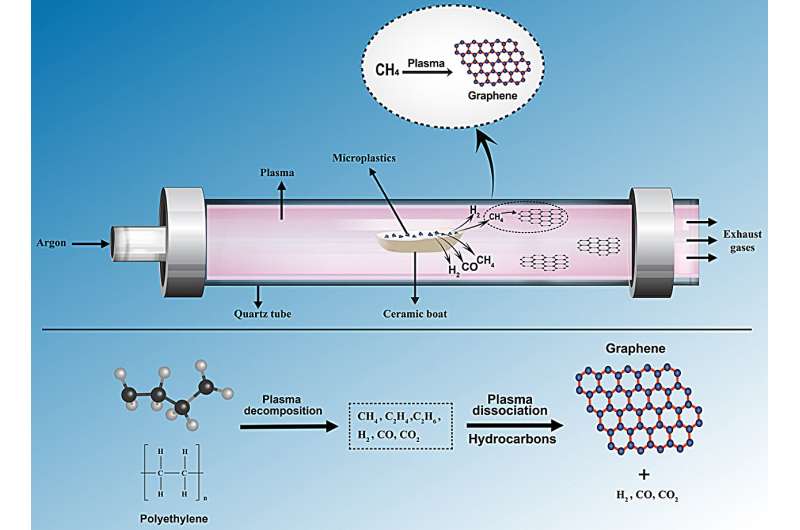
Researchers at James Cook University (JCU) have made a groundbreaking advancement in the fight against microplastic pollution by developing a method to convert microplastics into graphene, a highly valuable material. The findings were published in the journal Small Science.

Professor Mohan Jacob from JCU highlighted the persistent threat posed by microplastics, which degrade into tiny, water-insoluble fragments that are harmful to marine life, animals, and humans. “These microplastics are notorious for their non-degradable and insoluble nature in water and are an evolving threat to fish, animals, and humans,” said Professor Jacob.

Continue reading… “James Cook University Researchers Convert Microplastics into Valuable Graphene Material”

Quantum Computing Aids in Development of Advanced Solar Heat-Blocking Window Coating

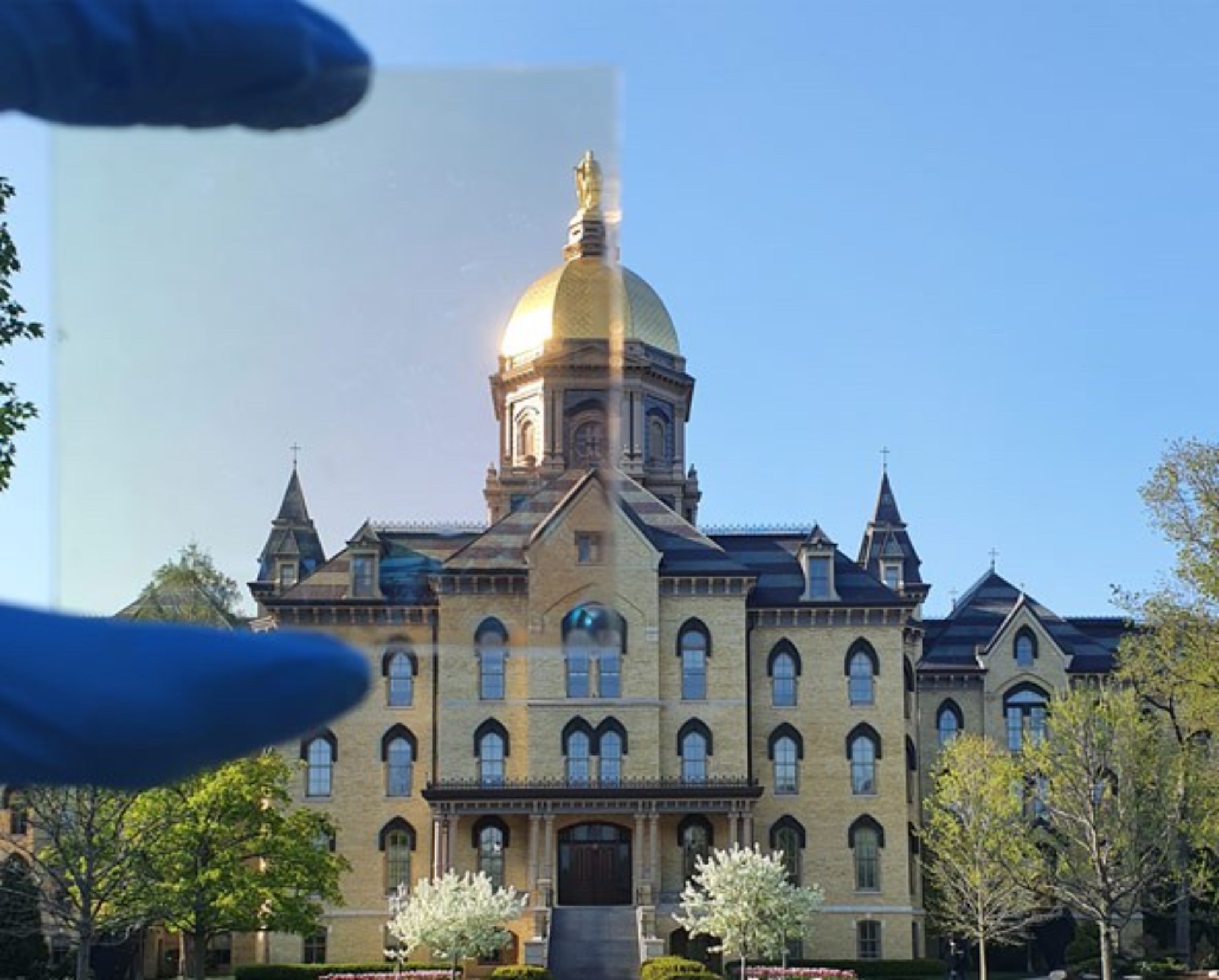
Two researchers from the University of Notre Dame, in collaboration with Kyung Hee University in South Korea, have leveraged quantum computing to create a new transparent window coating that effectively blocks solar heat. The breakthrough, published in ACS Energy Levels, is the work of Tengfei Luo, Notre Dame’s Dorini Family Professor of Energy Studies, and postdoctoral associate Seongmin Kim. Their innovative transparent radiative cooler (TRC) layer allows only visible light that doesn’t raise indoor temperatures to pass through, potentially reducing building cooling costs by up to 30%.

Air conditioning and electric fans account for 20% of the energy costs in buildings worldwide, according to the International Energy Agency. This figure represents about 10% of global electricity consumption. The TRC layer developed by Luo and Kim aims to significantly cut these energy expenses by blocking the solar heat that contributes to indoor temperature increases.

Continue reading… “Quantum Computing Aids in Development of Advanced Solar Heat-Blocking Window Coating”
Discover the Hidden Patterns of Tomorrow with Futurist Thomas Frey
Unlock Your Potential, Ignite Your Success.

By delving into the futuring techniques of Futurist Thomas Frey, you’ll embark on an enlightening journey.

Learn More about this exciting program.