Discovery of Key Proteins and Potential Treatment Pathway for Parkinson’s Disease

Researchers have uncovered a crucial role of a cell surface protein called Aplp1 in spreading the material responsible for Parkinson’s disease between brain cells. Promisingly, an FDA-approved cancer drug that targets another protein, Lag3, which interacts with Aplp1, has been shown to block this spread in mice, suggesting a potential therapy may already exist.

In a new study, an international team of scientists describes how Aplp1 and Lag3 work together to facilitate the entry of harmful alpha-synuclein protein clumps into brain cells.

Continue reading… “Discovery of Key Proteins and Potential Treatment Pathway for Parkinson’s Disease”

Innovative 3D-Printed Sweat Sensor Promises Non-Invasive Health Monitoring

“Diabetes is a major problem worldwide,” said Chuchu Chen, the study’s first author, highlighting the transformative potential of 3D printing in healthcare. The newly developed one-step 3D printing process utilizes a single-atom catalyst and enzymatic reactions to enhance signal detection of low-level biomarkers.

Unlike blood, sweat provides a non-invasive method for health monitoring. Uric acid levels in sweat can indicate risks for gout, kidney disease, and heart disease, while glucose and lactate levels help monitor diabetes and exercise intensity.

Continue reading… “Innovative 3D-Printed Sweat Sensor Promises Non-Invasive Health Monitoring”

Farasis Energy Unveils Revolutionary EV Battery with Exceptional Performance

China’s Farasis Energy has unveiled a groundbreaking electric vehicle (EV) battery, boasting exceptional range, climate temperature tolerances, and charge cycle lifespan. This innovative battery can operate normally between -22°F (-30°C) and 149°F (65°C), and it maintains 70% state-of-health (SOH) even after thousands of charge cycles.

The new battery was showcased at the ASEAN Automotive Supply Chain Conference held in Thailand on June 18 and 19. The conference focuses on regional integration within the automotive industry, highlighting trends, innovations, and challenges while bringing together industry leaders, policymakers, and stakeholders. It aims to facilitate discussions on supply chain optimization, technological advancements, and collaborative strategies to enhance competitiveness and sustainability in the ASEAN automotive sector.

Continue reading… “Farasis Energy Unveils Revolutionary EV Battery with Exceptional Performance”

Revolutionary Glassy Gels: A Breakthrough in Material Science

Researchers have developed a new class of materials called “glassy gels,” which are extremely hard and difficult to break despite containing over 50% liquid. The simplicity of producing glassy gels makes them promising for various applications. A paper titled “Glassy Gels Toughened by Solvent,” detailing this work, appears in the journal Nature.

Traditionally, gels and glassy polymers are viewed as distinct materials. Glassy polymers are hard, stiff, and often brittle, used in products like water bottles and airplane windows. Gels, such as contact lenses, contain liquid and are soft and stretchy. “We’ve created a class of materials that we’ve termed glassy gels, which are as hard as glassy polymers but can stretch up to five times their original length without breaking,” says Michael Dickey, the corresponding author of the paper and the Camille and Henry Dreyfus Professor of Chemical and Biomolecular Engineering at North Carolina State University. “What’s more, once the material has been stretched, you can return it to its original shape by applying heat. Additionally, the surface of the glassy gels is highly adhesive, which is unusual for hard materials.”

Continue reading… “Revolutionary Glassy Gels: A Breakthrough in Material Science”

Revolutionizing Satellite Launches: SpinLaunch’s Innovative Approach

A California-based company, SpinLaunch, is capturing attention with its groundbreaking satellite launch system, especially from enthusiasts in the Punkin Chunkin community. This technology aims to revolutionize the way satellites are sent into space by using a giant rotating arm to fling satellites into low Earth orbit, eliminating the need for rocket fuel and relying solely on electricity.

SpinLaunch has already conducted multiple successful tests with this technology. “This is not a rocket, and our ability to perform this many tests in just 11 months, all functioning as planned, is a testament to the nature of our technology,” said Jonathan Yaney, founder and CEO of SpinLaunch, in a 2022 Space.com report after their 10th successful launch. The company plans to launch constellations of satellites into orbits below 600 miles by 2026. Satellites are crucial for monitoring Earth’s health, detecting issues like methane leaks, and conducting various types of research. Therefore, a cleaner, more efficient method for placing them in orbit is significant for scientific advancements.

Continue reading… “Revolutionizing Satellite Launches: SpinLaunch’s Innovative Approach”

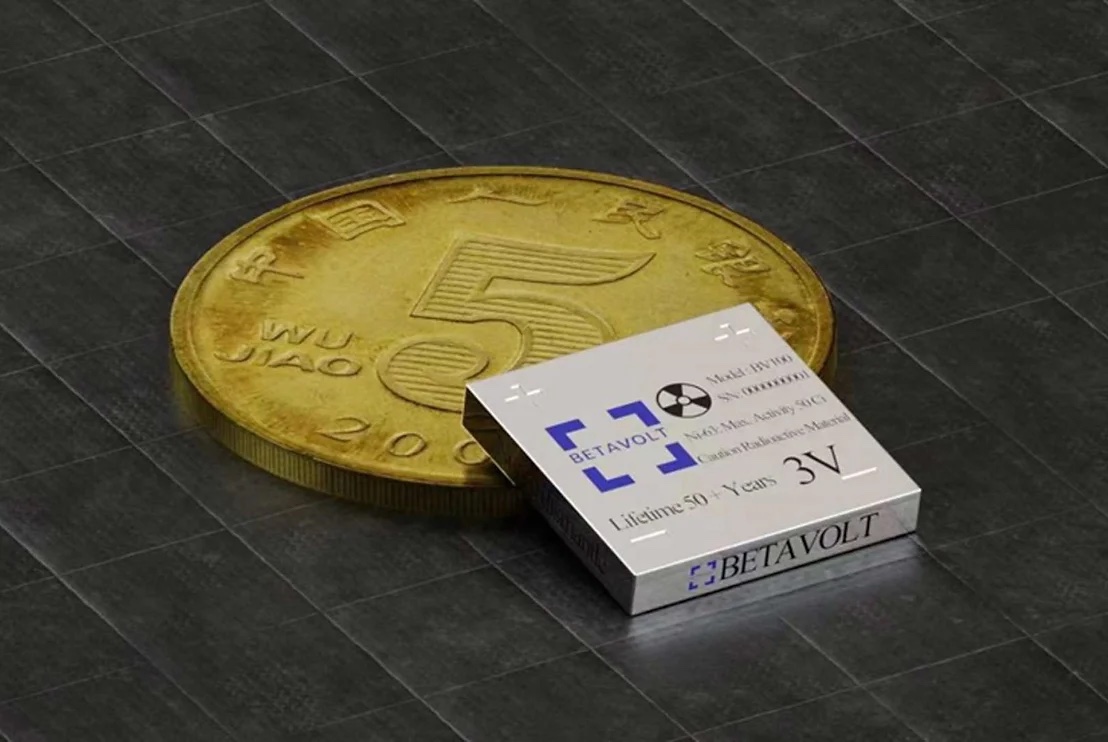
Betavolt Unveils Revolutionary Nuclear Battery Offering Up to 50 Years of Uninterrupted Power

In a remarkable technological leap, Beijing-based startup Betavolt has introduced a revolutionary nuclear battery that promises to provide uninterrupted electricity for up to half a century without the need for charging or maintenance. This groundbreaking innovation heralds a new era in energy storage by achieving the miniaturization of atomic energy, fitting 63 nuclear isotopes into a module smaller than a coin.

Betavolt’s nuclear battery, the first of its kind globally, has successfully entered the pilot testing phase and is poised for mass production for a wide array of commercial applications, including smartphones and drones. The company envisions its Betavolt atomic energy batteries as a solution to long-lasting power supply needs in diverse scenarios such as aerospace, AI equipment, medical devices, microprocessors, advanced sensors, small drones, and micro-robots.

Continue reading… “Betavolt Unveils Revolutionary Nuclear Battery Offering Up to 50 Years of Uninterrupted Power”

Breakthrough 3D Model Offers Hope for Understanding and Treating Brittle Bone Disease

For individuals suffering from brittle bone disease, also known as osteogenesis imperfecta (OI), life is fraught with complications. The slightest misstep, a seemingly harmless fall, or even one false move can result in a broken bone. This is because they were born with an inherited genetic defect that makes their bones extremely brittle and often leads to physical deformity.

The root cause of brittle bones in most cases is a mutation in the gene responsible for producing type I collagen, the crucial protein for establishing a hard bone matrix. This mutation prevents the collagen protein from folding correctly, resulting in an unstable bone matrix and brittle bones.

Continue reading… “Breakthrough 3D Model Offers Hope for Understanding and Treating Brittle Bone Disease”

New AI Model Enhances Understanding of Human Decision-Making

Human beings often behave irrationally—or as an artificially intelligent robot might say, “sub-optimally.” Data, the emotionless yet affable android from Star Trek: The Next Generation, frequently struggled to understand humans’ flawed decision-making processes. If he had been programmed with a new model developed by researchers at MIT and the University of Washington, he might have had an easier time.

In a paper published last month, Athul Paul Jacob, a Ph.D. student in AI at MIT, Dr. Jacob Andreas, his academic advisor, and Abhishek Gupta, an assistant professor in computer science and engineering at the University of Washington, described a novel approach to modeling an agent’s behavior. They employed their method to predict human goals and actions.

Continue reading… “New AI Model Enhances Understanding of Human Decision-Making”

Venice-Based 9Tech Revolutionizes Solar Panel Recycling with Eco-Friendly Method

Venice-based startup 9Tech has developed a highly efficient method for recycling solar panels, enabling the recovery of up to 99% of components. This innovative approach is significantly cleaner and greener than conventional recycling methods, as it avoids the release of toxic fumes.

As the global push for cleaner energy sources intensifies, it is estimated that 400 gigawatts of solar power are being added to the grid annually, a figure expected to more than quadruple by the decade’s end. While this growth is positive, environmentalists are concerned about the waste generated when solar panels reach the end of their lifespan. Built to withstand weather events for over 30 years, solar panels are tough and challenging to dismantle, making recycling or component recovery particularly difficult and reliant on harsh chemicals.

Continue reading… “Venice-Based 9Tech Revolutionizes Solar Panel Recycling with Eco-Friendly Method”

Revolutionizing Plant Phenotyping with 3D-Printed Models and Advanced Sensor Technologies

Traditionally, plant phenotyping—the science of accurately recording plant characteristics—has relied on time-consuming, manual measurements. Today, these processes are increasingly automated, supported by advanced sensor technologies and machine learning. These technologies record parameters such as size, fruit quality, leaf shape, and growth rates. Automated systems can often gather complex information about a plant that is difficult for humans to determine on a large scale.

A key aspect of this sensor-based breeding is the availability of precise reference materials. The sensors require data on a “standard plant” that includes all relevant characteristics, including three-dimensional properties such as leaf angle. A physical model offers clear advantages over purely digital or two-dimensional representations. For example, it can be used as a reference and internal control instance in a greenhouse or test field under real plants.

Continue reading… “Revolutionizing Plant Phenotyping with 3D-Printed Models and Advanced Sensor Technologies”

AI-Powered Smartphone Tool from RMIT University Enhances Early Stroke Detection

Biomedical engineers at RMIT University have unveiled a groundbreaking smartphone tool equipped with AI capabilities that could revolutionize the early detection of strokes. This innovative technology uses AI to analyze facial expressions, assisting paramedics in quickly identifying stroke symptoms, which could save lives and prevent long-term disability.

Strokes occur when blood flow to the brain is obstructed, depriving brain cells of oxygen and nutrients. As a leading cause of disability and death worldwide, timely intervention during a stroke is critical. Every minute counts and can significantly influence a patient’s recovery.

Continue reading… “AI-Powered Smartphone Tool from RMIT University Enhances Early Stroke Detection”

Visualized: The Dramatic Rise of Global Renewable Energy Capacity (2000–2023)

Since 2000, global renewable energy capacity has surged by 415%, achieving a compound annual growth rate (CAGR) of 7.4%. Despite this impressive overall increase, many affluent regions, including the United States and Europe, have experienced slower average annual growth in renewable capacity.

In partnership with the National Public Utilities Council, this chart illustrates how each world region has contributed to the growth in renewable energy capacity from 2000 to 2023, based on the latest data from the International Renewable Energy Agency (IRENA).

Continue reading… “Visualized: The Dramatic Rise of Global Renewable Energy Capacity (2000–2023)”
Discover the Hidden Patterns of Tomorrow with Futurist Thomas Frey
Unlock Your Potential, Ignite Your Success.

By delving into the futuring techniques of Futurist Thomas Frey, you’ll embark on an enlightening journey.

Learn More about this exciting program.