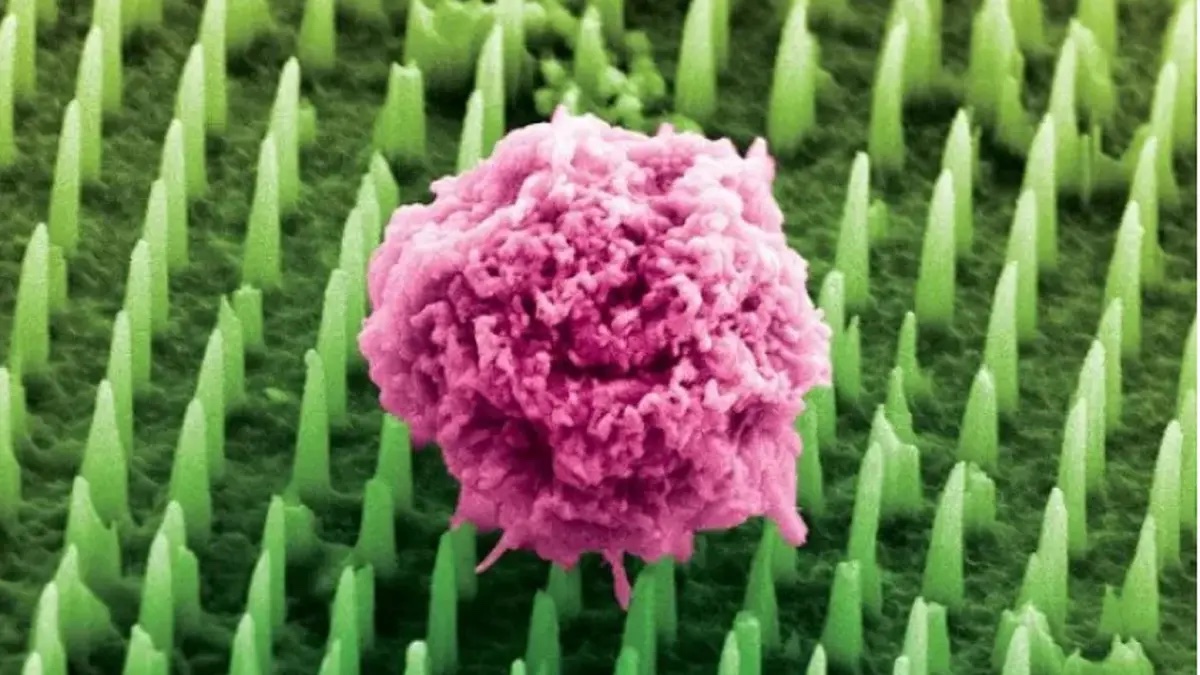
Scientists at King’s College London have developed a nanoneedle-studded patch that can painlessly collect detailed molecular information from tissues, without cutting, scarring, or removing a single cell. The development could be a game-changer for patients who currently endure invasive procedures to diagnose conditions like cancer and Alzheimer’s. Traditional biopsies are a common procedure performed worldwide. It involves removing small chunks of tissue, often with a needle or scalpel, causing pain, risk of complications, and delays in diagnosis.
For organs like the brain, repeat biopsies are rarely possible. But this new patch with tens of millions of nanoneedles 1,000 times thinner than a human hair offers a pain-free alternative. For many, this could mean earlier diagnosis and more regular monitoring, transforming how diseases are tracked and treated.
“We have been working on nanoneedles for twelve years, but this is our most exciting development yet. It opens a world of possibilities for people with brain cancer, Alzheimer’s, and for advancing personalised medicine,” said Dr Ciro Chiappini, the lead author of the study.