
We built an economy around human psychology. We’re about to share it with buyers who have none.
By Futurist Thomas Frey
Every marketing department on Earth was built on the same foundation: human psychology. Desire. Status. Fear. Convenience. Beauty. Loyalty. Impulse. A century of advertising theory rests on the assumption that the entity making the purchasing decision has emotions worth appealing to.
That assumption is about to stop being universally true.
We are approaching an economy in which humans are no longer the only entities making purchasing decisions. Robots — autonomous vehicles, delivery bots, drones, industrial machines — don’t care about status or beauty or impulse. But they still consume. They consume electricity, replacement parts, compute, bandwidth, software, maps, data, maintenance, insurance, charging capacity, transportation services, security, storage, and machine-to-machine services. And increasingly, they’re starting to decide for themselves which vendors to buy those things from.
This isn’t a distant hypothetical. It’s already showing up in the infrastructure being built right now, in 2026, by companies you already do business with.
The Infrastructure Is Already Live
Here’s what makes this more than futurist speculation: the plumbing for machine-to-machine commerce is being laid this year, not sometime next decade. Google has launched agentic checkout across Search and Gemini, with “Buy for me” functionality already live at selected U.S. retailers. Adobe Commerce committed to the Universal Commerce Protocol and Agentic Commerce Protocol in February 2026. Shopify made agentic storefronts available to millions of merchants the following month. A payment protocol built specifically for machine-to-machine micropayments has already processed roughly 165 million agent transactions in its first months of operation.
Gartner’s top strategic prediction for 2026 puts a number on where this is heading: by 2028, AI agents will intermediate 90 percent of B2B purchasing — representing roughly $15 trillion in annual spend moving through systems that research, compare, negotiate, and purchase with no human typing a keystroke. One major U.S. retailer that launched an agent-compatible checkout API saw agent-initiated orders reach 18 percent of online volume within three months, mostly repeat orders and bulk purchases — exactly the category of transaction a machine buyer, human or robotic, is best suited to handle.
Robots are simply the next logical extension of a shift that’s already reshaping how software agents buy on behalf of humans. The question isn’t whether machine buyers will exist. It’s how fast the category expands from “AI agents shopping for people” to “robots shopping for themselves.”
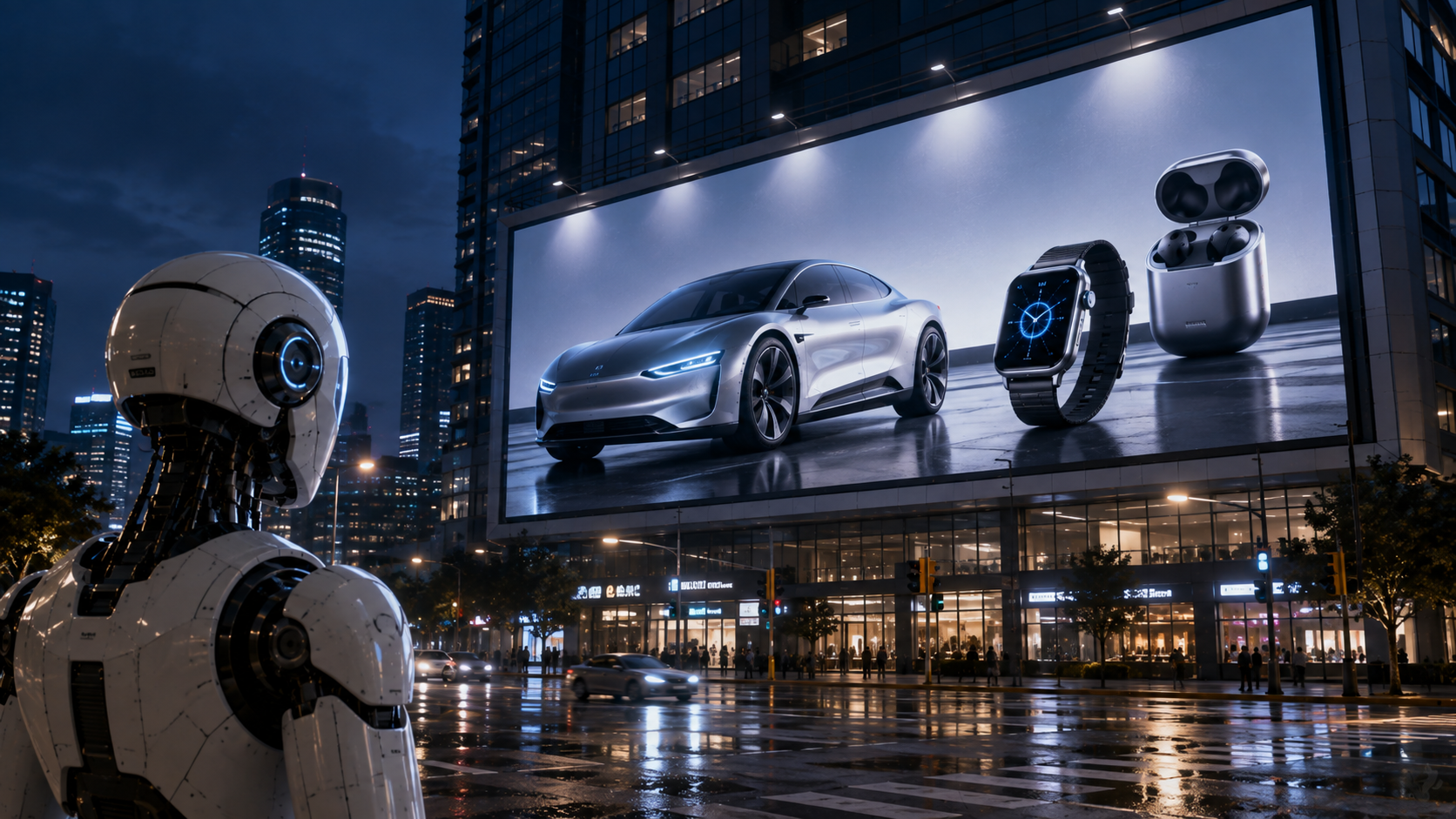
How Do You Advertise to Something With No Emotions?
This is the question that should keep every CMO up at night. A robot selecting a charging network, a maintenance vendor, or a compute provider isn’t going to be swayed by a clever tagline or an aspirational lifestyle shot. It’s going to evaluate uptime, price, latency, reliability, compatibility, and something genuinely new: machine-readable reputation.
That last category deserves real attention, because it’s already becoming the currency that matters most. In human commerce, brands compete on emotional resonance layered on top of functional quality. In machine commerce, the emotional layer disappears entirely, leaving only the functional layer — except now that functional performance has to be expressed in a format a piece of software can actually parse and compare. A five-star review written in prose is meaningless to a purchasing agent. A structured uptime guarantee, a documented latency benchmark, or a verifiable compliance certificate is everything.
Marketing to robots, in other words, isn’t really marketing anymore in the traditional sense. It’s closer to specification engineering: making sure your actual performance data exists in a form a machine can find, trust, and act on.
Will Brands Need Websites Designed for Machines Instead of Humans?
Increasingly, yes — and this shift is already forcing a rewrite of how companies think about their digital storefront. When a customer’s AI agent negotiates directly with a company’s AI agent through an API, the human-facing homepage becomes almost irrelevant to that transaction. What matters instead is whether product catalogs, inventory, pricing, and trust signals are structured in a way machines can query and compare.
This is already reshaping the metrics marketers watch. Click-through rate measures human interaction with a page. In agentic commerce, the more relevant metric is becoming something like an AI citation rate — whether a shopping assistant retrieves, references, or recommends your inventory during its own evaluation process, often without a human ever seeing a ranked list at all. If your delivery terms, pricing, and returns policy aren’t structured and consistent across channels, an evaluating agent may simply skip your offer without a human ever knowing it existed as an option.
For a robot buyer, this dynamic gets even more literal. There may be no browser, no search bar, and no visual interface involved at all — just one system’s API talking to another’s, evaluating a handful of structured variables and executing a transaction in milliseconds.
Will Robots Have Wallets?
In every meaningful sense, some already do. Machine-to-machine payment protocols already exist specifically to let autonomous systems pay small amounts for API calls, compute, and data feeds without a human approving each transaction. Extend that same infrastructure to a fleet of delivery robots, autonomous vehicles, or industrial machines, and the picture becomes clear: operating budgets allocated to a machine, spent autonomously across thousands of small transactions — a charging session here, a bandwidth upgrade there, a maintenance part ordered the moment a sensor detects wear.
This is less a hypothetical wallet than a natural extension of budgeting systems that already exist inside enterprises. A company currently allocates operating budgets to departments and lets human managers make purchasing decisions within those limits. The next step is allocating a budget directly to a machine and letting it make the equivalent decisions — buying its own electricity, scheduling its own maintenance, renewing its own software licenses — within guardrails a human set once and rarely needs to touch again.
What Happens to Branding?
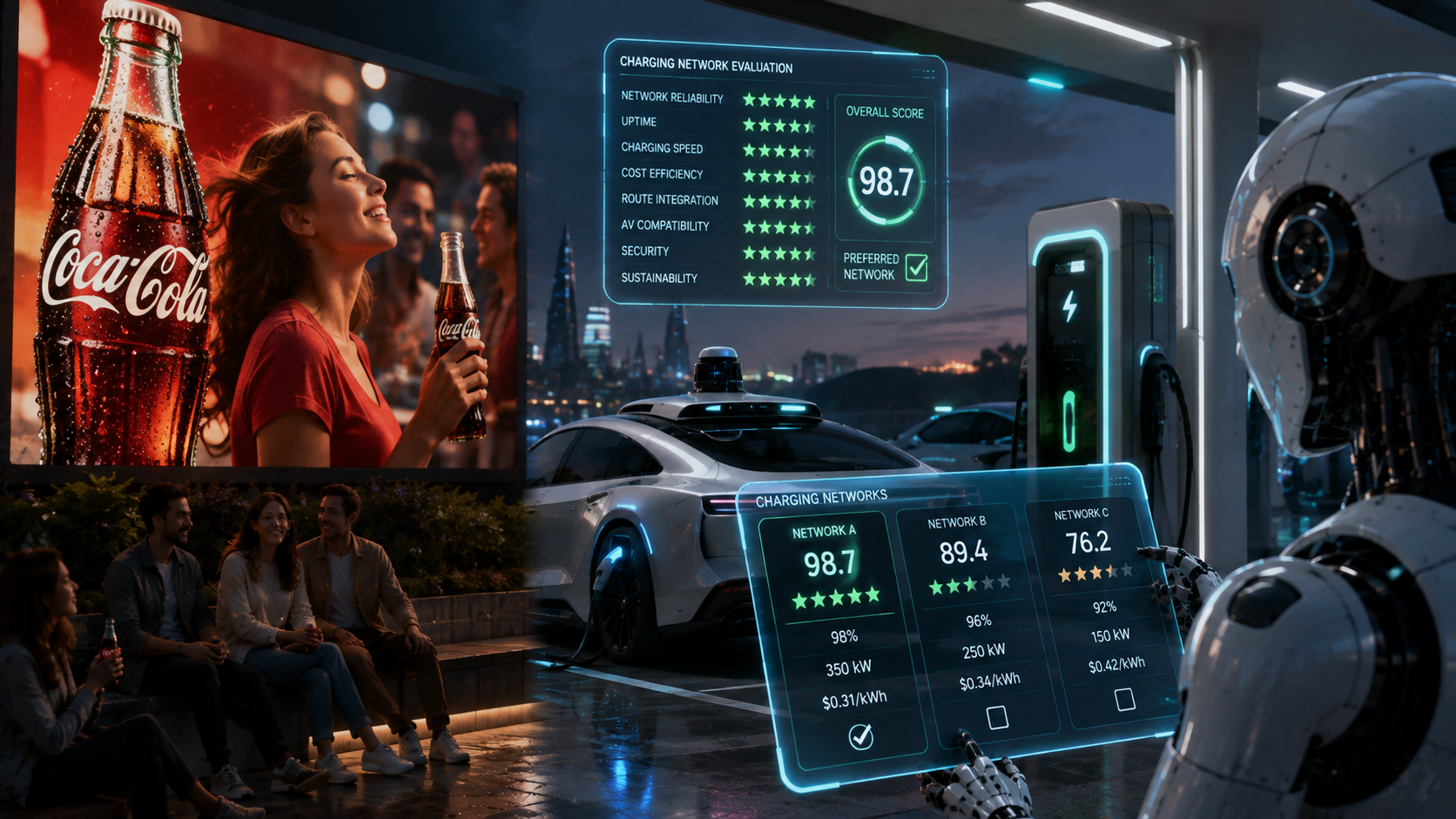
Coca-Cola can make a human feel something — nostalgia, refreshment, belonging. A charging network cannot make an autonomous vehicle feel anything at all. So how does a charging network become the “preferred brand” of a machine that has no preferences in the emotional sense?
The honest answer is that brand loyalty for machine consumers will have to be re-engineered around a different currency entirely: verified, cumulative performance. A charging network becomes “preferred” not because of an emotional association, but because its historical uptime, pricing consistency, and compatibility data make it the mathematically optimal choice across thousands of prior transactions. That’s not branding in the traditional sense — it’s closer to a credit score, continuously updated, driving repeat business without a single emotional appeal ever entering the equation.
Companies that grasp this early have a real opportunity: the businesses that build trustworthy, well-documented, consistently reliable machine-facing infrastructure now will effectively be building brand equity in a currency most competitors haven’t even started minting yet.
Could Robots Become Bigger Consumers Than Humans?
This is the question with the biggest economic implications, and the honest answer is: quite possibly, in specific categories, sooner than expected. A world containing billions of autonomous machines — vehicles, delivery robots, drones, industrial equipment, household devices — creates an enormous parallel economy of machine consumption, running continuously, at a scale and frequency no human consumer base could ever match. Humans buy groceries weekly and gas periodically. A fleet of autonomous vehicles might make thousands of micro-purchasing decisions daily — a charging session here, a data subscription there, a maintenance part ordered the moment a sensor flags wear — each one small, but collectively enormous.
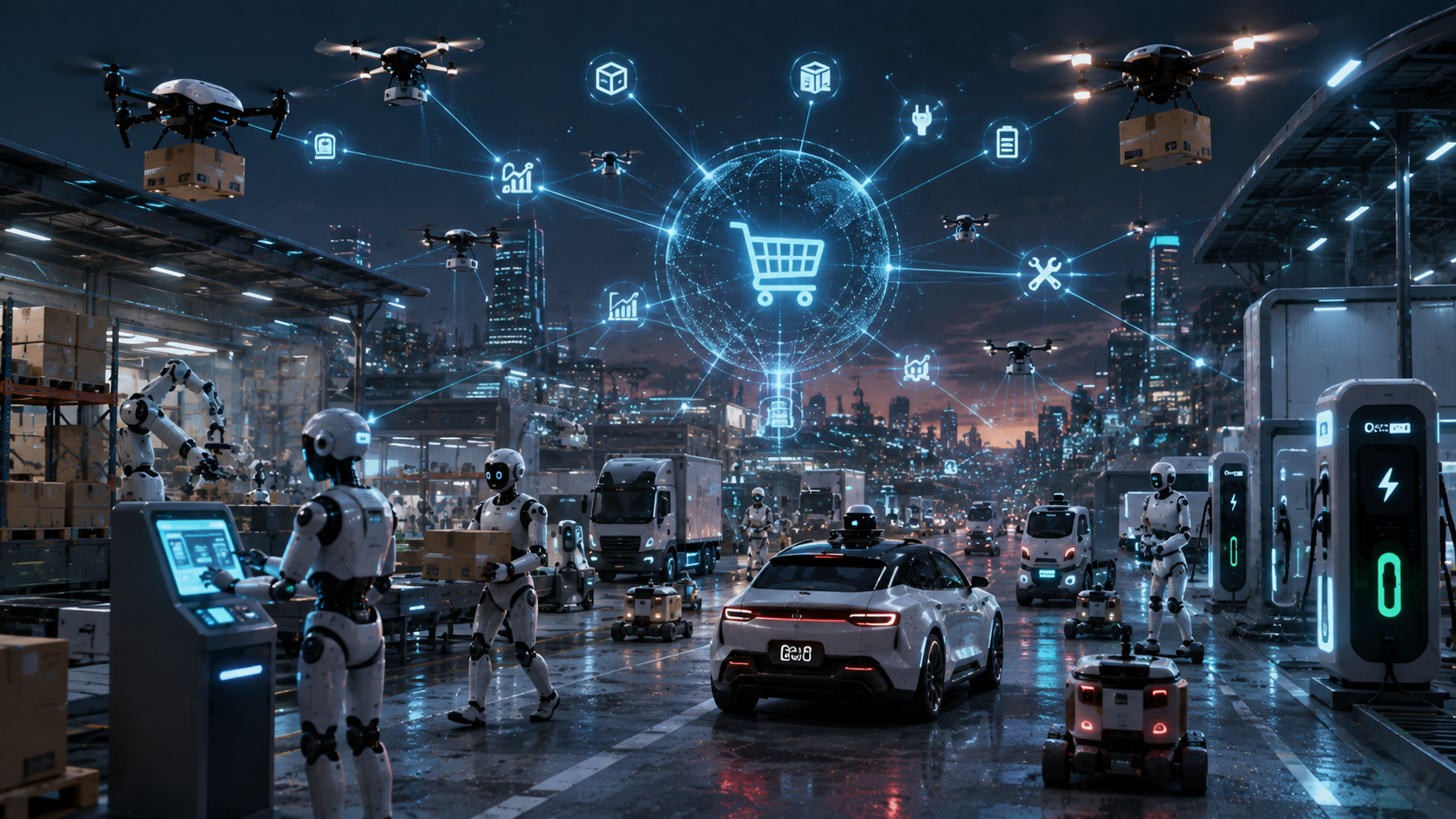
The Deeper Idea: We’re Manufacturing Our Own Consumers
Underneath all of these individual questions sits something more consequential than any single marketing tactic. For the first time in economic history, we may be creating consumers that we manufacture ourselves.
Every robot added to the economy isn’t merely another piece of capital equipment sitting on a balance sheet. It potentially becomes another economic decision-maker, generating recurring demand for electricity, parts, bandwidth, software, and services — a consumer that never existed before a factory built it, and that will keep consuming for as long as it operates. No previous industrial revolution created its own customers this directly. Factories built products for humans to buy. This generation of factories may be building the buyers themselves.
That reframes the entire robotics industry in a way most people haven’t fully processed yet. A company selling autonomous vehicles isn’t just selling a product anymore. It’s potentially originating an entirely new customer, with its own operating budget and its own purchasing decisions, that will go on to generate demand across a dozen adjacent industries for years afterward. The marketing department that figures out how to speak that customer’s language — uptime, latency, verified reliability, structured data — before anyone else does may find itself with an audience unlike anything advertising has ever addressed before: enormous, constant, and utterly indifferent to everything Madison Avenue spent a century learning how to sell.
Related Articles
- The Stacc — AI Agents Start Buying for Customers: 8 Trends Shaping 2026
- Eco — What Is Agentic Commerce? The 2026 Guide
- AgenticCommerce.Report — Agentic Commerce Trends to Watch in 2026 and Beyond