Author: admin

SoftFoot Pro: Revolutionizing Prosthetics with Flexibility and Adaptability

The Italian Institute of Technology (IIT) has made a groundbreaking advancement in prosthetic technology with the introduction of SoftFoot Pro. This innovative prosthetic foot is designed to move and adapt like a natural human foot, offering a motor-free, flexible, and all-weather solution for individuals with limb loss.

Inspired by the human foot’s shape and anatomical features, SoftFoot Pro stands out for its unique design. The prototype was unveiled at a G7 Health track event in Genoa, Italy, organized by the Italian Ministry of Health in collaboration with IIT. This event focused on strategies for lifelong health and active aging.

Continue reading… “SoftFoot Pro: Revolutionizing Prosthetics with Flexibility and Adaptability”

Pioneering Cleaner Skies: Joby Aviation’s Hydrogen-Electric Air Taxi Achieves Milestone Flight

In a significant advancement for sustainable aviation technology, Joby Aviation, a general aviation startup based in California, has successfully completed a non-stop flight with its hydrogen-electric air taxi demonstrator. The S4 eVTOL air taxi flew 523 miles (841 kilometers), producing only water as a by-product, showcasing the potential of hydrogen technology as a greener alternative to traditional gas-powered jets for mid-range regional travel.

Building on its successful battery-electric air taxi development program, Joby’s aircraft, which takes off and lands vertically, demonstrates how hydrogen can enable emissions-free travel without the need for a runway. This achievement underscores the viability of hydrogen technology for cleaner aviation solutions.

Continue reading… “Pioneering Cleaner Skies: Joby Aviation’s Hydrogen-Electric Air Taxi Achieves Milestone Flight”

Transforming Human-Robot Interaction: UC San Diego’s Humanoid Robot Learns Expressive Movements

Engineers at the University of California, San Diego have made significant strides in humanoid robotics by training a robot to perform a wide range of expressive movements effortlessly. This includes simple dance routines and gestures like waving, high-fiving, and hugging, all while maintaining a steady gait on various terrains. The enhanced expressiveness and agility of this humanoid robot hold promise for improving human-robot interactions in diverse settings, such as factory assembly lines, hospitals, homes, and hazardous environments like laboratories or disaster sites.

“Through expressive and more human-like body motions, we aim to build trust and showcase the potential for robots to coexist harmoniously with humans,” said Xiaolong Wang, a professor in the Department of Electrical and Computer Engineering at the UC San Diego Jacobs School of Engineering. “We are working to help reshape public perceptions of robots as friendly and collaborative rather than terrifying like The Terminator.”

Continue reading… “Transforming Human-Robot Interaction: UC San Diego’s Humanoid Robot Learns Expressive Movements”

The Future of Aviation: Hydrogen-Powered Flight on the Horizon

Hydrogen-powered flight is set to revolutionize air travel, providing greater opportunities for fossil-free transportation. Technological advancements in this field are accelerating rapidly. New studies from Chalmers University of Technology in Sweden indicate that by 2045, almost all air travel within a 750-mile radius (1,200 km) could be conducted using hydrogen-powered aircraft. Furthermore, with a novel heat exchanger currently under development, this range could be extended even further.

“If everything falls into place, the commercialization of hydrogen flight can go really fast now. As early as 2028, the first commercial hydrogen flights in Sweden could be in the air,” says Tomas Grönstedt, Professor at Chalmers University of Technology and Director of the TechForH2 competence center.

Continue reading… “The Future of Aviation: Hydrogen-Powered Flight on the Horizon”

The Evolution and Breakthroughs in Computer Chips

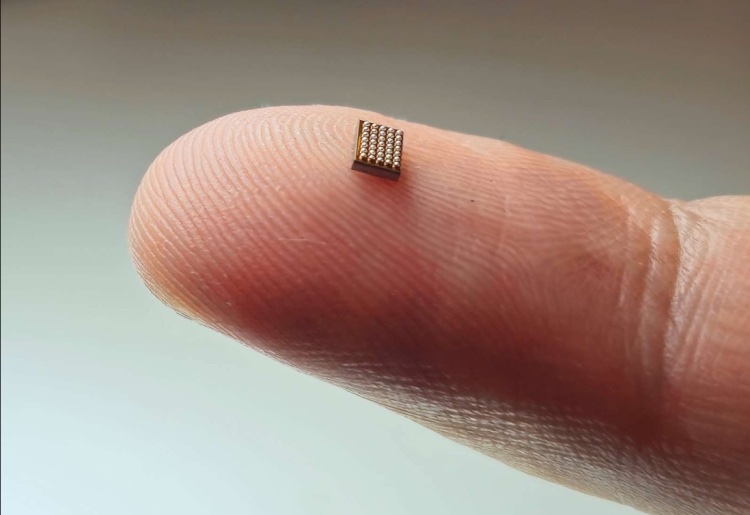
Silicon computer chips have been the cornerstone of technology for over half a century. Today, the tiniest features on commercially available chips are around 3 nanometers, a remarkable feat considering a human hair is roughly 80,000 nanometers wide. Shrinking these features further is essential to meet our growing demand for more memory and processing power. However, we are approaching the limits of what can be achieved with traditional materials and processes.

Researchers at the U.S. Department of Energy’s Princeton Plasma Physics Laboratory (PPPL) are pioneering the next generation of computer chips. They are leveraging their expertise in physics, chemistry, and computer modeling to explore new materials and processes that can produce chips with even smaller features.

Continue reading… “The Evolution and Breakthroughs in Computer Chips”

New Quantum Computer Shatters Record for “Quantum Supremacy”

A new quantum computer has set a world record in “quantum supremacy,” outperforming Google’s Sycamore machine by a factor of 100.

Researchers at quantum computing company Quantinuum used their new 56-qubit H2-1 computer to run various benchmark experiments, evaluating the machine’s performance and qubit quality. Their findings were published on June 4 in a study uploaded to the preprint database arXiv, though it has yet to undergo peer review.

Continue reading… “New Quantum Computer Shatters Record for “Quantum Supremacy””

Revolutionizing LED Technology: Enhancing Performance with Bionic Microstructures

Gallium nitride (GaN)-based light-emitting diodes (LEDs) have revolutionized the lighting industry, offering superior energy efficiency, extended operating life, and enhanced environmental sustainability over conventional lighting technologies. Recently, the push toward miniaturizing LEDs has gained momentum, driven by advancements in display devices, augmented reality, virtual reality, and other emerging technologies. However, the lack of cost-effective native substrates and high threading dislocation density in heteroepitaxial films grown on sapphire substrates remain significant obstacles to improving device performance. Additionally, Fresnel reflections at the epitaxy-substrate interface, caused by abrupt changes in refractive indices, further reduce light energy utilization.

Inspired by the compound eyes of moths, which exhibit excellent anti-reflective properties and strong light-absorption capabilities, researchers have sought to improve light utilization in LEDs. The challenge, however, lies in the rapid and precise processing of microstructures on the curved surfaces of optoelectronic devices. “Common projection lithography methods are highly sensitive to substrate shape, leading to reduced accuracy in microstructure definition on substrates with large warps or irregular shapes,” explains Professor Shengjun Zhou. “We propose a flexible nanoimprint lithography technique that enables high-throughput and high-quality processing of bionic microstructures on curved surfaces.”

Continue reading… “Revolutionizing LED Technology: Enhancing Performance with Bionic Microstructures”

Neuromorphic Computing: The Future of AI Hardware

While much of the tech world remains fixated on the latest large language models (LLMs) powered by Nvidia GPUs, a quieter revolution is brewing in AI hardware. As the limitations and energy demands of traditional deep learning architectures become increasingly apparent, a new paradigm called neuromorphic computing is emerging – one that promises to slash the computational and power requirements of AI by orders of magnitude. To delve into this promising technology, VentureBeat spoke with Sumeet Kumar, CEO and founder of Innatera, a leading startup in the neuromorphic chip space.

“Neuromorphic processors are designed to mimic the way biological brains process information,” Kumar explained. “Rather than performing sequential operations on data stored in memory, neuromorphic chips use networks of artificial neurons that communicate through spikes, much like real neurons.” This brain-inspired architecture gives neuromorphic systems distinct advantages, particularly for edge computing applications in consumer devices and industrial IoT.

Continue reading… “Neuromorphic Computing: The Future of AI Hardware”

The Tragic Reality of Child Mortality in the U.S.: 20,000 Excess Deaths Annually

Children in the U.S. are dying at higher rates than in other wealthy, developed countries. Research published in the journal JAMA Pediatrics highlights these “excess deaths” — the number of additional deaths among children under age 19 in the U.S. compared to similar countries. The estimate is a staggering 20,000 excess deaths per year, painting a grim picture of pediatric health in the country.

Dr. Steven Woolf, the study’s co-author and a professor of family medicine and population health at Virginia Commonwealth University School of Medicine, remarked, “The chances of a child surviving to age 20 are now decreasing after decades of progress.” This study calculated the median mortality rates for children in 16 countries outside the U.S., including Australia, Canada, Japan, and 13 European countries, from 1999 to 2019. By comparing these rates to those in the U.S. and multiplying the difference by the U.S. population size each year, the researchers identified significant disparities.

Continue reading… “The Tragic Reality of Child Mortality in the U.S.: 20,000 Excess Deaths Annually”

MIT’s New Water Harvester Extracts Fresh Water from Air

In a world where many regions struggle to secure enough water, MIT researchers have developed a new water harvester capable of extracting sufficient fresh water from the air to meet the daily needs of several people.

Water harvesters typically use adsorbent materials to collect water on their surfaces. This new device from MIT maximizes exposure to air with a series of vertical fins spaced 2 mm (0.08 in) apart. These fins are constructed from copper sheets sandwiched in copper foams and coated with a specialized zeolite material, renowned for its water adsorption properties. After an hour, the fins become saturated with water, at which point the copper sheets are heated to release the collected water. Repeating this cycle 24 times a day in air with 30% humidity (considered arid), the harvester can produce up to 1.3 L (0.3 gal) of drinkable water per day per liter of the adsorbent coating. When scaled up, this equates to 5.8 L (1.5 gal) per kilogram (2.2 lb) of material used per day, enough to meet the daily water needs of several people.

Continue reading… “MIT’s New Water Harvester Extracts Fresh Water from Air”

Revolutionizing Software Engineering: The Impact of Large Language Models

The rapid advancement of large language models (LLMs) is transforming various fields, including software engineering. In just a few years, LLMs have evolved from advanced code autocomplete tools to AI agents capable of designing software, implementing and correcting entire modules, and enhancing software engineers’ productivity.

While some excitement around AI-powered software engineering agents is overhyped, there is undeniable value for developers who harness these new AI tools to accomplish more in less time. There are three main ways that LLMs are changing the coding experience:

Continue reading… “Revolutionizing Software Engineering: The Impact of Large Language Models”

World’s First Super-Sized Nano Transparent Screen Developed and Commercialized

A groundbreaking Nano Transparent Screen (NTS) has been developed and commercialized for the first time in the world. This innovative screen can adjust its transparency according to the environment and can be produced at a low cost, paving the way for the widespread adoption of large transparent screens, which until now have been prohibitively expensive. The newly developed screen is expected to find applications across various products, such as transparent displays in department stores and supermarkets, smart windows for buildings, and versatile transparent displays suitable for both indoor and outdoor promotional uses.

The research team, led by Principal Researcher Jun-Ho Jeong of the Nano-lithography and Manufacturing Research Center at the Korea Institute of Machinery and Materials (KIMM), in collaboration with Meta2People, has successfully commercialized a 100-inch large-sized NTS. This screen’s transparency can be freely adjusted depending on the surrounding lighting and images. The NTS was installed in the outdoor space of the “Youth Mall” located in Chungju in June and will be showcased at the International Nano Technology Exhibition, known as “Nano Korea 2024,” from July 3 to July 5, 2024, at KINTEX in Ilsan.

Continue reading… “World’s First Super-Sized Nano Transparent Screen Developed and Commercialized”
Discover the Hidden Patterns of Tomorrow with Futurist Thomas Frey
Unlock Your Potential, Ignite Your Success.

By delving into the futuring techniques of Futurist Thomas Frey, you’ll embark on an enlightening journey.

Learn More about this exciting program.