Author: admin

Advanced AUVs: Revolutionizing Underwater Conservation with AI

Covering nearly 80% of the planet, the underwater environment is critical in maintaining ecological balance and supporting human well-being. Effective conservation relies on a thorough understanding of underwater species distribution and ecosystem dynamics, but this process can be time-consuming and costly.

A team of U.S. National Science Foundation-funded researchers at the Minnesota Interactive Robotics and Vision Laboratory is working to overcome these challenges. They are developing advanced autonomous underwater vehicles (AUVs) powered by artificial intelligence to collect vast amounts of data, provide detailed insights into species distribution, and create comprehensive habitat maps to understand environmental drivers.

Continue reading… “Advanced AUVs: Revolutionizing Underwater Conservation with AI”

Revolutionary Water Harvesting from Air Using Adsorbent Fins

A collaboration of researchers from multiple universities in the US has successfully demonstrated the use of adsorbent fins to harvest water from the air. This innovative approach is more efficient than previous water harvesting technologies and could help secure water supplies in dry and arid regions, according to a press release.

As the planet warms and climatic conditions become more extreme, access to clean water is expected to trouble millions of people. Traditionally, our water supplies have been dependent on the availability of local water bodies. However, advances in technology now make it possible to extract water from the air.

Continue reading… “Revolutionary Water Harvesting from Air Using Adsorbent Fins”

Revolutionizing Balance Assessment: AI and Wearable Sensors Lead the Way

Traditionally, physicians have relied on subjective observations and specialized equipment to gauge balance in individuals with conditions such as Parkinson’s disease, neurological injuries, and age-related decline. These methods, especially the subjective ones, can lack precision, be difficult to administer remotely, and often prove inconsistent. Addressing these limitations, researchers from Florida Atlantic University have developed a novel approach using wearable sensors and advanced machine learning algorithms that could redefine balance assessment practices.

The researchers utilized wearable Inertial Measurement Unit (IMU) sensors placed on five body locations: ankle, lumbar, sternum, wrist, and arm. Data collection followed the Modified Clinical Test of Sensory Interaction on Balance (m-CTSIB) protocol, testing four sensory conditions: eyes open and closed on stable and foam surfaces. Each test lasted roughly 11 seconds, simulating continuous balance scenarios.

Continue reading… “Revolutionizing Balance Assessment: AI and Wearable Sensors Lead the Way”

LignoSat: Pioneering Eco-Friendly Satellites with Wood

A groundbreaking satellite named LignoSat, developed by a team at Kyoto University in collaboration with logging company Sumitomo Forestry, is set to revolutionize space technology with its unique construction from magnolia wood. This 10-centimeter cube aims to pave the way for environmentally friendly satellites that completely burn up upon re-entering Earth’s atmosphere.

The LignoSat project began in April 2020, with researchers evaluating various types of wood for their durability in harsh space conditions. Magnolia emerged as the top choice due to its strength and workability. Using traditional Japanese joinery techniques, the satellite’s wooden panels are seamlessly joined without screws or glue.

Continue reading… “LignoSat: Pioneering Eco-Friendly Satellites with Wood”

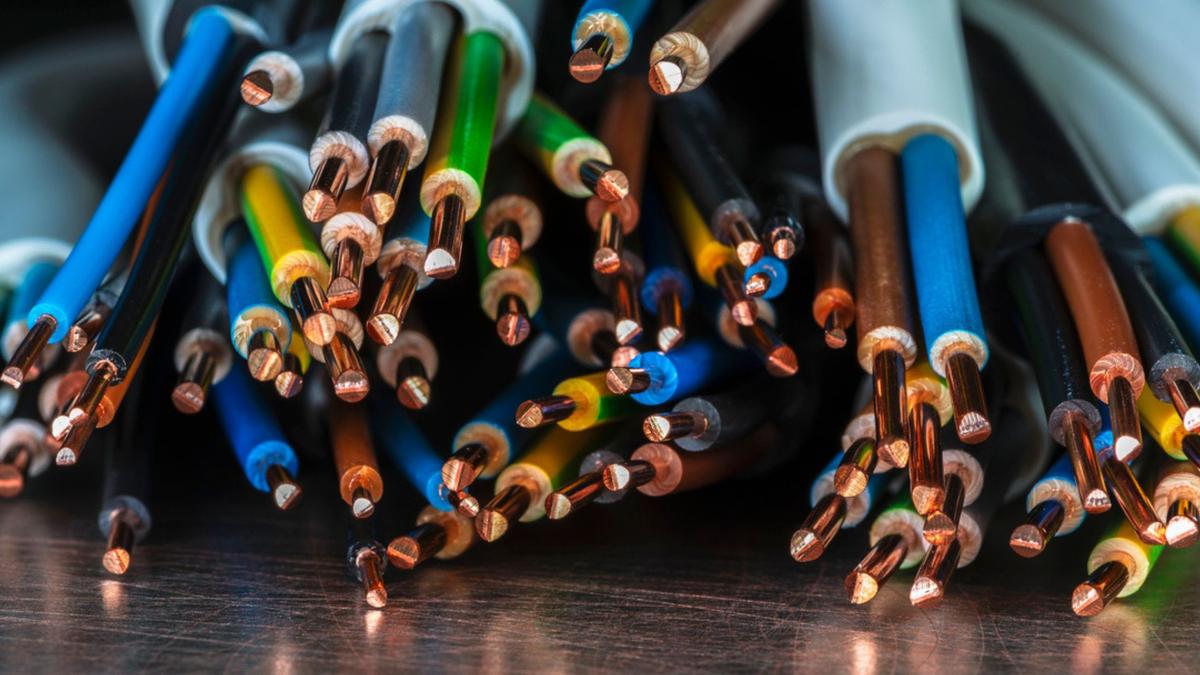
VEIR Unveils Revolutionary Power Transmission Technology

A groundbreaking power transmission technology has emerged in Woburn, Massachusetts, promising to redefine energy distribution efficiency while minimizing visual impact. VEIR, a startup co-founded by MIT alumnus Tim Heidel, has developed an innovative approach using superconducting cables and an advanced cooling system. This technology boosts transmission capacity, surpassing conventional lines by five to ten times, addressing the urgent global need for robust transmission infrastructure to support renewable energy integration and grid resilience.

VEIR’s technology relies on superconducting cables and an advanced cooling system, enabling their lines to initially carry up to 400 megawatts of power, with plans for even higher capacities in the future. “We can deploy much higher power levels at much lower voltage, and so we can deploy the same high power but with a footprint and visual impact that is far less intrusive,” said Heidel. This breakthrough not only increases capacity but also addresses regulatory and community opposition that have hindered many transmission projects.

Continue reading… “VEIR Unveils Revolutionary Power Transmission Technology”

Texas Scientists Near Breakthrough in Vision Technology with Tiny Imager Chip

For more than 15 years, a group of scientists in Texas has been diligently working on creating devices that can “see” through barriers using medium-frequency electromagnetic waves. Now, they seem closer than ever to achieving their goal.

In an interview with Futurism, Kenneth O, an electrical engineering professor at the University of Texas, explained that the new tiny imager chip developed by his research team can detect the outlines of items through barriers like cardboard. This breakthrough is the result of continuous advances and innovations in microprocessor technology over the past two decades.

Continue reading… “Texas Scientists Near Breakthrough in Vision Technology with Tiny Imager Chip”

Greece Introduces Six-Day Workweek Amid Economic Recovery

For most people, labor law can be boring. But when someone suggests working an extra day, people start to pay attention. In Greece, new regulations effective July 1 will make this possible for certain sectors.

Starting July 1, specific industrial and manufacturing facilities, along with businesses providing 24/7 services, can transition to a six-day workweek instead of the traditional five-day week, according to Emmanouil Savoidakis, head of the labor law practice at Politis & Partners, an Athens-based law firm specializing in business law. However, the tourism and food service industries are excluded from this new arrangement.

Continue reading… “Greece Introduces Six-Day Workweek Amid Economic Recovery”

Discovery of Key Proteins and Potential Treatment Pathway for Parkinson’s Disease

Researchers have uncovered a crucial role of a cell surface protein called Aplp1 in spreading the material responsible for Parkinson’s disease between brain cells. Promisingly, an FDA-approved cancer drug that targets another protein, Lag3, which interacts with Aplp1, has been shown to block this spread in mice, suggesting a potential therapy may already exist.

In a new study, an international team of scientists describes how Aplp1 and Lag3 work together to facilitate the entry of harmful alpha-synuclein protein clumps into brain cells.

Continue reading… “Discovery of Key Proteins and Potential Treatment Pathway for Parkinson’s Disease”

Innovative 3D-Printed Sweat Sensor Promises Non-Invasive Health Monitoring

“Diabetes is a major problem worldwide,” said Chuchu Chen, the study’s first author, highlighting the transformative potential of 3D printing in healthcare. The newly developed one-step 3D printing process utilizes a single-atom catalyst and enzymatic reactions to enhance signal detection of low-level biomarkers.

Unlike blood, sweat provides a non-invasive method for health monitoring. Uric acid levels in sweat can indicate risks for gout, kidney disease, and heart disease, while glucose and lactate levels help monitor diabetes and exercise intensity.

Continue reading… “Innovative 3D-Printed Sweat Sensor Promises Non-Invasive Health Monitoring”

Farasis Energy Unveils Revolutionary EV Battery with Exceptional Performance

China’s Farasis Energy has unveiled a groundbreaking electric vehicle (EV) battery, boasting exceptional range, climate temperature tolerances, and charge cycle lifespan. This innovative battery can operate normally between -22°F (-30°C) and 149°F (65°C), and it maintains 70% state-of-health (SOH) even after thousands of charge cycles.

The new battery was showcased at the ASEAN Automotive Supply Chain Conference held in Thailand on June 18 and 19. The conference focuses on regional integration within the automotive industry, highlighting trends, innovations, and challenges while bringing together industry leaders, policymakers, and stakeholders. It aims to facilitate discussions on supply chain optimization, technological advancements, and collaborative strategies to enhance competitiveness and sustainability in the ASEAN automotive sector.

Continue reading… “Farasis Energy Unveils Revolutionary EV Battery with Exceptional Performance”

Revolutionary Glassy Gels: A Breakthrough in Material Science

Researchers have developed a new class of materials called “glassy gels,” which are extremely hard and difficult to break despite containing over 50% liquid. The simplicity of producing glassy gels makes them promising for various applications. A paper titled “Glassy Gels Toughened by Solvent,” detailing this work, appears in the journal Nature.

Traditionally, gels and glassy polymers are viewed as distinct materials. Glassy polymers are hard, stiff, and often brittle, used in products like water bottles and airplane windows. Gels, such as contact lenses, contain liquid and are soft and stretchy. “We’ve created a class of materials that we’ve termed glassy gels, which are as hard as glassy polymers but can stretch up to five times their original length without breaking,” says Michael Dickey, the corresponding author of the paper and the Camille and Henry Dreyfus Professor of Chemical and Biomolecular Engineering at North Carolina State University. “What’s more, once the material has been stretched, you can return it to its original shape by applying heat. Additionally, the surface of the glassy gels is highly adhesive, which is unusual for hard materials.”

Continue reading… “Revolutionary Glassy Gels: A Breakthrough in Material Science”

Revolutionizing Satellite Launches: SpinLaunch’s Innovative Approach

A California-based company, SpinLaunch, is capturing attention with its groundbreaking satellite launch system, especially from enthusiasts in the Punkin Chunkin community. This technology aims to revolutionize the way satellites are sent into space by using a giant rotating arm to fling satellites into low Earth orbit, eliminating the need for rocket fuel and relying solely on electricity.

SpinLaunch has already conducted multiple successful tests with this technology. “This is not a rocket, and our ability to perform this many tests in just 11 months, all functioning as planned, is a testament to the nature of our technology,” said Jonathan Yaney, founder and CEO of SpinLaunch, in a 2022 Space.com report after their 10th successful launch. The company plans to launch constellations of satellites into orbits below 600 miles by 2026. Satellites are crucial for monitoring Earth’s health, detecting issues like methane leaks, and conducting various types of research. Therefore, a cleaner, more efficient method for placing them in orbit is significant for scientific advancements.

Continue reading… “Revolutionizing Satellite Launches: SpinLaunch’s Innovative Approach”
Discover the Hidden Patterns of Tomorrow with Futurist Thomas Frey
Unlock Your Potential, Ignite Your Success.

By delving into the futuring techniques of Futurist Thomas Frey, you’ll embark on an enlightening journey.

Learn More about this exciting program.