Author: admin

New 3D Printing Technique Seamlessly Blends Soft and Hard Materials in a Single Part

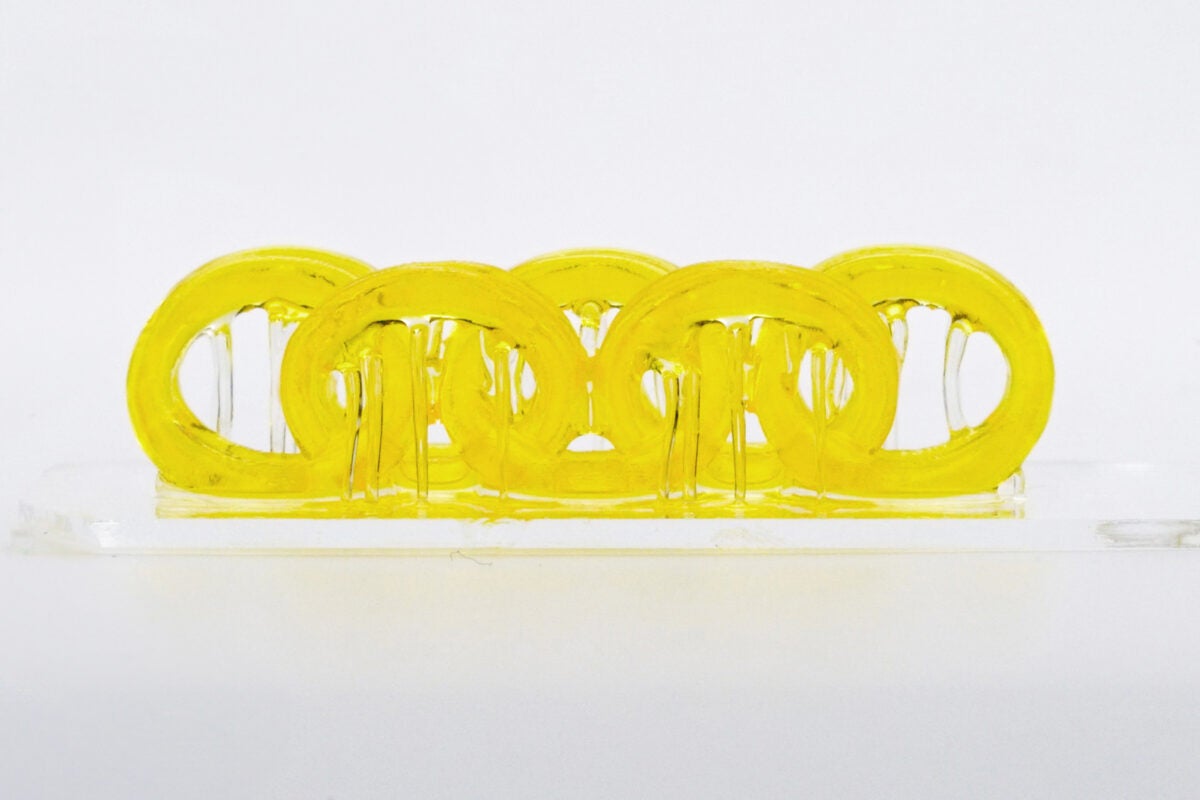
A research team at the University of Texas at Austin has developed a groundbreaking 3D printing process that, for the first time, enables the precise integration of soft and hard materials within a single printed component—without introducing mechanical weaknesses where the two properties meet. This innovation, recently published in Nature Materials, marks a major advancement in additive manufacturing.

The method uses a specially formulated photopolymer resin matrix and a dual-exposure approach, employing two distinct wavelengths of light to control material properties at a microscopic level. Violet light initiates a reaction that forms a soft, elastomer-like structure, while higher-energy ultraviolet (UV) light triggers a separate reaction that creates a rigid, thermoplastic-like material. By controlling exposure to each wavelength during the printing process, researchers can seamlessly transition between soft and hard regions within a single object.

Continue reading… “New 3D Printing Technique Seamlessly Blends Soft and Hard Materials in a Single Part”
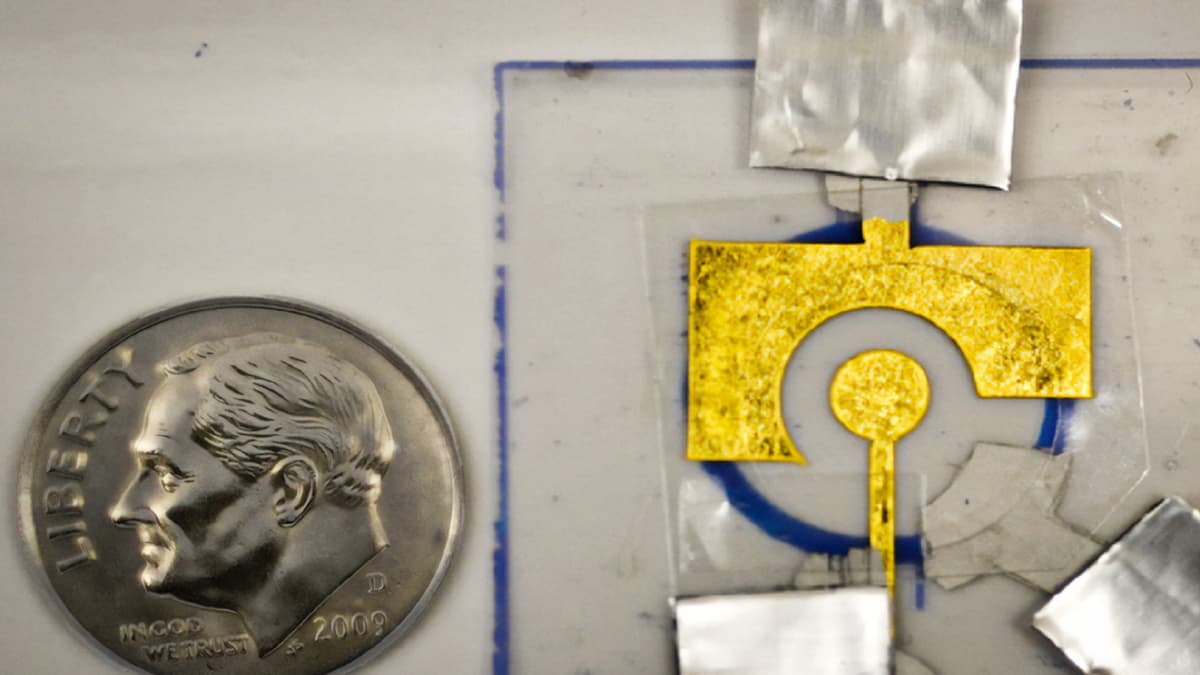
Low-Cost, At-Home Diagnostic Sensor Could Revolutionize Disease Detection

MIT researchers have created a groundbreaking disposable DNA-based sensor capable of detecting diseases like cancer and HIV at home—at a cost of just 50 cents. The sensor is not only highly precise but also shelf-stable for weeks without refrigeration, making it ideal for use in remote or resource-limited settings.

The technology relies on electrochemical sensors that incorporate a DNA-chopping enzyme from the CRISPR gene-editing system. When the enzyme encounters a disease-related genetic target—such as a cancer-linked gene—it activates and begins cutting surrounding DNA strands attached to the sensor’s electrode. This disruption changes the electrical signal, signaling the presence of the disease.

Continue reading… “Low-Cost, At-Home Diagnostic Sensor Could Revolutionize Disease Detection”

Quantum Leap: Researchers Achieve First Unconditional Exponential Speedup

Quantum computing has taken a major step forward with a breakthrough demonstrating an unconditional exponential speedup—a long-awaited milestone in the field. Led by Daniel Lidar, a professor of engineering at the University of Southern California (USC) and a leading expert in quantum error correction, the research was carried out in collaboration with teams from USC and Johns Hopkins University. Their findings were published in Physical Review X.

Quantum computers have promised transformative capabilities: solving complex equations, designing next-generation medicines, breaking encryption, and discovering new materials. However, one persistent barrier has slowed progress—noise. These small but constant errors disrupt quantum operations, often rendering results less reliable than those from traditional classical computers.

Continue reading… “Quantum Leap: Researchers Achieve First Unconditional Exponential Speedup”

Turning Coffee Waste into Climate-Smart Bricks

Australian researchers at Swinburne University of Technology have created strong, sustainable bricks using used coffee grounds, offering a promising solution for reducing the construction industry’s carbon footprint.

On June 27, Swinburne signed an intellectual property licensing agreement with startup Green Brick to bring these eco-friendly bricks to market.

Continue reading… “Turning Coffee Waste into Climate-Smart Bricks”

Cracking the Taxol Code: How Scientists Are Rebuilding a Cancer Drug Without Killing Yew Trees

This breakthrough marks a powerful convergence of ancient botanical wisdom and modern science, showing how plants can be tapped more sustainably for life-saving medicine. For decades, the chemotherapy drug Taxol—used to treat breast, ovarian, lung, and other aggressive cancers—was derived from the bark of the Pacific yew tree.

But harvesting Taxol in this way kills the tree, posing a major ecological and supply challenge since yews grow slowly and live for centuries. In recent years, scientists discovered that a precursor chemical called baccatin III, which can be chemically converted into Taxol, is produced in the tree’s needles and can be harvested without harming the plant.

Continue reading… “Cracking the Taxol Code: How Scientists Are Rebuilding a Cancer Drug Without Killing Yew Trees”

Sunlight, a Sponge, and the End of Thirst: Scientists Unleash Scalable, Energy-Free Desalination

Forget billion-dollar desalination plants, complex filters, or energy-hungry infrastructure. The next revolution in clean water might just come from a 3D-printed sponge and the sun.

In a radical leap forward, researchers at the American Chemical Society have developed a lightweight, porous aerogel that turns salty seawater into fresh, drinkable water using nothing more than natural sunlight and a curved piece of plastic. No electricity. No pressure systems. Just a sun-powered sponge that could fit in your backpack—and possibly save millions.

Continue reading… “Sunlight, a Sponge, and the End of Thirst: Scientists Unleash Scalable, Energy-Free Desalination”

Plastic’s Chemical Jailbreak: Scientists Slash Recycling Costs with One Enzyme-Fueled Hack

The world’s dirtiest material may have just met its molecular match.

In a stunning breakthrough, scientists have unveiled a new enzymatic recycling method that turns plastic’s worst traits into profit-generating advantages—and it all hinges on a single, brilliantly simple chemical switch.

Led by researchers from the U.S. Department of Energy’s National Renewable Energy Laboratory (NREL), the University of Massachusetts Lowell, and the University of Portsmouth, the new process promises to break down PET—the world’s most-used plastic—faster, cheaper, and cleaner than ever before. Forget decades of hype around theoretical recycling utopias. This one actually works.

Continue reading… “Plastic’s Chemical Jailbreak: Scientists Slash Recycling Costs with One Enzyme-Fueled Hack”

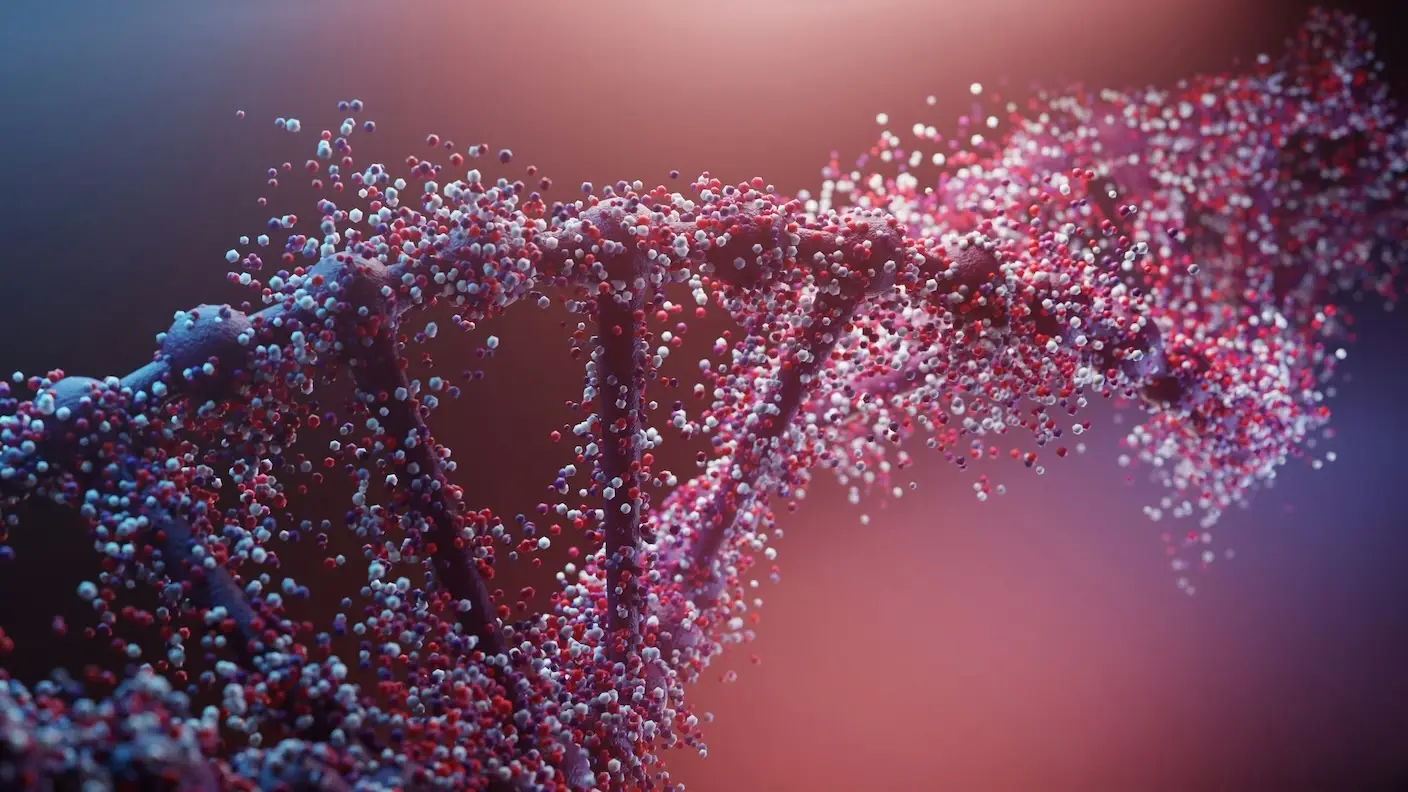
Google’s AI Is Decoding the Genetic “Dark Matter” That Controls Us All

For years, scientists stared at the human genome and shrugged. We mapped it, sequenced it, even gave it a name—the Human Genome Project. But when it came to understanding what most of that DNA actually does, we were flying blind. Only about 2% of our genetic code directly tells cells which proteins to build. The rest—an eerie 98%—was long dismissed as “junk.”

Not anymore.

Google DeepMind just dropped a molecular bombshell: AlphaGenome, an AI that doesn’t just read your DNA—it predicts how the darkest corners of it control your body’s machinery. It’s not just looking at genes. It’s reading the switches, regulators, silencers, enhancers, and hidden messages that tell those genes when, where, and how to act.

Continue reading… “Google’s AI Is Decoding the Genetic “Dark Matter” That Controls Us All”

Air. Water. Anywhere: Students Build a 3D-Printed Drone That Flies, Swims—and Breaks the Rules of Physics

In a Danish lab filled with student prototypes and secondhand electronics, something extraordinary has taken flight—and dived straight into the pool.

A team of applied industrial electronics students at Aalborg University has pulled off a jaw-dropping feat: a fully 3D-printed hybrid drone that takes off, plunges underwater, swims like a mechanical fish, and then explodes back into the air—no pause, no manual switch, just seamless transition between two fundamentally different worlds.

Forget what you know about drones. This isn’t a toy with wings. It’s a shape-shifting robot that obeys no single environment and no conventional engineering playbook.

Continue reading… “Air. Water. Anywhere: Students Build a 3D-Printed Drone That Flies, Swims—and Breaks the Rules of Physics”

No Scalpel, No Sternum, No Problem: Surgeons Replace Heart Valve Through the Neck in Robotic World First

Heart surgery just went from brutal to barely noticeable.

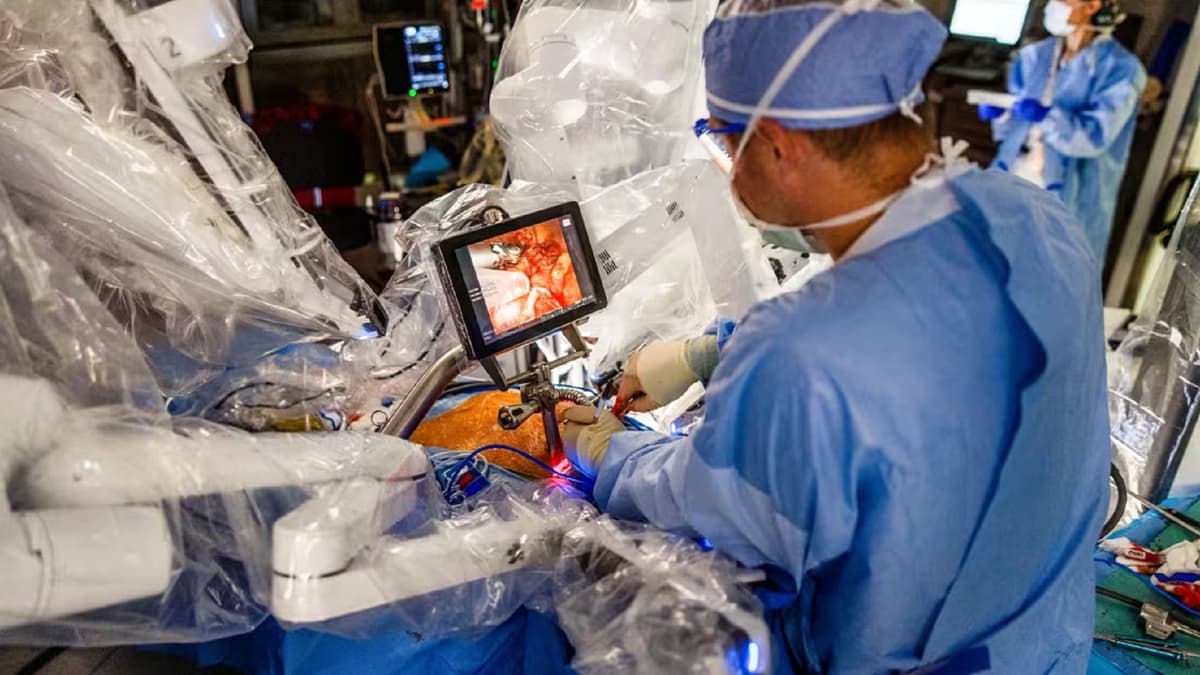
In a world-first operation that borders on science fiction, surgeons at the Cleveland Clinic have replaced a failing heart valve through a tiny incision in the neck—no cracked chest, no rib spreaders, no weeks-long recovery. Just four precision-guided robotic arms, a hidden scar along a neck crease, and a surgical team that rewrote the rulebook on aortic valve replacement.

Dr. Marijan Koprivanac, the mastermind behind the procedure, didn’t just avoid the sternum—he eliminated it from the equation entirely. Traditional aortic valve replacement (AVR) means opening the chest wide, a brutal process that carries pain, risk, and lengthy rehab. Even the “minimally invasive” versions still involve partial sternotomies or rib incisions. But not this.

This time, the surgeons went in through the front of the neck.

Continue reading… “No Scalpel, No Sternum, No Problem: Surgeons Replace Heart Valve Through the Neck in Robotic World First”

The 5-Minute Fix: Scientists Build a Chemical Assassin That Hunts and Kills PFOA in Water

For decades, PFOA—one of the most notorious “forever chemicals”—has been quietly infiltrating our water, bodies, and food supply. Nearly indestructible, nearly unavoidable, and linked to a range of serious health issues, it’s the molecular villain no one invited but everyone drinks.

Now, scientists at the University of Utah have developed a material that doesn’t just remove it—it hunts it down with chemical precision and destroys it in five minutes flat.

Their breakthrough? A lab-engineered, crystalline substance known as a metal-organic framework (MOF) that acts like a molecular spiderweb. When water flows through it, PFOA molecules get snagged and trapped by electrostatic force. But here’s the kicker: the same material glows when PFOA is present. It doesn’t just clean your water—it tells you when it’s dirty.

Continue reading… “The 5-Minute Fix: Scientists Build a Chemical Assassin That Hunts and Kills PFOA in Water”

Robots Are Learning to Taste: How 3D Laser Scanners Are Teaching Machines to Harvest Like Humans

The future of farming isn’t about bigger tractors—it’s about smarter sensors. And now, robots are getting their first real taste of fruit.

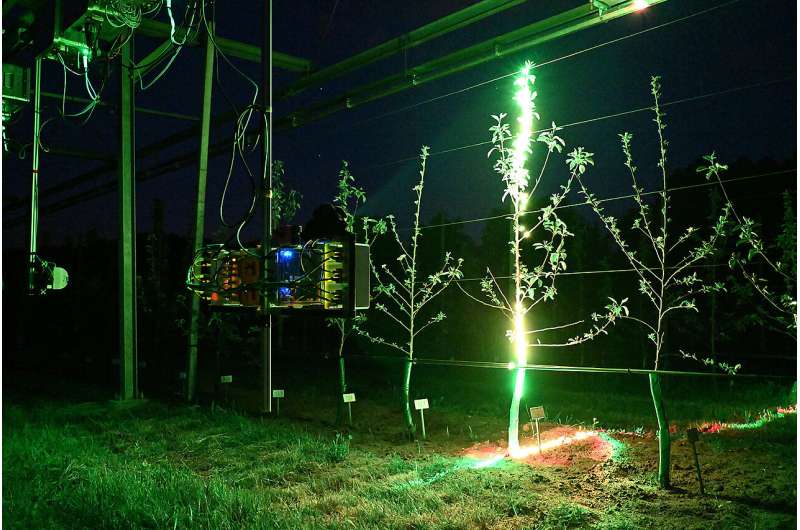
In a field outside Potsdam, Germany, something unusual is happening. A robotic system, armed with a 3D laser scanner developed by Professor Andreas Nüchter’s team at Julius-Maximilians-Universität Würzburg, is circling rows of apple trees—not to observe, but to understand. This isn’t your typical machine vision. It’s multispectral precision scanning designed to read water content, analyze ripeness, and make nuanced decisions that were once the exclusive domain of skilled human pickers.

And that’s exactly the point.

Continue reading… “Robots Are Learning to Taste: How 3D Laser Scanners Are Teaching Machines to Harvest Like Humans”
Discover the Hidden Patterns of Tomorrow with Futurist Thomas Frey
Unlock Your Potential, Ignite Your Success.

By delving into the futuring techniques of Futurist Thomas Frey, you’ll embark on an enlightening journey.

Learn More about this exciting program.