Author: admin

Revolutionizing Pediatric Surgery: How the Senhance Robot is Changing the Future of Minimally Invasive Procedures

In a groundbreaking moment for pediatric surgery, 16-year-old Rev from Aurora, Colorado, became the first patient to undergo gallbladder removal using the remotely controlled Senhance robotic system at HCA HealthONE Rocky Mountain Children’s. What’s more impressive is that Rev was discharged the same afternoon and was back on his feet just two days later, dancing at his prom. This quick recovery marks a dramatic shift in how common surgeries are being performed, thanks to cutting-edge technology that promises to make procedures faster, safer, and less invasive.

Historically, surgeries like gallbladder removal required extended hospital stays and weeks of painful recovery. However, with innovations from Asensus Surgical and its Senhance system, these processes are becoming more efficient, even in the delicate world of pediatric surgery—a field known for its unique challenges.

Continue reading… “Revolutionizing Pediatric Surgery: How the Senhance Robot is Changing the Future of Minimally Invasive Procedures”

The Future of Reproduction: Lab-Grown Human Babies and the End of Traditional Sex for Parenting

In less than a decade, the need for sex to produce a baby could be a thing of the past, opening up possibilities for same-sex couples and even multi-partnered relationships to have biological children. A recent meeting by the Human Fertilisation and Embryology Authority (HFEA) revealed that scientists are nearing a breakthrough in growing human eggs and sperm in the lab. This monumental shift in reproductive science could change the way we think about family, sex, and genetics, but it also raises ethical questions and concerns about its potential societal impact.

At the meeting, HFEA officials discussed the rapid progress being made in the field of in vitro gametogenesis (IVG)—the process of reprogramming stem cells or even skin cells to function like eggs or sperm cells. This revolutionary advancement is already showing success in animals, with the creation of babies from two male mice and even the possibility of a child from two biological fathers. Experts believe that bridging the gap from mice to humans could take as little as two to ten years, potentially opening the door to lab-grown human embryos with the genetic material from multiple parents.

Continue reading… “The Future of Reproduction: Lab-Grown Human Babies and the End of Traditional Sex for Parenting”

DeepSeek Shakes Up AI Industry with Low-Cost, High-Performance Model That Rivals Global Giants

DeepSeek, a Chinese AI research lab, has recently shocked the tech world by unveiling its groundbreaking AI model, DeepSeek-R1, which achieves performance levels comparable to the best chatbots in the world—but at a fraction of the cost. This one-year-old company has thrown into question the prevailing notion that developing cutting-edge AI requires ever-increasing financial and energy investments, positioning itself as a serious competitor to established players like OpenAI, Google, and Meta.

The launch of DeepSeek’s open-sourced AI model has caused a ripple effect across the global tech market, with stocks of US-based technology giants tumbling in response. DeepSeek’s sudden rise has raised alarms about the US’s position as the dominant force in AI development, as well as the valuations of major tech companies.

Continue reading… “DeepSeek Shakes Up AI Industry with Low-Cost, High-Performance Model That Rivals Global Giants”

SEALSQ Unveils World’s First Quantum-Resistant Secure Hardware, Leading the Charge in Post-Quantum Cryptography

SEALSQ, a Swiss semiconductor company, is making waves in the world of cybersecurity by unveiling what it claims to be the “world’s first” quantum-resistant secure hardware. This breakthrough represents a significant leap forward in post-quantum cryptography, providing a future-proof solution to secure sensitive data in the era of quantum computing.

Specializing in integrated semiconductor solutions, PKI (Public Key Infrastructure), and provisioning services, SEALSQ has been at the forefront of developing both hardware and software designed to withstand quantum attacks. With quantum computing advancements on the horizon, current encryption methods face the risk of being rendered obsolete. Traditional cryptographic systems, such as RSA and Elliptic Curve Cryptography (ECC), could eventually be broken by powerful quantum computers, putting sensitive financial transactions and personal data at risk.

Continue reading… “SEALSQ Unveils World’s First Quantum-Resistant Secure Hardware, Leading the Charge in Post-Quantum Cryptography”

Revolutionizing Ocean Exploration: British Startup Deep Develops Underwater Habitats for Extended Research

A British startup, Deep, is setting out to revolutionize ocean exploration with its innovative approach to developing underwater habitats designed for long-term human presence on the seafloor. By enabling scientists to live and work on the ocean floor for weeks or even months, this groundbreaking initiative could unlock new opportunities for marine research and significantly enhance our understanding of the Earth’s vital marine ecosystems.

Despite the vastness of the world’s oceans, only a small fraction has been thoroughly explored. The majority of marine life—estimated to be 90%—resides in the deep sea, yet current diving technology severely limits researchers’ access to this underexplored environment. Traditional scuba diving restricts scientists to shallow depths and short excursions, while submersibles and remotely operated vehicles (ROVs) only provide fleeting glimpses of the ocean’s depths. In order to truly comprehend and protect our oceans, researchers need a way to immerse themselves in these environments for extended periods.

Continue reading… “Revolutionizing Ocean Exploration: British Startup Deep Develops Underwater Habitats for Extended Research”

Tiny Magnetic Robots Could Revolutionize Medicine by Clearing Blocked Arteries

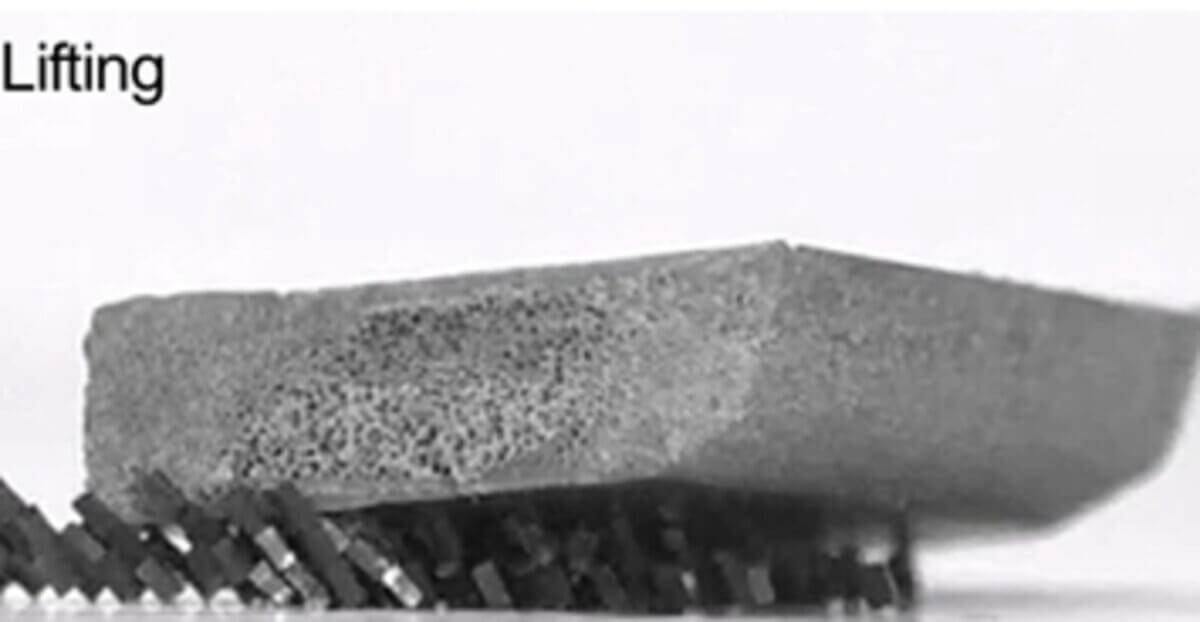
Imagine a future where doctors deploy thousands of microscopic robots to clear blocked arteries or deliver precise treatments. Researchers at Hanyang University have taken a major step toward this possibility by developing microrobots that can self-organize into swarms, tackle obstacles, and even transport heavy loads. In a groundbreaking study published in the journal Device, scientists demonstrated how these robots, each smaller than a grain of salt, can work together like an army of ants to solve complex problems.

Each of these miniature robots, measuring just 600 micrometers tall (about half a millimeter), is made using a process similar to ice cube molding, allowing researchers to create hundreds of these tiny robots cost-effectively. The robots are embedded with magnetic particles called neodymium-iron-boron (NdFeB), enabling them to respond to external magnetic fields and interact with one another. This allows them to form various shapes and structures to adapt to different challenges.

Continue reading… “Tiny Magnetic Robots Could Revolutionize Medicine by Clearing Blocked Arteries”

SpiRobs: Octopus-Inspired Robotic Arm Sets New Standard for Precision and Flexibility

Researchers at the University of Science and Technology of China, led by Nikolaos Freris, have unveiled an extraordinary advancement in robotics: the octopus-inspired SpiRobs robotic arm. Drawing inspiration from the fluidity and dexterity of natural appendages like the elephant trunk and octopus tentacles, this spiral-shaped robotic arm combines the precision of a human hand with the agility of animal limbs.

As part of a new class of soft robots, SpiRobs showcases an innovative design that blends nature’s adaptability with cutting-edge engineering. By leveraging reverse engineering techniques, the team has created a robot that can perform complex gripping maneuvers such as reeling, extending, winding, and grasping with an impressive 95 percent success rate in task execution.

Continue reading… “SpiRobs: Octopus-Inspired Robotic Arm Sets New Standard for Precision and Flexibility”

Pioneering Oxygen Production System Could Enable Sustainable Lunar Habitats

A team of engineers is making significant strides in space innovation with the development of a revolutionary machine designed to produce oxygen directly on the Moon. This ambitious project, taking place in a massive vacuum sphere at NASA’s Johnson Space Center, pushes the boundaries of current space technology and aims to create a life-sustaining system for lunar missions.

The device, a silvery metal contraption adorned with colorful wires, marks a major step forward in enabling long-term lunar exploration and habitat construction. According to Brant White, program manager at Sierra Space, a private aerospace company, “We’ve tested everything we can on Earth now. The next step is going to the moon.” This project is part of a broader initiative to develop systems that can extract essential resources from the Moon’s surface, providing astronauts with the oxygen and materials necessary for survival and deep-space exploration.

Continue reading… “Pioneering Oxygen Production System Could Enable Sustainable Lunar Habitats”

Revolutionary Nano-Materials Combine Strength of Steel with the Lightness of Foam Using Machine Learning

Researchers at the University of Toronto’s Faculty of Applied Science & Engineering have created an innovative class of nano-architected materials that are as strong as carbon steel yet as light as Styrofoam. Published in Advanced Materials, the research, led by Professor Tobin Filleter, highlights how machine learning was used to design nanomaterials with remarkable properties—high strength, low weight, and the ability to be customized for various applications. This breakthrough could revolutionize industries such as automotive and aerospace, where materials must balance strength and lightness.

Nano-architected materials, composed of tiny repeating units just a few hundred nanometers in size, are structured into complex 3D shapes known as nanolattices. These materials take advantage of the “smaller is stronger” principle, where nanoscale designs achieve superior strength-to-weight and stiffness-to-weight ratios compared to conventional materials. However, traditional lattice shapes often have sharp intersections and corners, creating stress concentrations that lead to premature failure.

Continue reading… “Revolutionary Nano-Materials Combine Strength of Steel with the Lightness of Foam Using Machine Learning”

Revolutionary Saltwater-Conductive Yarn Battery Powers Marine Devices

In a groundbreaking development, researchers have designed a prototype rechargeable battery that functions in saltwater environments, offering a promising new energy source for oceanic and sea-based applications. This innovative saltwater-conductive yarn battery is not only flexible and durable but can also be integrated into fabrics or nets, providing power to marine devices such as safety equipment, fishing nets, and life vests.

Traditional batteries are highly sensitive to water, especially saltwater, due to the potential for damage and malfunction. However, this new design cleverly utilizes seawater as an electrolyte, turning its naturally occurring sodium, chloride, and sulfate ions into a functional energy source. This approach transforms seawater, typically a threat to conventional electronics, into a key component for generating power.

Continue reading… “Revolutionary Saltwater-Conductive Yarn Battery Powers Marine Devices”

NASA Tests 3D-Printed Antenna for Low-Cost, High-Performance Space Communication

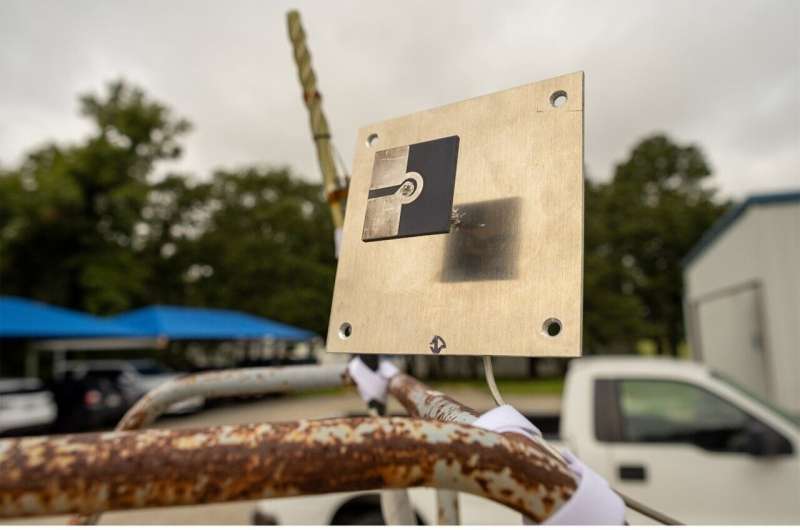
In fall 2024, NASA achieved a significant milestone in space communication technology by testing a 3D-printed antenna designed to deliver science data from space to Earth. This groundbreaking experiment demonstrated the potential of 3D printing as a cost-effective, rapid development solution for the growing number of science and exploration missions. Tested in flight with an atmospheric weather balloon, the antenna could pave the way for more affordable and flexible communication systems in future space missions.

NASA’s Near Space Network engineers led the design and construction of the 3D-printed antenna, which was tested using the network’s relay satellites. The antenna was launched aboard a weather balloon, marking a major step in demonstrating the feasibility of additive manufacturing (3D printing) for space communication applications.

Continue reading… “NASA Tests 3D-Printed Antenna for Low-Cost, High-Performance Space Communication”

The Moon as a Data Hub: Lonestar Data Holdings to Launch First Lunar Data Center

The Moon, Earth’s natural satellite, may soon become a bustling hub of commercial activity, with one of the most ambitious ventures set to take place next month. Florida-based startup Lonestar Data Holdings is preparing to launch the first-ever physical data center on the Moon, ushering in a new era of off-world technological innovation. The company plans to deploy its data center using SpaceX’s Falcon 9 rocket, with a targeted launch window in February. The center will ride aboard Intuitive Machines’ upcoming lunar lander mission, marking a historic step in space exploration and data storage.

Lonestar’s lunar data center, named “Freedom,” will be the first of its kind to operate beyond Earth. As the company notes, this data center will serve various customers by offering secure data storage and edge processing capabilities. However, this won’t be your typical data center. Unlike conventional servers that require rapid data access, the Freedom center’s focus will be on long-term data preservation. It’s designed to store crucial information in a way that ensures its protection for generations to come, free from the threats of natural disasters, cyberattacks, and geopolitical tensions on Earth.

Continue reading… “The Moon as a Data Hub: Lonestar Data Holdings to Launch First Lunar Data Center”
Discover the Hidden Patterns of Tomorrow with Futurist Thomas Frey
Unlock Your Potential, Ignite Your Success.

By delving into the futuring techniques of Futurist Thomas Frey, you’ll embark on an enlightening journey.

Learn More about this exciting program.