Electrodes let you taste and chew in virtual reality

a

You’re having dinner in a virtual reality game. The banquet scene in front of you looks so real that your mouth is watering. Normally, you would be disappointed, but not this time. You approach the food, stick out your tongue – and taste the flavours on display. You move your jaw to chew – and feel the food’s texture between your teeth.

Continue reading… “Electrodes let you taste and chew in virtual reality”

Job security won’t exist in the age of ‘superintelligence’

brain

Coined in 1956 by John McCarthy, it was originally intended to define an independent machine agent that can take actions to maximize success toward a particular goal, with human-like functions such as learning and problem solving. AI can be broadly categorized as ANI (artificial narrow intelligence), AGI (artificial general intelligence) and ASI (artificial superintelligence). Almost all of the AI systems we see today align under ANI — e.g., IBM Watson, Deep Blue, a calculator, even the device you’re reading this from all fall into that category. All are built to perform specific functions, but are not quite at a human level.

Continue reading… “Job security won’t exist in the age of ‘superintelligence’”

Paralyzed man feels through robotic fingers

 Rob_Nathan_Fingerdetection 7g6f

A 28-year-old man left paralyzed after a car accident has been able to feel as though he was touching something with his fingers after a robotic arm was connected directly to his brain in a world-first breakthrough.

Nathan Copeland, who was injured after crashing his car on a rainy night in Pennsylvania when he was just 18, spoke of experiencing a “really weird sensation” as he touches things.

Continue reading… “Paralyzed man feels through robotic fingers”

Remote control of the brain is coming. How will it be used?

brain-remote

Controlling the minds of others from a distance has long been a favourite science fiction theme – but recent advances in genetics and neuroscience suggest that we might soon have that power for real.

Just over a decade ago, the bioengineer Karl Deisseroth and his colleagues at Stanford University published their paper on the optical control of the brain – now known as optogenetics – in which the firing pattern of neurons is controlled by light.

Continue reading… “Remote control of the brain is coming. How will it be used?”

“Brain Malware”: How Hackers could get inside your brain

1470222159035804

Hackers have spyware in your mind. You’re minding your business, playing a game or scrolling through social media, and all the while they’re gathering your most private information direct from your brain signals. Your likes and dislikes. Your political preferences. Your sexuality. Your PIN.

Continue reading… ““Brain Malware”: How Hackers could get inside your brain”

‘Neural Dust’ Could Monitor Your Brain Wirelessly

neural-dust-fingertip-ryan-neely-berkeley_1

Science fiction that features wires connecting brains to computers might now be obsolete. Wireless powered implants, each smaller than a grain of rice, could serve as “neural dust” that can one day scan and stimulate brain cells. Such research could one day help lead to next-generation brain-machine interfaces for controlling prosthetics, exoskeletons and robots, as well as “electroceuticals” to treat disorders of the brain and body.

Continue reading… “‘Neural Dust’ Could Monitor Your Brain Wirelessly”

Chinese man famed superhuman memory beat an AI in a facial recognition contest

facial-recognition-matching-faces f53

At a competition in China to see who is better at recognizing faces, man or machine, Wang Yuheng, representing the humans, emerged victorious.

Wang is famous in China for his photographic memory. He successfully identified a specific glass of water out of 520 seemingly identical ones in a Chinese reality TV show. He also reportedly helped police crack a case by extracting “hidden clues” from surveillance camera footage, thanks to his exceptional observational skills.

Continue reading… “Chinese man famed superhuman memory beat an AI in a facial recognition contest”

The first transparent 3D-printed skull has just been implanted

sk

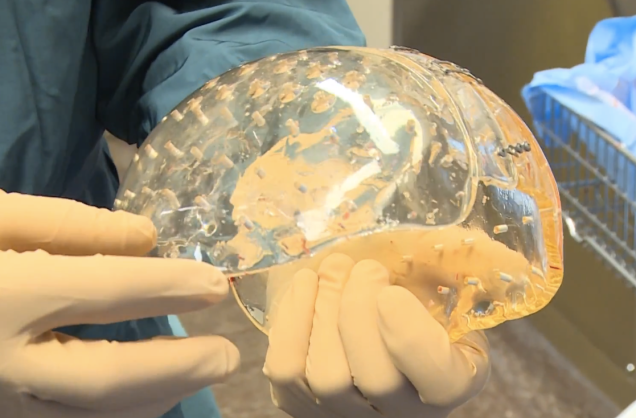
Surgeons in Holland implanted a transparent plastic skull in a woman whose skull has never stopped growing. The rare bone disease that was wrecking her vision and destroying her life has been been bested by a simple 3D printer. The team of surgeons, led by Dr. Bon Verweij at the University Medical Center in Utrecht, expect her new skull to last indefinitely.

Continue reading… “The first transparent 3D-printed skull has just been implanted”

Can a dead brain person be brought to life?

2961565820_3d59b7bdfb_z

The IRB at Anupam Hospital in India has approved Bioquark to recruit 20 patients who have been classed as clinically brain dead. The company is wanting to revive brain function and use brain and spinal cord stimulation, bioactive molecules and stem cells. Within just 15 days it is in hope that the results will be known.

Continue reading… “Can a dead brain person be brought to life?”

The race to monetize artificial intelligence has begun

think

The artificial intelligence (A.I.) battle has been heating up. IBM, Microsoft, Amazon, Apple, Facebook, and Google all continuously release impressive technologies in the space that are capturing the minds of developers and customers. From a market standpoint, A.I. is positioned to become a pillar of the next generation of software technologies. We can expect all those software giants to capture segments of the A.I. space, however, the most interesting question is who can monetize A.I. at scale first.

Continue reading… “The race to monetize artificial intelligence has begun”

Discover the Hidden Patterns of Tomorrow with Futurist Thomas Frey
Unlock Your Potential, Ignite Your Success.

By delving into the futuring techniques of Futurist Thomas Frey, you’ll embark on an enlightening journey.

Learn More about this exciting program.