During Betsy DeVos’ recent three-hour confirmation hearing to become President Donald Trump’s education secretary, charter schools came up no fewer than 60 times. Homeschooling was mentioned once. Charter schools have become a significant part of the US public-education system and now educate 2.5 million kids. But homeschooling has quietly experienced a surge in recent years too. Brian Ray, a homeschooling researcher at the National Home Education Research Institute, estimates the number of kids taught at home is growing by as much as 8% a year since the total hovered around 2 million in 2010, according to US Census figures.
Graphene’s power has finally been unlocked, and it’s crazier than we expected
It’s official: graphene has been made into a superconductor in its natural state – which means electrical current can flow through it with zero resistance. Last year, physicists managed to do this by doping graphene with calcium atoms, but this is the first time researchers have achieved superconductivity in the material without having to alter it. And the results so far show that the material achieves an incredibly rare type of superconductivity that’s even crazier and more powerful than scientists expected.
Continue reading… “Graphene’s power has finally been unlocked, and it’s crazier than we expected”
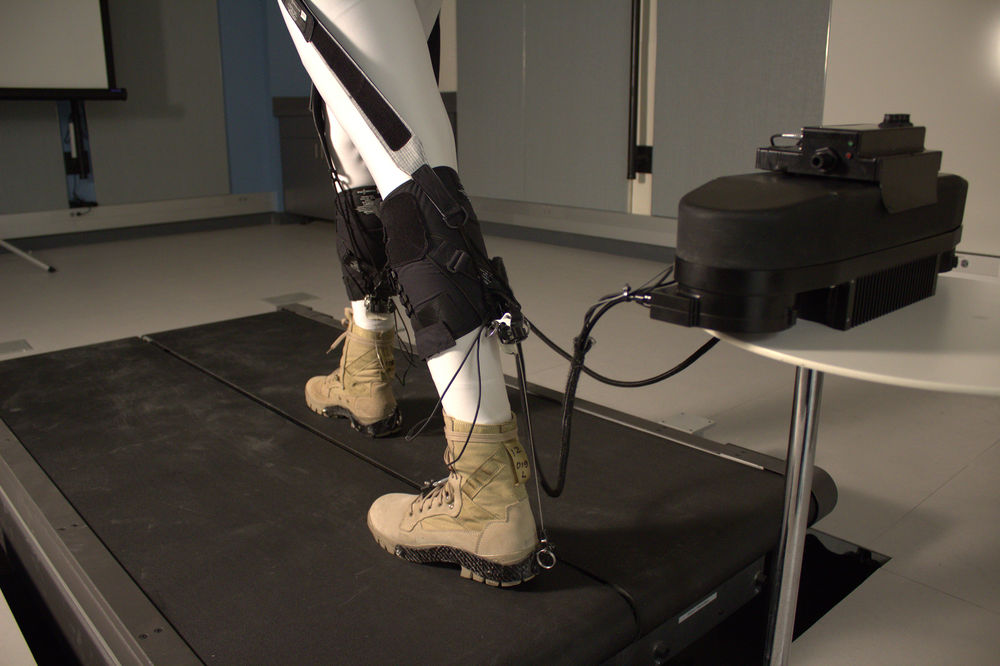
Soft-shelled exosuit might put Iron Man’s duds to shame
The word exosuit has become all but synonymous with a hard-shelled suit that imbues its wearer with superhuman abilities—leap tall buildings, lift multi-ton items, and make the paralyzed walk—thanks to some awesome looking robotics. But some exosuit researchers in a recent study published inScience Robotics, are taking a softer approach to exosuits. These rigs have more in common with high-tech workout gear than a robotic sci-fi suit, and they could help improve human mobility.
Continue reading… “Soft-shelled exosuit might put Iron Man’s duds to shame”
South Korea makes a 1000 kilometer per hour high speed train that will go from Seoul to Busan in 30 minutes
South Korea is seeking to develop a train-like public transport concept that is almost as fast as the speed of sound up 1,000 km / h, the Korea Railroad Research Institute (KRRI) said Tuesday. The state-run institute will join forces with other research groups and Hanyang University to build the near-supersonic “train”, which would be able to travel from Seoul to Busan in half an hour.
Volunteering from home will soon be as common as working from home
We’re all familiar with the concept of working from home—and in 2017 volunteering from home will become just as ubiquitous. A busy life, working two jobs, unsociable working hours, and living in a remote location can all make it difficult for people to give time or money to good causes in their community. But technology now makes it possible to give your time and energy from the comfort of your own sofa, whether it’s to answer advice lines or support peers one-on-one.
Continue reading… “Volunteering from home will soon be as common as working from home”
Plans unveiled for world’s first ‘floating city’ in the middle of the Pacific Ocean
A company is planning to build the world’s first floating city in the middle of the Pacific Ocean. The government of French Polynesia has signed an agreement with a US firm and they hope construction work will begin in 2019. The Seasteading Institute has spent the past five years trying to work out how to build “permanent, innovative communities floating at sea”.
What will be the largest internet company in 2030? This prediction will probably surprise you.
Thirty years ago, it was a big deal when schools got their first computers. Today, it’s a big deal when students get their own laptops. According to Futurist Thomas Frey, in 14 years it’ll be a big deal when students learn from robot teachers over the internet. It’s not just because the technology will be that sophisticated, Frey says, but because the company responsible for it will be the largest of its kind.
NOTE: Visit FuturistSpeaker.com to learn more about DaVinci Institute’s senior futurist Thomas Frey.
Cardboard drone has a one-way ticket
In developing regions where lack of road infrastructure is problematic for those in the business of moving goods, drones are already having an impact. But also problematic is the fact that the people sending drones off to do the courier work kinda need them back again. A new cardboard drone being funded by DARPA won’t concern itself with such limitations, with the ability to deliver vital goods and disappear soon after the job is done.
What’s the next big thing in 3-D printing? Shapeshifting Materials
Three-dimensional printers have brought major advances to every corner of manufacturing: Scientists have used the process to engineer human tissue, print a rubber material to make drones less dangerous to people on the ground, and create a lightweight material that’s 10 times stronger than steel and just 1/20th its density.
Continue reading… “What’s the next big thing in 3-D printing? Shapeshifting Materials”
Here’s why an AI firm is smashing windows
In a sound-proofed hangar on an RAF airbase just north of Cambridge, UK, Chris Mitchell and his colleagues are busy using sledgehammers to teach their computers a lesson. The team has gathered thousands of window panes and doors, all of different shapes and sizes, which they then smash, one by one, recording the distinctive shattering sound of each type of glass. Sometimes they swing sledgehammers or garden spades, sometimes they throw bricks. “We completely underestimated the mess it would make,” says Mitchell. “And how tiring it would be.”
Continue reading… “Here’s why an AI firm is smashing windows”
Are you going to lose your job to AI? Here’s what experts really think
There’s a big temptation for businesses to use artificial intelligence to shave off time and money wherever they can. According to experts, that’s not the smartest use of the technology.
Continue reading… “Are you going to lose your job to AI? Here’s what experts really think”
9 Predictions for AI in 2017
2016 was a banner year for artificial intelligence. Alpha Go’s victory over Lee Sedol was perhaps one of the most important, but we saw advancements in self-driving cars, the continued embrace of bots and personal assistants for retail, adoption and competition around in-house assistants like Amazon Echo, along with frequent, sometimes weekly, breakthroughs on the academic side, mainly relating to machine learning. With the biggest tech companies in the world–Google, Facebook, Amazon, Microsoft, and others–devoting more and more resources to AI, the momentum is going to increase.
Continue reading… “9 Predictions for AI in 2017”