Electric cars could eclipse fossil fuels by 2027

Mitsubishi_Outlander_PHEV_10_l-large_trans++gsaO8O78rhmZrDxTlQBjdGtT0gK_6EfZT336f62EI5U

Electric power could be the dominant form of propulsion for all new cars sold in the UK as early as 2027, with more than 1.3 million electric cars registered each year, according to forecast analysis by Go Ultra Low, the government and industry-backed campaign.

This means that, according to Go Ultra Low, the UK is on target to meet a government forecast that all new cars and vans will be electrically-powered by 2040.

Continue reading… “Electric cars could eclipse fossil fuels by 2027”

We’re going to put a Carbon nanotube computer in your hand

silicon

The silicon semiconductor industry has been going strong for more than 50 years. Like a steamroller, it has trundled over bumps and holes, while defying repeated warnings that it was running out of fuel or was about to be overtaken by flashier competitors.

Continue reading… “We’re going to put a Carbon nanotube computer in your hand”

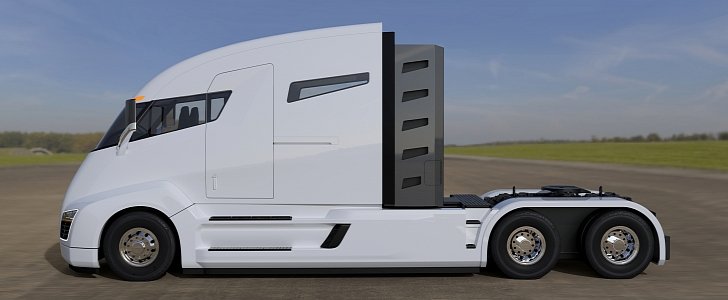
Electric truck maker Nikola raises $2.3 billion in first month

elec

Nikola Motor Company is an American manufacturer that wants to build electric semis. They recently announced that they raised $2.3 billion in the first month since they opened their pre-sales.

Continue reading… “Electric truck maker Nikola raises $2.3 billion in first month”

Welcome to Larry Page’s Secret Flying-Car Factories

zee

Silicon Valley developed a fleeting infatuation with a startup called Zee.Aero not too long ago. The company had set up shop right next to Google’s headquarters in Mountain View, Calif., because Google tightly controls most of the land in the area. A reporter spotted patent filings showing Zee.Aero was working on a small, all-electric plane that could take off and land vertically—a flying car.

Continue reading… “Welcome to Larry Page’s Secret Flying-Car Factories”

Robots could be the future of mail

drone

Despite the hype, drones may be only one small part of the future of post. It’s expected that not only drones but self-driving trucks may be the next big thing in mail delivery.

Continue reading… “Robots could be the future of mail”

The UK gets its first driverless car insurer

car

As cars have gained more assistive driving features, many questions have been raised as to how driverless vehicles will be insured. If someone has an accident while being piloted by an autonomous car, who is at fault? The driver? The car itself ?

Continue reading… “The UK gets its first driverless car insurer”

Norway might become the first to ban gas-powered cars

gas

The US is only now warming up to the idea of electric cars and other eco-friendly modes of transportation,  however Norway is whole-heartedly embracing them. It might become the first country to actually ban the sale of gas-powered vehicles in its aim to reach zero vehicle emissions by 2025.

Continue reading… “Norway might become the first to ban gas-powered cars”

Wireless charging for electric vehicles has finally hit the road

car

I’m on a bus headed for Bletchley Park, however I’m not going to visit the UK’s second-world-war code breaking centre.  In fact, I’m just along for the ride. I’m on an electric bus that is one of the first vehicles to use inductive charging technology. Its batteries charge wirelessly when the bus stops to pick up passengers. No need to plug in to charge.

Continue reading… “Wireless charging for electric vehicles has finally hit the road”

Tesla’s inspired over a dozen new electric vehicle rivals

tesla

If imitation is the sincerest form of flattery, then Elon Musk should be blushing. On top of the increased competition from big auto manufacturers, there are now many venture-backed startups that are kicking tires within the electric vehicle industry. According to Tracxn, a startup intelligence platform, some of Tesla’s rivals include Faraday Future, NextEV, and Atieva.

Continue reading… “Tesla’s inspired over a dozen new electric vehicle rivals”

Lithium-air catalyst could make car and phone batteries last five times longer

ut

US and South Korean scientists discovered catalyst materials that could make it possible to create lithium-air (Li-Air) batteries that can potentially store five times more power than lithium-ion (Li-On) batteries do today. Lithium-air batteries work by taking oxygen from the air and then using it in chemical reactions that will produce electricity, rather than storing an oxidiser internally like lithium-ion batteries.

Continue reading… “Lithium-air catalyst could make car and phone batteries last five times longer”

Discover the Hidden Patterns of Tomorrow with Futurist Thomas Frey
Unlock Your Potential, Ignite Your Success.

By delving into the futuring techniques of Futurist Thomas Frey, you’ll embark on an enlightening journey.

Learn More about this exciting program.