A new form of empire-building is underway, and your personal information is the territory
We are witnessing the emergence of a new form of colonialism—one that doesn’t require gunboats or territorial occupation, but instead harvests the most intimate resource of the 21st century: human data. While we debate traditional geopolitics, a silent war is raging for control over the digital essence of humanity itself.
The battleground is no longer geographic—it’s neurographic. AI companies aren’t just collecting data; they’re mapping the collective unconscious of our species, one interaction at a time.
The United Arab Emirates just declared war on the American university system, and most people don’t even realize it. By becoming the first nation to provide free AI tutoring to every citizen, the UAE isn’t just modernizing education—it’s exposing the fundamental obsolescence of institutions that charge $200,000 for what artificial intelligence can deliver for pennies.
This isn’t a distant threat. Universities are facing their Kodak moment, and the disruption is accelerating faster than anyone anticipated.
Picture this: it’s 2040, and you’re looking at your monthly electric bill. Will it be powered by massive solar farms stretching across countryside, or by sleek new nuclear reactors humming quietly in your region? The answer to this question could determine whether your electricity costs a few cents per kilowatt-hour or significantly more—and it’s a battle being fought right now between two very different visions of America’s energy future.
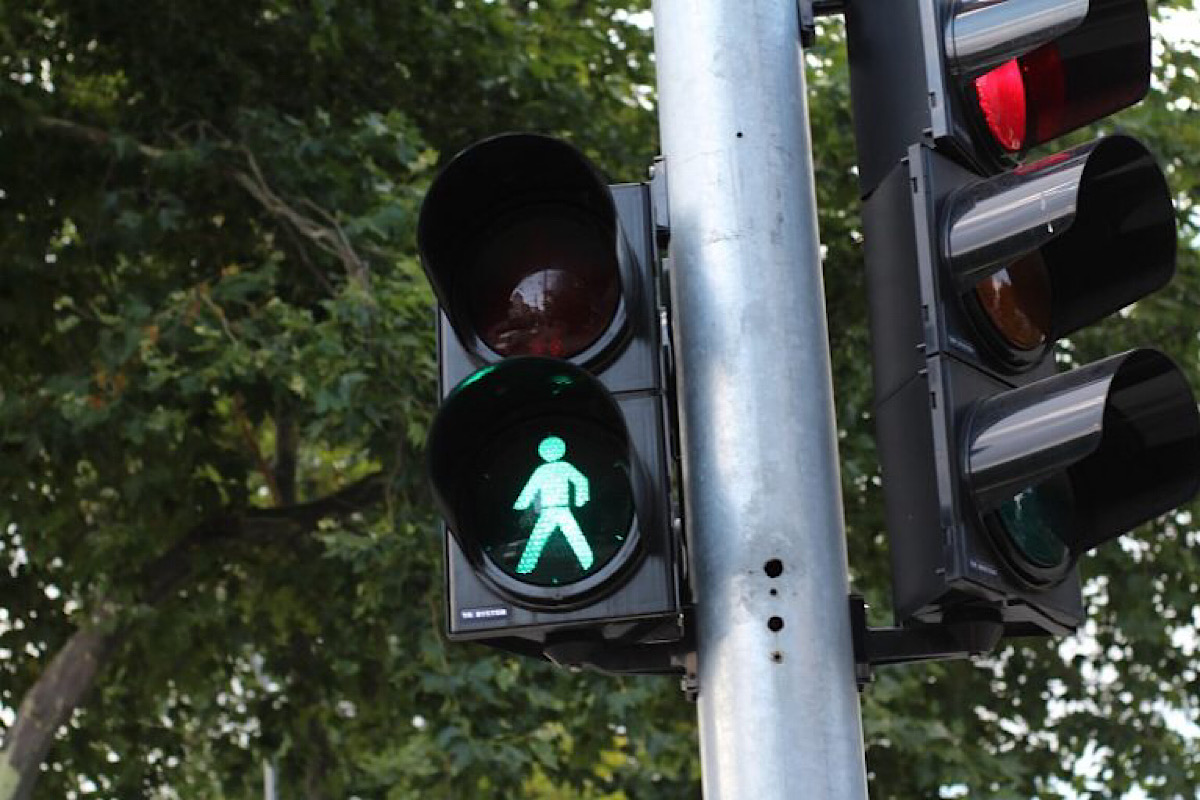
A proposal by researchers at the University of Waterloo in Canada to add a fourth light to traffic signals that would be specifically for communicating with self-driving cars.
The proposed light, which would be blue in color, would indicate to autonomous vehicles that they have been detected by the traffic signal system and that it is safe to proceed through the intersection. This would help ensure that self-driving cars are able to navigate through intersections safely and efficiently, without relying on human drivers to interpret traditional traffic signals.
According to the researchers, the addition of a fourth light to traffic signals could help facilitate the widespread adoption of autonomous vehicles and improve overall traffic flow. However, they note that more research is needed to evaluate the effectiveness of this approach and to determine how it would be implemented in practice.
Spent rockets are dangerous space trash, but they could be the future of living and working in orbit.
IN EARLY OCTOBER, a dead Soviet satellite and the abandoned upper stage of a Chinese rocket narrowly avoided a collision in low Earth orbit. If the objects had crashed, the impact would have blown them to bits and created thousands of new pieces of dangerous space debris. Only a few days prior, the European Space Agency had published its annual space environment report, which highlighted abandoned rocket bodies as one of the biggest threats to spacecraft. The best way to mitigate this risk is for launch providers to deorbit their rockets after they’ve delivered their payload. But if you ask Jeffrey Manber, that’s a waste of a perfectly good giant metal tube.
Manber is the CEO of Nanoracks, a space logistics company best known for hosting private payloads on the International Space Station, and for the past few years he has been working on a plan to turn the upper stages of spent rockets into miniature space stations. It’s not a new idea, but Manber feels its time has come. “NASA has looked at the idea of refurbishing fuel tanks several times,” he says. “But it was always abandoned, usually because the technology wasn’t there.” All of NASA’s previous plans depended on astronauts doing a lot of the manufacturing and assembly work, which made the projects expensive, slow, and hazardous. Manber’s vision is to create an extraterrestrial chop shop where astronauts are replaced by autonomous robots that cut, bend, and weld the bodies of spent rockets until they’re fit to be used as laboratories, fuel depots, or warehouses.
The Nanoracks program, known as Outpost, will modify rockets after they’re done with their mission to give them a second life. The first Outposts will be uncrewed stations made from the upper stages of new rockets, but Manber says it’s possible that future stations could host people or be built from rocket stages already in orbit. In the beginning, Nanoracks won’t use the interior of the rocket and will mount experiment payloads, power supply modules, and small propulsion units to the outside of the fuselage. Once company engineers have that figured out, they can focus on developing the inside of the rocket as a pressurized laboratory.
The idea of sentient, lab-created “organoids” raises ethical questions that ripple through science.
Tests could include physical scans, mathematical models, and more.
Scientists say there are reasons it could be necessary to create consciousness … and destroy it.
A thought-provoking new article poses some hugely important scientific questions: Could brain cells initiated and grown in a lab become sentient? What would that look like, and how could scientists test for it? And would a sentient, lab-grown brain “organoid” have some kind of rights?
As education leaders consider their options in the age of the COVID-19 crisis, they must rethink the conventional wisdom.
Higher education in the United States is at an inflection point. The core mission of the university—instruction, research, and service—has not changed. Nor has the need for advanced education to prepare individuals for a fulfilling life and to drive the knowledge economy. For individuals, the economic benefit of earning a college degree remains clear. College graduates are on average wealthier, healthier, and happier over a lifetime.1
Even before the COVID-19 crisis, however, the higher-education sector faced significant challenges. Consider student completion: only 60 percent of all those who started college actually earned a degree within six years in 2017 (the latest year for which data is available). The figures are even worse for Black (39.9 percent) and Hispanic (54.4 percent) students. Other troubling disparities persist. In student enrollment, for example, 69 percent of white high-school graduates enroll in college, compared with 59 percent of Black high-schoolers and 61 percent of Hispanics. Furthermore, the level of student debt is rising, while repayment rates plummet, creating a potentially unsustainable burden for many students.
The pandemic is intensifying these challenges and creating new ones. Students and their families are struggling with the impact of campus shutdowns and questioning whether it is worth it to pay for an on-campus experience when much of the instruction is being done remotely. Under these circumstances, the risk of outcome inequities—from completion to employment to lifetime earnings—could worsen. For example, evidence suggests that lower-income students are 55 percent more likely than their higher-income peers to delay graduation2 due to the COVID-19 crisis. Underpinning all of these challenges is a business model at its breaking point, as institutions face falling revenues and rising health-and-safety costs.
In short, the coronavirus has confirmed the case for fast and fundamental change. It has also demonstrated that change is possible. When the pandemic hit, many US colleges and universities moved quickly to remote learning and other delivery models, launched affordability initiatives, and found creative ways to support their students. Now is the time to build on these lessons to reimagine the next five to ten years and beyond.
Volumetric 3D displays are neither easy to produce nor common, as holographic imagery generally requires a mix of stereoscopic screen technology and unique optics, sometimes backed by high-speed eye tracking. Today, the display experts at Sony are throwing their hat into the ring with a new option called the ELF-SR1 — also known as the Spatial Reality Display — which is initially being targeted at professional users in content creation businesses, but with an eye towards future use in consumer-facing applications.
The typical path to parenthood didn’t work for David Jay, a founder of the asexual movement. So he designed his own household—and is trying to show others what is possible.
David Jay is the oldest of 12 cousins on one side of his family and the third-oldest of 24 cousins on the other. As a kid, family to Jay meant having a lot of people around, a feeling of community, and crucially, a sense of permanence, that these people would always be in his life. Later, as an adult living in collective housing, he could access the feeling of family with those around him, but the permanence was gone. His roommates started finding romantic partners, having children, and dispersing. Jay had always wanted his own family with kids—and had known, for almost as long, that he wouldn’t be able to build one the usual way.
Jay is the founder of the Asexual Visibility and Education Network and one of the most prominent people in the asexual movement. (Asexual people, or aces, don’t experience sexual attraction, though many do have sex and form romantic relationships.) After starting AVEN as a freshman at Wesleyan University in 2001, Jay spent years explaining asexuality to the public, speaking at events and talking to the press. As he grew older, the questions on his mind moved beyond identity and attraction to issues of parenting and family life.
The problem for Jay was never how babies are made, and fostering and adoption were options. The problem was that he wanted kids and also wanted a co-parent to help him raise kids, but wasn’t interested in romantic partnership. Before exploring single parenthood, he was curious whether there might be another way to form the family he wanted.
Technical skills and data literacy are obviously important in this age of AI, big data, and automation. But that doesn’t mean we should ignore the human side of work – skills in areas that robots can’t do so well. I believe these softer skills will become even more critical for success as the nature of work evolves, and as machines take on more of the easily automated aspects of work. In other words, the work of humans is going to become altogether more, well, human.
With this in mind, what skills should employees be looking to cultivate going forward? Here are nine soft skills that I think are going to become even more precious to employers in the future.
Anxiety can be exhausting, but there is often a reason for it – and there are some surprising benefits to certain kinds of worrying.
“I’m a near-professional worrier,” admits Kate Sweeny ruefully. She’s struggled for much of her life with anxiety over things she can’t entirely control – including, these days, whether her parents are following social-distancing guidance during the Covid-19 pandemic.
A constant hum of low-grade worry affects many people, but what’s distinct about Sweeny is that it partly motivated her career choices. As a health psychologist at the University of California, Riverside, she specialises in understanding worry and stress.
“Not everybody uses their own life as fodder for research,” she laughs, but she’s found inspiration in her own experiences. One of her surprising findings has been that worrying can be beneficial in a variety of situations, from waiting for exam results to safeguarding health.