Google May Have Found The Tech To Take AR Smart Glasses Mainstream

Google May Have Found The Tech To Take AR Smart Glasses Mainstream


BY SANJIV SATHIAH
Google has acquired Raxium, a Californian-based start-up that is developing microLED display technology for use in augmented reality (AR) and virtual reality (VR) headset displays. The purchase was uncovered by The Information and has not been publicly announced, though estimates place the total cost of the deal at around $1 billion. As far as acquisitions go for Google, that’s not especially large; however, it could play a significant role in the company’s plans around AR and VR devices that it is said to have in the pipeline. 


A number of companies – including Meta, Apple, and Xiaomi – are known to be investing in the technology, all developing AR wearables that some consider to be the ‘next big thing’. Samsung is also investing heavily in microLED technology, and launched the world’s first microLED TV in late 2020. Although there hasn’t been much in the way of leaks regarding a possible Samsung microLED-based headset, it seems likely that it, too, is working on something in this space as well.

Continue reading… “Google May Have Found The Tech To Take AR Smart Glasses Mainstream”

How Long Does It Take To Get To The Moon?

By Noah Zelvis

At some point, mankind stopped looking at the Moon as some impossible object in the sky and started to decipher the science behind making the journey there. Since that time, many spacecraft have made the journey successfully to the Moon. In this article, we take a look at how long it took different types of craft to get to the Moon.

Continue reading… “How Long Does It Take To Get To The Moon?”

America’s Clutter Problem

BY JOSH SANBURN 

When the Amazon packages arrive at her door, Dana Harvey experiences one of two feelings: Ecstasy or Nausea. Harvey, 54, is a family therapist in Los Angeles who also practices another kind of therapy–retail.

She readily admits to indulging in those fleeting moments of joy that come from purchasing. But Harvey also realized the moments were piling up all around her. Her 8-ft.-long pine dining table soon disappeared under mountains of clothes, purses and books. She began making excuses about why her house was a wreck. Eventually she stopped having friends over. She was too embarrassed.

Last year, Harvey hired a professional organizer to help her get her things in order and curb her spending. Together, they threw out or donated bags and bags of shoes, scarves, jewelry, hats, appliances, stuffed animals and unused makeup. Some items still had their tags attached. Today, more often than not, Harvey can find a place for the possessions she decided to keep. She often includes “Clear 10 Things” on her daily to-do list. Her home is less cluttered. Her friends stop by more. Her dining table is a table again. But as spring arrives, she still feels the pull of her iPad, the seasonal clothes and deals just waiting for her online.

For middle-class Americans, it’s never been easier to feel consumed by consumption. Despite the recession, despite a brief interlude when savings rates shot up and credit-card debt went down, Americans arguably have more stuff now than any society in history. Children in the U.S. make up 3.1% of the world’s kid population, but U.S. families buy more than 40% of the toys purchased globally. The rise of wholesalers and warehouse supermarkets has packed our pantries and refrigerators with bulk items that often overflow into a second fridge. One-click shopping and same-day delivery have driven purchasing to another level altogether, making conspicuous consumption almost too easy.

Continue reading… “America’s Clutter Problem”

Ep. 75 with Michael Cushman

Watch our interview with Michael Cushman on Youtube or listen on the Futurati Podcast website.

Michael Cushman is the former president of Engaging Change, head of strategy at the Garlic Media Group, and the managing director of the consulting arm of the Da Vinci Institute, as well as a noted expert on the future of education, the future of real estate, and myriad other topics.

Related

Continue reading… “Ep. 75 with Michael Cushman”

Why This Start-Up Thinks Storing Containers In Space Is The Future

BY TUSHAR MEHTA


The future of humankind’s space endeavors is promising, with various private agencies taking humans into outer space or planning to take humans into space soon. But besides taking humans for a glorified taxi ride in a craft that flies extra high, many space-tech companies have also been attracting investors, garnering roughly $7.7 billion in investments from venture capitalists in 2021 according to PitchBook — a number that has gone up 50% over the previous year.


Among the ventures that have intrigued investors is Inversion Space, a Torrance, California-based company that aims to utilize the Earth’s orbit to store containers that can stay up for a period of up to five years. The company also envisions using the space surrounding the Earth for hyper-fast deliveries by propelling items into the space and then making them fall back into the atmosphere with the help of a parachute, The New York Times reports.

Inversion Space’s founders, Austin Briggs and Justin Fiaschetti, are betting on the possibility of space travel becoming more economical. As it becomes cheaper and easier to reach space — and humans identify ways to facilitate lodging in space, more companies might want to send to as well as bring objects back from the Earth’s orbit.

Continue reading… “Why This Start-Up Thinks Storing Containers In Space Is The Future”

Futurati Podcast with Samo Burja

Watch our interview with Samo Burja on Youtube.

Samo Burja is a sociologist and the founder of Bismarck Analysis, a firm that analyzes institutions, from governments to companies. His research work focuses on the causes of societal decay and flourishing and he writes on history, epistemology and strategy.

Related

Continue reading… “Futurati Podcast with Samo Burja”

Futurati Poccast with Trent Fowler

Watch Trent’s talk on Youtube or listen on the Futurati Podcast website. 

Trent Fowler is a machine learning engineer, author, and co-host of the Futurati Podcast. As someone who’s worked at several crypto startups, he has years of experience dealing with blockchain data and thinking about the blockchain’s mechanics. This episode is adapted from a talk he recently gave explaining at a high level how this remarkable technology works and what it might mean for the future.

Related 

Continue reading… “Futurati Poccast with Trent Fowler”

NASA funds experimental radiation shield and Mars climbing robot

Several futuristic projects have just been awarded money through NASA’s Innovative Advanced Concepts programme – here are New Scientist‘s top five choices

By Will Gater

NASA has just announced the projects that will be getting money from its NASA Innovative Advanced Concepts (NIAC) programme, which aims to support ideas for game-changing mission designs and never-before-seen space exploration tech. Here we look at five of the concepts and how they will be used.

Continue reading… “NASA funds experimental radiation shield and Mars climbing robot”

Tiny robots made in Mexico to explore moon in scientific first

The mission is poised to launch on a United Launch Alliance Vulcan rocket and would be the first American spacecraft to land on the moon in nearly 50 years.

The bots are scheduled to launch in June on Astrobotic’s Peregrine lander, originally developed for Google’s Lunar-X-Prize. (representative Image)

Five tiny robots designed and made in Mexico will blast off for the moon later this year, part of a first-of-its-kind scientific mission that envisions the two-wheeled bots scrambling across the lunar surface while taking sophisticated measurements.

The so-called nano robots developed by researchers at Mexico’s National Autonomous University (UNAM) will work together like a swarm of bees, the senior scientist told Reuters, once they make the nearly 240,000 mile (386,000 km) trip from earth aboard a rocket from closely held U.S. firm Astrobotic Technology.

The mission is poised to launch on a United Launch Alliance Vulcan rocket and would be the first American spacecraft to land on the moon in nearly 50 years.

Continue reading… “Tiny robots made in Mexico to explore moon in scientific first”

America’s Power Grid Is Increasingly Unreliable

Behind a rising number of outages are new stresses on the system caused by aging power lines, a changing climate and a power-plant fleet rapidly going green

By Katherine Blunt 

The U.S. electrical system is becoming less dependable. The problem is likely to get worse before it gets better.

Large, sustained outages have occurred with increasing frequency in the U.S. over the past two decades, according to a Wall Street Journal review of federal data. In 2000, there were fewer than two dozen major disruptions, the data shows. In 2020, the number surpassed 180. 

Utility customers on average experienced just over eight hours of power interruptions in 2020, more than double the amount in 2013, when the government began tracking outage lengths. The data doesn’t include 2021, but those numbers are certain to follow the trend after a freak freeze in Texas, a major hurricane in New Orleans, wildfires in California and a heat wave in the Pacific Northwest left millions in the dark for days.

The U.S. power system is faltering just as millions of Americans are becoming more dependent on it—not just to light their homes, but increasingly to work remotely, charge their phones and cars, and cook their food—as more modern conveniences become electrified.

At the same time, the grid is undergoing the largest transformation in its history. In many parts of the U.S., utilities are no longer the dominant producers of electricity following the creation of a patchwork of regional wholesale markets in which suppliers compete to build power plants and sell their output at the lowest price. Within the past decade, natural gas-fired plants began displacing pricier coal-fired and nuclear generators as fracking unlocked cheap gas supplies. Since then, wind and solar technologies have become increasingly cost-competitive and now rival coal, nuclear and, in some places, gas-fired plants. 

Regulators in many parts of the country are attempting to further speed the build-out of renewable energy in response to concerns about climate change. A number of states have enacted mandates to eliminate carbon emissions from the grid in the coming decades, and the Biden administration has set a goal to do so by 2035.

Continue reading… “America’s Power Grid Is Increasingly Unreliable”

Futurati Podcast with Trent Fowler

Listen on Futurati Podcast

Watch Trent’s talk on Youtube.

Trent Fowler is a machine learning engineer, author, and co-host of the Futurati Podcast. As someone who’s worked at several crypto startups, he has years of experience dealing with blockchain data and thinking about the blockchain’s mechanics. This episode is adapted from a talk he recently gave explaining at a high level how this remarkable technology works and what it might mean for the future.

Continue reading… “Futurati Podcast with Trent Fowler”

This Hyperspeed Space Sail Could Take Us to Next-Door Star Systems

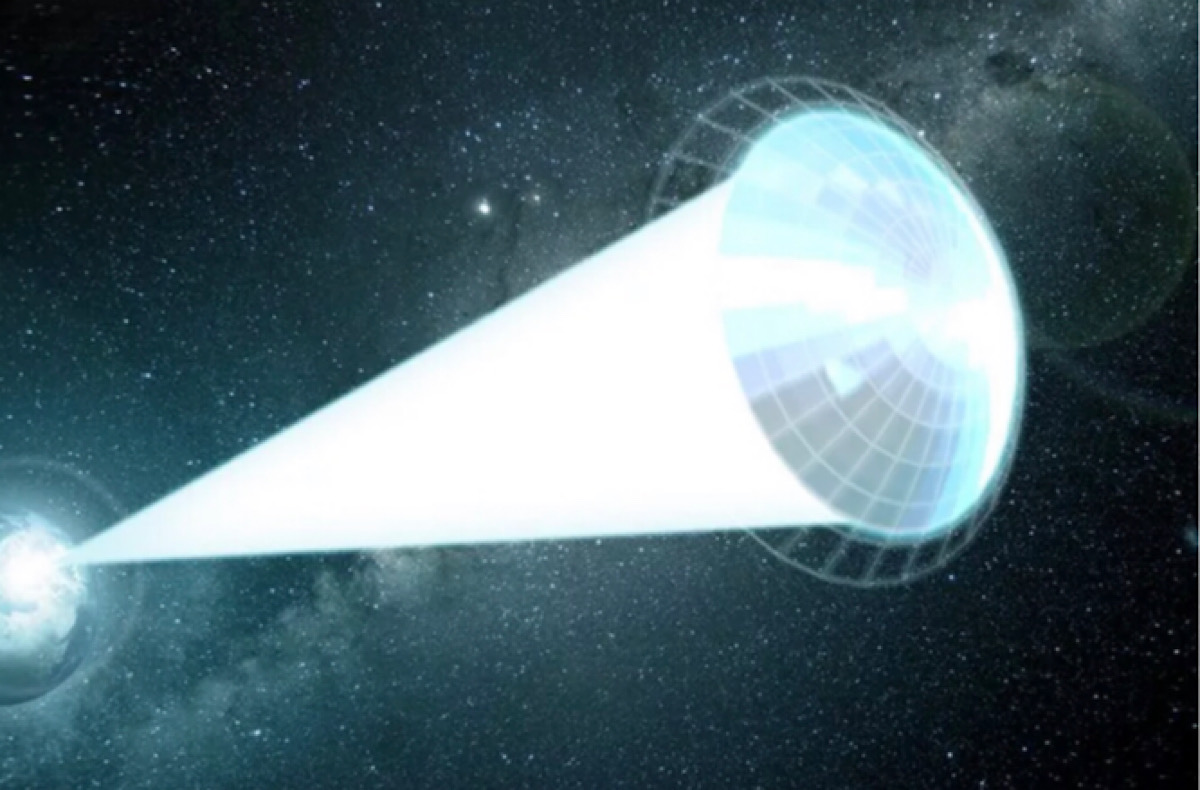
An artist’s conception of the Starshot Lightsail spacecraft during acceleration by a ground-based laser array.

By Monisha Ravisetti

For years, physicists have been trying to perfect a way to catapult space probes at a fifth the speed of light. One team is flagging an important section of the blueprint.

Only about 4 light-years away from our solar system lies Alpha Centauri, another bustling space neighborhood. It’s anchored by three stars with the same job as our sun, holds planets analogous to our eight famous orbs and may even have an Earth twin hanging out in the habitable zone.Almost like an alternate reality, the star system is a tantalizing region for space explorers.

There’s just one, glaring issue. With our present technology, spacecraft sent toward Alpha Centauri wouldn’t arrive until somewhere around the year 82022. That’s why, in 2016, late astrophysicist Stephen Hawking and investor Yuri Milner launched Breakthrough Starshot — an initiative to send microchip-size space probes over to Alpha Centauri at 20% the speed of light, reducing the whopping travel time to a mere 20 years. 

Continue reading… “This Hyperspeed Space Sail Could Take Us to Next-Door Star Systems”
Discover the Hidden Patterns of Tomorrow with Futurist Thomas Frey
Unlock Your Potential, Ignite Your Success.

By delving into the futuring techniques of Futurist Thomas Frey, you’ll embark on an enlightening journey.

Learn More about this exciting program.