American Research Team Puts New Spin On Old Technique To Produce 3D-Printed Organs

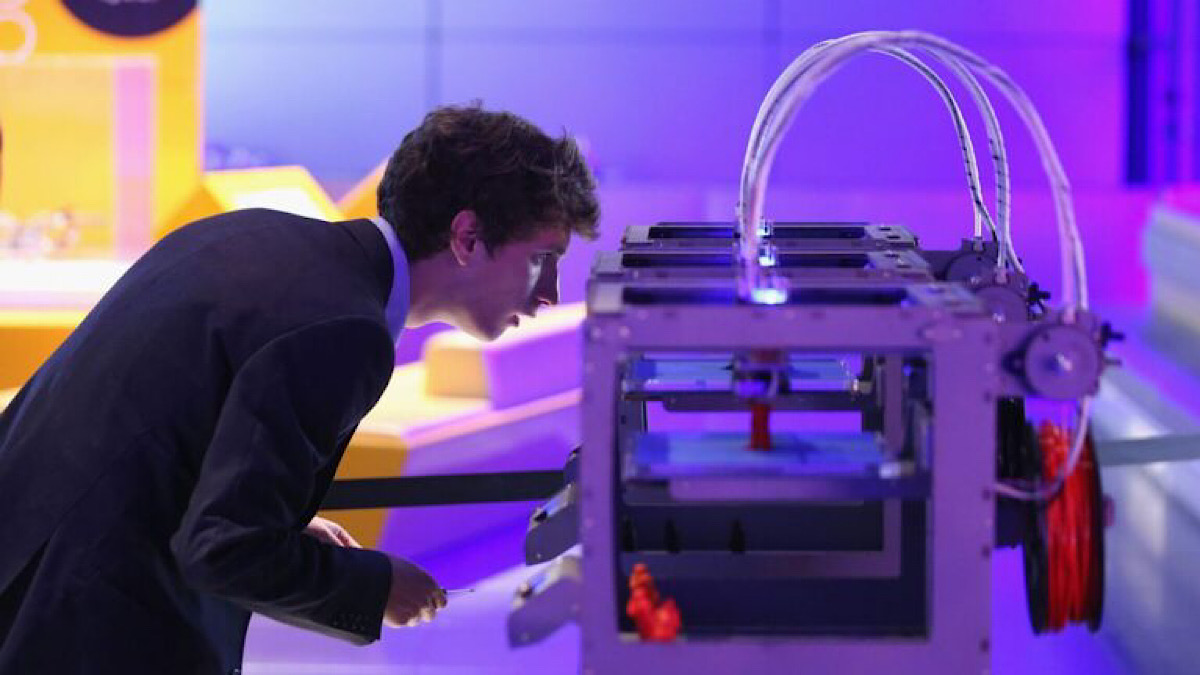
A technician checks on a 3D printer as it constructs a model human figure in the exhibition ‘3D: printing the future’ in the Science Museum on October 8, 2013 in London, England. The exhibition, which opens to the public tomorrow, features over 600 3D printed objects ranging from: replacement organs, artworks, aircraft parts and a handgun.

By Michael Leidig

The idea, however, has been beset with technical problems that have, to date, limited the type of organs that can be printed.

With too few organs to go around to satisfy the demand for transplants, scientists are now pinning their hopes on the possibility of 3D-printing technology.

In the United States alone there are an estimated 112,000 people currently waiting for urgent transplants and there is, therefore, plenty of demand for the possibility of 3D-printed organs.

The idea, however, has been beset with technical problems that have, to date, limited the type of organs that can be printed.

But researchers at the Stevens Institute of Technology, a private research university in New Jersey, are now pushing through these barriers by revamping a decades-old technique to reproduce any tissue type.

The work, led by Robert Chang, an associate professor in the mechanical engineering department at Stevens’ Schaefer School of Engineering & Science, could open up pathways for 3D printing any kind of organ at any time, even skin directly on an open wound.

Continue reading… “American Research Team Puts New Spin On Old Technique To Produce 3D-Printed Organs”

AI Speeds Precision Medicine for Parkinson’s Disease

Robotics combined with AI machine learning spots Parkinson’s disease signatures.

By Vanessa Lancaster

KEY POINTS

  • Over 10 million people worldwide live with Parkinson’s disease, including nearly a million Americans.
  • A new study uses AI deep learning that finds cellular disease signatures to help accelerate the discovery of novel therapeutics for Parkinson’s. 
  • This unique AI deep learning platform solution is not limited to Parkinson’s disease. It can be repurposed for other disease signatures.

Artificial intelligence (AI), machine learning, and robotics are accelerating precision medicine for neurodegenerative diseases and brain disorders.

A new study published in Nature Communications reveals a high-throughput screening platform using AI deep learning that finds cellular disease signatures to help accelerate the discovery of novel therapeutics for Parkinson’s disease (PD).

Continue reading… “AI Speeds Precision Medicine for Parkinson’s Disease”

Abundant “Secret Doors” on Human Proteins Could Be Game-Changer for Drug Discovery

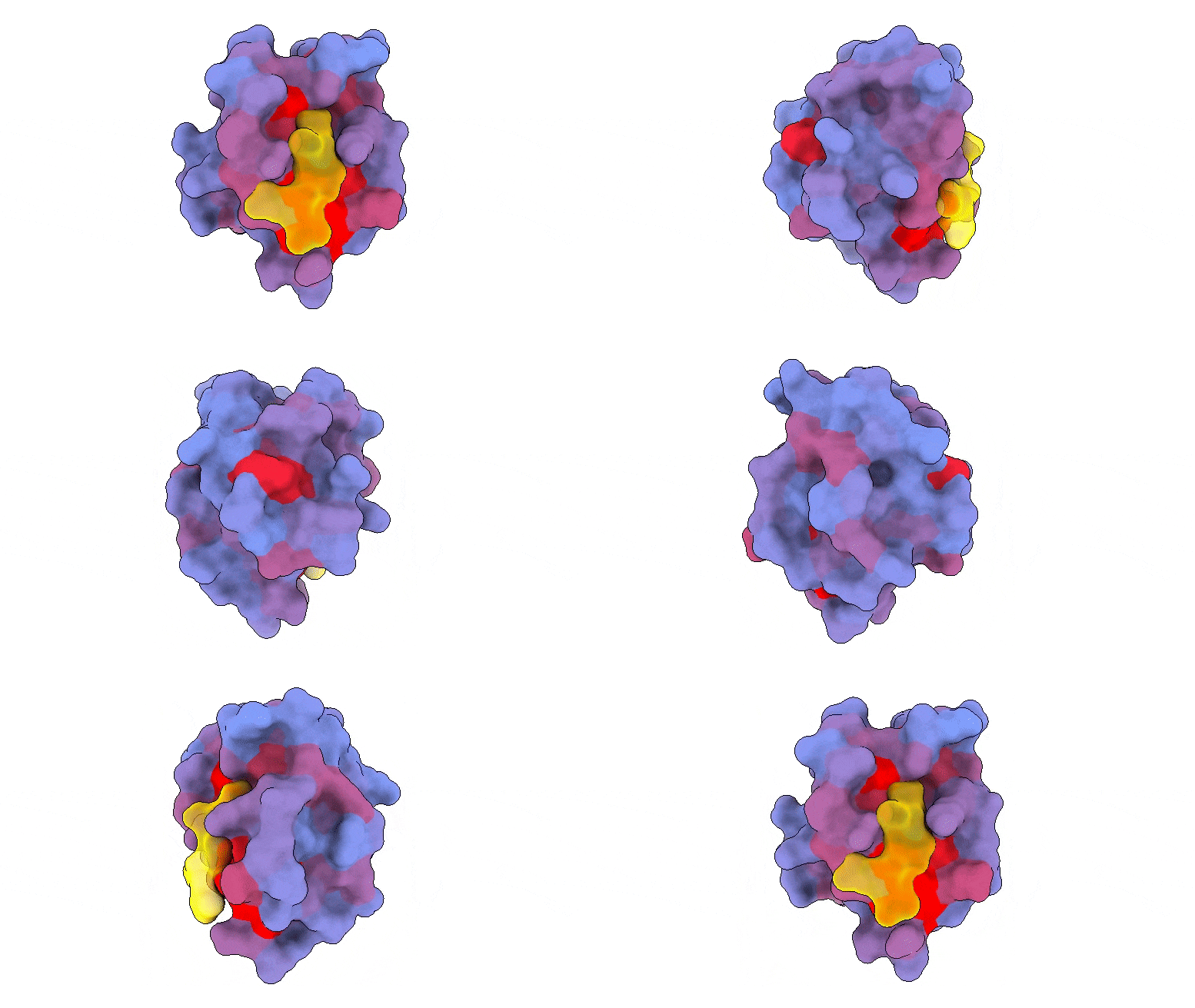
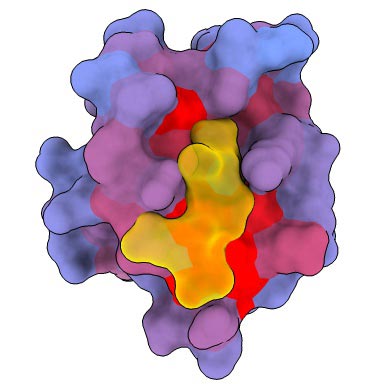
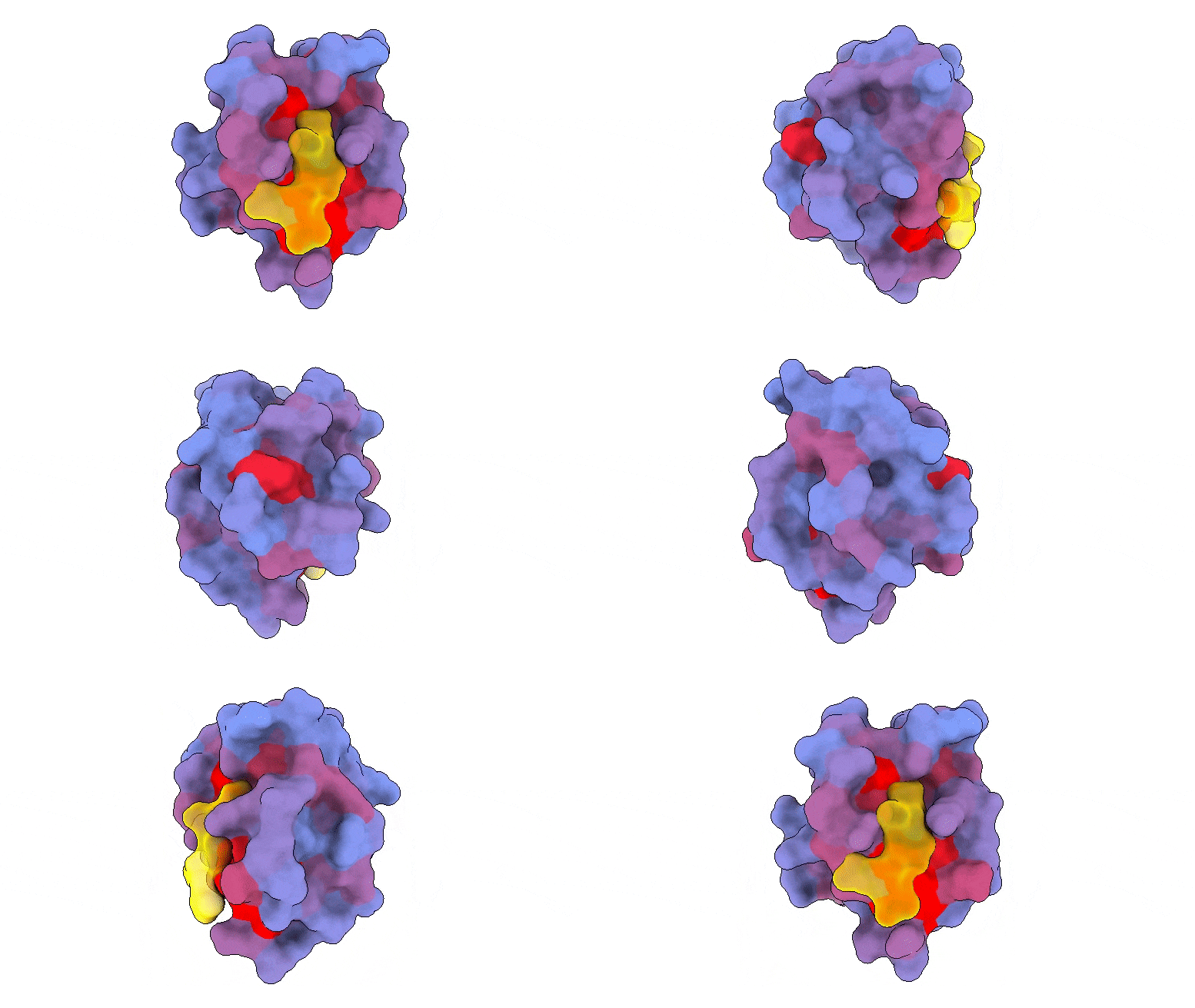
A three-dimensional animation of the human protein PSD95-PDZ3 showing the binding partner CRIPT (yellow) in the active site with the blue-to-red color gradient indicating increasing potential for allosteric effects. Based on PDB accession 1BE9.

By CENTER FOR GENOMIC REGULATION

Identification of hidden vulnerabilities on surface of ‘undruggable’ proteins could transform treatment of disease.

The number of potential therapeutic targets on the surfaces of human proteins is much greater than previously thought, according to the findings of a new study in the journal Nature.

A ground-breaking new technique developed by researchers at the Center for Genomic Regulation (CRG) in Barcelona has revealed the existence of a multitude of previously secret doors that control protein function and which could, in theory, be targeted to dramatically change the course of conditions as varied as dementia, cancer and infectious diseases.

The method, in which tens of thousands of experiments are performed at the same time, has been used to chart the first ever map of these elusive targets, also known as allosteric sites, in two of the most common human proteins, revealing they are abundant and identifiable.Official HCP Treatment Website – Partial-Onset Seizure InfoA Therapy Option May Reduce Your Patient’s Seizures. Learn Treatment Info Now.Prescription Treatment Website

The approach could be a game-changer for drug discovery, leading to safer, smarter and more effective medicines. It enables research labs around the world to find and exploit vulnerabilities in any protein – including those previously thought ‘undruggable’.

Continue reading… “Abundant “Secret Doors” on Human Proteins Could Be Game-Changer for Drug Discovery”

Pentagon wants SpaceX delivering cargo around the globe — and a live test could come next year

A SpaceX Falcon 9 rocket carrying the company’s Crew Dragon spacecraft is seen in this false color infrared exposure as it is launched on NASA’s SpaceX Demo-2 mission to the International Space Station on May 30, 2020.

By Aaron Mehta 

WASHINGTON — U.S. Transportation Command is taking the potential for cargo delivery via orbit seriously enough that it hopes to test the concept with SpaceX as soon as next year, the command’s head said Wednesday.

In what he called a “provocative thought,” Gen. Stephen Lyons said: “I’m really excited about the team that’s working with SpaceX on an opportunity, even perhaps in as early as ’21, to conduct a joint proof of principle” for space-based delivery.

The dream, Lyons told the National Defense Transportation Association, is to be able to move 80 tons of cargo — the equivalent of a C-17 transport — via a space-based vehicle anywhere on the globe within one hour.

“Think about the speed associated with that, whether a small force element or other capability,” he said. “I can tell you [SpaceX is] moving very, very rapidly in this area.”

A TRANSCOM spokesman said details of the potential “proof of principle” are being worked out with SpaceX, and it will involve “delivering cargo from one place to another through space.”

Continue reading… “Pentagon wants SpaceX delivering cargo around the globe — and a live test could come next year”

South Australian fuel stations to begin accepting Bitcoin

Motorists will soon be able to pay for their fuel with digital currencies, thanks to a deal between Crypto.com and OTR

By Ben ZACHARIAH

A major service station chain in South Australia will soon accept cryptocurrency for fuel purchases.

According to the Adelaide newspaper The Advertiser, On The Run (OTR) – operators of 170 BP service stations across the state – will begin taking Bitcoin and other cryptocurrencies from July.

Other businesses within the OTR service stations will also make the move, meaning people will be able purchase food and drink from cafes, Subway, Oporto, and Wok In A Box using the payment method.

Continue reading… “South Australian fuel stations to begin accepting Bitcoin”

90% of long-haul trucking may soon be self-driving. Are you ready to share the road with an autonomous 18-wheeler?

BY TRISTAN BOVE

Elon Musk has called them the most impactful technology on the horizon. But unions are lobbying against their widespread use, citing studies showing they may kill up to 500,000 jobs.

They are autonomous trucks, which supporters pitch as the remedy to a growing demand for shipping and for greater safety on the road. If the technology becomes good enough, the logistics industry will be radically changed, with trucks operating nearly around the clock as they crisscross the country. 

The number of companies racing to perfect automated trucking technology is long. Last year, Tesla revealed plans for its own autonomous truck called Semi, which relies on battery power and has a range of up to 500 miles. Meanwhile, Daimler, one of the world’s largest trucking companies, has announced a $573 million investment in self-driving trucks. And Aurora, another major player in the space, has gone so far as to create its own autonomous truck operating system.

Still, it will be years before drivers are completely absent from behind the wheel of 18-wheelers, experts tell Fortune. The technology must still be improved so it can reliably operate in extreme weather while officials must rewrite regulations that were originally created for human truck drivers.

As it stands, the U.S. government has opened the door to autonomous trucking—but only to a point. The U.S. Department of Transportation announced a $100 million plan for autonomous car research, including a $60 million grant for private companies. In March, Transportation Secretary Pete Buttigieg said that the government would not stand in the way of innovation, and that there would be “meaningful developments” in autonomous vehicle policy this decade.

“This is a marathon, not a sprint,” Steve Viscelli, a sociologist at the University of Pennsylvania researching automation and labor markets, told Fortune. “This is a decades-long sustained investment by the U.S. government. And so I would not bet against this technology being successful.”

Continue reading… “90% of long-haul trucking may soon be self-driving. Are you ready to share the road with an autonomous 18-wheeler?”

Ep. 80 with george selgin

Watch our interview with George Selgin on Youtube or listen on the Futurati Podcast website. 

George Selgin is a senior fellow and director emeritus of the the Center for Monetary and Financial Alternatives at the Cato Institute and professor emeritus of economics at the University of Georgia. His research covers a broad range of topics within the field of monetary economics, including monetary history, macroeconomic theory, and the history of monetary thought.

Continue reading… “Ep. 80 with george selgin”

Tiny satellites are changing the way we explore our planet and beyond

Want to go to space? It could cost you. 

This month, the SpaceX Crew Dragon spacecraft will make the first fully-private, crewed flight to the International Space Station. The going price for a seat is US$55 million. The ticket comes with an eight-day stay on the space station, including room and board – and unrivalled views. 

Virgin Galactic and Blue Origin offer cheaper alternatives, which will fly you to the edge of space for a mere US$250,000-500,000. But the flights only last between ten and 15 minutes, barely enough time to enjoy an in-flight snack.

But if you’re happy to keep your feet on the ground, things start to look more affordable. Over the past 20 years, advances in tiny satellite technology have brought Earth orbit within reach for small countries, private companies, university researchers, and even do-it-yourself hobbyists.

Continue reading… “Tiny satellites are changing the way we explore our planet and beyond”

Artificial fingertip gives robots nearly humanlike touch

3D printed skin reacts to texture and shape like our skin

Robots can be programmed to lift a car and even help perform some surgeries, but when it comes to picking up an object they have not touched before, such as an egg, they often fail miserably. Now, engineers have come up with an artificial fingertip that overcomes that limitation. The advance enables machines to sense the textures of these surfaces a lot like a human fingertip does.

The researchers are “bringing the fields of natural and artificial touch closer together … a necessary step to improve robotic touch,” says Mandayam Srinivasan, a touch researcher at the University College London who was not involved with the work.

Engineers have long sought to make robots as dexterous as people. One approach involves equipping them with artificial nerves. But, “The current state of robotic touch is generally far inferior to human tactile abilities,” Srinivasan says.

So, when researchers at the University of Bristol began designing an artificial fingertip in 2009, they used human skin as a guide. Their first fingertip—assembled by hand—was about the size of a soda can. By 2018, they had switched to 3D printing. That made it possible to make the tip and all its components about the size of an adult’s big toe and more easily create a series of layers approximating the multilayered structure of human skin. More recently, the scientists have incorporated neural networks into the fingertip, which they call TacTip. The neural networks help a robot quickly process what it’s sensing and react accordingly—seemingly just like a real finger.

Continue reading… “Artificial fingertip gives robots nearly humanlike touch”

A ‘STUNNING’ LEVEL OF STUDENT DISCONNECTION

Professors are reporting record numbers of students checked out, stressed out, and unsure of their future.

By Beth McMurtrie

In 20 years of teaching at Doane University, Kate Marley has never seen anything like it. Twenty to 30 percent of her students do not show up for class or complete any of the assignments. The moment she begins to speak, she says, their brains seem to shut off. If she asks questions on what she’s been talking about, they don’t have any idea. On tests they struggle to recall basic information.

“Stunning” is the word she uses to describe the level of disengagement she and her colleagues have witnessed across the Nebraska campus. “I don’t seem to be capable of motivating them to read textbooks or complete assignments,” she says of that portion of her students. “They are kind kids. They are really nice to know and talk with. I enjoy them as people.” But, she says, “I can’t figure out how to help them learn.”

Marley, a biology professor, hesitates to talk to her students about the issue, for fear of making them self-conscious, but she has a pretty good idea of what is happening. In addition to two years of shifting among online, hybrid, and in-person classes, many students have suffered deaths in their families, financial insecurity, or other pandemic-related trauma. That adds up to a lot of stress and exhaustion. In a first-year seminar last fall, Marley says, she provided mental-health counseling referrals to seven out of her 17 students.

Continue reading… “A ‘STUNNING’ LEVEL OF STUDENT DISCONNECTION”

EP. 79 with John Spencer

Watch our interview with John Spencer on Youtube or listen to it on the Futurati Podcast.

John Spencer is a pioneering outer space architect with design awards from NASA for his work on the International Space Station (ISS). He is the founder of the Space Tourism Society, co-founder of the Space Tourism Conference, and co-founder and Chief Creative Officer of Mars World Enterprises, Inc. His work aims at promoting and developing the Space Experience Economy (SEE).

Continue reading… “EP. 79 with John Spencer”