Hitachi Zosen Revolutionizes Synthetic Protein Production for Artificial Meat

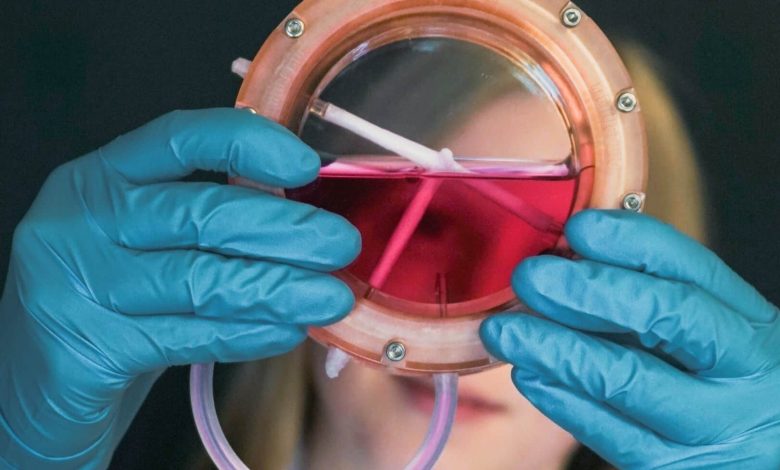
Japanese engineering giant Hitachi Zosen is set to enter the artificial meat industry by supplying synthetic protein to producers, with plans to commence sales as early as 2025. This groundbreaking development promises to reduce production costs by an impressive 90%.

The synthetic protein, essential for artificial meat production, will be crafted using a novel technique developed by NUProtein, a Tokushima-based startup in Japan. Hitachi Zosen has also contributed to cost reduction by optimizing a crucial step in the production process.

Continue reading… “Hitachi Zosen Revolutionizes Synthetic Protein Production for Artificial Meat”

Tim Peake Supports Ambitious Plan for Space-Based Solar Farms

British astronaut Tim Peake has thrown his support behind a groundbreaking concept of creating solar farms in space. This innovative approach involves using satellites to capture solar energy and then transmitting it back to ground stations in the form of microwaves. The concept has the potential to revolutionize sustainable energy generation.

At the heart of this idea lies the deployment of satellites in geostationary orbits approximately 36,000 kilometers (22,700 miles) above Earth’s surface. In this unique position, these satellites could harness solar power nearly round the clock, regardless of weather conditions, capitalizing on sunlight that is more intense than what reaches the Earth’s surface.

Continue reading… “Tim Peake Supports Ambitious Plan for Space-Based Solar Farms”

Enhancing Precision: Rice University Scientists Unveil Compact CRISPR-Cas13 System

CRISPR systems have revolutionized nucleic acid editing, and Rice University scientists have made a significant stride in this field by detailing the 3D structure of one of the smallest CRISPR-Cas13 systems known. In their study published in Nature Communications, the researchers not only examined this diminutive system but also improved its precision. This particular molecule, CRISPR-Cas13bt3, sets itself apart from other proteins in the CRISPR family.

Lead researcher Yang Gao, an assistant professor of biosciences and Cancer Prevention and Research Institute of Texas Scholar, highlighted the uniqueness of CRISPR-Cas13bt3, emphasizing its compact size. While typical CRISPR molecules contain around 1200 amino acids, this system boasts only about 700, providing an advantage due to better access and delivery to target-editing sites.

CRISPR-Cas13-associated systems, in contrast to Cas9-associated systems that target DNA, home in on RNA—the intermediary “instruction manual” that translates genetic information into protein assembly instructions. Scientists anticipate that RNA-targeting systems like these could be potent tools in combating viruses, which often use RNA for genetic encoding.

Yang Gao’s structural biology lab played a pivotal role in comprehending the system’s workings. By employing a cryo-electron microscope, they meticulously mapped the structure of CRISPR-Cas13, creating a detailed 3D model. The results yielded an unexpected revelation: this system operates differently from its Cas13 protein family counterparts.

In other Cas13 proteins, two initially separated domains come together like scissor blades when the system is activated, leading to a cut. CRISPR-Cas13bt3, however, employs a distinct mechanism. The “scissor” is already present, but it requires attachment to the RNA strand at the precise target site. To achieve this, it utilizes binding elements on two unique loops connecting different parts of the protein.

Xiangyu Deng, a postdoctoral research associate, highlighted the challenges in determining the complex protein and RNA structure, requiring significant troubleshooting to stabilize it for mapping.

Once the structural insights were gained, researchers from chemical and biomolecular engineer Xue Sherry Gao’s lab worked on enhancing the system’s precision. Their efforts involved testing the system’s activity and specificity in living cells.

The outcomes were promising, as the systems showcased a greater ability to target specific sites within cell cultures. Sherry Gao, the Ted N. Law Assistant Professor of Chemical and Biomolecular Engineering, emphasized that the work’s remarkable aspect lies in the structural biology insights guiding rational engineering improvements while maintaining high RNA editing activity.

Emmanuel Osikpa, a research assistant in the Xue Gao lab, confirmed the enhanced performance of the engineered Cas13bt3 in cellular assays, demonstrating its superior fidelity in targeting designated RNA motifs compared to the original system.

In summary, the Rice University researchers have delved into the intricacies of a compact CRISPR-Cas13 system, shedding light on its unique mechanisms and harnessing this knowledge to enhance precision in nucleic acid editing.

Revolutionary Earbuds Turn Brainwaves and Sweat into Health Data

Researchers at the University of California San Diego have pioneered a breakthrough in wearable technology, transforming ordinary earbuds into sophisticated devices capable of recording brain activity and collecting sweat lactate data. These 3D screen-printed, flexible sensors not only detect electrophysiological signals from the brain but also analyze sweat lactate, an organic acid produced during exercise and metabolic processes. The proximity of sweat glands in the ear to the brain makes earbuds an ideal tool for gathering such data.

The primary motivation behind this innovative approach is the potential to diagnose different types of seizures. With over 30 distinct categories of seizures, each impacting specific brain regions, EEG data combined with sweat lactate measurements offers valuable diagnostic insights. Beyond medical applications, these biometric data points can enhance personal performance monitoring during exercise and provide valuable insights into stress levels and focus.

Continue reading… “Revolutionary Earbuds Turn Brainwaves and Sweat into Health Data”

FedEx Unveils DexR: The AI-Powered Robot Revolutionizing Package Loading

FedEx has introduced a groundbreaking two-armed robot named DexR, engineered to automate one of the most challenging tasks faced by the company’s human workers—loading delivery trucks with packages. This innovative robot leverages artificial intelligence (AI) to efficiently stack rows of differently sized boxes within a delivery vehicle, aiming to maximize cargo space.

The complexity of this task is not to be underestimated. “Packages come in different sizes, shapes, weights, and packaging materials, and they come randomized,” explains Rebecca Yeung, Vice President of Operations and Advanced Technology at FedEx. DexR relies on a combination of cameras and lidar sensors to perceive and assess the packages, followed by intricate planning to configure the available boxes into a compact, secure arrangement, all while avoiding damage to the contents. Yeung highlights the significant advancements in AI that now make such complex decision-making feasible. DexR is currently undergoing testing, with plans for wider deployment across FedEx’s operations in the future.

Continue reading… “FedEx Unveils DexR: The AI-Powered Robot Revolutionizing Package Loading”

Mastering Micro Talk: The Art of Small Social Interactions

Small talk is the social glue that binds our interactions. It’s the foundation upon which we build friendships, foster trust with new acquaintances, transition into deeper conversations, and navigate unfamiliar social terrain. In our fast-paced lives, lengthy conversations about trivial matters may sometimes feel like a luxury. As the rhythm of modern life quickens, these expansive dialogues are gradually being replaced by what we can aptly term “micro talk.”

Micro talk comprises the subtle nods exchanged with colleagues, the swift “hi” to a neighbor, the heart emoji reaction to a friend’s Instagram story, the polite “thanks” to the cafe server, or the casual “good” in response to an inquiry about your day. Navigating this concise language of contemporary social etiquette is essential, as mastering micro talk is the gateway to more profound and meaningful conversations. Here are two key insights into the world of micro talk that can help you pave the way.

Continue reading… “Mastering Micro Talk: The Art of Small Social Interactions”

The Silent Giant in Finance: How SWIFT and CBDCs Threaten Financial Freedom

In the world of finance, one institution reigns supreme, yet it remains largely unknown to the public. This institution processes over $400 billion every day, surpassing the annual GDP of countries like Iran, Denmark, and South Africa. With a network that links over 11,000 banks and financial entities in more than 200 countries, including global central banks such as the U.S. Federal Reserve, it plays a pivotal role in the global financial system. This institution is the Society for Worldwide Interbank Financial Telecommunication (SWIFT), the backbone of worldwide finance.

SWIFT impacts us all, whether we realize it or not. If you’ve ever sent a wire transfer, it likely flowed through the SWIFT network. Even if you haven’t directly engaged in this process, your bank relies on SWIFT for managing payments on the backend.

Continue reading… “The Silent Giant in Finance: How SWIFT and CBDCs Threaten Financial Freedom”

Revolutionary Battery Innovation Promises to Alleviate Electric Vehicle Range Anxiety

Long road trips through the vast expanses of the American Midwest can evoke feelings of uncertainty, especially when you’re unsure where the next gas station might appear. Before the era of smartphones, this situation was akin to an “Exacerbated Emotional Emergency,” as drivers dreaded the looming “E” on the dashboard, signifying an empty fuel tank. The fear of being stranded on the roadside, hoping for assistance and praying for safety, was a familiar road trip nightmare. This was the precursor to “range anxiety” before electric cars came into the picture. Today, many Tesla, Lucid, and Rivian owners experience microbursts of similar anxiety when contemplating the availability of charging stations outside the Bay Area.

While electric charging stations are gradually proliferating across the country, they haven’t achieved the same ubiquity as traditional gas stations. Instead of focusing solely on faster recharging solutions, Professors Soojin Park and Youn Soo Kim from Pohang University of Science & Technology, along with Professor Jaegeon Ryu from Songang University, devised a groundbreaking way to extend the distance electric vehicles can travel before needing a recharge.

Continue reading… “Revolutionary Battery Innovation Promises to Alleviate Electric Vehicle Range Anxiety”

Space Manufacturing: The Next Frontier in Tech and Pharmaceuticals

While the space race’s public image has often focused on billionaire joyrides, tech giants are quietly exploring the realm of off-planet manufacturing. Startups are asking fundamental questions about producing computer components, harvesting stem cells, and manufacturing pharmaceuticals in space.

Research endeavors in this direction are already underway. NASA has granted a $2 million award to scientists investigating how zero-gravity conditions can enhance stem cell and gene therapy production. Defense company Northrop Grumman has partnered with a startup aiming to manufacture semiconductors in space. By the end of this decade, experts predict that everyday items will incorporate elements created beyond Earth’s boundaries.

Continue reading… “Space Manufacturing: The Next Frontier in Tech and Pharmaceuticals”

Machine Learning Aims to Improve Satellite Internet Connectivity in Canada’s Remote Areas

In Canada, rural and remote communities often rely on satellite connections for internet access. However, these connections frequently suffer from technical glitches, leading to frequent service disruptions. Bridging the digital divide between rural and urban areas has proven to be a persistent challenge, despite advancements in technology.

A potential solution is on the horizon, as a group of researchers from the National Research Council (NRC) and the University of Waterloo in Canada is harnessing the power of machine learning to tackle this age-old problem.

Identifying Issues Before They Escalate

The team has developed the Multivariate Variance-based Genetic Ensemble Learning Method, which combines various AI-driven techniques to detect abnormalities in satellites and satellite networks before they escalate into significant problems, as detailed in a recent press release.

Continue reading… “Machine Learning Aims to Improve Satellite Internet Connectivity in Canada’s Remote Areas”

NASA to Use Blockchain Technology to Verify Moon Landing Data

NASA, in collaboration with Lonestar, a computing startup in Florida, and the Isle of Man, is preparing to send a payload to the Moon in February 2024. This payload will include “data cubes,” and the data stored within them will be verified on Earth using blockchain technology.

The primary objective is to utilize blockchain technology to conclusively and immutably verify future Moon landings, starting with NASA’s Artemis 3 mission in 2025. The Artemis mission’s second phase, Artemis 2, is scheduled for launch in November 2024. While Artemis 2 will involve a crewed mission orbiting the Moon before returning to Earth, Artemis 3 aims to land humans on the lunar surface once again. As part of numerous scientific missions during the Artemis expeditions, Lonestar and the Isle of Man are collaborating to develop long-term lunar storage systems powered by solar energy, requiring minimal additional infrastructure.

Continue reading… “NASA to Use Blockchain Technology to Verify Moon Landing Data”

Tesla Optimus: The Advancements in Tesla’s Humanoid Robot

In a recent video posted by the official Tesla Optimus account, Tesla’s humanoid robot, Optimus, has demonstrated significant progress. The video showcases Optimus operating on the same end-to-end neural network used in Tesla’s cars, enabling it to process video input and generate control output.

The video commences with Optimus, also known as the Tesla Bot, performing a self-calibration routine, a crucial step in adapting to new environments. It highlights how Optimus utilizes its vision and joint position sensors to accurately determine the position of its limbs in space, entirely independent of external feedback. This capability empowers Optimus to interact with objects and execute tasks with precision and dexterity.

Continue reading… “Tesla Optimus: The Advancements in Tesla’s Humanoid Robot”
Discover the Hidden Patterns of Tomorrow with Futurist Thomas Frey
Unlock Your Potential, Ignite Your Success.

By delving into the futuring techniques of Futurist Thomas Frey, you’ll embark on an enlightening journey.

Learn More about this exciting program.