Walmart Builds the Future with 3D Printed Expansion in Alabama

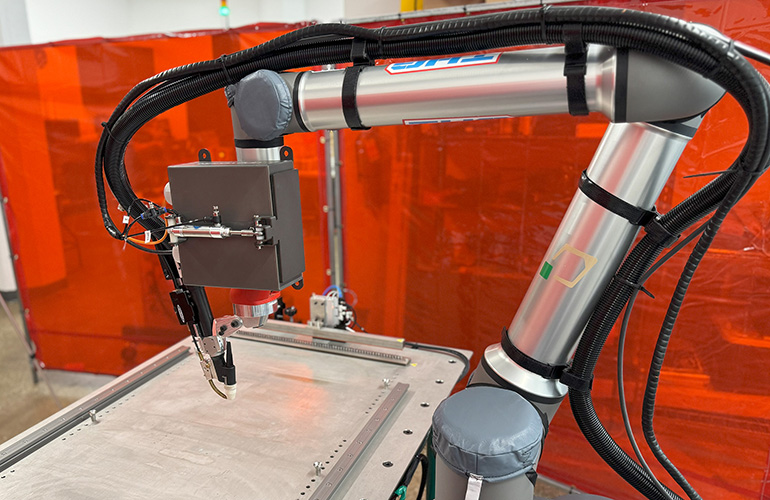
Walmart, in partnership with 3D printing company Alquist, has completed the expansion of a Supercenter in Owens Cross Roads, Alabama using large-scale 3D concrete printing (3DCP). As part of a pilot project to explore innovative construction methods, the companies built a 5,000-square-foot pickup area for online orders in just seven days—a major improvement in speed and efficiency over traditional construction.

The project utilized two large-format 3D concrete printers to produce 16-foot-high wall segments in a total of 75 hours. A five-person crew was able to complete the structure about 50% faster than conventional building methods, showcasing the potential for rapid deployment in commercial construction.

Continue reading… “Walmart Builds the Future with 3D Printed Expansion in Alabama”

Living Concrete: Scientists Develop Self-Healing Material Using Synthetic Lichen

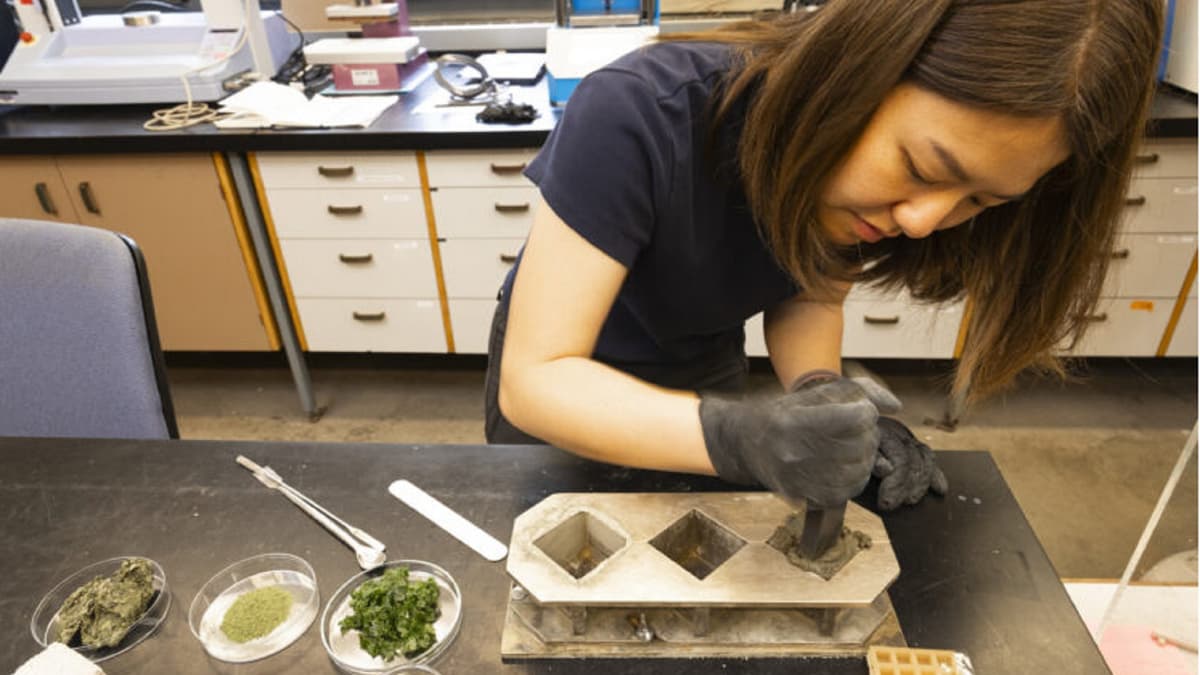
In a breakthrough that could transform global infrastructure, researchers in the U.S. have engineered a new form of self-healing concrete inspired by nature. Powered by air, sunlight, and water, the innovative material uses synthetic lichen to autonomously repair its own cracks, offering a sustainable and low-maintenance alternative to traditional concrete.

The project, led by Dr. Congrui Grace Jin, an assistant professor at Texas A&M University, mimics the natural symbiosis found in lichens—resilient organisms formed through a partnership between fungi and algae or cyanobacteria. By replicating this biological relationship with engineered microbes, Jin and her team have created a concrete system capable of maintaining and reinforcing itself without external intervention.

Continue reading… “Living Concrete: Scientists Develop Self-Healing Material Using Synthetic Lichen”

Sound-Powered Innovation: Researchers Use Ultrasound to Create Safer, Stronger Hydrogels

A team of scientists from McGill University and Polytechnique Montréal has developed a groundbreaking method to create hydrogels using ultrasound—offering a faster, cleaner, and more sustainable alternative to traditional manufacturing techniques. This new approach eliminates the need for potentially toxic chemical initiators and results in hydrogels that are stronger, more flexible, and more resistant to freezing and dehydration.

Hydrogels are water-absorbing polymer networks commonly used in medical and industrial applications, such as wound dressings, drug delivery, tissue engineering, contact lenses, and soft robotics. Traditional fabrication methods typically depend on chemical initiators to trigger gel formation, some of which can pose safety risks—particularly for biomedical use.

Continue reading… “Sound-Powered Innovation: Researchers Use Ultrasound to Create Safer, Stronger Hydrogels”

Smart Face Masks Detect Kidney Disease Through Breath Analysis

Engineers and scientists from Italy have transformed a common post-pandemic accessory—the face mask—into a powerful diagnostic tool capable of detecting chronic kidney disease (CKD) by analyzing a person’s breath. The device uses embedded gas sensors to identify disease-linked compounds with over 93% accuracy, offering a non-invasive, low-cost method for monitoring a condition that affects nearly 10% of the global population.

The new technology is built into FFP2-style face masks and incorporates four miniature gas sensors positioned between the mask’s inner fabric layers. These sensors track chemical signatures in exhaled breath associated with poor kidney function, including ammonia, acetone, dimethyl sulfide, and trimethylamine. When kidney function declines, these substances accumulate in the body and become detectable in the breath.

Continue reading… “Smart Face Masks Detect Kidney Disease Through Breath Analysis”

Sun-Powered Sponge Device Harvests Water from Air, Even in Dry Climates

A team of engineers from Australia and China has developed a sponge-like device that can extract drinkable water from the air, even in low humidity conditions where traditional methods like fog harvesting and radiative cooling typically fail. Powered entirely by the sun, the innovation offers a promising solution for water scarcity in remote or disaster-affected areas.

Designed by researchers from RMIT University in Melbourne and five Chinese institutions, the device functions effectively across a wide range of environmental conditions, including humidity levels between 30% and 90% and temperatures from 5 to 55 degrees Celsius.

Continue reading… “Sun-Powered Sponge Device Harvests Water from Air, Even in Dry Climates”

Robots Learn to “Feel” Objects by Shaking Them: A New Era in Sensor-Free Perception

In a major step forward for robotics, researchers from MIT, Amazon Robotics, and the University of British Columbia have developed a novel technique that allows robots to assess the properties of objects—such as weight, softness, or internal contents—by simply picking them up and giving them a gentle shake. Remarkably, this method relies solely on internal sensors, eliminating the need for external cameras or tactile systems.

This innovative approach mimics a common human behavior: gauging what’s inside a box by lifting and shaking it. By enabling robots to do the same, the team has created a low-cost, efficient method for robots to interpret the physical world, especially in environments where vision-based systems are impractical—like dark basements or disaster-stricken buildings.

Continue reading… “Robots Learn to “Feel” Objects by Shaking Them: A New Era in Sensor-Free Perception”

The Rise and Fall of Prompt Engineering: A Vanishing Role in the Age of AI

Just two years ago, prompt engineering emerged as a promising new job in the tech world. As large language models (LLMs) like ChatGPT took center stage, companies began seeking out specialists who could craft the most effective prompts to maximize AI performance. These professionals acted as intermediaries, translating human intentions into language that AIs could process efficiently.

Today, that role has virtually disappeared.

At the onset of the corporate AI boom, some organizations experimented with hiring prompt engineers to manage internal AI tools. But the need for dedicated roles quickly diminished. Now, crafting strong prompts is seen as a basic skill—something embedded into broader job functions rather than a specialized position. In many cases, companies even rely on AI itself to generate high-quality prompts.

Continue reading… “The Rise and Fall of Prompt Engineering: A Vanishing Role in the Age of AI”

How the Industrial Metaverse Is Revolutionizing Manufacturing

What once required a team of engineers physically pushing car chassis through factory assembly lines is now handled entirely in simulation. At BMW, digital twins—virtual replicas of entire factories—allow engineers to test and refine production processes long before a single piece of machinery is installed. This shift is part of a larger transformation happening in manufacturing, driven by what’s now being called the industrial metaverse.

While consumer visions of the metaverse have faltered, the industrial application of these technologies is thriving. The industrial metaverse—an ecosystem of interconnected simulations, sensors, 3D models, and augmented reality—offers manufacturers the ability to virtually plan, test, and optimize physical processes in a digital environment. According to the World Economic Forum, the industrial metaverse is expected to reach a global market value of $100 billion by 2030.

Continue reading… “How the Industrial Metaverse Is Revolutionizing Manufacturing”

3D-Printed Woodlouse Trap Offers Eco-Friendly Solution for Gardeners

A clever 3D-printed model by the maker “Overton Prints” is providing gardeners with a humane and effective way to manage woodlice (also known as pillbugs) in their garden beds. Shared for free on the Thingiverse platform, the design can be printed using any standard FDM 3D printer, making it accessible to hobbyists and gardening enthusiasts alike.

Rather than eliminating the woodlice, the goal of the design is to relocate them from sensitive garden areas to locations where they can continue their beneficial role in decomposition—such as compost heaps. The trap works without any bait. Instead, it uses the natural behavior of woodlice, which are drawn to cool, damp, and dark environments. The printed model is designed to recreate this ideal microclimate, making it an attractive refuge for the pests.

Continue reading… “3D-Printed Woodlouse Trap Offers Eco-Friendly Solution for Gardeners”

Breakthrough in Robotic Touch: Researchers Solve Key Sensor Flaw for Smarter, More Sensitive Robots

A team of researchers from Northwestern University and Tel Aviv University has made a critical discovery that could revolutionize robotic touch by making it more sensitive, accurate, and affordable. The advancement addresses a previously unnoticed flaw in the materials commonly used in flexible sensors—paving the way for robotic skins that better mimic the human sense of touch.

At the heart of the breakthrough is a deeper understanding of conductive elastomer composites, materials often used in robotic sensors and wearable electronics. The team discovered that a thin, nearly invisible insulating layer forms on the surface of these composites during manufacturing. This layer interferes with electrical conductivity and causes inconsistent, unreliable data from touch sensors.

Continue reading… “Breakthrough in Robotic Touch: Researchers Solve Key Sensor Flaw for Smarter, More Sensitive Robots”

Advancing Dry Eye Research: How 3D Printing Is Transforming Ophthalmological Diagnostics

An interdisciplinary project at the University of South Florida (USF) is leveraging 3D printing to enhance ophthalmological research focused on dry eye disease. This collaboration between the Morsani College of Medicine and the USF IT 3D Print Lab centers on developing a specialized, curved test model to support a newly designed laser scanner. The goal is to improve measurement accuracy of the tear film thickness on the cornea, a key factor in understanding and diagnosing dry eye conditions.

A major obstacle in this type of imaging diagnostics is the complex, curved geometry of the human cornea. Traditional calibration tools, such as the flat 1951 USAF Resolution Test Chart, are inadequate for scanners intended to map curved surfaces. To overcome this, the USF 3D Print Lab team, led by Lucas Tometich, designed a model that closely replicates the natural curvature of the cornea.

Continue reading… “Advancing Dry Eye Research: How 3D Printing Is Transforming Ophthalmological Diagnostics”

Smart Sorting: AI and X-Ray Technology Improve Safety in Waste Recycling

The improper disposal of electronic waste is becoming a growing issue, with many devices being discarded alongside regular plastic waste. This is particularly hazardous when these electronics contain lithium-ion batteries. If damaged during the recycling process, these batteries can ignite and cause fires in sorting plants.

In Germany, over 10,000 fires occur each year in waste sorting facilities, and approximately 80% of these incidents are linked to lithium-ion batteries. These batteries are commonly found in items such as smartphones, electric toothbrushes, and musical greeting cards. When thrown away with packaging waste, they can be crushed or punctured during sorting, leading to fires that cause an estimated one billion euros in damage annually.

Continue reading… “Smart Sorting: AI and X-Ray Technology Improve Safety in Waste Recycling”
Discover the Hidden Patterns of Tomorrow with Futurist Thomas Frey
Unlock Your Potential, Ignite Your Success.

By delving into the futuring techniques of Futurist Thomas Frey, you’ll embark on an enlightening journey.

Learn More about this exciting program.