The Future of the Grocery Store
What Happens When Shopping Stops Requiring a Shopper
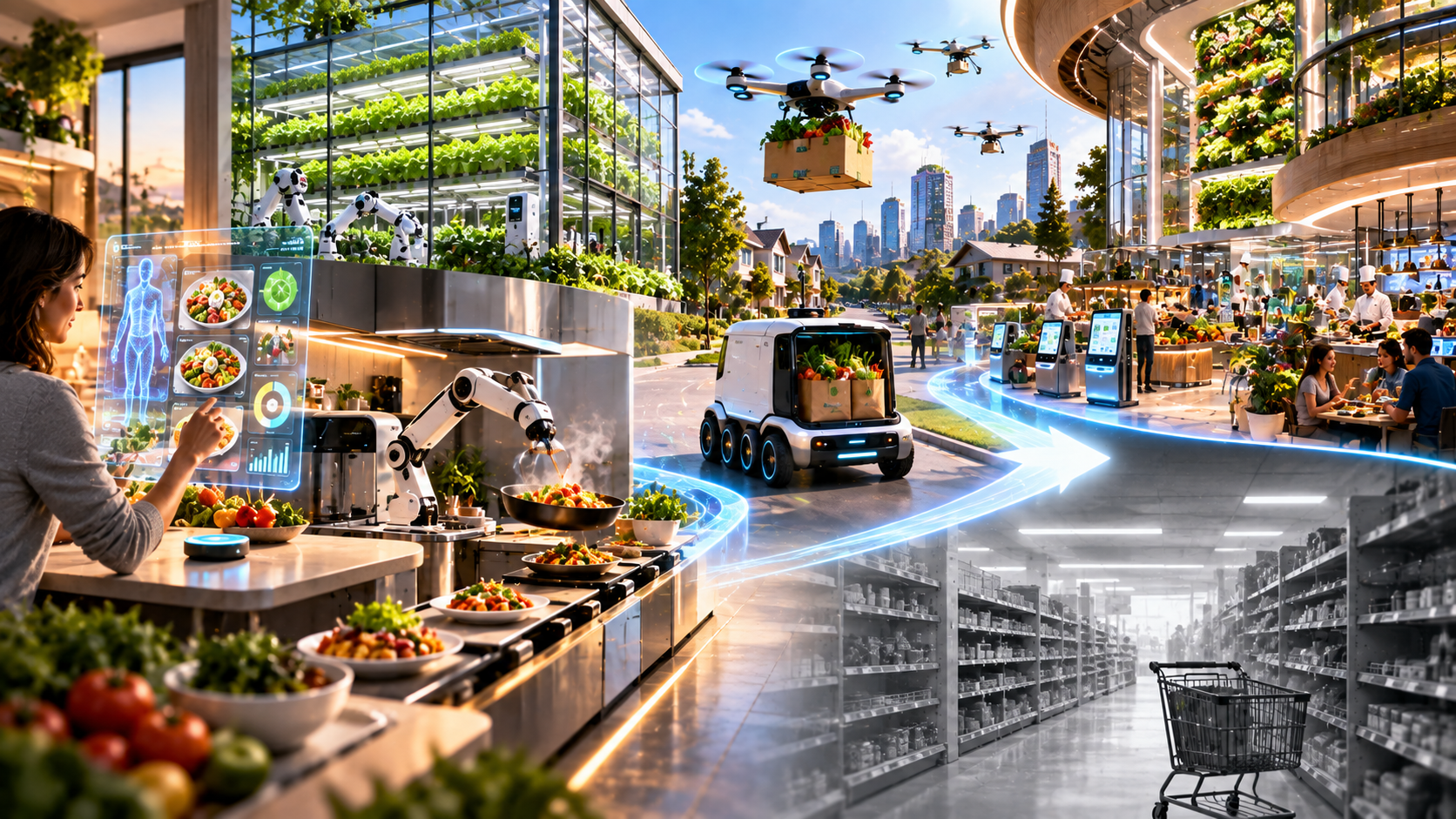
Predictive purchasing, automated kitchens, personalized nutrition, robotic delivery, and locally produced food could steadily eliminate reasons to wander supermarket aisles. Grocery stores may evolve into food-production and experience centers — or disappear from some communities altogether.
I want you to picture something that would have sounded like science fiction a decade ago, but that a handful of grocery chains are already building toward right now: you tell an AI assistant you want a healthy dinner your kids will actually eat for under forty dollars, and a complete shopping cart appears in seconds — priced, in stock, matched to your family’s preferences and your usual store — without you ever touching a single aisle.
This isn’t a hypothetical. At Groceryshop 2026 in Las Vegas, Instacart’s CEO opened the conference with exactly that example, telling an audience of more than 4,000 retail leaders, “I believe that AI is going to transform grocery more than any other technology shift to date.” DoorDash reported that customers using its new conversational shopping tool are building baskets fifty percent larger and checking out five times faster than customers using a traditional app. Kroger, one of the largest grocers in America, is now openly exploring what it calls a “managed service” model, where you stop making a weekly list altogether and simply hand your goals to an AI agent that plans and completes the shop for you.
The grocery store, as a physical destination you navigate with a cart and a list, is being quietly dismantled from the inside. The question worth asking isn’t whether this happens. It’s what’s left standing once it does.
Continue reading… “The Future of the Grocery Store”