Why Utopias Are Impossible: Three Simple Proofs

By Futurist Thomas Frey

I’ve often said there is no such thing as utopia. Even though millions of people believe in perfect societies where everyone is happy, needs are met, and conflicts don’t exist—they simply can’t happen. Not because we haven’t tried hard enough, but because utopias violate basic logic.

This isn’t pessimism or cynicism. It’s reality. And here’s why.

Continue reading… “Why Utopias Are Impossible: Three Simple Proofs”

The End of Ownership: When AI Makes Possessions Obsolete by 2040

By Futurist Thomas Frey

By 2040, you’ll stop owning most of your stuff. Not because you can’t afford it—because owning things will make no sense.

This isn’t about subscription services or sharing economy 2.0. This is something more fundamental: the convergence of personalization, robotics, and micro-manufacturing making on-demand production so efficient that ownership becomes economically irrational and logistically unnecessary.

Your AI won’t help you shop. It’ll simply have things made and delivered when you need them, then recycled when you’re done. Possessions become temporary—summoned when useful, disappeared when not.

Continue reading… “The End of Ownership: When AI Makes Possessions Obsolete by 2040”

The Rainbow Chip: How One Laser Becomes Many Colors Without Trying

By Futurist Thomas Frey

Researchers at the University of Maryland’s Joint Quantum Institute just solved one of photonics’ most frustrating problems: they’ve designed and tested new chips that reliably convert one color of light into a trio of hues, and remarkably, the chips all work without any active inputs or painstaking optimization.

This might sound like an incremental improvement—better lasers, more colors, so what? But it’s actually revolutionary. These chips take a single invisible telecom laser and passively transform it into red, green, and blue light automatically, with no tuning, no adjustment, and no delicate calibration. And that changes everything about how we build quantum computers, ultra-precise atomic clocks, optical communication systems, and photonic processors.

Continue reading… “The Rainbow Chip: How One Laser Becomes Many Colors Without Trying”

Mining Our Garbage: How Robotic Earthworms Will Turn Landfills Into Gold Mines

By Futurist Thomas Frey

I’ve always thought that our most valuable land in the future will be our landfills—because that’s where we’re burying our most valuable resources.

Think about what we throw away: rare earth metals in electronics, copper in wiring, aluminum in cans, plastics that could be reprocessed, organic matter that could generate energy. We’re essentially creating underground treasure vaults and then forgetting about them, piling more garbage on top year after year.

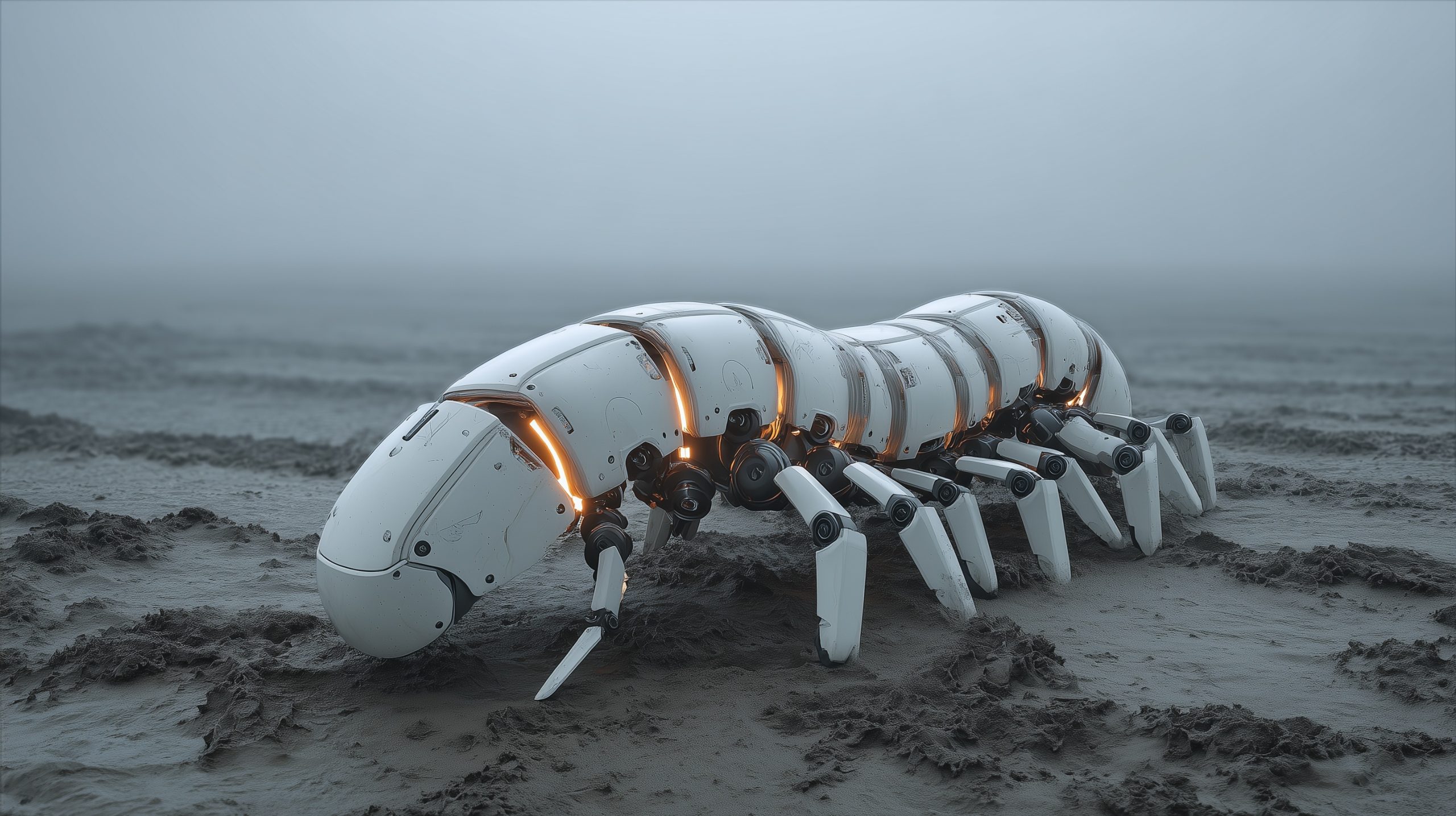
By 2040, someone will invent what I call robotic earthworms—autonomous mining systems capable of tunneling through landfills, extracting valuable materials, and replacing extracted waste with clean soil. And when that happens, the economics of waste management will invert completely.

Landfills won’t be environmental liabilities we pay to maintain. They’ll be mineral deposits we pay to access.

Continue reading… “Mining Our Garbage: How Robotic Earthworms Will Turn Landfills Into Gold Mines”

Your Personal Risk Map: When AI Predicts Danger Before It Happens

By Futurist Thomas Frey

By 2040, you’ll wake up to something nobody in history has ever had: a personalized risk map for your entire day.

Not a weather forecast or traffic report—a comprehensive assessment of every danger you’ll face in the next 24 hours, from catastrophic to trivial, calibrated specifically to your vulnerabilities. And more importantly, your day will be dynamically rerouted to avoid those dangers before they materialize.

This is one of the most counterintuitive transformations coming: for the first time in human existence, we’ll live with a “future risk lens” built into ordinary life, constantly showing us dangers we can’t see and guiding us away from harm we’d never anticipate.

Continue reading… “Your Personal Risk Map: When AI Predicts Danger Before It Happens”

The Era of Separation: How AI Fractures Society Into Dozens of Distinct Tribes

By Futurist Thomas Frey

We’re entering what I call the Era of Separation—a period where AI, robotics, and automation don’t just change society but fracture it into dozens of distinct populations living fundamentally different lives.

This isn’t the traditional divide between rich and poor, educated and uneducated, or even digital natives versus digital immigrants. This is something more complex and more profound: an entire architecture of new social separations emerging simultaneously, each creating populations with incompatible experiences, capabilities, and worldviews.

By 2040, the question “How do you live?” will have dozens of valid answers that describe completely different realities.

Continue reading… “The Era of Separation: How AI Fractures Society Into Dozens of Distinct Tribes”

When Forgetting Becomes Optional: The End of Human Memory Loss

By Futurist Thomas Frey

There’s a moment most of us know too well: standing in the kitchen, drawer half-open, completely blank on what you came for. Or that sickening realization that you forgot your mom’s birthday. Again.

By 2040, these moments won’t just be rare—they’ll feel quaintly obsolete, like missing a phone call because you were out of the house.

We’re approaching a peculiar threshold in human experience. For the first time in our species’ history, forgetting will become optional.

Continue reading… “When Forgetting Becomes Optional: The End of Human Memory Loss”

What Will Watching TV Look Like in 2040? Everything Changes

By Futurist Thomas Frey

Should you buy a new TV today? That depends on how long you plan to keep it—because by 2040, the entire concept of “watching TV” will be unrecognizable from what we do now.

The simple act of sitting on a couch staring at a glowing rectangle mounted on the wall is about to undergo its most radical transformation since the invention of television itself. And yes, if you’re planning to keep that TV for 15 years, you might want to wait. Here’s why.

Continue reading… “What Will Watching TV Look Like in 2040? Everything Changes”

The Future of Shoes: When Footwear Becomes Your Personal Health System

By Futurist Thomas Frey

I personally have a number of foot issues. At age 19, I froze my feet working to repair an accident on our family farm in South Dakota—spending hours in subzero temperatures trying to fix equipment that broke at the worst possible time. I’ve dealt with the consequences ever since—circulation problems, sensitivity to cold, periodic pain that flares up without warning. But I’m not unique. Everyone has foot issues at one time or another—plantar fasciitis, bunions, arch pain, swelling, neuropathy, gait problems that cause knee or back pain. Foot problems are universal, often chronic, and profoundly affect quality of life.

That’s why the most taken-for-granted object in our lives—shoes—is about to become one of the most sophisticated health devices we own.

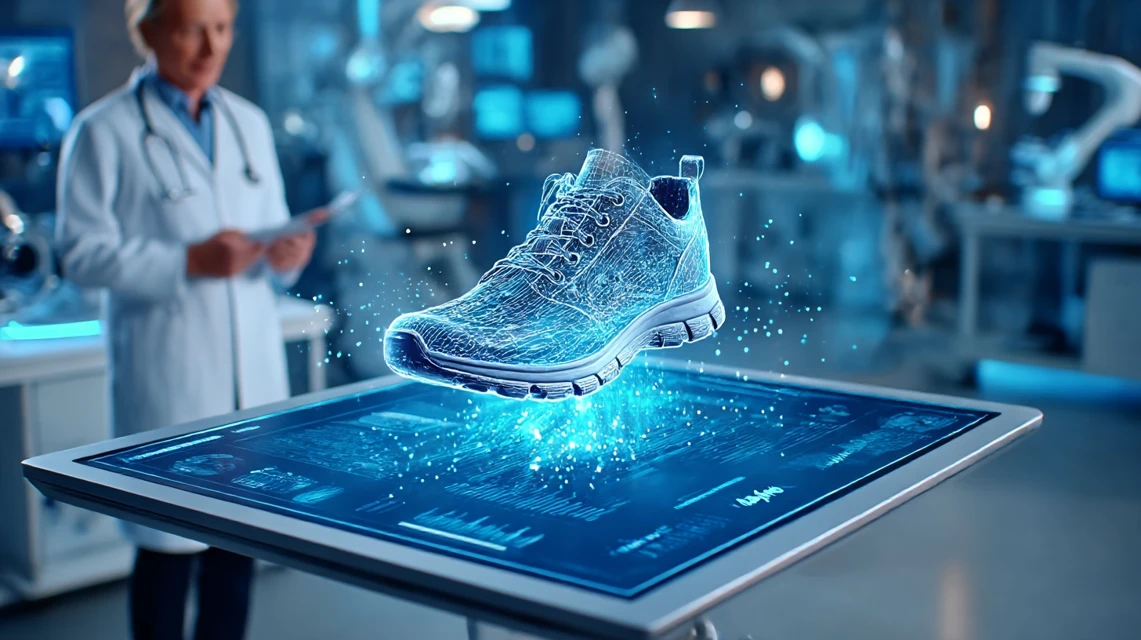
By 2040, shoes won’t just protect your feet—they’ll actively monitor your health, adjust to your body in real-time, prevent falls before they happen, and fix biomechanical problems that cause pain throughout your body. Footwear is about to go through its biggest transformation in history, evolving from passive protection to active health management.

Continue reading… “The Future of Shoes: When Footwear Becomes Your Personal Health System”

Synthetic Healing: The Next Frontier in Regenerative Medicine

By Futurist Thomas Frey

Healing is about to stop being something your body does and start being something we engineer.

For all of human history, recovery from injury has been a passive process—your body either heals itself or it doesn’t. Medicine could prevent infection, set bones, stitch wounds. But the actual healing? That happened on biology’s timeline, with biology’s limitations, leaving scars, incomplete repairs, and permanent damage.

Synthetic healing changes everything. Instead of waiting for your body to slowly regenerate damaged tissue, we’ll engineer the repair—using lab-grown tissues, programmable molecules, AI-guided nanorobots, and synthetic biological systems that don’t just match natural healing but exceed it.

This is the next frontier in regenerative medicine: making healing faster, more complete, and controllable. By 2040, synthetic healing will transform recovery from something that happens to you into something we design and deploy with precision.

Continue reading… “Synthetic Healing: The Next Frontier in Regenerative Medicine”

Search Is Broken: The Chaotic Transition from Links to AI Answers by 2040

By Futurist Thomas Frey

Search is dying. Not dramatically—gradually, messily, in ways that make finding information simultaneously easier and harder than it was five years ago.

Traditional search doesn’t work like it used to. Google’s AI Overview appears on top of search results with AI-generated summaries that have been found guilty of bias, hallucinated facts, and misquoted sources. The blue links you click are increasingly buried beneath AI-generated answers that may or may not be accurate. Google’s AI Overviews reduced organic click-through rates by an estimated 20-40%, meaning the websites that used to get traffic from search are starving while Google feeds you AI-summarized information without sending you anywhere.

AI search works better for some things—ask ChatGPT or Perplexity a question and you get direct answers instead of links. But it’s early, unreliable, and breaking the internet’s economic model in ways we haven’t figured out how to fix.

By 2040, search as we knew it will be unrecognizable. But the transition between now and then will be chaotic, economically destructive, and fundamentally change how information flows online.

Continue reading… “Search Is Broken: The Chaotic Transition from Links to AI Answers by 2040”

The Neumann Engine: Building Self-Replicating Innovation Ecosystems by 2040

By Futurist Thomas Frey

In 2023, I introduced the concept of the Neumann Engine—a self-replicating system for cities to thrive in the AI era by turning economic decline into innovation opportunity. Named after mathematician John von Neumann’s self-replicating machine theories, the Neumann Engine isn’t a single technology or institution. It’s a complete economic operating system that enables cities to generate prosperity through AI-powered entrepreneurship, autonomous coordination, and continuous adaptation.

By 2040, this concept will have evolved into one of the era’s defining megaprojects: The Neumann Engine Mega-Region Initiative—a $1 trillion global fund creating dozens of self-sustaining tech mega-regions across Europe, Asia, and the Americas. Linked AI-driven innovation corridors will connect continents, each designed as a fusion of venture studios, smart logistics, and autonomous governance.

The outcome: cities that don’t just survive AI disruption but use it as fuel for continuous economic reinvention. Self-replicating innovation ecosystems that spread across regions, creating prosperity exactly where traditional manufacturing and service economies are collapsing.

This is how post-industrial cities avoid becoming permanent decline zones—and how the global economy restructures around AI-native innovation rather than trying to preserve jobs that AI makes obsolete.

Continue reading… “The Neumann Engine: Building Self-Replicating Innovation Ecosystems by 2040”
Discover the Hidden Patterns of Tomorrow with Futurist Thomas Frey
Unlock Your Potential, Ignite Your Success.

By delving into the futuring techniques of Futurist Thomas Frey, you’ll embark on an enlightening journey.

Learn More about this exciting program.