3D printers can make everything from toys to jewelry to food, but now makers are starting to think bigger. So big, in fact, that there is now a 3D printer that can print entire pieces of furniture. (Pics and video)
The pace of technological innovation is accelerating quickly.
The news has been turning into science fiction for a while now. TVs that watch the watcher, growing tiny kidneys, 3D printing, the car of tomorrow, Amazon’s fleet of delivery drones – so many news stories now “sound like science fiction” that the term returns 1,290,000 search results on Google.
Workers install solar electric panels on a residential rooftop.
The head of America’s second-largest power company, David Crane, said microgrids will soon phase out large centralized electrical grids making the industry’s current business model obsolete.
Scientist Angelo Vermeulen on a Mars mock-up in Hawaii.
NASA has big plans for Mars in the coming decades, including intentions to blast a fifth rover onto the planet’s surface by 2020 and send a manned mission by 2030.
Wage discrimination isn’t a problem women face in the tech industry.
For a long time, Silicon Valley has suffered the reputation of being unwelcoming to women, from brogrammer attitudes to sexist apps to gender inclusivity. Whatever problems women may have with the tech industry, wage discrimination isn’t necessarily one of them. New research shows that there is no statistically significant difference in earnings between male and female engineers who have the same credentials and make the same choices regarding their career.
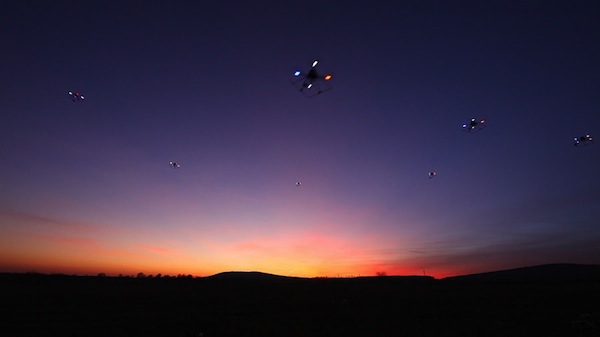
The first drones that can fly as a coordinated flock has been created by Hungarian researchers. The team watched as the ten autonomous robots took to the air in a field outside Budapest, zipping through the open sky, flying in formation or even following a leader, all without any central control. (Video)
Boulder County has more tech startups per capita than any U.S. metropolitan area, and it’s no wonder – the brightest minds flock to Boulder to work with companies that define innovation on a daily basis. And not only do startups thrive, seasoned technology companies and professionals find that being in this vibrant community is a large contributing factor to their long-term success.
Embedded tracking technologies are being used to remotely monitor individual health and performance.
Personal wearable devices are painting a more intimate picture of your health and overall fitness level by the data they are collecting. The real opportunity of wearables may be in connecting that information to a person who can help us make sense of the data and in turn, build a new relationship between patients and experts, one that carries with it highly personalized layers of analysis and recommendations.
One day robots will replace humans in certain jobs.
Eric Schmidt, Google chairman, thinks robots have their work cut out for them if they want to replace people. “There’s something about humans that technologists always forget,” he said. “Humans are creative and unpredictable.”
You probably carry around a few gadgets. You probably have your smartphone, maybe a tablet or e-reader. You may also have a fitness band or even a second smartphone. That’s a lot of stuff to carry. Imagine instead having just a single gadget that you deform physically into different shapes to suit your needs. (Pics and video)
The Maker Movement Encompasses all kinds of activity from traditional crafts to high-tech electronics.
In recent years, one of the more significant trends is the impact of technology on homemade manufacturing. The Maker Movement, a diffuse entrepreneurial community, has been using open source design to drive a telling resurgence in American manufacturing. Encompassing all kinds of activity from traditional crafts to high-tech electronics, linked by the adoption of digital tools, not just for design, but increasingly for manufacture through 3-D printing, technology has transformed DIY enthusiasts operating on their own at home into real communities.
Bringing business class travel to driverless cars.
Countries from the U.S. to Singapore will likely have self-driving cars on roadways by 2020. These road-aware vehicles will theoretically do away with nearly all traffic collisions and reduce traffic congestion. Auto designer Rinspeed, however, has fixed its considerable talent on another aspect of the autonomous car: just what to do with the passengers. (Photos)