Findings debunk dozens of prominent published papers claiming to read minds with EEG.
By PURDUE UNIVERSITY
Is it possible to read a person’s mind by analyzing the electric signals from the brain? The answer may be much more complex than most people think.
Purdue University researchers – working at the intersection of artificial intelligence and neuroscience – say a prominent dataset used to try to answer this question is confounded, and therefore many eye-popping findings that were based on this dataset and received high-profile recognition are false after all.
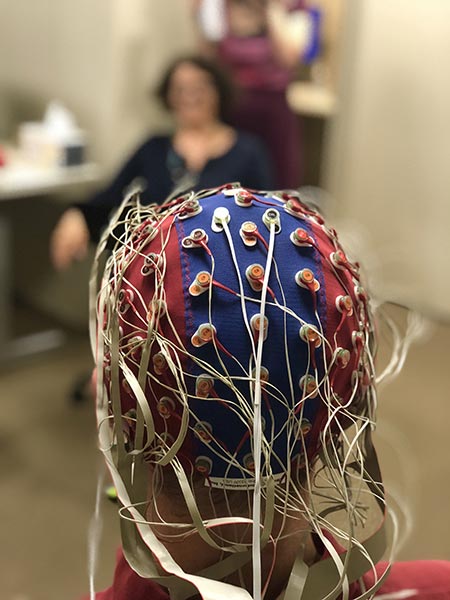
The Purdue team performed extensive tests over more than one year on the dataset, which looked at the brain activity of individuals taking part in a study where they looked at a series of images. Each individual wore a cap with dozens of electrodes while they viewed the images.
The Purdue team’s work is published in IEEE Transactions on Pattern Analysis and Machine Intelligence. The team received funding from the National Science Foundation.
Purdue University researchers are doing work at the intersection of artificial intelligence and neuroscience. In this photo, a research participant is wearing an EEG cap with electrodes.
Continue reading… “Blind Spots Uncovered at the Intersection of AI and Neuroscience – Dozens of Scientific Papers Debunked”