SkyDrive Unveils SD-05 Flying Car Design, Aiming to Begin Air Taxi Service in 2025

TOYOTA, Japan, Sept. 30, 2022 /PRNewswire/ — SkyDrive Inc. has unveiled the design of its commercial model flying car — the SkyDrive SD-05.

SkyDrive is planning to use the SD-05, currently in development, to launch air taxi service in the Osaka Bay area during the world exposition scheduled for 2025 in Osaka, Japan.

“This is another big step towards the realization of flying cars and sky roads,” said Takumi Yamamoto, SkyDrive design director. “Two years have passed since the announcement of the SD-03, which successfully completed its public manned flight test in August 2020, and we are very happy to be able to announce its successor, the SD-05.”

Headquartered in Toyota City, Aichi Prefecture, SkyDrive is a leading developer and manufacturer of flying cars (*1) and cargo drones in Japan.

Continue reading… “SkyDrive Unveils SD-05 Flying Car Design, Aiming to Begin Air Taxi Service in 2025”
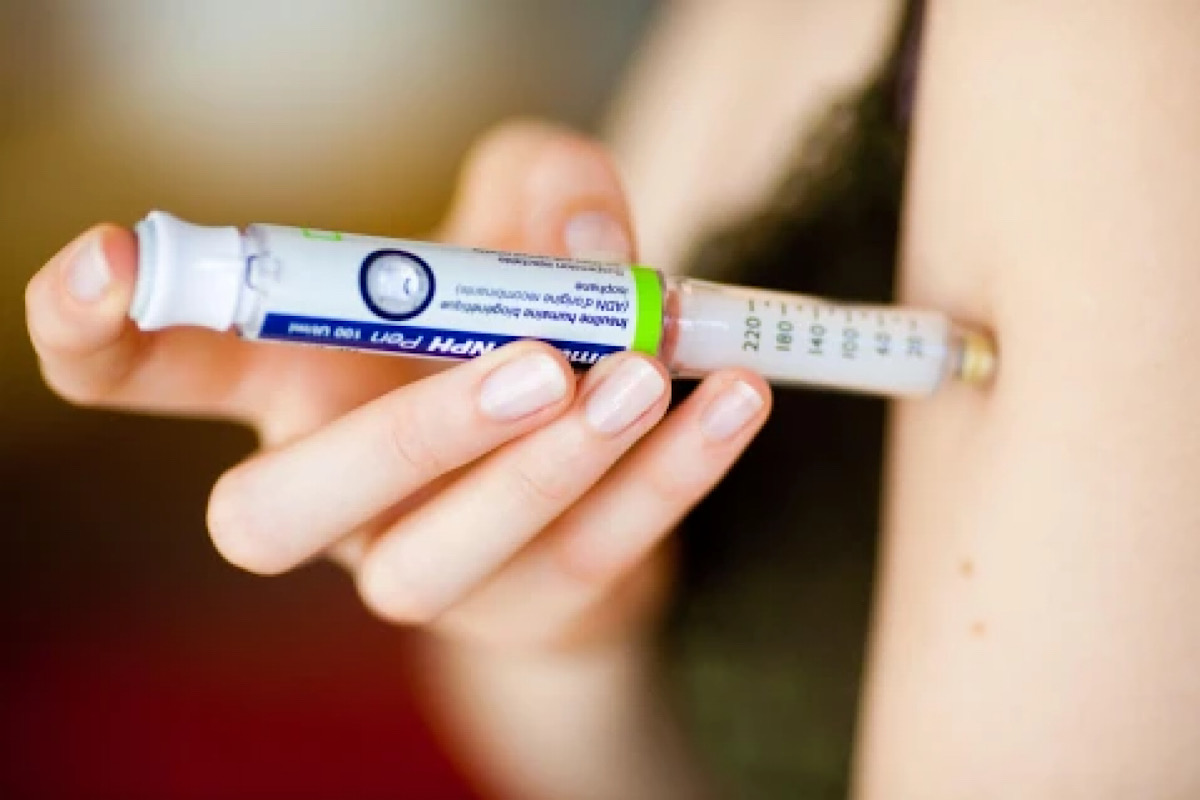
Robot pill could help replace insulin injections for diabetics

A robotic pill could replace the need for diabetics to regularly inject themselves with insulin

By Mark Waghorn

A robot pill that delivers insulin directly to the gut could replace multiple painful injections for people with diabetes.

It can also deliver antibiotics – offering hope of battling superbugs with oral medications.

For patients and physicians, taking treatments by mouth is most desirable. Swallowing is safer, more convenient and less invasive.

But they drugs often cannot withstand stomach acids before unleashing their payloads for the intended effects. The degradation makes them less effective.

The capsule, called RoboCap, could revolutionise therapy. In a swine model, it increased permeability for insulin more than tenfold.

Similar results were seen for vancomycin – an antibiotic that is usually delivered intravenously.

Lead author Dr Giovanni Traverso, of Massachusetts Institute of Technology (MIT) in the US, said: ‘Peptides and proteins are important drugs.

‘But the degradative environment of the gastrointestinal tract and poor absorption has limited the ability to deliver these drugs orally.’

Continue reading… “Robot pill could help replace insulin injections for diabetics”

Lyft plans ‘fully autonomous future’ as it starts driverless car rides to customers in Austin, Texas

Riders in Austin, Texas can now select an autonomous vehicle in the Lyft app to help them get around their city.

BY MARK ALLINSON 

This marks the first time that a commercial autonomous service is available in Austin, Texas and marks the third city where Lyft riders can hail an autonomous ride along with Miami, Florida and Las Vegas, Nevada.

Most people’s first autonomous vehicle experience will be on a ride hailing network like Lyft. For riders in Austin, this new ride mode looks just like any other Lyft ride. Riders can hail an autonomous vehicle (a Ford self-driving car powered by Argo AI technology) directly in the Lyft app for the same price as a normal Lyft ride. 

Riders will be able to control their ride without the assistance of a driver. When their vehicle arrives, the rider can unlock the doors, start their ride, and even contact customer support all from within the Lyft app.

At this time, a rider will also be accompanied by two safety operators, as Lyft says it prepares for a “fully autonomous future”.

Continue reading… “Lyft plans ‘fully autonomous future’ as it starts driverless car rides to customers in Austin, Texas”

Wearable Sensor Promises More Efficient Early Cancer Drug Development

Posted on September 27th, 2022 by Lawrence Tabak, D.D.S., Ph.D.

Wearable electronic sensors hold tremendous promise for improving human health and wellness. That promise already runs the gamut from real-time monitoring of blood pressure and abnormal heart rhythms to measuring alcohol consumption and even administering vaccines.

Now a new study published in the journal Science Advances [1] demonstrates the promise of wearables also extends to the laboratory. A team of engineers has developed a flexible, adhesive strip that, at first glance, looks like a Band-Aid. But this “bandage” actually contains an ultra-sensitive, battery-operated sensor that’s activated when placed on the skin of mouse models used to study possible new cancer drugs. 

This sensor is so sensitive that it can detect, in real time, changes in the size of a tumor down to one-hundredth of a millimeter. That’s about the thickness of the plastic cling wrap you likely have in your kitchen! The device beams those measures to a smartphone app, capturing changes in tumor growth minute by minute over time.

The goal is to determine much sooner—and with greater automation and precision—which potential drug candidates undergoing early testing in the lab best inhibit tumor growth and, consequently, should be studied further. In their studies in mouse models of cancer, researchers found the new sensor could detect differences between tumors treated with an active drug and those treated with a placebo within five hours. Those quick results also were validated using more traditional methods to confirm their accuracy.

Continue reading… “Wearable Sensor Promises More Efficient Early Cancer Drug Development”

HAL to advance India’s space race with launch of new cryogenic engine facility

By Anthony Wright

A new state-of-the-art cryogenic engine manufacturing facility is set to be inaugurated by the President of India, Droupadi Murmu in Bengaluru today (27th September).

Commissioned by Indian aerospace company Hindustan Aeronautics Limited (HAL), the 4500m2 Integrated Cryogenic Engine Manufacturing Facility (ICMF) will be used to manufacture and test cryogenic (CE20) and semi-cryogenic (SE2000) engines for the Indian Space Research Organisation (ISRO). 

The most widely used engines for launch vehicles designed to send rockets into space, cryogenic engines are highly complex and only a handful of countries are involved in their manufacture. 

In 2014, India successfully flew the GSLV-D5 launch vehicle with a cryogenic engine built by ISRO, which led to it becoming just the sixth country to develop cryogenic engines. 

ISRO and HAL signed a Memorandum of Understanding (MoU) in 2013 to enable HAL’s Aerospace Division to manufacture cryogenic engine modules. 

Continue reading… “HAL to advance India’s space race with launch of new cryogenic engine facility”

Chipotle is moving its tortilla robot to a real restaurant | Engadget

Chipotle’s tortilla-making robot will soon help out in a restaurant you can visit. The chain has unveiled a slew of technology updates that include moving the Miso Robotics-made Chippy robot to a real restaurant. The machine will start cooking tortilla chips in a Fountain Valley, California location in October. Feedback from customers and workers will help the company decide on a national rollout.

Artificial intelligence will influence some human cooks, too. Chipotle is piloting a demand-based cooking system that uses AI to tell staff what and when to cook based on forecasts for how much they’ll need. In theory, this lightens the load for employees while making sure there’s enough freshly-cooked tacos and burritos when you show up for dinner. The pilot is underway at eight Orange County, California restaurants.

Continue reading… “Chipotle is moving its tortilla robot to a real restaurant | Engadget”

Prime picking! New Amazon warehouse robot can handle ONE THOUSAND items per hour using ‘pinch-grasp’ technology to mimic human workers

By CHRISTOPHER CARBONE

Amazon’s new pinch-grasping robot can handle and stow 1,000 items per hour, which is significantly faster than human workers 

The prototype uses cameras, algorithms and machine learning to mimic how human hands grasp items of varying sizes and shapes

A video posted to the retail giant’s science blog showed the machine moving 19 items of varying size and shape in one minute 

‘We’re able to identify a specific item in the scene and use machine learning to know how best to pick it up and to move it quickly and without damage’

A new ‘pinch-grasping’ robot system unveiled by Amazon shows the machine deftly grabbing and stowing a wide range of items – moving at a rate of 1,000 items per hour, which is far faster than a human worker could.

Although humans don’t spend much time figuring out how to grasp a bottle from the back of the fridge that might fall and break open, teaching a robot to deal with cluttered spaces, locate a wide range of items and deftly move them is a challenge for the retail giant’s robotics division.

In a video posted to Amazon’s science blog, the robot prototype can be seen using its finger-like pinchers to move and stow 19 items – including small bags, a broom, a spice container and a small box – in 60 seconds. 

Continue reading… “Prime picking! New Amazon warehouse robot can handle ONE THOUSAND items per hour using ‘pinch-grasp’ technology to mimic human workers”

How VR & AR will transform the medical world 

A transformation is about to, and arguably already is, taking place in the medical world. The world we think we know is shifting at an astronomical speed, as VR and AR make their way into health care and health tech. 

By Kirsty Rigg 

Virtual Reality and Augmented Reality have power and appeal for one simple reason – they create a world where the impossible becomes possible. Just imagine what that could mean for healthcare… 

Eugene Canavan, medical design director at Design Partners (part of PA Consulting), shares his expert insights with Health Tech World, indicating how these breakthrough technologies will “revolutionise” medicine and surgical procedures.

Here’s what he had to say:

Continue reading… “How VR & AR will transform the medical world “

Isro develops artificial smart limb to aid amputees

Isro has developed a smart limb using microprocessors that are used in space exploration. 

By India Today Web Desk: The India Space Research Organisation (Isro) has developed an artificial smart limb that could help amputees in walking with a comfortable gait. The artificial limb is a spin-off from space technology that could be manufactured for commercial use soon. The smart is expected to be cheaper by about ten times.

The newly announced smart tech is called Microprocessor-Controlled Knees (MPKs), which offers extended capabilities for the amputee more than those offered by the passive limbs that do not use the microprocessors. Nearly 1.6 kilograms in weight, Isro says the smart limb under development, at the moment, enabled an amputee to walk about 100 meters in the corridor with minimum support.

These smart MPKs are being developed by Vikram Sarabhai Space Centre (VSSC), Isro under an MoU with the National Institute for Locomotor Disabilities (NILD), Pt. Deendayal Upadhyaya National Institute for Persons with Physical Disabilities, and the Artificial Limb Manufacturing Corporation of India (ALIMCO).

Continue reading… “Isro develops artificial smart limb to aid amputees”

This electric autonomous delivery robot can bring pizza to your door

Global mobility technology company Magna has developed an electric autonomous pizza delivery robot, aiming to reduce last mile delivery costs and carbon emissions in cities.

By Roselyne Min

A small, white, three-wheeled vehicle threads its way through parked cars and traffic to the doors of hungry pizza eaters in the US city of Detroit.

The autonomous delivery robot detects and avoids pedestrians and obstacles thanks to its cameras, radar and LiDAR (Light Detection and Ranging) remote sensing technology.

The company that developed the bot, Magna, says it’s exclusively powered by electricity and can travel at speeds of up to 32 km/h. 

Continue reading… “This electric autonomous delivery robot can bring pizza to your door”

Cornell Scientists Create Microscopic Robots With Electronic ‘Brains’

By Ryan Whitwam

We’ve seen tiny robots before, but never like this. Researchers from Cornell have created the first microscopic robots that operate without any form of external control. These nanomachines have all the hardware they need on board, including a basic electronic brain. They just need a little solar energy, and off they go. They’re currently very limited devices, but the designers envision almost unlimited applications. 

The research, which was led by postdoctoral researcher Michael Reynolds, built on research that was already happening at Cornell. Previously, Cornell set the world record for the smallest walking robot, but the new version is infinitely smarter. Reynolds developed robots between 100 and 250 micrometers across with an electronic circuit that controls the robot. That eliminates the need for an external control mechanism like heat or magnetism, which is required for other tiny robots. Reynolds says those robots are more like marionettes than true robots. 

The brain inside these robots is a simple complementary metal-oxide-semiconductor (CMOS) clock circuit. It contains just a thousand transistors, which is nothing compared with the billions that exist in today’s full-scale computer processors. The purpose of the circuit is to generate phase-shifted square waves that control the walking gait of the robot, which it does automatically when the integrated photovoltaic cells are exposed to light. The team tested three different designs with two, four, and six legs. The fastest among them can walk at a blistering 10 micrometers per second — that’s pretty fast given the microscopic scale. 

Continue reading… “Cornell Scientists Create Microscopic Robots With Electronic ‘Brains’”
Discover the Hidden Patterns of Tomorrow with Futurist Thomas Frey
Unlock Your Potential, Ignite Your Success.

By delving into the futuring techniques of Futurist Thomas Frey, you’ll embark on an enlightening journey.

Learn More about this exciting program.