Is your doctor providing the right treatment? This healthcare AI tool can help

By Sean Michael Kerner

How does a medical professional stay aware of the right procedures and treatments for patient ailments in the modern world? While many often rely on experience, there is another way that could have life-saving consequences. The trick is, it relies heavily on the power of artificial intelligence (AI).

New York-based medical startup H1 released a new update to its HCP Universe platform today to inject a dose of healthcare AI into medical intelligence. The HCP Universe platform is currently used by medical affairs teams at life sciences companies, which make sure doctors are aware of and use the latest science and medicine. 

Continue reading… “Is your doctor providing the right treatment? This healthcare AI tool can help”

How AI is being used to improve 3D printing

By Adam Zewe

  • Scientists and engineers often manually use trial-and-error to find the optimum parameters to consistently 3D print new materials effectively.
  • But researchers have now streamlined the process by training a machine-learning model to monitor and adjust the 3D printing process to correct errors in real-time.
  • The system could help engineers easily incorporate novel materials into their prints and allow technicians to adjust the printing process if material or environmental conditions change unexpectedly.

Scientists and engineers are constantly developing new materials with unique properties that can be used for 3D printing, but figuring out howto print with these materials can be a complex, costly conundrum.

Often, an expert operator must use manual trial-and-error — possibly making thousands of prints — to determine ideal parameters that consistently print a new material effectively. These parameters include printing speed and how much material the printer deposits.

MIT researchers have now used artificial intelligence to streamline this procedure. They developed a machine-learning system that uses computer vision to watch the manufacturing process and then correct errors in how it handles the material in real-time.

Continue reading… “How AI is being used to improve 3D printing”

Dronedek offers ‘next generation’ mailbox for drone, robotic delivery

Tested in Indiana, ‘world’s first smart mailbox’ for drone, robot and traditional mail delivery debuted on ‘Fox & Friends’

By Kerry J. Byrne

Indiana company debuts first smart mailbox ready for drone delivery.

The future of mail delivery arrived Tuesday morning on “Fox & Friends” with what co-host Lawrence Jones called “the world’s first smart mailbox.”

“This is the Dronedek, which is the next-generation mailbox,” said Dronedek founder and CEO Dan O’Toole, as he demonstrated the service outside a brick commercial building on a rainy day in Lawrence, Indiana.

Co-hosts Jones, Steve Doocy and Ainsley Earhardt marveled at the moment of innovation from the New York City studio.

Continue reading… “Dronedek offers ‘next generation’ mailbox for drone, robotic delivery”

AI Tools Can Predict DNA Structure and Regulation

Predicted 3D structure for a segment of human genomic DNA.

Newly developed artificial intelligence (AI) programs accurately predicted the role of DNA’s regulatory elements and three-dimensional (3D) structure based solely on its raw sequence, according to two recent studies in Nature Genetics. These tools could eventually shed new light on how genetic mutations lead to disease and could lead to new understanding of how genetic sequence influences the spatial organization and function of chromosomal DNA in the nucleus, said study author Jian Zhou, Ph.D., Assistant Professor in the Lyda Hill Department of Bioinformatics at UTSW.

“Taken together, these two programs provide a more complete picture of how changes in DNA sequence, even in noncoding regions, can have dramatic effects on its spatial organization and function,” said Dr. Zhou, a member of the Harold C. Simmons Comprehensive Cancer Center, a Lupe Murchison Foundation Scholar in Medical Research, and a Cancer Prevention and Research Institute of Texas (CPRIT) Scholar.

Only about 1% of human DNA encodes instructions for making proteins. Research in recent decades has shown that much of the remaining noncoding genetic material holds regulatory elements – such as promoters, enhancers, silencers, and insulators – that control how the coding DNA is expressed. How sequence controls the functions of most of these regulatory elements is not well understood, Dr. Zhou explained.

Continue reading… “AI Tools Can Predict DNA Structure and Regulation”

Robot dogs could soon patrol US Space Force’s station

They could be part of safety protocols and emergency responses

By Ameya Paleja

  • Robot dogs can work well in natural as well as man-made environments
  • They are ideal for repetitive tasks and can also be controlled remotely
  • Patrol dogs are much better than their gun-totting counterparts

The U.S. Space Force conducted a demonstration using robot dogs in a bid to automate repetitive security tasks at its Cape Canaveral spaceport, a military press release said. 

Robot dogs have been touted as replacements for many routines and highly hazardous tasks since they can get the job done without being exposed to risk, truly man’s best friend. While companies like Boston Dynamics have planned to use them for civilian and emergency purposes, those like Ghost Robotics are working to develop military applications for the same technology. 

Continue reading… “Robot dogs could soon patrol US Space Force’s station”

Telexistence to install AI re-stocking robots in 300 convenience stores across Japan

 BY MAI TAO

Telexistence has started the mass production of its originally developed artificial intelligence robot, TX SCARA, to be installed in 300 FamilyMart stores, Japan’s top-tier convenience store chain in major metropolitan areas, starting later this month, validating its AI-based “robot-as-a-service” solution for grocery retailers.

TX SCARA was created to do the specific task of restocking refrigerated shelves with bottles and cans, a repetitive, tedious job generally performed by employees in often uncomfortable settings.

TX SCARA can be in operation 24/7, replenishing shelves at a pace of up to 1,000 bottles and cans per day, relying almost completely on its AI system – known as “GORDON” – to know when and where products need to be placed on the shelves. 

The implementation of AI robots in FamilyMart stores will allow retailers to take advantage of the newly created time and economic “surplus” in the store environment. Retailers can focus on further improvements in the store environment for both employees and customers, as well as the profitability of each store.

Tomohiro Kano, general manager of store development department and railway and corporate franchisee department, of FamilyMart, says: “The decline in Japan’s labor population is one of the key management issues for FamilyMart to continue stable store operations.

Continue reading… “Telexistence to install AI re-stocking robots in 300 convenience stores across Japan”

ORGANS IN ORBIT 

Nasa sending ‘materials similar to human tissues and organs’ to dark side of Moon

By Charlotte Edwards

NASA is planning to send some female body parts to space on its upcoming Moon mission.

The unusual passengers will be rocketed past the dark side of the Moon later this month as part of the Artemis I mission.

The US space agency is planning to send real women to the Moon but it’s thought the female body has a bigger risk of negative impacts from space radiation.

This is where mannequins Helga and Zohar come into play.

The two torsos are said to be made up of materials similar to the bones, soft tissues, and organs of a female adult human.

Over 10,000 sensors and radiation detectors will be tracking the effects of space on these materials as Helgar and Zohar travel around the Moon.

The plan is to send the two identical torsos to space on the Artemis 1 mission that will be testing out all the tech that should take humans to the Moon in a few years time.

Nasa plans to rocket Artemis 1 into space later this month and send its Orion capsule looping around the Moon.

The current launch date is scheduled for August 29.

Continue reading… “ORGANS IN ORBIT “

Kumulus H2O Generator Solves Problem of 1 Billion People: Threatens Bottled Water Industry

By Cristian Curmei

Imagine for a moment that you live in an area where water is hard to come by. What do you do? The most common occurrence is to travel endless kilometers or miles to the nearest watering hole. Or, you can consider that we live in modern times, and science and technology are now indispensable weapons against age-old problems.

Like most other things humans create, all of it is because of necessity; after all, it’s the mother of invention. Let’s take the Kumulus One as the perfect example of what can be achieved when tech and science are used to attack problems that communities around the world may be facing. In this case, that problem is a lack of drinking water.

Folks, Kumulus One is nothing more than an apparatus that has been designed by a group of people that seek to shape our eco-friendly future. In the process, giving rise to a machine that can harness the power of the Sun and the humidity in the air around it to create pure drinking water. Simple. 

Suppose you haven’t heard of this gadget yet. In that case, it’s because the Kumulus is a rather fresh contraption on the market, having only recently popped up in Tunisia and in a diverse range of fairs and exhibitions. It’s here the Kumulus team raised awareness of the lack of drinking water around the world, why it’s a right to have clean water, and how their solution works. I’m guessing that finding investors is also part of this plan.

Continue reading… “Kumulus H2O Generator Solves Problem of 1 Billion People: Threatens Bottled Water Industry”

Panda Express developed a robot wok

The beginning of the end for fast food workers?

Written by Greg Nichols

As employees are becoming harder to find, fast casual restaurants have been investing in more automation. According to one estimate, the global food technology market is estimated to reach $342 billion by 2027, and there are ample signs that fast food, in particular, is embracing automation.

The latest example? Panda Express has rolled out a robotic wok, dubbed the Panda Auto Wok (PAW). The move comes on the heels of fast-casual restaurants like White Castle, Chipotle, and Jack in the Box adopting robotic systems for the back of the house cooking. Is this the end of the fast food worker? Do consumers even care in a pandemic-influenced market where convenience and touchless delivery reign supreme? 

I connected with Stanley Liu, VP of Operation Services, to talk about tofu, changing priorities in the food business and robots. The bottom line is that the restaurant industry is hyper-competitive, and efficiency is the only way to survive. 

Continue reading… “Panda Express developed a robot wok”

Tesla setting up to overtake Toyota as the world’s largest carmaker

Elon Musk says Tesla is working towards a production of 20 million new cars annually – which, if all sold, would be twice the sales figures of the world’s number one carmaker, Toyota.

By Ben Zachariah

Tesla is preparing to boost production, with CEO Elon Musk telling shareholders the electric vehicle company is aiming for 20 million new cars annually.

The Tesla boss said the ‘run rate’ – the average production number from each factory – is set to increase to two million cars each year, up from one to 1.5 million currently, according to Automotive News Europe.

The new target means at least ten of the company’s ‘Gigafactories’ will need to be operated, which when boosted to an average of two million electric vehicles, would equate to a total annual production of 20 million new cars.

Continue reading… “Tesla setting up to overtake Toyota as the world’s largest carmaker”

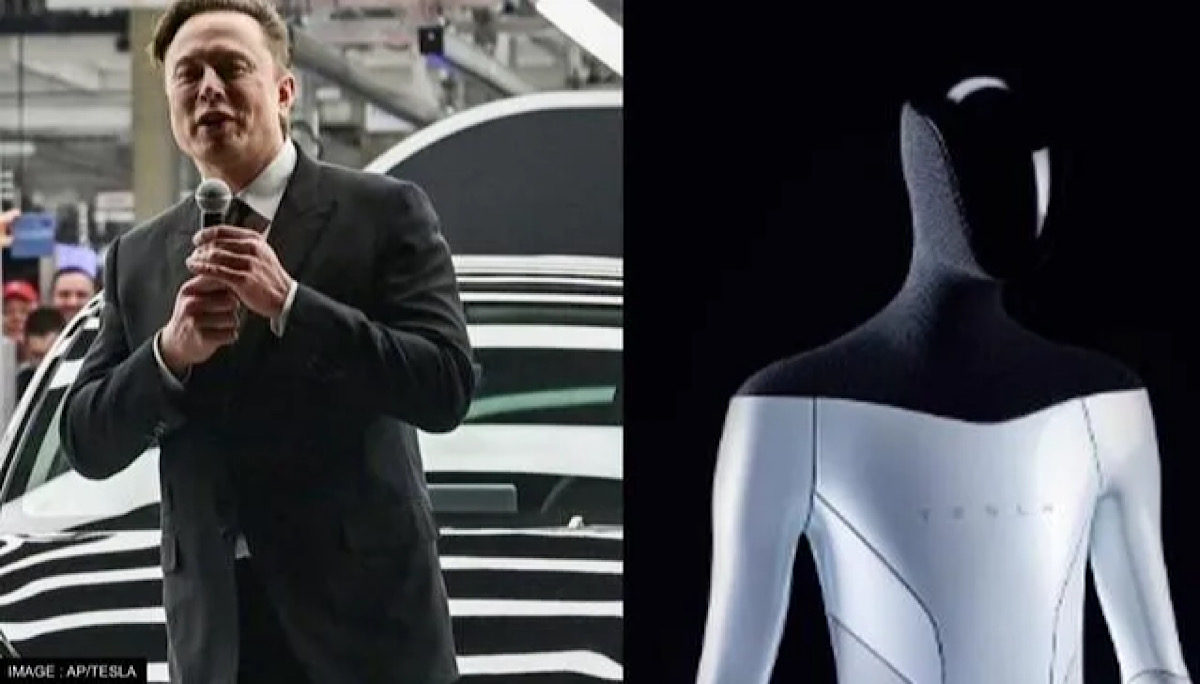
Elon Musk Says People Will Be ‘blown Away’ By Tesla Optimus Robot Set To Unveil On Sept 30

Elon Musk, during Tesla’s annual shareholder meeting, also claimed that the Optimus robot will eventually become “more valuable than the cars”.

By Harsh Vardhan 

Tesla CEO Elon Musk has claimed that people will be ‘blown away’ when his company’s humanoid robot is unveiled at Tesla AI Day #2 on September 30. Musk made the statements during the annual shareholder meeting held earlier this week and even claimed that the Tesla bots would eventually become “more valuable than the cars”. Named Optimus, the bi-pedal humanoid robot was first introduced by Musk at Tesla’s AI Day in August last year. 

Continue reading… “Elon Musk Says People Will Be ‘blown Away’ By Tesla Optimus Robot Set To Unveil On Sept 30”

Mars colonisation made ‘cheaper and efficient’ as ‘valuable’ metals to be made from soil

NEW research has taken a “giant leap” forward in humanity’s plans to colonise Mars, with a plan to use the Red Planet’s air, dirt and sunlight to extract metals.

By ANTONY ASHKENAZ

A team of researchers, led by Professor Akbar Rhamdhani of the Swinburne University of Technology, has published the first of its kind detailed study on metal production on another planet. This research could be pivotal for humanity’s plans to live on another planet, as it would allow them to build large structures on alien worlds without having to ferry gigantic heaps of materials from Earth.

Focussing on extracting metals on the Red Planet, the researchers are currently developing a process that would take processed air, dirt and sunlight on Mars to create metallic iron.

The process would use concentrated solar power as a source of heat and carbon, which is produced by the cooling of CO gas—which is a by-product of oxygen production in the Mars atmosphere.

Humans have already been able to produce oxygen on Mars on the Perseverance rover, through the MOXIE (Mars Oxygen In-Situ Resource Utilization Experiment) NASA project.

The researchers intend to couple their metal extraction process with a future oxygen generator plant which is much larger than the Mars rover’s MOXIE.

Continue reading… “Mars colonisation made ‘cheaper and efficient’ as ‘valuable’ metals to be made from soil”
Discover the Hidden Patterns of Tomorrow with Futurist Thomas Frey
Unlock Your Potential, Ignite Your Success.

By delving into the futuring techniques of Futurist Thomas Frey, you’ll embark on an enlightening journey.

Learn More about this exciting program.