Jaw-Dropping Stats About the State of Retirement in America

By Rob Poindexter

Many Americans spend their lives working hard and dreaming of the day they can finally retire. But planning for retirement requires more than dreaming — it means being strategic and focused on saving money, among other things. The average age of retirement for Americans is 66, according to a Gallup poll, which is up from age 60 in the 1990s. With Americans living an average of 78.7 years, that’s a good 12 or more years of time to enjoy life after work, at a hopefully slower pace.

Of the 47.8 million Americans ages 65 and older, the average income is only $38,515 dollars, according to the U.S. Census, and their average net worth is $170,516. With numbers like that, saving for retirement can be challenging. Here are other shocking statistics about the state of retirement in the U.S.

Young People Think They’ll Retire Early … Until They’re Older
According to a Gallup poll study, when 18- to 29-year-olds were interviewed about retirement, younger people expressed optimism that they’ll be able to retire early, closer to their early 60s. However, once they hit 30, that optimism wanes, perhaps due to the realities of making a living catching up with them.

Continue reading… “Jaw-Dropping Stats About the State of Retirement in America”

Stanford Engineers Build Robot-run Restaurant

Engineering students at Stanford got tired of minimal food options on campus and high prices at the available locations. This struggle inspired Alex Kolchinski, Alex Gruebele, and Max Perham to create Mezli, a startup that makes fully autonomous modular restaurants. 

Kolchinski mentioned how they discovered that the $10 cost of a burrito bowl from Chipotle consists of $3 for food and the remaining $7 for labor, real estate, and overhead. That sparked the idea for a self-contained restaurant. 

The team also learned most chains did most cooking in mass in central kitchens and only had a few final steps to make meals on-site, such as heating and plating. They then concluded automating those final steps could provide meals at a smaller price. 

With backgrounds in soft robotics, aerospace engineering, and artificial intelligence, and the help of Michelin-star chef Eric Minnich, the students started Mezli. 

The startup has created a prototype robot, and the company hopes to launch its third version in 2022. Kolchinksi expects the company’s first publicly-deployed robot restaurant to serve hundreds of customers daily when it opens this year. Mass production will follow. 

Continue reading… “Stanford Engineers Build Robot-run Restaurant”

Could this be the first human outpost on the MOON? Bunker made from 3D-printed Romanesque arches topped with 8ft of lunar soil could protect astronauts from radiation, meteorites and moonquakes

By SAM TONKIN

  • US company AI SpaceFactory has released designs for 3D-printed human bunker that could be built on moon
  • Outpost has Romanesque arches that would be topped with 8ft of lunar soil, along with three separate units
  • The 3D-printed shell design also incorporates a photovoltaic tree to capture and harvest solar energy 
  • It has been designed to protect astronauts from radiation, meteorites and moonquakes when on the moon

When NASA returns humans to the moon later this decade, its wider vision will be to set up a lunar outpost for people to survive for longer periods.

To support that goal, a US company has unveiled its design for a 3D-printed bunker that could protect astronauts from radiation, meteorites and moonquakes.

AI SpaceFactory’s outpost would feature Romanesque arches topped with over 8ft of lunar soil, along with three separate units that share a communal courtyard. 

Each unit area is 807 square feet (75 square metres), while the central staging area is 968 square feet (90 square metres).

Continue reading… “Could this be the first human outpost on the MOON? Bunker made from 3D-printed Romanesque arches topped with 8ft of lunar soil could protect astronauts from radiation, meteorites and moonquakes”

Harvard Developed AI Identifies the Shortest Path to Human Happiness

The researchers created a digital model of psychology aimed to improve mental health. The system offers superior personalization and identifies the shortest path toward a cluster of mental stability for any individual.

Deep Longevity, in collaboration with Harvard Medical School, presents a deep learning approach to mental health.

Deep Longevity has published a paper in Aging-US outlining a machine learning approach to human psychology in collaboration with Nancy Etcoff, Ph.D., Harvard Medical School, an authority on happiness and beauty.

The authors created two digital models of human psychology based on data from the Midlife in the United States study.

The first model is an ensemble of deep neural networks that predicts respondents’ chronological age and psychological well-being in 10 years using information from a psychological survey. This model depicts the trajectories of the human mind as it ages. It also demonstrates that the capacity to form meaningful connections, as well as mental autonomy and environmental mastery, develops with age. It also suggests that the emphasis on personal progress is constantly declining, but the sense of having a purpose in life only fades after 40-50 years. These results add to the growing body of knowledge on socioemotional selectivity and hedonic adaptation in the context of adult personality development.

Continue reading… “Harvard Developed AI Identifies the Shortest Path to Human Happiness”

This Dissolvable Implant Could Revolutionize Pain Management

Researchers at Northwestern University created an implantable device that attaches to a nerve to deliver pain relief.

By Margaret Osborne

After some success on rats, researchers are hopeful this device could provide humans a more targeted and less addictive alternative to opioids.

Millions of Americans live with pain. While pain can be an important indicator of health, it can also be debilitating, causing fatigue, depression and a decreased quality of life. Researchers from Johns Hopkins University and George Washington University estimated that pain cost the United States $560 billion to $635 billion in 2011.

In the 1990s, pharmaceutical companies claimed they had the answer: opioids. After being assured these drugs were not addictive, doctors prescribed opioids liberally, hoping to relieve their patients’ suffering.

But opioids are highly addictive, and as doctors prescribed more and more, drug abuse escalated. Some patients turned to heroin and synthetic opioids when they couldn’t get ahold of prescription drugs, and between 1999 and 2019, opioid overdoses killed nearly 500,000 people in the U.S. In 2017, the United States Department of Health and Human Services declared the opioid epidemic a public health emergency.

Since discovering the addictive properties of opioids, scientists have been searching for safer alternatives to relieve pain. Biomedical engineer John A. Rogers, of Northwestern University, thinks he may have created one—an implantable, dissolvable device that cools nerves in the body.

Continue reading… “This Dissolvable Implant Could Revolutionize Pain Management”

Combining AI and Zebrafish to Accelerate Drug Discovery

As part of our SLAS Europe 2022 coverage, we speak to Dr. Javier Terriente, Co-founder and Chief of Drug Development at ZeClinics, about how zebrafish could be the future for discovering new therapeutics.

Please could you introduce yourself and tell us about your role at ZeClinics?

My name is Javier Terriente, and I have a PhD in molecular biology. I spent 15 years in academia, and in 2013 we founded ZeClinics. I am the co-founder of ZeClinics, but I have also been leading the scientific side of the company. I was the scientific director until a couple of years ago, and today I am the chief of drug development.

Essentially, my role now within the company is to lead our internal drug development programs, and I also help with the implementation of new technologies like artificial intelligence and so on. In a way, I would say that I am the chief innovative officer in the company.

ZeClinics is a contract research organization (CRO) specializing in zebrafish research. Why was ZeClinics founded, and what are some of its core missions and values?

First and foremost, ZeClinics was founded on the basis of our expertise, which we felt could bring something new to the industry. As an academic, I had a lot of experience working with zebrafish. I was very much focused on basic research problems, but we understood from early on that the zebrafish could bring a lot of biological and experimental advantages to the industry that may be useful for drug discovery, target discovery, and understanding the safety of new compounds and more. So, we thought, ‘Why not?’. Why not create a company that can bring that expertise to the industry? Our company started small and has grown to 40 people – and we hope to grow more in the future.

In terms of core missions and values, I would say that our main mission is excellence and quality. We think – and hope – that we are always providing the best scientific output with the best quality, in terms of data management, in terms of scientific quality, and in terms of translatability of the results to humans.

I would say this excellence is what really drives us. The second mission that we have is to accelerate research. Within everything that we do, we seek to get drugs to patients earlier and at the lowest possible cost.

Continue reading… “Combining AI and Zebrafish to Accelerate Drug Discovery”

Elon Musk’s ‘Teslas in Tunnels’ Las Vegas project is still happening, and here’s the first station

It looks like your run-of-the-mill underground parking garage

By Andrew J. Hawkins 

The first passenger station in the “Vegas Loop” network of vehicle tunnels that’s being built by Elon Musk’s Boring Company was revealed Thursday. The station is situated underneath Resorts World Las Vegas, the first in what is expected to be 55 stops along 29 miles of tunnels. 

The Boring Company already operates a small version of this “Teslas in Tunnels” system underneath the Las Vegas Convention Center, which opened in early 2021 and involves two 0.8-mile tunnels. Afterward, Musk’s startup proposed a massive citywide expansion that was eventually approved by Clark County officials last year. The system uses human-controlled Model X and Y vehicles to transport passengers, despite Musk’s previous statements about using sleds to carry cars through the tunnels.

DUBBED THE VEGAS LOOP, THE SYSTEM WILL ALLOW PASSENGERS TO HITCH RIDES IN TESLAS TO AND FROM PLACES LIKE THE HOTEL CASINOS ON THE LAS VEGAS STRIP.

Dubbed the Vegas Loop, the system will allow passengers to hitch rides in Teslas to and from places like the hotel casinos on the Las Vegas Strip, the city’s new football stadium, the Las Vegas Convention Center, and McCarran International Airport. The Resorts World casino station is the first station opened. The company recently received unanimous approval to expand its Vegas Loop project to include stops at landmarks like the Stratosphere and Fremont Street.

“Today marks a monumental moment not only for our resort, but for Las Vegas,” said Scott Sibella, president of Resorts World Las Vegas, in a statement. “Our passenger station will make a visit to our resort from the Las Vegas Convention Center easier than ever, and eventually connect us to key destinations throughout the city.” 

Continue reading… “Elon Musk’s ‘Teslas in Tunnels’ Las Vegas project is still happening, and here’s the first station”

New Artificial Photosynthesis Method Grows Food With No Sunshine

By Vanessa Bates Ramirez 

How can we grow more food using fewer resources? Scientists have been focused on this question for decades if not centuries, as an ever-growing global population necessitates constantly seeking new ways to produce food in sustainable and affordable ways.

Here’s a question most of us have never contemplated, because it seems so unfathomable: what if crops could grow without sunlight—not vertical farm-style, where LED light replaces the sun, but in total darkness?

A paper published last week in Nature Food details a method for doing just that.

Photosynthesis uses a series of chemical reactions to convert carbon dioxide, water, and sunlight into glucose and oxygen. The light-dependent stage comes first, and relies on sunlight to transfer energy to plants, which convert it to chemical energy. The light-independent stage (also called the Calvin Cycle) follows, when this chemical energy and carbon dioxide are used to form carbohydrate molecules (like glucose).

A research team from UC Riverside and the University of Delaware found a way to leapfrog over the light-dependent stage entirely, providing plants with the chemical energy they need to complete the Calvin Cycle in total darkness. They used an electrolysis to convert carbon dioxide and water into acetate, a salt or ester form of acetic acid and a common building block for biosynthesis (it’s also the main component of vinegar). The team fed the acetate to plants in the dark, finding they were able to use it as they would have used the chemical energy they’d get from sunlight.

Continue reading… “New Artificial Photosynthesis Method Grows Food With No Sunshine”

WEBEX HOLOGRAM: TAKING VIRTUAL MEETINGS TO A WHOLE NEW LEVEL

By PAUL BARKER

Holograms have previously been mainly restricted to the sci-fi scene, but now that Cisco is introducing them into Webex, they are indeed on the cusp of moving into the real world.

At a recent presentation held at Cisco Toronto’s Innovation Lab, a group of media experienced the Webex Hologram in action, as work on the product continues to the point where there will be a full-fledged launch that delivers what the company describes as “photorealistic, real-time holograms of actual people.”

Aruna Ravichandran, senior vice president and chief marketing officer of Webex, said that “with this particular technology, we now have the ability to basically hologram a live person in regardless of where they are located on the planet. It’s not an avatar, you actually see a live person.”

According to the Webex Hologram fact sheet, a presenter can “share both physical content and digital content that allows users to co-create and truly collaborate.

Continue reading… “WEBEX HOLOGRAM: TAKING VIRTUAL MEETINGS TO A WHOLE NEW LEVEL”

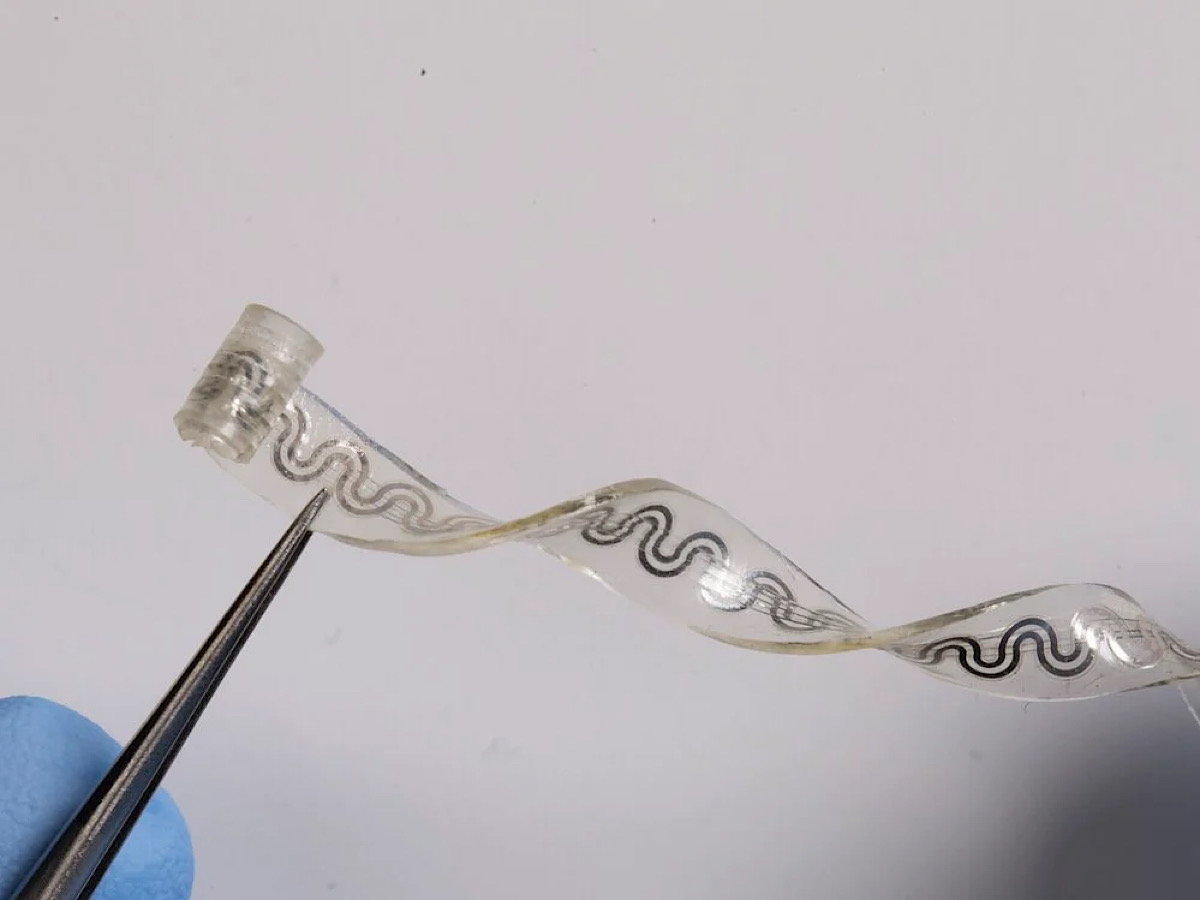
Israeli-developed smart fabric uses electricity to fast-track repair of nerves

Silicone-based invention being tailored for human use after proving itself on rats; it wraps damaged nerves and electrically stimulates them using energy from light shone on skin

By NATHAN JEFFAY

A magnified image of the Israeli-developed material which speeds the repair of damaged nerves using electricity (courtesy of the Technion-Israel Institute of Technology) 

Israeli researchers say they have developed a material that speeds the repair of damaged nerves using electricity.

The ultra-thin material — a high-tech fabric of sorts — can be wrapped around damaged nerves inside the body and then enable electricity derived from light to flow there after the wound is closed up.

Its inventors, from Haifa’s Technion – Israel Institute of Technology, have tested the material on rats and documented its effectiveness in the peer-reviewed journal Nature Materials.

The material speeded up nerve repair in rats by 33 percent, and now heads to development and testing on humans.

Continue reading… “Israeli-developed smart fabric uses electricity to fast-track repair of nerves”

AI SpaceFactory Presents 3D Printing Lunar Outpost LINA in Collaboration with NASA

By Michelle Codiva

AI SpaceFactory announced its first lunar outpost LINA designed to blend with the moon’s terrain. The outpost would keep the astronauts safe on the moon as it could protect them during moonquakes, cosmic radiation, lunar dust contamination, and cold nights.

The project is a collaboration between NASA Kennedy Space Center and AI SpaceFactory. It is part of NASA’s 2020 Announcement of Collaboration Opportunity (ACO).

ACO aims to partner with different companies for the moon and space technology mission. It has selected 17 companies that proposed relevant topics in the area of technology, such as small spacecraft technologies, sustainable power and intelligent system robotics. The total estimated resources to fund the projects cost $15.5 million.

Continue reading… “AI SpaceFactory Presents 3D Printing Lunar Outpost LINA in Collaboration with NASA”

3D-PRINTED NASA SATELLITE MARKS ‘GAME-CHANGER’ FOR SPACE EXPLORATION: MICHIO KAKU

American physicist Michio Kaku says CAPSTONE mission overcomes ‘the cost of space travel’

By Kristen Altus

American physicist and author Michio Kaku says 3D-printed rockets has lowered the cost of space exploration ten-fold.

NASA’s mission to the moon has returned – but this time, with a modern tech twist.

A 3D-printed satellite the size of a microwave oven was launched into space Tuesday, embarking on a new path around the moon in hopes of retrieving new information for future astronaut exploration.

American physicist and author Michio Kaku called the CAPSTONE CubeSat launch a “game changer” for spaceflight on “Varney & Co.” Thursday.

“Space travel has been haunted by a dirty four-letter word: cost,” Kaku told FOX Business’ Stuart Varney. “It costs $10,000 to put a pound of anything into orbit around the Earth. That’s your weight in solid gold. That’s the cost of space travel.”

Continue reading… “3D-PRINTED NASA SATELLITE MARKS ‘GAME-CHANGER’ FOR SPACE EXPLORATION: MICHIO KAKU”
Discover the Hidden Patterns of Tomorrow with Futurist Thomas Frey
Unlock Your Potential, Ignite Your Success.

By delving into the futuring techniques of Futurist Thomas Frey, you’ll embark on an enlightening journey.

Learn More about this exciting program.