Autonomous transport vessel wins state funding

By Vince McDonagh 

The hydrogen-powered Samskip SeaShuttleAn ambitious project to build two hydrogen-powered, remotely controlled and autonomous-ready containerships has secured NOK150m (£12.5m) in funding from Norwegian state enterprise ENOVA.

The SeaShuttle vessels, the developers say, will have zero greenhouse gas emissions and can potentially operate autonomously. There are two on order, due for delivery by 2025.

They will operate between Oslofjord, near the Norwegian capital, and Rotterdam, and their cargo is expected to include salmon and other seafood destined for European markets.

The project is being led by multimodal transport and logistics group Samskip and marine robotics specialist Ocean Infinity.

Each vessel will be powered by  a 3.2MW hydrogen fuel cell.ENOVA, which operates under Norway’s Ministry of Climate and Environment, promotes a shift towards more environmentally friendly energy consumption and production, as well as technologies based on sustainable energy.

Originally announced at Nor-Shipping 2022 two months ago, the Samskip-Ocean Infinity partnership covers both the construction and operation of the ships, in a collaboration seeking to push forward towards zero-emission, efficient and safe, multimodal logistics.

Continue reading… “Autonomous transport vessel wins state funding”

NASA wants to put a nuclear reactor on the moon

Fission surface power systems – depicted in this conceptual illustration – could provide reliable power for human exploration of the Moon under Artemis. Credits: NASA

By Heather Brinkmann

THE SPACE AGENCY AND THE U.S. DEPARTMENT OF ENERGY HAVE SELECTED THREE DESIGN CONCEPT PROPOSALS FOR A FISSION SURFACE POWER SYSTEM FOR A DEMONSTRATION ON THE MOON

NASA is one step closer to finalizing nuclear power some 238,900 miles away from Earth.

The space agency and the U.S. Department of Energy have selected three design concept proposals for a fission surface power system that would be stationed on the moon.

The hope is that a nuclear reactor would produce the power needed to operate rovers, conduct experiments and help support life.

Scientists say that the concepts for the technology will benefit future exploration under the Artemis umbrella and will be ready to launch by the end of the decade.

Continue reading… “NASA wants to put a nuclear reactor on the moon”

Cornell algorithms help self-driving cars learn from own memories

Carlos Diaz-Ruiz, a doctoral student, drives the data collection car and demonstrates some of the data collection techniques the autonomous vehicle researchers use to create their algorithms

 By ANTHONY JAMES

Autonomous vehicles that rely on artificial neural networks to navigate the world around them have no memory of the past, unlike humans, and are therefore in a constant state of seeing the world for the first time – no matter how many times they’ve driven down a particular road before. 

This is particularly problematic in adverse weather conditions, when the car cannot safely rely on its sensors, say researchers at the Cornell Ann S. Bowers College of Computing and Information Science and the College of Engineering, who are currently researching how best to overcome this limitation by providing self-driving cars with the ability to create ‘memories’ of previous experiences and use them in future navigation.

Doctoral student Yurong You is lead author of ‘HINDSIGHT is 20/20: Leveraging Past Traversals to Aid 3D Perception,’ which You presented virtually in April at ICLR 2022, the International Conference on Learning Representations [‘Learning representations’ includes deep learning, a kind of machine learning].

“The fundamental question is, can we learn from repeated traversals?” said senior author Kilian Weinberger, professor of computer science at Cornell Bowers CIS. “For example, a car may mistake a weirdly shaped tree for a pedestrian the first time its laser scanner perceives it from a distance, but once it is close enough, the object category will become clear. So the second time you drive past the very same tree, even in fog or snow, you would hope that the car has now learned to recognize it correctly.”

Continue reading… “Cornell algorithms help self-driving cars learn from own memories”

Cerebras sets record for ‘largest AI model’ on a single chip

Plus: Yandex releases 100-billion-parameter language model for free, and more

By Katyanna Quach

IN BRIEF US hardware startup Cerebras claims to have trained the largest AI model on a single device powered by the world’s largest Wafer Scale Engine 2 chip the size of a plate.

“Using the Cerebras Software Platform (CSoft), our customers can easily train state-of-the-art GPT language models (such as GPT-3 and GPT-J) with up to 20 billion parameters on a single CS-2 system,” the company claimedthis week. “Running on a single CS-2, these models take minutes to set up and users can quickly move between models with just a few keystrokes.”

The CS-2 packs a whopping 850,000 cores, and has 40GB of on-chip memory capable of reaching 20 PB/sec memory bandwidth. The specs on other types of AI accelerators and GPUs pale in comparison, meaning machine learning engineers have to train huge AI models with billions of parameters across more servers.

Even though Cerebras has evidently managed to train the largest model on a single device, it will still struggle to win over big AI customers. The largest neural network systems contain hundreds of billions to trillions of parameters these days. In reality, many more CS-2 systems would be needed to train these models. 

Machine learning engineers will likely run into similar challenges to those they already face when distributing training over numerous machines containing GPUs or TPUs – so why switch over to a less familiar hardware system that does not have as much software support?

Continue reading… “Cerebras sets record for ‘largest AI model’ on a single chip”

AI-AI-O: The first driverless robot tractor unveiled to farmers at show

Visitors to the Highland show had the opportunity to get up close with the first driverless robot tractor to be on sale to Scotland’s farmers.

Capable of a multitude of farm tasks using normal farm implement attachments, the AgBot 5.115T2 is a 156hp dual tracked driverless tractor which is now available to buy from Angus-based precision farming specialists, SoilEssentials.

The machine, which took pride of place on the company’s stand at the show, is also scheduled to carry out on-farm demonstration days in East Lothian and Angus later this week.

The company’s managing director, Jim Wilson, said that despite the £220,000 price tag, there had been several strong declarations of interest.

“The game-changer is that there is no need for anyone to sit in the driving seat – a major bonus in this time of labour shortages. And when you take into account the fact that one of these machines can work through the night, the investment sounds less daunting.”

Continue reading… “AI-AI-O: The first driverless robot tractor unveiled to farmers at show”

BITCOIN CAN FUND HIGH-QUALITY, EQUITABLE, HEALTHCARE FOR EVERYONE

Creating a system distributed by the internet the same way Bitcoin exists could create accessible healthcare for everyone.

By VISHVAS GARG

THE CURRENT GLOBAL HEALTH CARE SYSTEM IS BROKEN.

Over 6.2 million people have died of COVID-19-related deaths as of June 13, 2022. This is despite $8.9 trillion or 9.8% of global GDP spent on healthcare in 2019 worldwide.

More broadly, half the world lacks access to essential healthcare services. Furthermore, the current healthcare system leaves out the most vulnerable groups of people, leading to health disparities and inequities.

Health is a fundamental human right. It should be so for everyone.

Today, healthcare is delivered in one of two ways:

– Insurance-based healthcare systems: Generally, economically strong countries have insurance-based healthcare systems that may or may not offer universal coverage. Furthermore, health disparities and inequities are widely prevalent even among the most well-covered groups of people. As an example, in the United States racial and ethnic minorities, economically weaker sections of the population, and people who live anywhere other than in large, fringe metropolitan counties continue to experience worse quality healthcare.

– Out-of-pocket healthcare systems: Economically weaker countries usually have out-of-pocket healthcare systems. It is important to note that even in economies that have insurance-based healthcare systems, the most vulnerable group of people may still have to consume healthcare out-of-pocket. In the majority of the world where out-of-pocket systems are common, corruption, favoritism and lack of accountability is deep-rooted.

Both systems have one common attribute: intermediaries that control patient access or create inefficiencies or both.

Continue reading… “BITCOIN CAN FUND HIGH-QUALITY, EQUITABLE, HEALTHCARE FOR EVERYONE”

Advances in computer vision are set to disrupt the healthcare industry

Video is the future of healthcare, and computer vision breakthroughs are the key, says Coryn Ramirez, director of marketing at Presage Technologies. With new cutting-edge signal and image processing methods, it’s now possible for an ordinary phone camera to measure everything from heart beats to electricity, even under the most challenging conditions, including highly variable motion and lighting. Right now Presage Technologies is applying that capability to a broad range of emerging applications in healthcare and beyond.

“We want to increase the equity and the accessibility of healthcare for both provider and patient,” says Ramirez. “We see some of the barriers here where access to remote medicine or vitals shouldn’t be a $400 Apple Watch. We want to tap into the power of video to make it more efficient, more cost-effective, and safer for all parties.”

Presage Technologies has applied these advances in computer vision to a vitals by video platform that can capture and analyze vital signs, no matter where a patient is or what they’re doing. It’s continuous, passive video monitoring that’s also contactless – there’s no need for any type of wearable. Continuous monitoring means all the data is put into context, as a patient moves through their day and various levels of exertion. The technology can currently identify and track heart rate and heart rate variability, respiration rate and respiration quality. They’ve demonstrated the ability to capture oxygen saturation, and they’re working on blood pressure measurement now.

It’s a huge game changer for the healthcare industry in a broad array of applications, addressing industry concerns about safety, cost, equipment, environment and other unique scenarios. Yet it has applications outside the healthcare industry too, says Dr. Aya Eid, director of biomedical imaging at Presage.

“Wherever physiology has informative significance, we can provide value there,” Dr. Eid says. That includes applications that range far outside a doctor’s office.

Continue reading… “Advances in computer vision are set to disrupt the healthcare industry”

Artificial photosynthesis can produce food without sunshine

Plants are growing in complete darkness in an acetate medium that replaces biological photosynthesis.

by Holly Ober,  University of California – Riverside

Photosynthesis has evolved in plants for millions of years to turn water, carbon dioxide, and the energy from sunlight into plant biomass and the foods we eat. This process, however, is very inefficient, with only about 1% of the energy found in sunlight ending up in the plant. Scientists at UC Riverside and the University of Delaware have found a way to bypass the need for biological photosynthesis altogether and create food independent of sunlight by using artificial photosynthesis.

The research, published in Nature Food, uses a two-step electrocatalytic process to convert carbon dioxide, electricity, and water into acetate, the form of the main component of vinegar. Food-producing organisms then consume acetate in the dark to grow. Combined with solar panels to generate the electricity to power the electrocatalysis, this hybrid organic-inorganic system could increase the conversion efficiency of sunlight into food, up to 18 times more efficient for some foods.

“With our approach we sought to identify a new way of producing food that could break through the limits normally imposed by biological photosynthesis,” said corresponding author Robert Jinkerson, a UC Riverside assistant professor of chemical and environmental engineering.

Continue reading… “Artificial photosynthesis can produce food without sunshine”

Ep. 92 with Gena Gorlin

Watch our interview with Gena Gorlin on Youtube or listen on the Futurati Podcast website.

From Jeff Bezos and Elon Musk to Vitalik Buterin and the unknown Satoshi Nakamoto, some of the most influential and impactful people in the world are the founders of startups. These people have the courage and vision to embark upon uncertain ventures which permanently change the world. But, though much is written about how they approach business or stay productive, much less time is spent on understanding how they function psychologically. Tonight’s guest is among the leading experts in just this subject. Gena Gorlin decided to pursue psychology after realizing that her ambition in life was to discover how to enable people to achieve greatness in theirs. Today, she is a professor and licensed psychologist in NYC, where she unites art, science, philosophy, teaching, and practice in the common aim of helping people become their noblest, most sublimely joyful selves.

If you enjoy this interview please subscribe to the podcast and share it with your friends!

Continue reading… “Ep. 92 with Gena Gorlin”

STanford Engineers Develop Tiny Robots To Treat Patients From The Inside

If you’re not a fan of swallowing pills, how about swallowing a robotic doctor instead?

A team at Stanford University has developed what it calls a ‘millirobot’ smaller than a fingertip, which is able to enter the human body and have a look around, identifying and treating complex diseases.

The team are working on several different robot designs, including one that can ‘crawl’ using the motion generated by magnetic fields, and can fold itself over to get around obstacles.

The ‘spinning-enabled wireless amphibious origami millirobot’ (might we suggest a catchier name?) can carry medicine until it reaches the precise location in the body it’s needed in, allowing for super-targeted drug delivery.

Continue reading… “STanford Engineers Develop Tiny Robots To Treat Patients From The Inside”

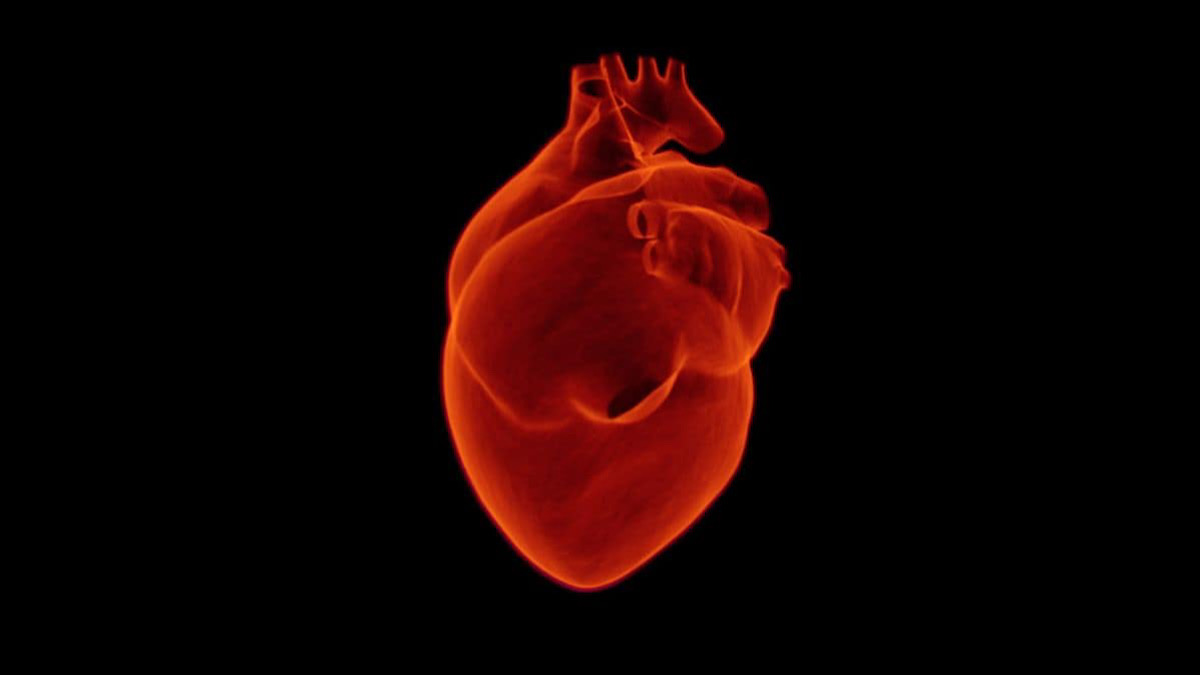
New Technology Can Repair Heart Muscles After an Attack, Say Researchers

In a groundbreaking finding, researchers have developed a technology that can help effectively treat heart diseases in humans. The technology repairs heart muscles in mice after a heart attack and also successfully regenerates them. Researchers, from the University of Houston, have used a synthetic messenger ribonucleic acid (mRNA) to deliver mutated transcription factors to the heart of the mouse. The transcription factors are the proteins that control the conversion of DNA into RNA.

In their study, published in The Journal of Cardiovascular Aging, the team conducted an experiment to show that two mutated transcription factors, Stemin and YAP5SA, work closely to increase the replication of heart muscle cells or cardiomyocytes in mice.

“What we are trying to do is dedifferentiate the cardiomyocyte into a more stem cell-like state so that they can regenerate and proliferate,” said Siyu Xiao, Ph.D graduate and co-author of the study. According to another co-author Dinakar Iyer, Stemin transcription proved to be a game-changer in their experiment. While Stemin triggers stem-like properties in cardiomyocytes, YAP5SA works on organ growth resulting in more replication of the myocytes.

Continue reading… “New Technology Can Repair Heart Muscles After an Attack, Say Researchers”

New technology helps robots move objects quickly and safely

by Marni Ellery

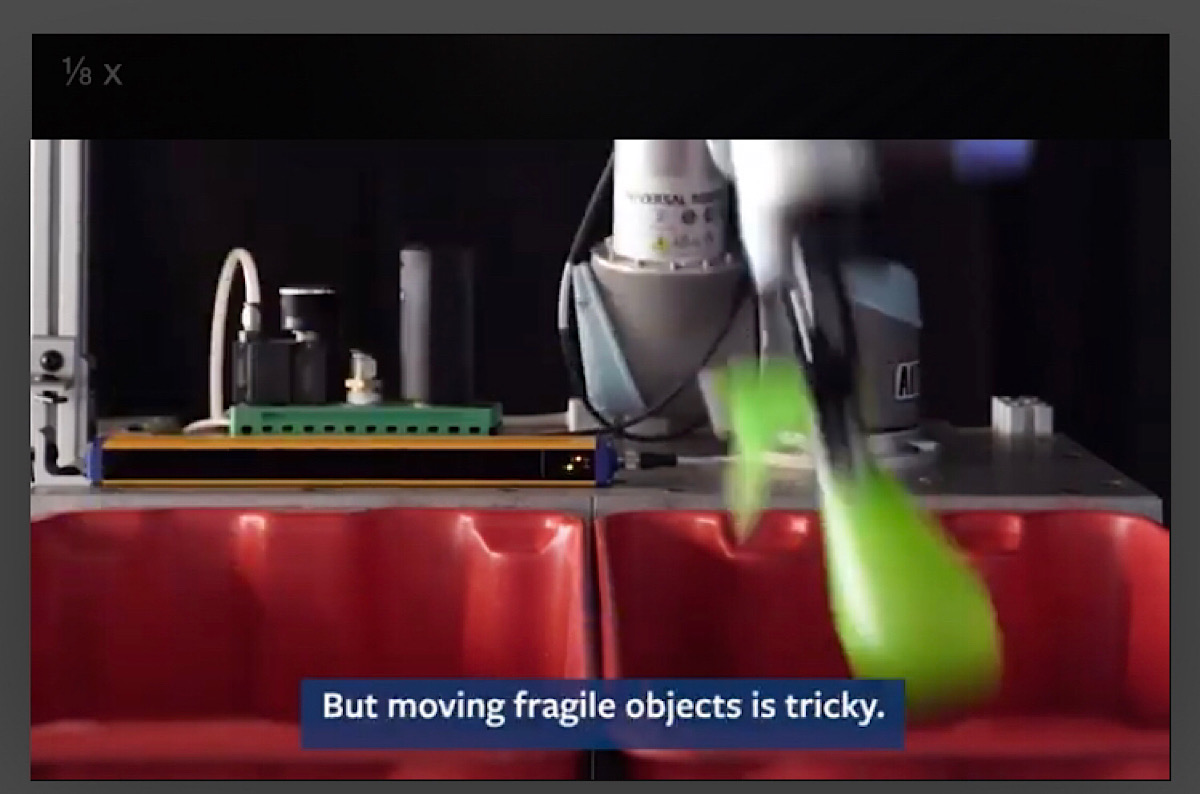
Rapidly moving containers without dropping, spilling or damaging them is tough enough for humans, let alone robots. Now, Ken Goldberg, professor of industrial engineering and operations research and of electrical engineering and computer sciences; postdoctoral researcher Jeff Ichnowski; and their team at UC Berkeley’s AUTOLAB have published Grasp-Optimized Motion Planning for Fast Inertial Transport (GOMP-FIT).

In their paper, presented in May at the 2022 International Conference on Robotics and Automation, the UC Berkeley team solves this challenge for robots transporting open-top containers and fragile objects in settings like warehouses and hospitals. Watch a video to see how GOMP-FIT makes this possible — and solves what the researchers call “the rushing sommelier” problem, where a waiter must quickly serve wine to customers.

Continue reading… “New technology helps robots move objects quickly and safely”
Discover the Hidden Patterns of Tomorrow with Futurist Thomas Frey
Unlock Your Potential, Ignite Your Success.

By delving into the futuring techniques of Futurist Thomas Frey, you’ll embark on an enlightening journey.

Learn More about this exciting program.