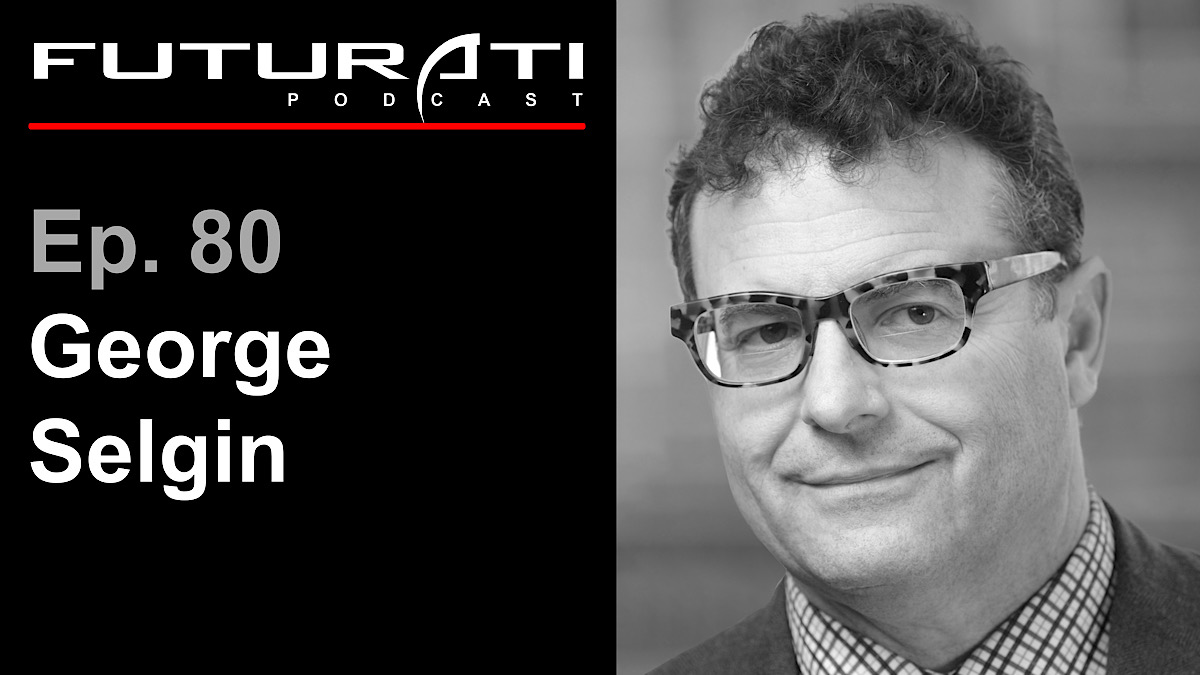
Concorde has nothing on a plane being developed in Houston

By Barbara Schwarz

Venus Aerospace is a team of literal rocket scientists and they are developing a hypersonic aircraft that enables one hour travel anywhere in the world. It takes off and lands like a regular jet. But once it’s over water and is at 35,000 feet, the rockets kick in.

Venus CEO and co-founder Sassie Duggleby says; “It boosts to the edge of the atmosphere where you are traveling at 170,000 feet at Mach 9 and cruise across the world, coming down on the other side. Los Angeles to Tokyo in one hour.”

Duggleby says you cannot fire off the rocket attached to the aircraft right off the bat because rockets are incredibly loud.

“If you’ve ever been around a rocket that takes off, it makes an incredible amount of noise,” Duggleby said. “They break windows five miles away. There are issues with sonic booms over land so initially, we would have to be out over water.”

Any big body would do, including the Gulf of Mexico close to the company’s hometown of Houston.

Continue reading… “Concorde has nothing on a plane being developed in Houston”

Tesla is going to make a new futuristic-looking electric vehicle as a ‘dedicated robotaxi’

By Fred Lambert

Elon Musk announced that Tesla is going to build a new futuristic-looking electric vehicle as a “dedicated robotaxi” – though there’s no clear timeline for the new vehicle.

At Tesla’s Cyber Rodeo event tonight, Gigafactory Texas was the real star of the show.

CEO Elon Musk made clear that Tesla’s focus in the short term and in 2022 specifically is to scale operations to increase production capacity, and Giga Texas is going to be critical to make that happen.

But the CEO still made sure to get people excited about upcoming new products and said that 2023 is going to be the year for new vehicles with the Cybertruck, Tesla Semi, and new Roadster all entering production next year.

Musk even announced a new vehicle at the event: a dedicated robotaxi.

Continue reading… “Tesla is going to make a new futuristic-looking electric vehicle as a ‘dedicated robotaxi’”

Tesla is aiming to start production of its Optimus humanoid robot in 2023

By Fred Lambert

Elon Musk gave a timeline to production for the first time for the Tesla Optimus project, a humanoid robot capable of doing general tasks.

The CEO believes the company can bring the ambitious project to production as soon as next year. It’s an ultra-ambitious timeline even for him.

When Tesla announced the “Tesla Bot” project at its A Day last year, Elon Musk presented it as something the company could do by leveraging existing work and parts from the development of self-driving technology, and if they don’t do it, someone else will.

At the time, it certainly didn’t sound like a priority for Tesla and many saw it mainly as a recruitment tool as the automaker is trying to boost its AI team to deliver its full self-driving system.

A few months later, the project’s priority level went up fast.

Musk announced that Tesla is now prioritizing product development of Tesla Bot, which he now calls Optimus, in 2022over some of its upcoming vehicles.

The CEO appeared a lot more excited about the project and its potential to impact labor shortage and eventually the broader economy.

When first announcing the project, Tesla was aiming to have a prototype of the humanoid robot ready by the end of 2022, but there was no talk of a production timeline just yet.

Continue reading… “Tesla is aiming to start production of its Optimus humanoid robot in 2023”

South Australian fuel stations to begin accepting Bitcoin

Motorists will soon be able to pay for their fuel with digital currencies, thanks to a deal between Crypto.com and OTR

By Ben ZACHARIAH

A major service station chain in South Australia will soon accept cryptocurrency for fuel purchases.

According to the Adelaide newspaper The Advertiser, On The Run (OTR) – operators of 170 BP service stations across the state – will begin taking Bitcoin and other cryptocurrencies from July.

Other businesses within the OTR service stations will also make the move, meaning people will be able purchase food and drink from cafes, Subway, Oporto, and Wok In A Box using the payment method.

Continue reading… “South Australian fuel stations to begin accepting Bitcoin”

SpinLaunch signs Space Act Agreement to test innovative mass accelerator launch system

SpinLaunch has signed a Space Act Agreement with NASA. Through this partnership, SpinLaunch will develop, integrate, and fly a NASA payload on the company’s Suborbital Accelerator Launch System to provide valuable information to NASA for potential future commercial launch opportunities.

The Space Act Agreement is part of NASA’s Flight Opportunities Program, which demonstrates promising technologies for space exploration, discovery, and the expansion of space commerce through suborbital testing with industry flight providers.

The program is funded by NASA’s Space Technology Mission Directorate at the agency’s Headquarters in Washington, D.C. and managed at NASA’s Armstrong Flight Research Center in Edwards, California. NASA’s Ames Research Center in California’s Silicon Valley manages the solicitation and evaluation of technologies to be tested on commercial flight vehicles.

SpinLaunch will manifest and fly the first NASA payload on a developmental test flight later this year and provide means for post-flight recovery of payload back to NASA. The two organizations will work jointly to analyze the data and assess the system for future flight opportunities. After full review, NASA and SpinLaunch will publish all non-proprietary launch environment information from the test flight.

“SpinLaunch is offering a unique suborbital flight and high-speed testing service, and the recent launch agreement with NASA marks a key inflection point as SpinLaunch shifts focus from technology development to commercial offerings,” said Jonathan Yaney, Founder and CEO of SpinLaunch. “What started as an innovative idea to make space more accessible has materialized into a technically mature and game-changing approach to launch. We look forward to announcing more partners and customers soon, and greatly appreciate NASA’s continued interest and support in SpinLaunch.”

Continue reading… “SpinLaunch signs Space Act Agreement to test innovative mass accelerator launch system”

90% of long-haul trucking may soon be self-driving. Are you ready to share the road with an autonomous 18-wheeler?

BY TRISTAN BOVE

Elon Musk has called them the most impactful technology on the horizon. But unions are lobbying against their widespread use, citing studies showing they may kill up to 500,000 jobs.

They are autonomous trucks, which supporters pitch as the remedy to a growing demand for shipping and for greater safety on the road. If the technology becomes good enough, the logistics industry will be radically changed, with trucks operating nearly around the clock as they crisscross the country. 

The number of companies racing to perfect automated trucking technology is long. Last year, Tesla revealed plans for its own autonomous truck called Semi, which relies on battery power and has a range of up to 500 miles. Meanwhile, Daimler, one of the world’s largest trucking companies, has announced a $573 million investment in self-driving trucks. And Aurora, another major player in the space, has gone so far as to create its own autonomous truck operating system.

Still, it will be years before drivers are completely absent from behind the wheel of 18-wheelers, experts tell Fortune. The technology must still be improved so it can reliably operate in extreme weather while officials must rewrite regulations that were originally created for human truck drivers.

As it stands, the U.S. government has opened the door to autonomous trucking—but only to a point. The U.S. Department of Transportation announced a $100 million plan for autonomous car research, including a $60 million grant for private companies. In March, Transportation Secretary Pete Buttigieg said that the government would not stand in the way of innovation, and that there would be “meaningful developments” in autonomous vehicle policy this decade.

“This is a marathon, not a sprint,” Steve Viscelli, a sociologist at the University of Pennsylvania researching automation and labor markets, told Fortune. “This is a decades-long sustained investment by the U.S. government. And so I would not bet against this technology being successful.”

Continue reading… “90% of long-haul trucking may soon be self-driving. Are you ready to share the road with an autonomous 18-wheeler?”

Ep. 80 with george selgin

Watch our interview with George Selgin on Youtube or listen on the Futurati Podcast website. 

George Selgin is a senior fellow and director emeritus of the the Center for Monetary and Financial Alternatives at the Cato Institute and professor emeritus of economics at the University of Georgia. His research covers a broad range of topics within the field of monetary economics, including monetary history, macroeconomic theory, and the history of monetary thought.

Continue reading… “Ep. 80 with george selgin”

Tiny satellites are changing the way we explore our planet and beyond

Want to go to space? It could cost you. 

This month, the SpaceX Crew Dragon spacecraft will make the first fully-private, crewed flight to the International Space Station. The going price for a seat is US$55 million. The ticket comes with an eight-day stay on the space station, including room and board – and unrivalled views. 

Virgin Galactic and Blue Origin offer cheaper alternatives, which will fly you to the edge of space for a mere US$250,000-500,000. But the flights only last between ten and 15 minutes, barely enough time to enjoy an in-flight snack.

But if you’re happy to keep your feet on the ground, things start to look more affordable. Over the past 20 years, advances in tiny satellite technology have brought Earth orbit within reach for small countries, private companies, university researchers, and even do-it-yourself hobbyists.

Continue reading… “Tiny satellites are changing the way we explore our planet and beyond”

Solar panels that can generate electricity at night have been developed at Stanford

By RINA TORCHINSKY

A team of engineers at Stanford University have developed a solar cell that can generate some electricity at night.

The research comes at a moment when the number of solar jobs and residential installations are rising.

While standard solar panels can provide electricity during the day, this device can serve as a “continuous renewable power source for both day- and nighttime,” according to the study published this week in the journal Applied Physics Letters.

The device incorporates a thermoelectric generator, which can pull electricity from the small difference in temperature between the ambient air and the solar cell itself.

Continue reading… “Solar panels that can generate electricity at night have been developed at Stanford”

Lion Burger, Tiger Steak From Lab-Grown Meat Hit the Market

Tiger steak for dinner?

By Tasos Kokkinidis

A British company called Primeval Foods is pitching lab-grown meat, such as lion burgers, tiger steaks, and zebra sushi rolls to climate-conscious consumers.

The company says it wants consumers of plant-based meat alternatives to switch to lab-grown meats in a bid to preserve the planet.

Lab-grown meat is produced by cultivating animal cells directly to produce food from any species without slaughtering animals. It also allows producers to replicate the sensory and nutritional profiles of conventional meat.

Although most companies focus on the most common meat categories in demand, such as chicken, beef and pork, Primeval Foods may be the first of its kind to entice consumers with exotic “cultured” meat products.

Continue reading… “Lion Burger, Tiger Steak From Lab-Grown Meat Hit the Market”

PickNik Robotics partners with Sierra Space to build robots for deep space missions and space habitats

PickNik Robotics and Sierra Space have agreed a collaboration which will explore the implementation of robotic autonomy and controllability for autonomous maintenance of space habitat environments.

 BY SAM FRANCIS 

PickNik Robotics is a robotics software and engineering services company, while Sierra Space is a commercial space company with 1,100 employees, more than 500 missions and over 30 years of space flight heritage.

The companies anticipate that the robotic autonomy solutions developed with this collaboration will significantly improve the ability to support low Earth orbit (LEO), lunar and deep space missions. 

PickNik Robotics’ expertise in robotic manipulation paired with Sierra Space’s LIFE habitat (Large Integrated Flexible Environment) product lines will help enable extended mission durations that benefit from remote-controlled automation.

Sierra Space aims to build the future of space transportation and destinations to enable a vibrant, growing commercial space economy in LEO.

Continue reading… “PickNik Robotics partners with Sierra Space to build robots for deep space missions and space habitats”

How AR and AI are making Zurich a smarter and safer city

David Weber, Head of Smart City Zurich, gives an inside look of how Zurich uses tech like AR, AI and digital twins to improve the city’s infrastructure and safety. 

By Liew Ming En
It can be difficult for Ironman to differentiate friend from foe when speeding through the skies. But he can easily do so with the augmented reality (AR) technology inbuilt in his suit, which automatically targets enemies and avoids civilians.

AR in the real world is still a long way away from science fiction films like Ironman, but progress in recent years is revealing use cases in various sectors. In Zurich, for example, AR is used to visualise how planned buildings will look before they are constructed.

David Weber, the Head of Smart City Zurich, shares how Zurich uses tech like AR, AI and digital twins to improve urban planning, increase citizen participation, and better citizen safety.

Continue reading… “How AR and AI are making Zurich a smarter and safer city”
Discover the Hidden Patterns of Tomorrow with Futurist Thomas Frey
Unlock Your Potential, Ignite Your Success.

By delving into the futuring techniques of Futurist Thomas Frey, you’ll embark on an enlightening journey.

Learn More about this exciting program.