Bionic eye tech aims to help blind people see

Existing bionic eye systems have a chip fitted to a person’s retina, which connects wirelessly to a camera fitted to glasses

By Bernd Debusmann Jr

Once upon a time there were some unusual Australian sheep, with exceptionally sharp eyesight.

The small flock spent three months last year with bionic, artificial eyes, surgically implanted behind their retinas.

These sheep were part of a medical trial that aims to ultimately help people with some types of blindness to be able to see.

The specific aim of the sheep test was to see if the device in question, the Phoenix 99, caused any adverse physical reactions – the bionic eye was said to have been well tolerated by the animals. As a result, an application has now been made to start testing in human patients.

The project is being carried out by a team of researchers from the University of Sydney and the University of New South Wales.

The Phoenix 99 is wirelessly linked to a small camera attached to a pair of glasses, it works by stimulating a user’s retina. The retina is the layer of light-sensitive cells at the back of the eye that convert light into electrical messages, sent to the brain via the optic nerve, and processed into what we see.

Continue reading… “Bionic eye tech aims to help blind people see”

Uber Plans to Accept Crypto Payments, CEO Says

The San Francisco-based transport giant will “absolutely” accept crypto payments, CEO Dara Khosrowshahi said in an interview with Bloomberg. Sponsored

By Wahid Pessarlay 

IN BRIEF

  • Uber CEO said the company will accept crypto payments, but didn’t reveal when.
  • He pointed out the challenges with using cryptocurrencies.
  • Dara Khosrowshahi said there are always conversations about crypto inside the company.

The Trust Project is an international consortium of news organizations building standards of transparency.

Among many things — fares, food delivery, stocks, etc. — the CEO said that Uber users will be allowed to pay fares in digital assets without disclosing an exact date. He added that there are “conversations all the time” about cryptocurrencies within the firm.Sponsored

“I think right now what we see with Bitcoin [BTC] and some of the other cryptos that they are quite valuable as a store of value,” Khosrowshahi said. “The exchange mechanism is expensive, it’s not great for the environment.”

Continue reading… “Uber Plans to Accept Crypto Payments, CEO Says”

Intel designs new crypto mining chip that’s ‘1000 times better’ than current processors

The ‘blockchain accelerator’ chip is also claimed to be more energy efficient, one of crypto’s biggest criticisms 

By Adam Smith

Intel is designing a new chip specifically designed to mine cryptocurrency.

The manufacturer announced that the “blockchain accelerator” is set to ship later this year, saying that the technology “has the potential to enable everyone to own much of the digital content and services they create” as people “usher in the era of metaverse and Web 3.0”.

The chip itself will apparently provide “over 1000x better performance per watt than mainstream GPUs for SHA-256 based mining”, with the company saying it will provide more details at the International Solid State Circuit Conference (ISSCC) this month.

“We are mindful that some blockchains require an enormous amount of computing power, which unfortunately translates to an immense amount of energy. Our customers are asking for scalable and sustainable solutions, which is why we are focusing our efforts on realizing the full potential of blockchain by developing the most energy-efficient computing technologies at scale,” senior vice president Raja M. Koduri wrote.

Continue reading… “Intel designs new crypto mining chip that’s ‘1000 times better’ than current processors”

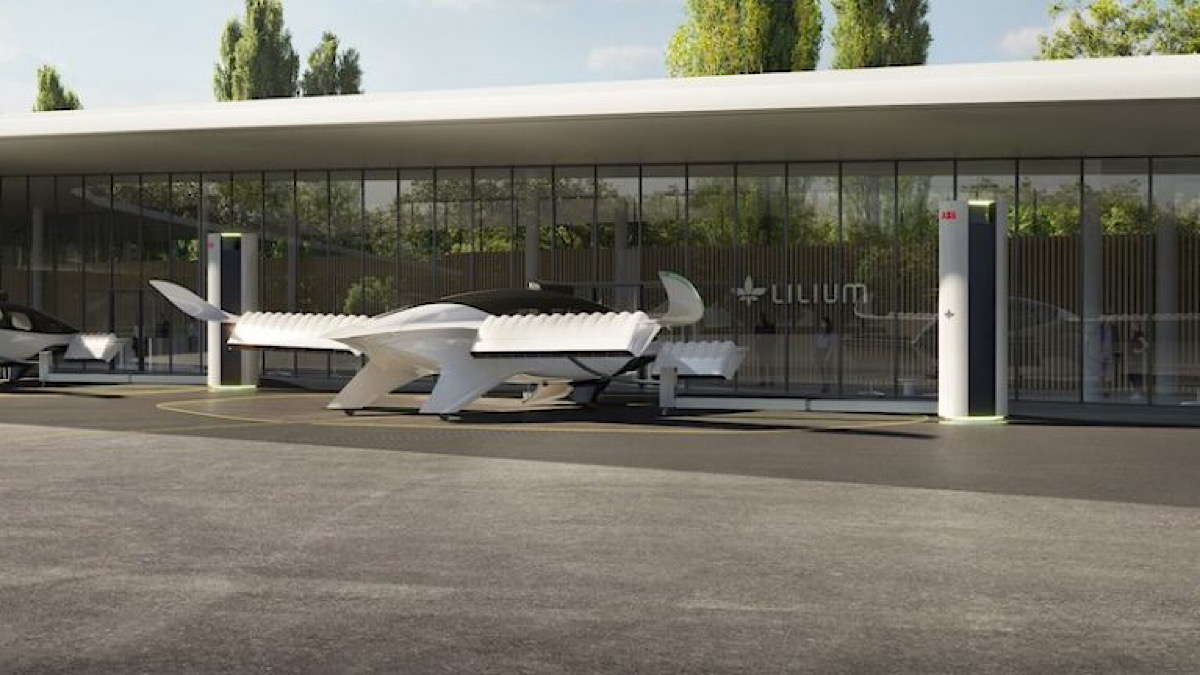
ABB to provide charging infrastructure for Lilium’s electric passenger-carrying drone

BY MARK ALLINSON 

ABB E-mobility has agreed to provide the charging infrastructure for Lilium’s high speed regional air network, using electric passenger-carrying drones, scheduled for commercial launch in 2024.

Lilium has plans to launch networks in Florida, Germany, and Brazil. As part of the agreement, ABB will develop, test and supply the MegaWatt fast charging infrastructure necessary for the quick turnaround times needed for electric aviation.

The ABB charging points are designed to be capable of fully charging batteries in approximately 30 minutes, and charging up to 80 percent in 15 minutes, enabling the 20-25 flights per aircraft per day planned across Lilium’s global vertiport network. 

The initial range of a 7-Seater Lilium Jet is expected to be 155 miles with an average speed of 175 mph.

Frank Muehlon, president of ABB’s E-mobility division, says: “Combining Lilium’s mission to grow sustainable aviation with ABB’s global market expertise and leadership in e-mobility and charging infrastructure is a win for the environment and a win for passengers.

“Moreover, we see this planned partnership as an important commitment to all relevant charging standards that are adopted by multiple electric ‘vehicle’ manufacturers.

Continue reading… “ABB to provide charging infrastructure for Lilium’s electric passenger-carrying drone”

New Concept Lets Elon Musk’s Cybertruck Drive on Water

A James Bond-inspired concept will allow Elon Musk’s Cybertruck to be driven on water.

The Cybercat idea is designed to quickly transform Tesla’s vehicle into an all-electric high performance amphibious catamaran.

It sees the addition of electric outboard motors, pontoons, and optional hydrofoils in the Foiler model, which fold or collapse into parts to be stored in the vehicle.

They can then be installed “by a single person in less time than it takes to launch a boat.”

Elon Musk has previously said the Cybertruck design “influenced partly by The Spy Who Loved Me”, and even bought the 1976 Lotus Espirit featured in the film.

Now Cybercat creator Anthony Diamond believes that taking the vehicle onto the water will “pay homage to this passion.”

He explains, “We believe that with more than 1.3 million Cybertruck reservations, the market potential for Cybercat is immense and total gross margins comparable to those generated from the Tesla Model S and X vehicle lines combined are achievable.”

The Cybercat has estimated pricing of between $22,900 and $32,900, while the Foiler would market at $35,400 to $42,900.

Continue reading… “New Concept Lets Elon Musk’s Cybertruck Drive on Water”

Robots paint luxury building in Dubai, bots ten times faster than humans

Usually, a single apartment unit takes up to 4 man-days of manual painting, while MYRO can auto-paint it within 4 hours

Arab News

Dubai: UAE-based Emaar Properties has deployed robots to complete the painting works of its luxury high-rise residential project in Downtown Dubai.

The robots for painting works are developed by MYRO International, a Singapore-based company known for distributing robotic products and automation solutions for the construction, painting, and coating sectors.

MYRO bots are currently deployed to Emaar’s residential project Forte, for a stage 1 trial. 

The productivity of these robots is nearly 1000 sq ft/hour, which is ten times faster than manual painting. 

Usually, a single apartment unit takes up to 4 man-days of manual painting, while MYRO can auto-paint it within 4 hours.

Continue reading… “Robots paint luxury building in Dubai, bots ten times faster than humans”

A million miles away, NASA’s James Webb Telescope snaps its first space selfie

This “selfie” was created using a specialized pupil imaging lens inside of the NIRCam instrument that was designed to take images of the primary mirror segments instead of images of space. (NASA)

By Denise Chow

A million miles from Earth, the James Webb Telescope has snapped its first selfie from orbit.

NASA released the self-portrait Friday, along with several mosaic images that the telescope captured while gazing at its first star. The images were taken as part of a monthslong process to assess the health of the observatory’s various mirrors and instruments.

Nearly 50 days after Webb launched into space, the photos are early indicators that it is functioning as expected and is ready to begin its mission.

“This amazing telescope has not only spread its wings, but it has now opened its eyes,” Lee Feinberg, Webb’s optical telescope element manager at the NASA Goddard Space Flight Center in Greenbelt, Maryland, said Friday in a news briefing.

But before Webb can begin capturing jaw-dropping images of galaxies, star clusters and planets, mission controllers need to be sure that the observatory’s huge primary mirror is properly aligned.

Measuring more than 21 feet across, its honeycomb-shaped primary mirror is designed to collect and focus light from objects in the cosmos. To fit inside its rocket for launch, however, the telescope’s mirror, along with several other components, were carefully folded up.

Over the course of several weeks, as the telescope journeyed to its final destination in orbit around the sun, it delicately unfurled. Each of the telescope’s 18 gold-coated, hexagonal mirror segments were moved into place.

Continue reading… “A million miles away, NASA’s James Webb Telescope snaps its first space selfie”

UNIVERSITY OF QUEENSLAND INVESTIGATES 3D PRINTING FOR FUTURE OF PERSONALIZED MEDICINE

Spritam, the world’s first FDA-approved 3D printed drug.

By HAYLEY EVERETT 

Researchers at the University of Queensland (UG) have published a new paper exploring 3D printing’s role in the future of personalized medicine for patients.

According to pharmacist, UQ PhD student and lead author of the study Liam Krueger, the technology is refined enough to accurately print specialized dosages onsite in hospitals and pharmacies in coming years. Through the study, the researchers are hoping to accelerate the advancement of 3D printed pharmaceuticals within Australia and beyond.

“3D printing is regularly used in other medical settings such as dentistry to create implants, however the utilization of the technology is lagging in the pharmaceutical space,” said Krueger.

“WITH THIS RESEARCH WE ARE HOPING TO GAIN MORE MOMENTUM FOR THE IMPLEMENTATION OF THIS TECHNOLOGY WHICH WOULD BE AN INCREDIBLE OPPORTUNITY FOR THE FUTURE OF THE AUSTRALIAN PHARMACEUTICAL LANDSCAPE.”

Continue reading… “UNIVERSITY OF QUEENSLAND INVESTIGATES 3D PRINTING FOR FUTURE OF PERSONALIZED MEDICINE”

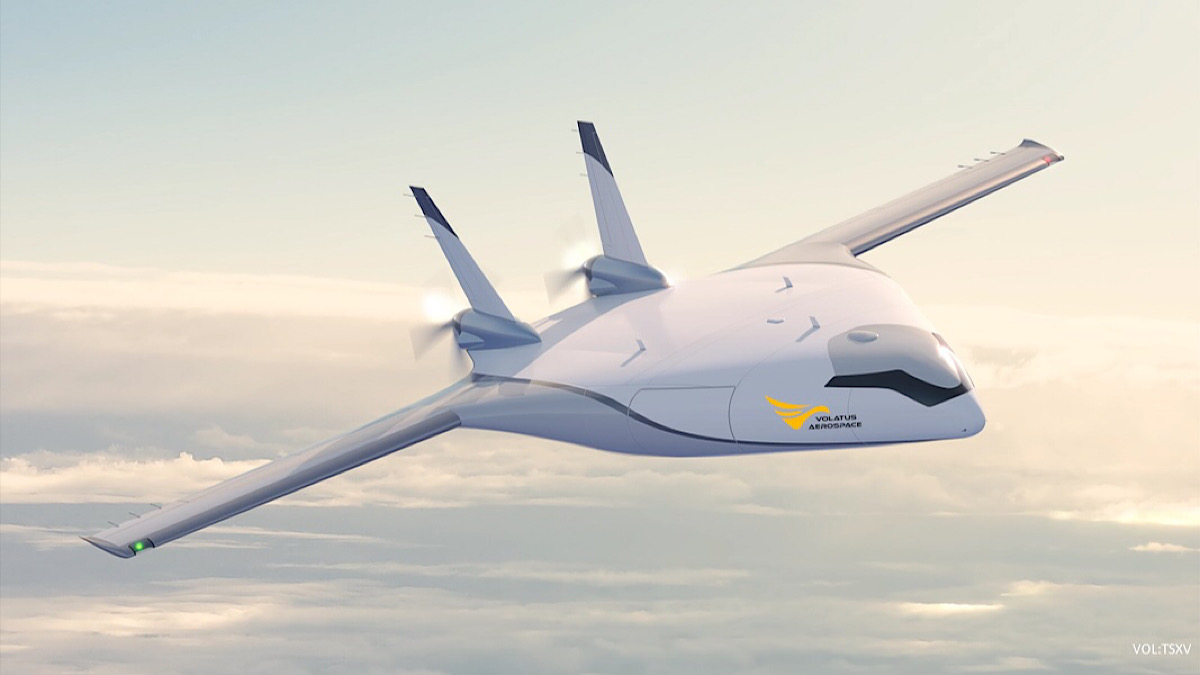
Drones as Big as 747s Will Fly Cargo Around the World With Low Emissions, Startup Says

By Vanessa Bates Ramirez 

The global supply chain is currently experiencing all kinds of glitches, from material shortages to labor shortages and beyond. Moving goods from point A to point B has become more expensive, and there’s no quick fix in sight. But a San Diego-based startup plans to meet some of the demand for air freight with an innovative solution: autonomous cargo drones as big as a Boeing 747. And customers are jumping on board.

Natilus, founded in 2016, this week announced $6 billion worth of pre-orders for over 440 of its aircraft. The company says its blended wing design can fit 60 percent more cargo than existing freight aircraft while cutting costs by 60 percent and with 50 percent less carbon emissions.

Aleksey Matyushev, the company’s CEO, pointed out in a press release that moving freight by sea is 13 times cheaper than moving it by air, but takes 50 times as long. “Natilus intends to revolutionize the transport industry by providing the timeliness of air freight at an affordable cost reduction of 60 percent, making air cargo transportation substantially more competitive,” he said.

How will they do this? Much of the savings will reportedly come from the aircraft’s design.

Continue reading… “Drones as Big as 747s Will Fly Cargo Around the World With Low Emissions, Startup Says”

This company plans to build a self-driving car with a brain that runs on light

By Sierra Mitchell

Two clear trends are developing in the automotive space: The first is the move away from internal-combustion engines and toward battery-electric vehicles, and the second is the pursuit of autonomy. Cars that can drive themselves come from the likes of Waymo and other companies, while automakers such as Tesla boast about their driver-assistance features. 

One company planning on tinkering at the intersection of these trends is called Lightmatter, which is going to build the brains of a self-driving prototype vehicle. The company’s microchips set them apart from others in the tech industry: The chips that will do the computing for this experimental self-driving car will be light-based, unlike the traditional chips that employ electrons and transistors. 

The company, in conjunction with Harvard University and Boston University, has received $4.8 million in funding from a government organization called IARPA. That stands for Intelligence Advanced Research Projects Activity, and can be thought of as an analog of DARPA—which funds defense-related research—but from the Office of the Director of National Intelligence. 

Lightmatter, unlike outfits such Zoox or Rivian, is definitely not a car or transportation company, so don’t expect to see Lightmatter-branded vehicles passing you on the highway. It’s a chip company, and the photonic chips they make are specifically geared towards powering artificial intelligence computations in an efficient way. 

Continue reading… “This company plans to build a self-driving car with a brain that runs on light”

Outrider releases ‘fully autonomous’ truck parking system

BY DAVID EDWARDS 

Outrider, a developer of autonomous technology for yard operations at logistics hubs, has released “fully autonomous” trailer backing capabilities to its fleet.

This proprietary technology enables autonomous yard trucks to back trailers into tight spaces with precision and without modifications to trailers.

These capabilities are now available as part of the Outrider System, which automates distribution yards for large, logistics-dependent enterprises. 

Andrew Smith, founder and CEO of Outrider, says: “Automation is key to relieving the inflationary pressure on the supply chain.

“Distribution yards are critical links in the supply chain and prime targets for automating the flow of goods between over-the-road transportation and fulfillment centers, warehouses and manufacturing plants.

Continue reading… “Outrider releases ‘fully autonomous’ truck parking system”

Solar-powered car that can ‘drive for months without charging’ to hit roads this summer

The five -seater Lightyear One is designed to be an ‘off-the-grid, clean, and convenient mobility solution’(Lightyear)

By Anthony Cuthbertson

Lightyear One costs €150,000 and aims to be on roads by mid-2022.

A solar-powered car has travelled hundreds of kilometres on a single charge, marking a major milestone towards bringing the “world’s most efficient and sustainable” vehicle to the market.

The Lightyear One drove 400km (248 miles) at 130kph before needing to recharge during tests in the Italian town of Aprilia last month. Previous tests carried out at a lower speed saw the electric car travel more than 700km.

Lightyear claims its car will allow customers to “drive for months without charging”, and hopes to deliver the first vehicles to customers by mid 2022.

Reservations for the Lightyear One can already be made through the company’s website, requiring a €150,000 down payment.

“We have achieved an energy consumption of 141-watt hours per kilometre. What this means is that on one charge, you’d be able to drive for over 400km. For example, that ‘s from Amsterdam all the way to Luxembourg,” said Megan Parfitt, vehicle test coordinator at Lightyear.

“Comparing that to other vehicles on the market right now, that’s about one-and-a-half times further than a directly-comparable vehicle can do with the same battery size… It shows we’re well on our way to achieving our target of being the most efficient car on the market, not just in legislative cycles but also in real-world conditions that the customer will experience.”

Continue reading… “Solar-powered car that can ‘drive for months without charging’ to hit roads this summer”
Discover the Hidden Patterns of Tomorrow with Futurist Thomas Frey
Unlock Your Potential, Ignite Your Success.

By delving into the futuring techniques of Futurist Thomas Frey, you’ll embark on an enlightening journey.

Learn More about this exciting program.