Bio-Inspired Leaf LSC Design Revolutionizes Solar Energy Efficiency

Since the 1970s, luminescent solar concentrators (LSCs) have aimed to boost solar energy capture by utilizing luminescent materials to convert and concentrate sunlight onto photovoltaic (PV) cells. Unlike traditional concentrators that rely on mirrors and lenses, LSCs can harvest diffuse light, making them ideal for applications like building-integrated photovoltaics, where their semitransparent and colorful nature offers aesthetic benefits. However, scaling up LSCs to cover larger areas has been challenging due to issues like self-absorption of photoluminescent (PL) photons within the waveguide.

Researchers at Ritsumeikan University in Japan have introduced an innovative “leaf LSC” model designed to overcome these challenges by improving the collection and transfer of light to PV cells. The leaf LSC approach addresses scalability by using smaller, interconnected luminescent components that function like leaves on a tree, enhancing both efficiency and practicality.

Continue reading… “Bio-Inspired Leaf LSC Design Revolutionizes Solar Energy Efficiency”

Revolutionizing Orthopaedics: 3D Printing Patient-Specific Implants for Personalized Medicine

The process of creating 3D-printed, patient-specific implants begins with a thorough clinical assessment to identify the unique needs of each patient. Advanced imaging techniques, such as X-rays and CT scans, are utilized to gather detailed anatomical data, which is then converted into a digital 3D model using specialized software. This digital model is sent to a 3D printer, where rigorous quality control measures ensure the implant is manufactured with precision and accuracy.

The implant is custom-designed to fit the patient perfectly, ensuring optimal functionality and comfort. The use of 3D printing allows for the replication of complex structures and intricate details that would be challenging to achieve with traditional manufacturing methods. This precise production process ensures that the implant meets the highest standards, leading to a successful surgical outcome and a swift recovery for the patient.

Continue reading… “Revolutionizing Orthopaedics: 3D Printing Patient-Specific Implants for Personalized Medicine”

Nvidia Unveils Omniverse Cloud Sensor RTX to Revolutionize Autonomous Machine Development

Nvidia is set to launch a new suite of microservices called Omniverse Cloud Sensor RTX, designed to provide highly accurate sensor simulations that will significantly accelerate the development of fully autonomous machines. According to Nvidia, developers using Omniverse Cloud Sensor RTX can test sensor perception and AI software at scale in realistic, physically accurate virtual environments, long before deploying them in the real world.

In addition to aiding developers, Omniverse Cloud Sensor RTX will enable sensor manufacturers to validate and integrate digital twins of their sensors in virtual environments. This capability is expected to reduce the time and cost associated with physical prototyping.

Continue reading… “Nvidia Unveils Omniverse Cloud Sensor RTX to Revolutionize Autonomous Machine Development”

Pioneering Anode-Free Sodium Solid-State Batteries: A Leap Toward Sustainable Energy

Researchers at the Laboratory for Energy Storage and Conversion (LESC), led by Professor Y. Shirley Meng, have achieved a significant breakthrough in energy storage technology by developing the first anode-free sodium solid-state battery. This innovation, a collaboration between the University of Chicago’s Pritzker School of Molecular Engineering and the University of California, San Diego’s Aiiso Yufeng Li Family Department of Chemical and Nano Engineering, marks a major step forward in creating cost-effective, fast-charging, high-capacity batteries for electric vehicles and grid storage.

Grayson Deysher, a PhD candidate at UC San Diego and the lead author of a recent paper published in Nature Energy, emphasized the novelty of this achievement. “While there have been previous advancements in sodium, solid-state, and anode-free batteries, no one has successfully combined these three concepts until now,” Deysher stated.

Continue reading… “Pioneering Anode-Free Sodium Solid-State Batteries: A Leap Toward Sustainable Energy”

New Discovery Reveals Hidden Water on the Moon in Unusual Mineral

Scientists have made a significant breakthrough in understanding where water on the Moon may be hiding. A recent analysis of Moon dust collected by China’s Chang’e-5 lander has revealed that a mineral within the dust contains an astonishing amount of water—so much so that water constitutes 41 percent of its weight. This mineral is similar to novograblenovite, a rare substance first identified in basaltic rock from Russia’s Kamchatka Peninsula only a few years ago. Both the lunar and terrestrial minerals share the chemical formula (NH4)MgCl3·6H2O and have comparable crystalline structures.

The discovery of this water-rich mineral on the Moon is not only intriguing for what it tells us about lunar water but also for the clues it may provide about the Moon’s geological history and the origins of its water. The fact that we can study a similar mineral on Earth allows scientists to draw parallels and hypothesize about how water became trapped in the Moon’s surface materials.

Continue reading… “New Discovery Reveals Hidden Water on the Moon in Unusual Mineral”

Stanford’s StarFOX: Pioneering Autonomous Swarms of Satellites for Future Space Missions

In the future, space exploration may rely not on individual, expensive satellites, but on teams of smaller satellites working together as a “swarm.” These swarms will enhance accuracy, agility, and autonomy in space missions. Researchers at Stanford University’s Space Rendezvous Lab are at the forefront of this innovation, recently completing the first-ever in-orbit test of a prototype system that navigates a swarm of satellites using only visual information shared through a wireless network.

“It’s a milestone paper and the culmination of 11 years of effort by my lab, which was founded with this goal of surpassing the current state of the art and practice in distributed autonomy in space,” said Simone D’Amico, associate professor of aeronautics and astronautics and senior author of the study published on the arXiv preprint server. “Starling is the first demonstration ever made of an autonomous swarm of satellites.”

Continue reading… “Stanford’s StarFOX: Pioneering Autonomous Swarms of Satellites for Future Space Missions”

Revolutionizing Construction: UCL Student Develops Biomaterial to Capture CO2 and Reduce Carbon Footprint

A groundbreaking construction biomaterial that utilizes living microorganisms to capture carbon dioxide from the atmosphere has been developed by a graduate student at University College London (UCL) and a team of researchers. This innovation, known as a cyanobacterial engineered living material (C-ELM), has the potential to significantly reduce the construction industry’s carbon footprint if mass-produced and widely implemented.

Developed by a master’s student in the UCL Bio-Integrated Design program, the C-ELM material integrates living cyanobacteria into translucent panels that can be mounted on the interior walls of buildings. These microorganisms, through the process of photosynthesis, absorb carbon dioxide from the air. They then undergo a biomineralization process that binds the carbon dioxide to calcium, forming calcium carbonate and effectively sequestering the carbon.

Continue reading… “Revolutionizing Construction: UCL Student Develops Biomaterial to Capture CO2 and Reduce Carbon Footprint”

Breakthrough in Solar Energy: Moroccan Researchers Develop Highly Efficient and Durable PVT Solar Panels

Researchers at Chouaïb Doukkali University in Morocco have achieved a significant breakthrough in solar energy technology by developing an advanced type of photovoltaic-thermal (PVT) solar panel. This innovative design not only enhances efficiency but also addresses the durability challenges that have long plagued traditional PVT modules.

Central to the new PVT panel is a custom-designed channel-box heat exchanger. This component ensures optimal convective heat exchange by allowing the entire surface of the solar panel to be in direct contact with a cooling fluid. The research team explained, “A new aluminum heat exchanger configuration, consisting of 94 channels and attached directly to the PV module, was designed.”

Continue reading… “Breakthrough in Solar Energy: Moroccan Researchers Develop Highly Efficient and Durable PVT Solar Panels”

Innovative Concrete Recycling Process Paves the Way for Sustainable Construction

Concrete, a material that often ends up in landfills after its use, is responsible for approximately 8% of global carbon emissions due to its production. However, researchers at the University of Tokyo have developed a groundbreaking method to recycle old concrete into new, robust building blocks. These new blocks are not only strong enough for constructing houses and pavements but also offer a sustainable solution to combat climate change.

The innovative process transforms waste concrete into new blocks that capture carbon dioxide, contributing to a circular economy. Remarkably, this method can be repeated, making it a truly sustainable and renewable approach. “We are trying to develop systems that can contribute to a circular economy and carbon neutrality,” said Professor Ippei Maruyama, the lead researcher behind this development.

Continue reading… “Innovative Concrete Recycling Process Paves the Way for Sustainable Construction”

NanoHive Medical Secures $7M Series C Funding to Accelerate Growth and Innovation in Spinal Fusion Technology

NanoHive Medical, a pioneer in 3D-printed titanium spinal fusion implants, has successfully raised $7 million in Series C funding to fuel its rapid growth and enhance profitability. This new investment will primarily support the expansion of NanoHive’s commercial footprint across the U.S. and drive the development of their innovative Hive portfolio, which includes advanced soft titanium implants and smart sensor technology.

The funding will also enable NanoHive to explore selected international markets and strengthen strategic partnerships. The company is focused on bringing its specialized spinal fusion technology to a wider audience, offering customized and clinically proven solutions for patients.

Continue reading… “NanoHive Medical Secures $7M Series C Funding to Accelerate Growth and Innovation in Spinal Fusion Technology”

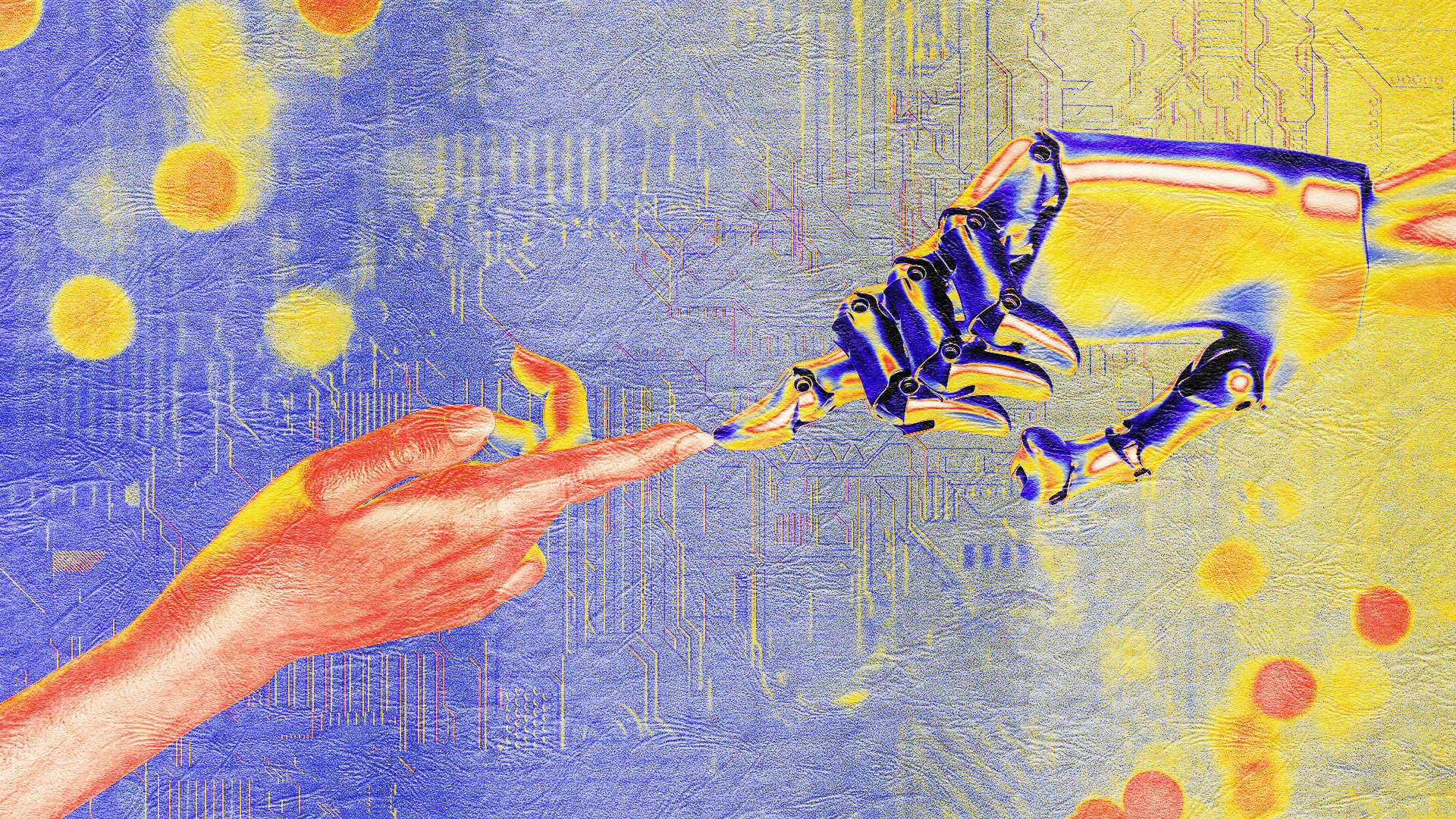
The Complex Impact of AI on Jobs: Balancing Automation and Human Creativity

The conversation around artificial intelligence (AI) has rapidly expanded from research labs and tech companies to everyday discussions in mainstream media, coffee shops, and street corners. AI is a hot topic, with concerns ranging from its potential to revolutionize industries to fears of its impact on jobs and society. Recently, a friend shared a story about overhearing a group of men discussing the threats posed by AI, with one of them expressing his frustration by saying, “I want to punch AI in the face!”

While AI doesn’t have a face to punch, this reaction highlights the anxiety many people feel about the rise of machine intelligence. The potential dangers of AI are indeed concerning. It can be misused to reinforce biases, destabilize political systems, and deepen social inequities. Some experts even warn that AI could one day challenge our dominance as a species. But beneath these fears lies a more immediate concern: the potential economic impact of AI, particularly on jobs.

Continue reading… “The Complex Impact of AI on Jobs: Balancing Automation and Human Creativity”

Scientists Develop Injectable “Goo” That Regrows Cartilage, Offering Hope for Joint Damage Treatment

Scientists have developed an innovative injectable “goo” that has shown promising results in regrowing cartilage, a breakthrough that could revolutionize the treatment of joint damage in humans. Although the new biomaterial has only been tested on sheep so far, researchers are optimistic about its potential to repair joint damage caused by degenerative diseases like osteoarthritis and sports injuries such as anterior cruciate ligament (ACL) tears.

Cartilage, the flexible tissue lining joints like the knees, plays a crucial role in cushioning and protecting bones from grinding against each other during movement. However, as we age or due to injury, this vital tissue deteriorates, leading to joint pain and reduced mobility. “When cartilage becomes damaged or breaks down over time, it can have a great impact on people’s overall health and mobility,” said Samuel Stupp, co-author of the study and director of Northwestern University’s Simpson Querrey Institute for BioNanotechnology. “The problem is that, in adult humans, cartilage does not have an inherent ability to heal.”

Continue reading… “Scientists Develop Injectable “Goo” That Regrows Cartilage, Offering Hope for Joint Damage Treatment”
Discover the Hidden Patterns of Tomorrow with Futurist Thomas Frey
Unlock Your Potential, Ignite Your Success.

By delving into the futuring techniques of Futurist Thomas Frey, you’ll embark on an enlightening journey.

Learn More about this exciting program.