Japanese Supermarket Chain Aeon Implements AI to Standardize Employee Smiles

Aeon, a major Japanese supermarket chain, has introduced a new AI system designed to evaluate and “standardize” employee smiles. On July 1, the company announced the rollout of the “smile-rating AI system,” named “Mr. Smile,” across 240 stores in Japan. This move makes Aeon the first company to employ such technology on this scale.

Developed by the Japanese company InstaVR, Mr. Smile claims to accurately assess employees’ demeanor and rate their overall attitude based on over 450 factors, including greeting, facial expressions, voice volume, and tone. Aeon states its goal is to “standardize staff members’ smiles and satisfy customers to the maximum.”

Continue reading… “Japanese Supermarket Chain Aeon Implements AI to Standardize Employee Smiles”

Scientists Develop Portable Tractor Beam for Medical Use

A tractor beam—a special beam of electromagnetic radiation that draws particles toward it instead of pushing them away—might be a concept straight from Star Trek, but scientists from the Australian Research Council’s Centre of Excellence for Transformative Meta-Optical Systems (TMOS) have recently taken steps toward a more portable way to generate one in real life.

The Melbourne-based research team suggests that this could lead to better, less invasive technology capable of performing biopsies without the cell trauma caused even by the smallest handheld tweezers or needles. The team’s paper is published in the peer-reviewed journal ACS Photonics from the American Chemical Society.

Continue reading… “Scientists Develop Portable Tractor Beam for Medical Use”

Breakthrough Nasal Spray Targets Alzheimer’s Disease

A few years ago, researchers identified abnormal clumps of tau proteins in the brain as being associated with Alzheimer’s disease. Since then, efforts have been focused on eradicating these toxic tangles, which have become a hallmark of the degenerative disease. Recently, researchers from the University of Texas Medical Branch (UTMB) have developed a breakthrough nasal spray containing antibodies that selectively target and clear away tau tangles, helping to restore cognitive function.

“This nasal spray approach opens new avenues for non-invasive delivery of tau therapeutic antibodies directly to the brain, and it holds promise for many neurodegenerative diseases,” said Dr. Rakez Kayed, professor at the Department of Neurology at UTMB and the study’s corresponding author. “Our research highlights the potential of nasal tau immunotherapy to effectively target intracellular tau aggregates – a primary driver of neurodegeneration and cognitive decline in diseases like Alzheimer’s and other tauopathies.”

Continue reading… “Breakthrough Nasal Spray Targets Alzheimer’s Disease”

Innovative Robot Developed to Control Weeds Without Harmful Herbicides

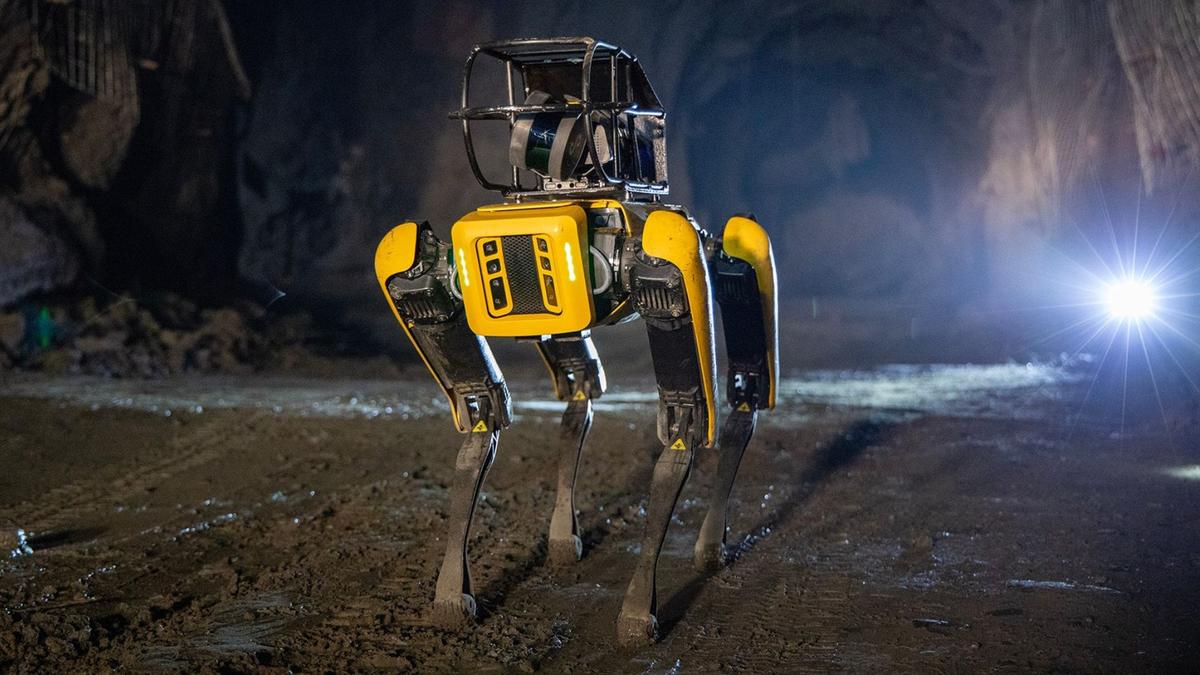
Researchers at Texas A&M University have developed a groundbreaking robotic system to control weeds on farms without the use of harmful herbicides. This new method leverages a Boston Dynamics Spot quadruped robot, equipped with a flexible end effector and a propane torch, to effectively manage weed growth.

Weed infestation is a persistent issue in agriculture, as weeds compete with crops for essential nutrients, water, and sunlight. Traditional methods, such as manual removal and mechanized herbicide spraying, are either labor-intensive or environmentally damaging. The Texas A&M team’s robotic solution offers a sustainable and efficient alternative.

Continue reading… “Innovative Robot Developed to Control Weeds Without Harmful Herbicides”

Innovative Light-Based Method Cleans Up “Forever Chemicals” at Room Temperature

Researchers have developed a groundbreaking method to decompose perfluoroalkyl substances (PFASs), commonly known as “forever chemicals,” using visible LED light at room temperature. This innovative approach offers a promising solution for sustainable fluorine recycling and PFAS treatment.

PFASs, widely used since the invention of Teflon in 1938, are found in various applications such as cookware, clothing, and firefighting foam. Their stability and resistance to heat and water, while useful, pose significant environmental and health challenges. These chemicals do not break down easily and accumulate in water, soil, and animal bodies, causing carcinogenic effects and hormonal disruptions in humans. Traditionally, decomposing these chemicals requires temperatures exceeding 752°F (400°C), making the process difficult and energy-intensive.

Continue reading… “Innovative Light-Based Method Cleans Up “Forever Chemicals” at Room Temperature”

Leveraging Spaceborne Lidar for Comprehensive Forest Monitoring

Assessing forest health accurately is essential but challenging, especially over large areas and diverse forest types. Traditional methods like airborne laser scanning (ALS) are effective but limited in scope and cost. Space-based monitoring, particularly through lidar technology, offers a promising solution.

Forests are crucial for carbon sequestration, water regulation, habitat provision, and biodiversity support. Understanding forest ecosystem functions requires accurate measurements of parameters such as canopy height, canopy cover, and tree density. However, obtaining these measurements on a large scale has been difficult.

Continue reading… “Leveraging Spaceborne Lidar for Comprehensive Forest Monitoring”

Mimicking Mantis Vision: A Breakthrough in Artificial Eyes for Autonomous Systems

Self-driving cars sometimes struggle with crashes because their visual systems can’t always process static or slow-moving objects in 3D space. This issue is reminiscent of the monocular vision found in many insects, which excels at motion-tracking but lacks depth perception. However, the praying mantis stands out with its exceptional vision, thanks to its binocular depth perception.

Inspired by the praying mantis, researchers at the University of Virginia School of Engineering and Applied Science have developed artificial compound eyes that address significant limitations in current visual data collection and processing systems. These limitations include accuracy issues, data processing lag times, and the need for substantial computational power.

Continue reading… “Mimicking Mantis Vision: A Breakthrough in Artificial Eyes for Autonomous Systems”

Vayu Robotics Revolutionizes E-Commerce Deliveries with Innovative AI-Powered Robot

As e-commerce deliveries surge, maintaining affordable delivery costs remains a challenge. Vayu Robotics Inc., based in Palo Alto, California, addresses this issue with the release of a groundbreaking delivery robot. This robot integrates advanced artificial intelligence models with cost-effective sensors, promising to transform the delivery landscape.

Technological Breakthroughs and Vision

Anand Gopalan, CEO of Vayu Robotics, emphasized the uniqueness of their technology. “The unique set of technologies we have developed at Vayu have allowed us to solve problems that have plagued delivery robots over the past decade and finally create a solution that can actually be deployed at scale and enable the cheap transport of goods everywhere,” Gopalan stated. Vayu was co-founded by industry veterans Anand Gopalan, former CEO of Velodyne; Mahesh Krishnamurthi, who previously worked at Apple SPG and Lyft; and Nitish Srivastava, also from Apple SPG and Geoffrey Hinton’s AI lab at the University of Toronto. Geoffrey Hinton serves as an advisor to the company.

Continue reading… “Vayu Robotics Revolutionizes E-Commerce Deliveries with Innovative AI-Powered Robot”

Revolutionary 3D-Printed Solar Steam Generators for Desalination Developed in Singapore

Scientists at Nanyang Technological University (NTU) in Singapore have devised a groundbreaking method to separate salt from water using bioinspired 3D-printed solar steam generators (SSGs). This innovation promises a more affordable and less energy-intensive solution for desalinating seawater.

Innovative Design and Materials

The research team, led by Yanbei Hou, utilized a novel metal-organic framework (MOF) derived fusing agent in a multi-jet fusion (MJF) 3D printer. This technique enabled the creation of SSGs with a capillary pore structure, enhancing their performance. Encapsulating iron oxide particles (Fe3O4) in a carbon layer (C@Fe3O4 hybrids), derived from MOF, allowed the SSGs to effectively absorb sunlight and convert it into heat.

Continue reading… “Revolutionary 3D-Printed Solar Steam Generators for Desalination Developed in Singapore”

Farmblox: Revolutionizing Agriculture with Farmer-Centric Automation

Nathan Rosenberg, the founder of the farm automation platform Farmblox, emphasizes a crucial lesson for selling technology to farmers: respect their autonomy and traditions. “Farmers are multigenerational,” Rosenberg told TechCrunch. “It’s not just a profession, it’s a community, a way of life, and you need to respect that. You can’t come in as a Silicon Valley tech person and tell them what to do.”

A Unique Approach to Agtech

Farmblox takes a distinct approach to agricultural technology compared to its predecessors. The startup offers a solar-powered connected monitor that integrates with third-party sensors already used by farmers. This setup allows farmers to monitor soil moisture levels and water usage more efficiently. The collected data is fed into an AI-powered automation platform, accessible from anywhere.

Continue reading… “Farmblox: Revolutionizing Agriculture with Farmer-Centric Automation”

New Dual-Target Antibiotic Offers Revolutionary Defense Against Drug Resistance

A groundbreaking study from the University of Illinois Chicago (UIC) has unveiled a new antibiotic with the potential to make it nearly impossible for bacteria to develop resistance. This innovative drug, detailed in a recent paper in Nature Chemical Biology, works by simultaneously targeting two crucial bacterial cellular processes, making it 100 million times more difficult for bacteria to evolve defenses.

The researchers explored a class of synthetic antibiotics called macrolones, which have the unique ability to disrupt bacterial cell function through two different mechanisms: interfering with protein production and corrupting DNA structure. This dual-action approach significantly complicates the bacteria’s ability to adapt and survive.

Continue reading… “New Dual-Target Antibiotic Offers Revolutionary Defense Against Drug Resistance”

South Korean Scientists Revolutionize Lab-Grown Meat with Breakthrough in Flavor

In a significant step forward for sustainable food sources, researchers in South Korea have developed a new method to make lab-grown meat taste like the real deal. Despite its initial appearance as a transparent, bubble gum pink disc, this innovation has the potential to transform the meat industry.

Lab-grown meat, also known as cultured or cell-based meat, is an emerging alternative to conventional meat, offering the same nutritional benefits and sensory experience without the associated carbon footprint. This meat is created by cultivating animal cells in a lab on 3D structures called “scaffolds,” allowing the cells to multiply without the need for traditional animal farming.

Continue reading… “South Korean Scientists Revolutionize Lab-Grown Meat with Breakthrough in Flavor”
Discover the Hidden Patterns of Tomorrow with Futurist Thomas Frey
Unlock Your Potential, Ignite Your Success.

By delving into the futuring techniques of Futurist Thomas Frey, you’ll embark on an enlightening journey.

Learn More about this exciting program.