MIT Researchers Pioneer Room-Temperature DNA Storage with Amber-Like Polymer

Inspired by the movie Jurassic Park, a team of MIT researchers has developed a groundbreaking method to store DNA for extended periods using a glassy, amber-like polymer. This innovative approach allows for the preservation of DNA at room temperature, circumventing the need for energy-intensive freezing methods.

Traditional DNA storage methods require freezing temperatures, which consume substantial energy and are impractical in many regions. The new method developed by the MIT team stores DNA at room temperature, protecting it from damage caused by heat or moisture.

Continue reading… “MIT Researchers Pioneer Room-Temperature DNA Storage with Amber-Like Polymer”

New AI Framework Revolutionizes Wearable Exoskeletons for Enhanced Human Mobility

“This work proposes and demonstrates a new machine-learning framework that bridges the gap between simulation and reality to autonomously control wearable robots to improve mobility and health of humans,” says Hao Su, an associate professor of mechanical and aerospace engineering at North Carolina State University.

“Exoskeletons have enormous potential to improve human locomotive performance,” Su, the corresponding author of a new study published in Nature, explains. “However, their development and broad dissemination are limited by the requirement for lengthy human tests and handcrafted control laws.”

Continue reading… “New AI Framework Revolutionizes Wearable Exoskeletons for Enhanced Human Mobility”

MASH Makes’ Waste-Based Biofuel Demonstrates Viability as Fossil Fuel Replacement in Shipping Industry

Recent tests have shown that MASH Makes’ waste-based biofuel is a viable ‘drop-in’ replacement for fossil fuels in the shipping sector. In collaboration with the global shipping company NORDEN, this innovative biofuel will now be trialed in live vessels. These trials mark a significant step towards achieving net-zero emissions, with biofuel poised to play a crucial role in decarbonizing shipping and heavy industry.

Shipping, which facilitates over 80% of global trade, consumes more than 330 million tons of fossil fuel annually, accounting for over 3% of global CO2 emissions—more than the entire country of Germany. Decarbonizing this essential part of the global economy is vital to meeting climate goals, but traditional green technologies have struggled to achieve this.

Continue reading… “MASH Makes’ Waste-Based Biofuel Demonstrates Viability as Fossil Fuel Replacement in Shipping Industry”

Revolutionary Photonic Chip from Tsinghua University Processes Images in Nanoseconds

Researchers at Tsinghua University in China have developed a groundbreaking photonic chip that can process, transmit, and reconstruct images in mere nanoseconds. This innovative chip bypasses the traditional optical-to-electronic data conversion used by conventional chips, significantly enhancing the speed and efficiency of image processing.

Machine vision, a rapidly evolving field where cameras, sensors, and algorithms collaborate to interpret the world and execute specific tasks, has traditionally relied on transferring data over long distances for analysis. This process, however, is too slow for many real-time applications. “The world is entering an AI era, but AI is very time- and energy-exhaustive,” said Lu Fang, associate professor at Tsinghua University’s Department of Electronic Engineering. In today’s fast-paced world, machine vision now requires on-device data processing, known as edge computing, to enable quicker decision-making.

Continue reading… “Revolutionary Photonic Chip from Tsinghua University Processes Images in Nanoseconds”

Revolutionizing Solar Energy: The Promise of Perovskite Cells

The solar energy world is on the brink of a revolution as scientists race to develop a new type of solar cell that promises to convert electricity more efficiently than today’s panels. In a recent paper published in the journal Nature Energy, a researcher from CU Boulder and his international collaborators unveiled an innovative method to manufacture these next-generation solar cells, known as perovskite cells, a critical step towards their commercialization.

Currently, nearly all solar panels are made from silicon, which has an efficiency of 22 percent, meaning they convert only about one-fifth of the sun’s energy into electricity. Additionally, producing silicon is both expensive and energy-intensive.

Continue reading… “Revolutionizing Solar Energy: The Promise of Perovskite Cells”

Hero Gauntlet: Revolutionizing Prosthetics for Partial Hand Amputees

The innovative Hero Gauntlet, designed by Open Bionics, is a groundbreaking device tailored for individuals with partial hand amputations or congenital limb differences, offering them renewed independence and functionality.

Michael Altheim’s life changed dramatically a decade ago when he lost all four fingers on his right hand in a work-related accident. The limitations of previous prosthetic solutions, which were heavy, minimally functional, and not waterproof, added to his challenges. The Hero Gauntlet aims to address these issues, providing a more effective and user-friendly alternative.

Continue reading… “Hero Gauntlet: Revolutionizing Prosthetics for Partial Hand Amputees”

AI Breakthrough: UK Company Develops Rare-Earth-Free Magnet

As the demand for rare earth materials continues to grow, innovative solutions are emerging to address this need. UK deep-tech company Materials Nexus has announced the development of a new rare-earth-free permanent magnet, created using its advanced AI platform. This AI-driven process was 200 times faster than traditional methods, offering a promising alternative in a world increasingly reliant on powerful magnets.

With the shift from internal combustion engines to electric mobility, the need for compact, high-power motors is skyrocketing. Currently, permanent magnet motors are the dominant choice in the automotive industry, powering over 80% of modern electric vehicles (EVs). Materials Nexus projects that the demand for permanent magnets in the EV sector alone will increase tenfold by 2030. Beyond automotive applications, these magnets are essential in robotics, drones, wind turbines, and HVAC systems.

Continue reading… “AI Breakthrough: UK Company Develops Rare-Earth-Free Magnet”

Game-Changing 1,000-Mile EV Battery from MIT Spinout Poised to Revolutionize Electric Vehicles

An MIT spinout company, 24M, has developed a groundbreaking electric vehicle (EV) battery capable of delivering an impressive 1,000-mile range on a single charge. This innovation has the potential to significantly reduce range anxiety, a major concern among potential EV buyers.

Range anxiety, the fear of running out of battery power before reaching a charging station, has been a significant barrier to the widespread adoption of EVs. While many EVs on the market today offer a range of 300 to 400 miles, 24M’s new battery could extend that range to 1,000 miles, potentially making EVs more appealing to a broader audience.

Continue reading… “Game-Changing 1,000-Mile EV Battery from MIT Spinout Poised to Revolutionize Electric Vehicles”

Revolutionary Carbon-Cement Supercapacitor Could Transform Energy Storage

Researchers at MIT, led by Damian Stefaniuk, have developed a groundbreaking material that could revolutionize energy storage. By combining water, cement, and carbon black—a highly conductive material commonly used in car tires—Stefaniuk and his team created a supercapacitor with the potential to significantly impact renewable energy storage.

Unlike lithium-ion batteries, supercapacitors are not ideal for long-term energy storage but excel at rapid charging and discharging. This makes them an intriguing complement to conventional batteries. The novel carbon-cement supercapacitor developed by Stefaniuk’s team could alleviate pressure on the electrical grid by providing efficient storage solutions for green energy, which often fluctuates throughout the day.

Continue reading… “Revolutionary Carbon-Cement Supercapacitor Could Transform Energy Storage”

The Future of Markets: Blockchain, Tokenization, and Financial Innovation

Blockchain and cryptoassets have not only revolutionized innovation and wealth creation globally but also sparked discussions on the future evolution of markets and payments. In the United States, these conversations have gained momentum, particularly as the Presidential election approaches. However, the broader point is that the advantages of blockchain and tokenized payments—faster, instantaneous, and cheaper transactions and record-keeping—are clear to both individuals and institutions. The next phase of these discussions, the tokenization and digitization of all assets, marks a significant advancement for blockchain, cryptoassets, and the broader opportunities of tokenization.

Despite the promise and reality of cryptoassets, the marketplace for these assets remains relatively small compared to traditional financial (TradFi) assets and markets. Tokenizing these assets has the potential to shift this dynamic. BlackRock, for example, estimates—and is investing in—initiatives to realize up to $10 trillion in value from the tokenization of real-world assets (RWA). Nevertheless, even with significant investment and interest, regulation or guardrails are necessary to ensure these efforts are successful.

Continue reading… “The Future of Markets: Blockchain, Tokenization, and Financial Innovation”

China Installs World’s Largest 18 MW Wind Turbine

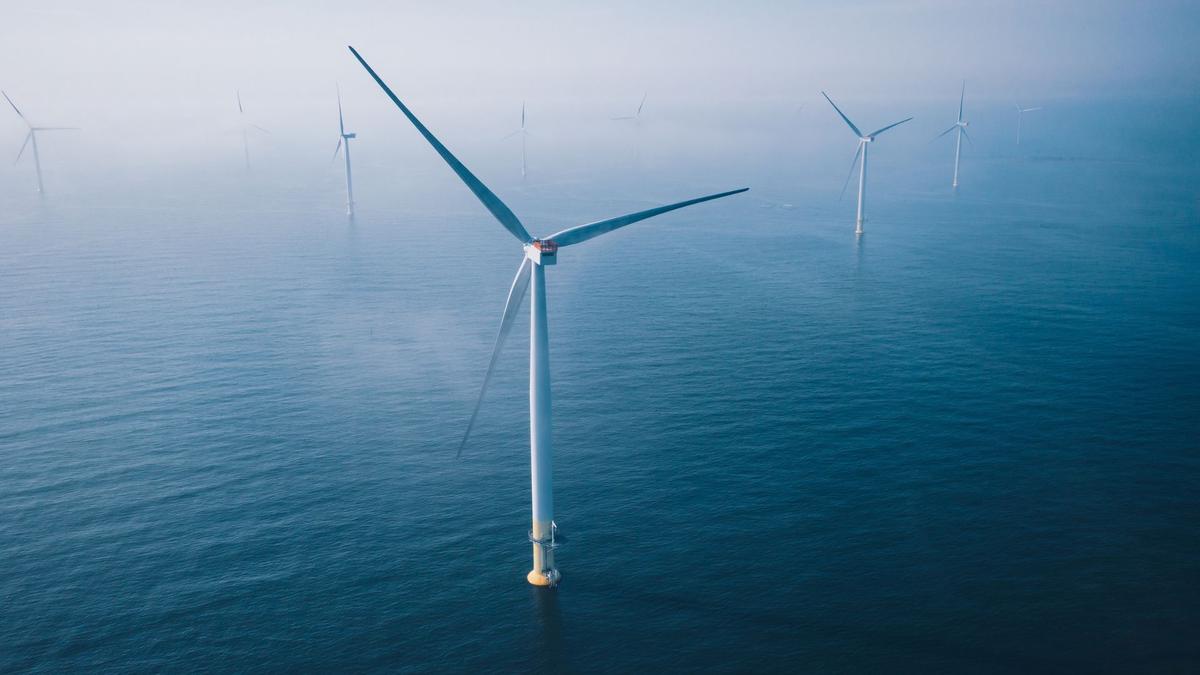
In a groundbreaking achievement, China has successfully installed an 18 MW wind turbine, the largest in the world by power rating. This monumental feat was accomplished by the state-owned Dongfang Electric Corporation on June 5 at a coastal test base in South China’s Guangdong province.

As the global push towards renewable energy intensifies, wind turbines are becoming increasingly vital. Original equipment manufacturers (OEMs) are now focused on building larger and more efficient turbines to harness the powerful winds of the seas, capable of supplying energy to numerous households with each rotation.

Continue reading… “China Installs World’s Largest 18 MW Wind Turbine”

Plasma Proteomics: A New Frontier in Sepsis Diagnosis and Prognosis

Analyzing the plasma proteins of patients with sepsis can provide critical insights into the severity and prognosis of the condition, researchers report. Their findings demonstrate how affordable, high-throughput proteomics using mass spectrometry (MS) can effectively map the plasma proteome, revealing differences in patient responses.

The study, published in Science Translational Medicine, identified three distinct clusters of sepsis patients based on their plasma proteomes. These clusters were indicative of the patients’ response states, disease severity, and outcomes. The researchers found that a patient’s assignment to a particular cluster could change over time, suggesting potential applications for therapeutic intervention and disease progression monitoring.

Continue reading… “Plasma Proteomics: A New Frontier in Sepsis Diagnosis and Prognosis”
Discover the Hidden Patterns of Tomorrow with Futurist Thomas Frey
Unlock Your Potential, Ignite Your Success.

By delving into the futuring techniques of Futurist Thomas Frey, you’ll embark on an enlightening journey.

Learn More about this exciting program.