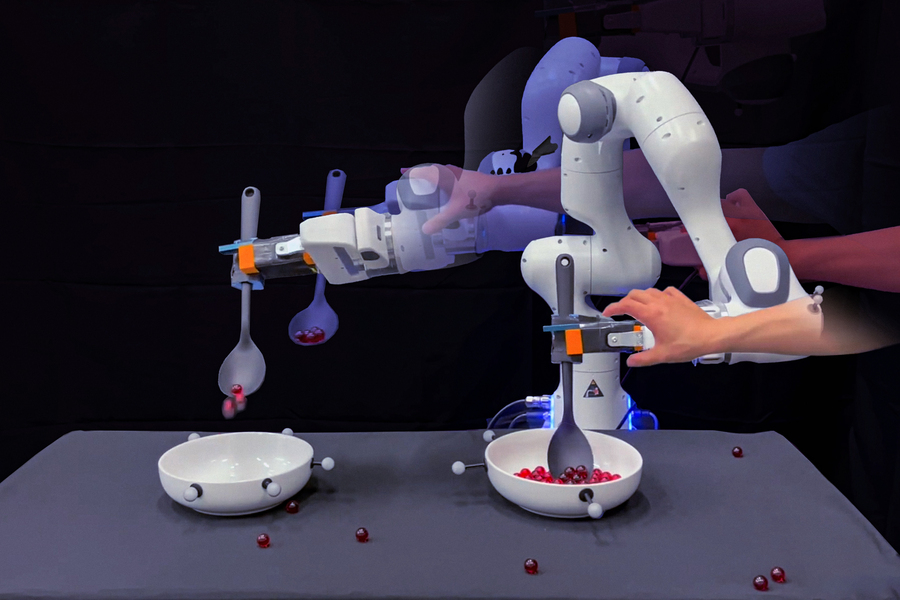
Enhancing Robotic Household Chores: MIT’s Innovative Approach

Robots are steadily advancing from simple tasks like cleaning spills to more complex household duties. Many of these robotic helpers are trained through imitation, mimicking the movements guided by humans. However, without the ability to adapt to unexpected obstacles or disruptions, robots often struggle to navigate unforeseen challenges, requiring them to restart tasks from the beginning.

Addressing this limitation, MIT engineers have devised a groundbreaking method to imbue robots with a degree of common sense when confronted with deviations from their trained paths. Their approach integrates robot motion data with the expansive “common sense knowledge” stored in large language models (LLMs).

Continue reading… “Enhancing Robotic Household Chores: MIT’s Innovative Approach”

Introducing the Thermonator: The Flame-Throwing Robot Dog by Throwflame

The wait is finally over for those eagerly anticipating the release of the flame-throwing robot dog announced by Ohio-based Throwflame last summer. Meet the Thermonator, hailed as the “first-ever flamethrower-wielding robot dog,” now available for purchase at a price tag of $9,420.

The Thermonator is a quadruped robot equipped with an ARC flamethrower affixed to its back, capable of being fueled by either gasoline or napalm. Boasting a one-hour battery life and a flame-throwing range extending up to 30 feet, this cutting-edge creation also offers Wi-Fi and Bluetooth connectivity for seamless remote control via smartphone.

Continue reading… “Introducing the Thermonator: The Flame-Throwing Robot Dog by Throwflame”

Unveiling the Hyperloop Train: China’s Leap into Hypersonic Transportation

Imagine traversing from New York to Los Angeles in less than an hour, or completing the journey from London to Paris in a mere 15 minutes. Such feats may seem like the stuff of science fiction, yet China’s foremost missile manufacturer, the China Aerospace Science and Industry Corporation (CASIC), is boldly claiming to have engineered the fastest train ever conceived.

CASIC’s ambitious endeavor centers around the development of a hyperloop train capable of achieving mind-boggling speeds within a vacuum environment. The fundamental principle involves enclosing a tube spacious enough to accommodate a train and evacuating all air to eliminate drag and resistance.

Continue reading… “Unveiling the Hyperloop Train: China’s Leap into Hypersonic Transportation”

Capturing Light’s Blink: MIT’s Trillion Frames per Second Camera Revolutionizes Photography

In a groundbreaking leap forward for photographic technology, MIT has unveiled a revolutionary camera capable of capturing a staggering trillion frames per second. Contrasting this with the mere 24 frames per second of a traditional movie camera, this innovation has propelled scientists into a realm where they can now photograph the fastest phenomenon known to mankind: light itself.

The development of this cutting-edge camera, described as a milestone in the realm of scientific imaging, has unlocked the ability to freeze-frame events occurring in a mere nanosecond. Astonishingly, the camera can then extend this fleeting moment to a duration as long as twenty seconds, providing researchers with an unprecedented window into the behavior of light.

Continue reading… “Capturing Light’s Blink: MIT’s Trillion Frames per Second Camera Revolutionizes Photography”

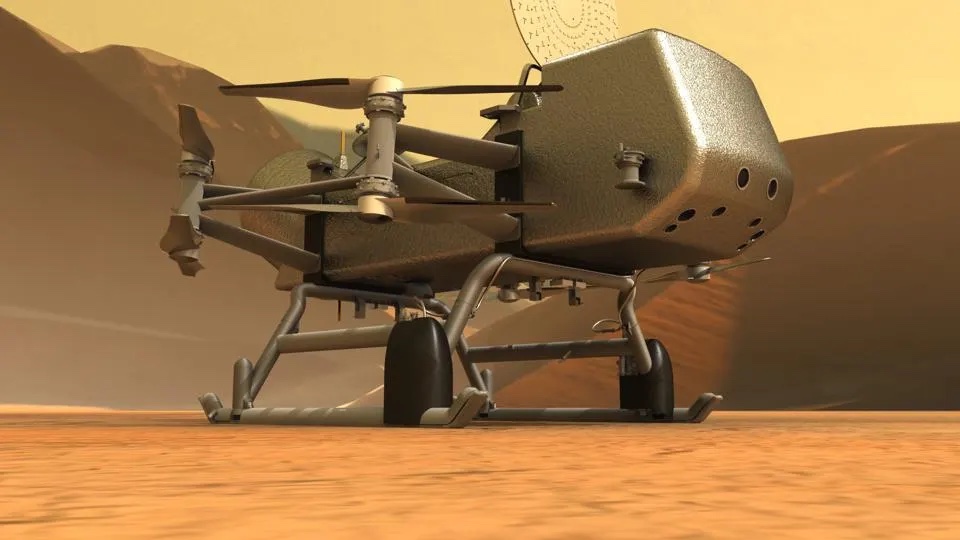
NASA’s Dragonfly Mission: Exploring Titan’s Enigmatic World

NASA has greenlit its highly anticipated Dragonfly mission, set to embark on an exhilarating journey to Saturn’s largest moon, Titan, with a price tag of $3.35 billion and a slated launch in July 2028.

Titan stands as a celestial anomaly, boasting a plethora of earthly features, including weather patterns and liquid bodies on its surface. With an atmosphere, rainfall, lakes, oceans, and geological formations, Titan presents a captivating blend of familiarity and strangeness, earning descriptions ranging from utopia to enigma due to its peculiar chemistry.

Continue reading… “NASA’s Dragonfly Mission: Exploring Titan’s Enigmatic World”

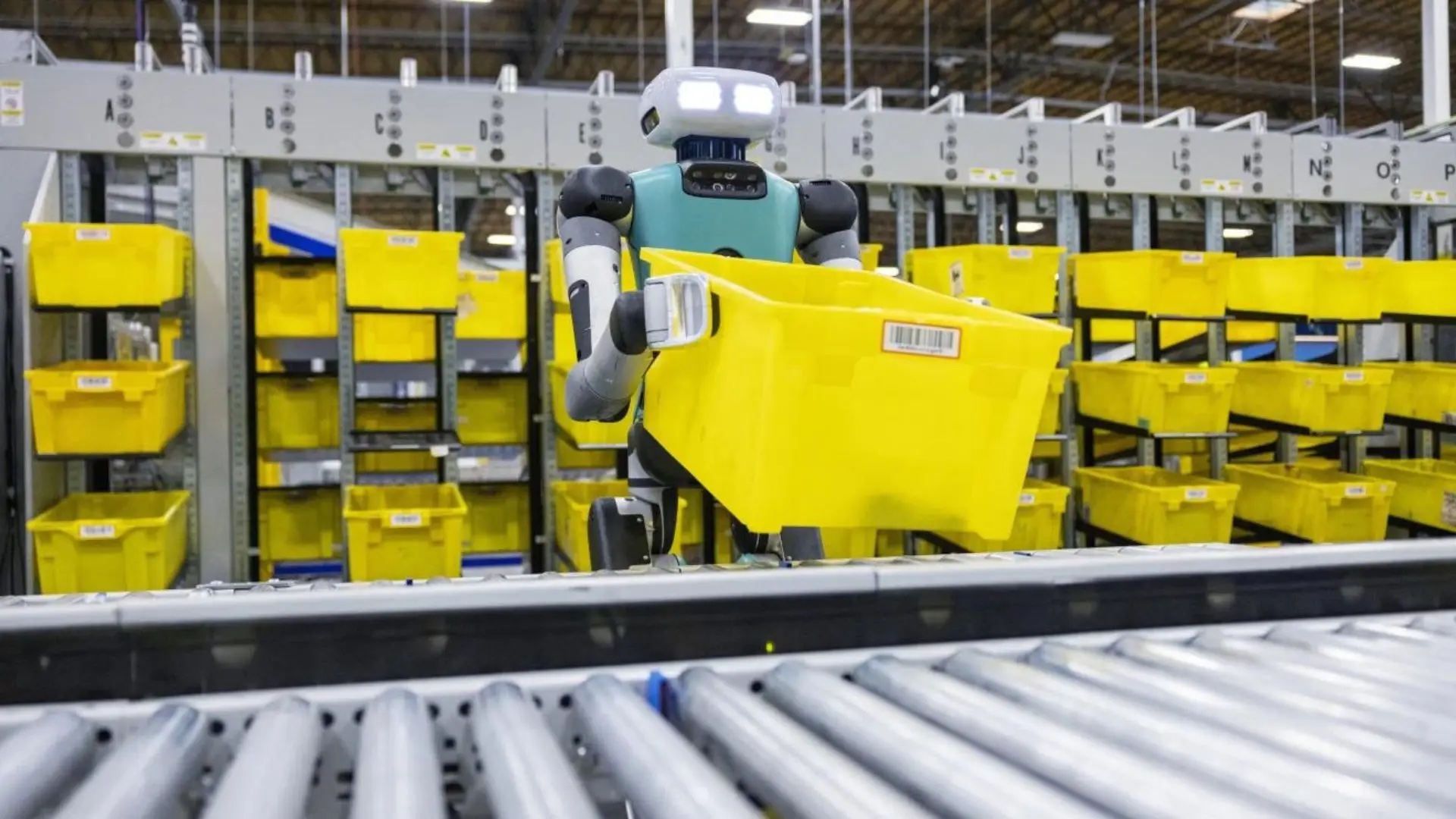
Amazon’s Robot Revolution: Enhancing Efficiency While Embracing Human Collaboration

Amazon’s latest foray into warehouse automation heralds a new era of efficiency and innovation, with the introduction of humanoid robots and advanced robotic systems aimed at revolutionizing warehouse operations. This week marks the commencement of testing for Digit, a two-legged robot designed to tackle a myriad of tasks, starting with the movement of empty tote boxes within Amazon’s facilities.

In tandem with Digit, Amazon unveils Sequoia, a cutting-edge robotic system engineered to streamline order fulfillment processes. Deployed initially at a fulfillment center in Houston, Texas, Sequoia epitomizes Amazon’s relentless pursuit of operational excellence. However, as the tech giant doubles down on automation, concerns loom over the potential impact on its vast workforce, comprising nearly 1.5 million individuals.

Continue reading… “Amazon’s Robot Revolution: Enhancing Efficiency While Embracing Human Collaboration”

urning the Tide: Breaking Down Plastic Pollution with Microbial Innovation

In the perpetual battle against plastic pollution, a groundbreaking discovery from a Harvard laboratory offers a glimmer of hope. Amidst the daunting timeline of plastic decomposition—ranging from centuries to decades—a newly unearthed microbe has emerged as a formidable ally, capable of initiating the breakdown of virtually any type of plastic within a matter of days.

Enter Breaking, a pioneering startup spearheading the translation of this scientific breakthrough into a tangible solution for cleaning up plastic waste. CEO and co-founder Sukanya Punthambaker reflects on the pivotal moment when the discovery transcended the confines of the lab, igniting a mission to harness science and technology for environmental restoration.

Continue reading… “urning the Tide: Breaking Down Plastic Pollution with Microbial Innovation”

The Screw Bike: A Mind-Bending Ride into the Future of Electric Vehicles

In the realm of eccentric vehicles, few can rival the spectacle of the Screw Bike—a mesmerizing electric creation that defies convention with its four custom-built omnidirectional wheels, poised sideways for seamless self-balancing akin to a Segway, and capable of maneuvering in any direction. It’s a marvel of ingenuity that pushes the boundaries of traditional transportation.

Leading this audacious venture is British YouTuber James Bruton, renowned for his expertise in self-balancing technology and omnidirectional wheels. His repertoire includes crafting a self-balancing bicycle with a sideways-mounted omni-wheel and numerous self-stabilizing robot projects. Yet, the Screw Bike represents a bold new frontier in his exploration.

Continue reading… “The Screw Bike: A Mind-Bending Ride into the Future of Electric Vehicles”

Unleashing Energy Insights: Bidgely’s AI Revolutionizes Grid Efficiency

For years, the troves of data collected by smart electric and gas meters held immense potential, yet harnessing this wealth of information remained a challenge. Bidgely, an innovative energy intelligence firm based in Los Altos, California, has now unlocked this potential by leveraging artificial intelligence (AI) to craft personalized consumer profiles, revolutionizing how energy usage is understood and managed.

CEO Abhay Gupta, reflecting on Bidgely’s recognition on Fast Company’s Most Innovative Companies list of 2024, highlights the pivotal role of innovation and AI in propelling the clean-energy transition forward.

Continue reading… “Unleashing Energy Insights: Bidgely’s AI Revolutionizes Grid Efficiency”

Unraveling the Slow Pace of NASA’s Artemis Program: A Comparison with Apollo Missions”

Between 1969 and 1972, the Apollo missions accomplished what seemed like the impossible—landing a dozen astronauts on the moon. However, comparing those feats with our current endeavors, particularly NASA’s Artemis program, reveals a stark contrast in speed, complexity, and progress. Delving into the reasons behind this disparity reveals a complex interplay of financial constraints, political dynamics, and shifting priorities.

Financial considerations loom large in this discussion. The Apollo missions were undeniably successful but came at an exorbitant cost. At its zenith, NASA commanded a staggering 5% of the federal budget, with over half of that dedicated to Apollo. Adjusting for inflation, the Apollo program would tally over $260 billion in today’s currency. Including precursor programs like Gemini and robotic lunar missions, the figure balloons to over $280 billion.

Continue reading… “Unraveling the Slow Pace of NASA’s Artemis Program: A Comparison with Apollo Missions””

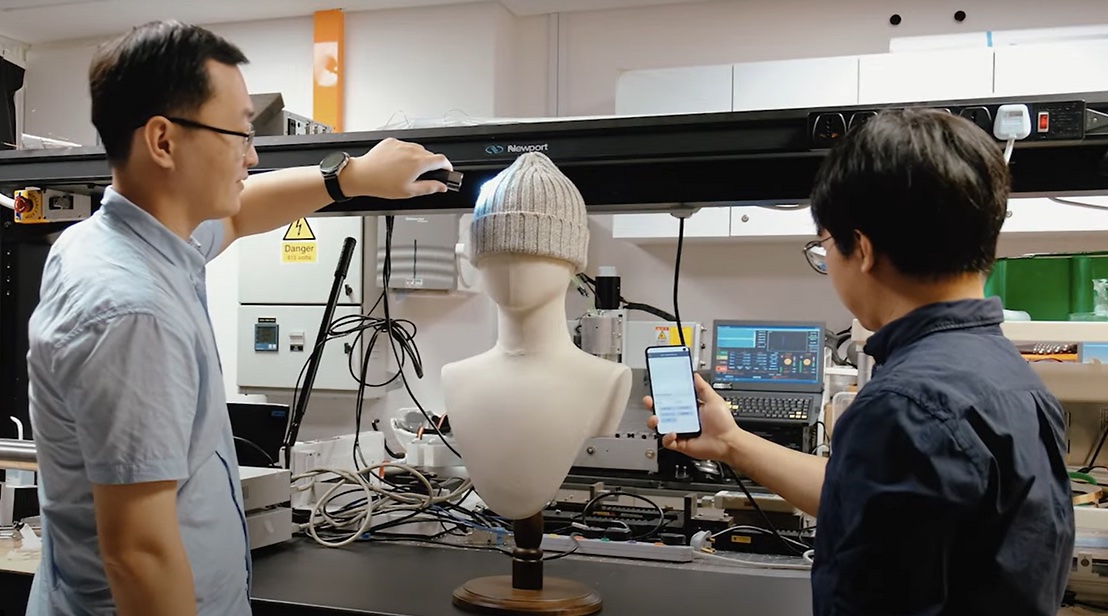
Weaving the Future: NTU Scientists Pioneer Ultra-Thin Semiconductor Fibers for Smart Textiles

A groundbreaking achievement in wearable technology has emerged from the labs of Nanyang Technological University, Singapore (NTU Singapore), where scientists have developed ultra-thin semiconductor fibers that seamlessly integrate into fabrics, revolutionizing ordinary textiles into smart electronics.

The impetus for this breakthrough stemmed from the demand for flexible and defect-free materials crucial for stable signal transmission. Traditional manufacturing methods often resulted in stress-induced cracks and deformities, impeding performance and scalability. To overcome this challenge, NTU scientists conducted rigorous modeling and simulations to identify stress factors during manufacturing, leading to a meticulous selection of materials and production techniques.

Continue reading… “Weaving the Future: NTU Scientists Pioneer Ultra-Thin Semiconductor Fibers for Smart Textiles”

Harnessing the Body: The Future of Implantable Batteries

Innovations in battery technology are extending beyond traditional applications, as demonstrated by experts at China’s Tianjin University of Technology. By leveraging a combination of gold, salt, and the body’s own oxygen, researchers are pioneering body-based batteries with the potential to power life-saving medical devices and even combat diseases.

These remarkable batteries, highlighted in a research summary from ScienceDaily, represent a promising advancement in the field of medical technology. Initial studies conducted on rats have shown the compatibility of this technology within a biological system, without any adverse effects observed. If successfully implemented in humans, these innovative power sources could eliminate the need for surgical interventions when batteries fail in crucial implants like pacemakers and neurotransmitter devices.

Continue reading… “Harnessing the Body: The Future of Implantable Batteries”
Discover the Hidden Patterns of Tomorrow with Futurist Thomas Frey
Unlock Your Potential, Ignite Your Success.

By delving into the futuring techniques of Futurist Thomas Frey, you’ll embark on an enlightening journey.

Learn More about this exciting program.