The Humane AI Pin: Redefining Mobile Interaction

Humane’s latest innovation, the AI Pin, presents a radical departure from traditional smartphones by eliminating the need for a screen. Instead, it leverages an AI assistant and the CosmOS operating system to abstract away conventional app interfaces, offering a streamlined user experience. Whether you need to make a call, send a text, perform calculations, jot down notes, or seek information, the AI Pin responds to voice commands, functioning as an all-encompassing mobile solution.

Positioned as a pivotal step towards a post-smartphone era, the AI Pin aims to reduce screen time and re-engage users with the physical world. Yet, fundamental questions linger about the feasibility and desirability of such a shift in our technological landscape.

Continue reading… “The Humane AI Pin: Redefining Mobile Interaction”

Advancing Meta’s AI Infrastructure: The Next Generation of MTIA”

Meta is forging ahead with the development of its next-generation infrastructure, with a strong focus on integrating AI capabilities. This strategic move encompasses the support for new generative AI products, recommendation systems, and cutting-edge AI research. The company anticipates substantial growth in this area as the demand for compute power to sustain AI models rises in tandem with their complexity.

Last year, Meta introduced the Meta Training and Inference Accelerator (MTIA) v1, marking its inaugural foray into AI inference acceleration. Tailored specifically for Meta’s deep learning recommendation models, MTIA v1 aimed to enhance compute efficiency across Meta’s suite of apps and technologies.

Continue reading… “Advancing Meta’s AI Infrastructure: The Next Generation of MTIA””

Wrapping Up Futurist of the Year 2024: A Celebration of Science in Warsaw

This Friday marks the conclusion of Futurist of the Year 2024 in Warsaw—a pioneering congress that celebrates science. The event, organized by the Nicolaus Copernicus University (NCU) in partnership with various collaborators, serves as a platform for debating the future of technology, economy, and education.

“Futurist of the Year 2024 is a project for which we have been preparing by gathering contacts with leading futurists. They helped us build the program for the largest scientific congress focusing on the future of education, banking, and modern technology,” says Piotr Turek, the Rector of Nicolaus Copernicus University.

Continue reading… “Wrapping Up Futurist of the Year 2024: A Celebration of Science in Warsaw”

Unveiling the Early Childhood Cognitive Nexus: Stunting’s Impact on Visual Working Memory

A groundbreaking collaboration spearheaded by Professor John Spencer from the University of East Anglia and Assistant Professor Samuel Forbes from the esteemed Psychology Department has uncovered a pivotal connection, affecting infants as young as six months old. This correlation links the physical stature of infants to their cognitive abilities, intricately tied to brain function. The joint effort, which also involved the University of Nottingham, the Community Empowerment Lab, University of Iowa, Rhode Island Hospital, Brown University, and the Bill & Melinda Gates Foundation, represents a significant stride forward in comprehending early childhood development.

Central to this research is the concept of ‘visual working memory,’ a fundamental aspect of our cognitive framework responsible for maintaining and processing visual information. The study meticulously compared this cognitive capacity in infants experiencing stunted growth—a telltale sign of undernutrition and adverse environmental conditions—with their peers exhibiting expected growth patterns. The study’s findings are striking, revealing that infants with stunted growth display disrupted visual working memory, rendering them more susceptible to distractions. This poses a worrying precedent for their cognitive development, indicating a potentially diminished trajectory in the year ahead.

Continue reading… “Unveiling the Early Childhood Cognitive Nexus: Stunting’s Impact on Visual Working Memory”

Quantum Computing: Breaking Free from the Freeze

For decades, the quest for quantum computing has been hampered by the need for bone-chilling temperatures, just a hair’s breadth above absolute zero. This frigid environment is essential to coax quantum bits or “qubits” into revealing their extraordinary computational powers, isolating them from the mundane warmth of classical computing.

Each qubit requires elaborate refrigeration setups to operate, hindering the scalability needed for quantum computers to tackle complex tasks like material design or drug discovery. Companies like Google, IBM, and PsiQuantum envision sprawling warehouses filled with cooling systems to accommodate these behemoths of computation.

Continue reading… “Quantum Computing: Breaking Free from the Freeze”

VonMercier’s Arosa EV Hovercraft: Pioneering Exploration and Eco-Friendly Recreation

VonMercier’s ambitious mission to revolutionize exploration, recreation, and transportation has taken a significant leap forward with the introduction of its electric hovercraft, the Arosa EV Hovercraft. While not the epitome of sleek design, this innovative vehicle is capturing attention and imagination alike.

Described by Electrek as the “platypus of the transportation world,” hovercrafts amalgamate diverse elements into functional yet unconventional forms. Despite its appearance, the Arosa holds promise for thrilling adventures across varied terrains.

Continue reading… “VonMercier’s Arosa EV Hovercraft: Pioneering Exploration and Eco-Friendly Recreation”

The Hydrogen Revolution: Unlocking Power with Water Engines

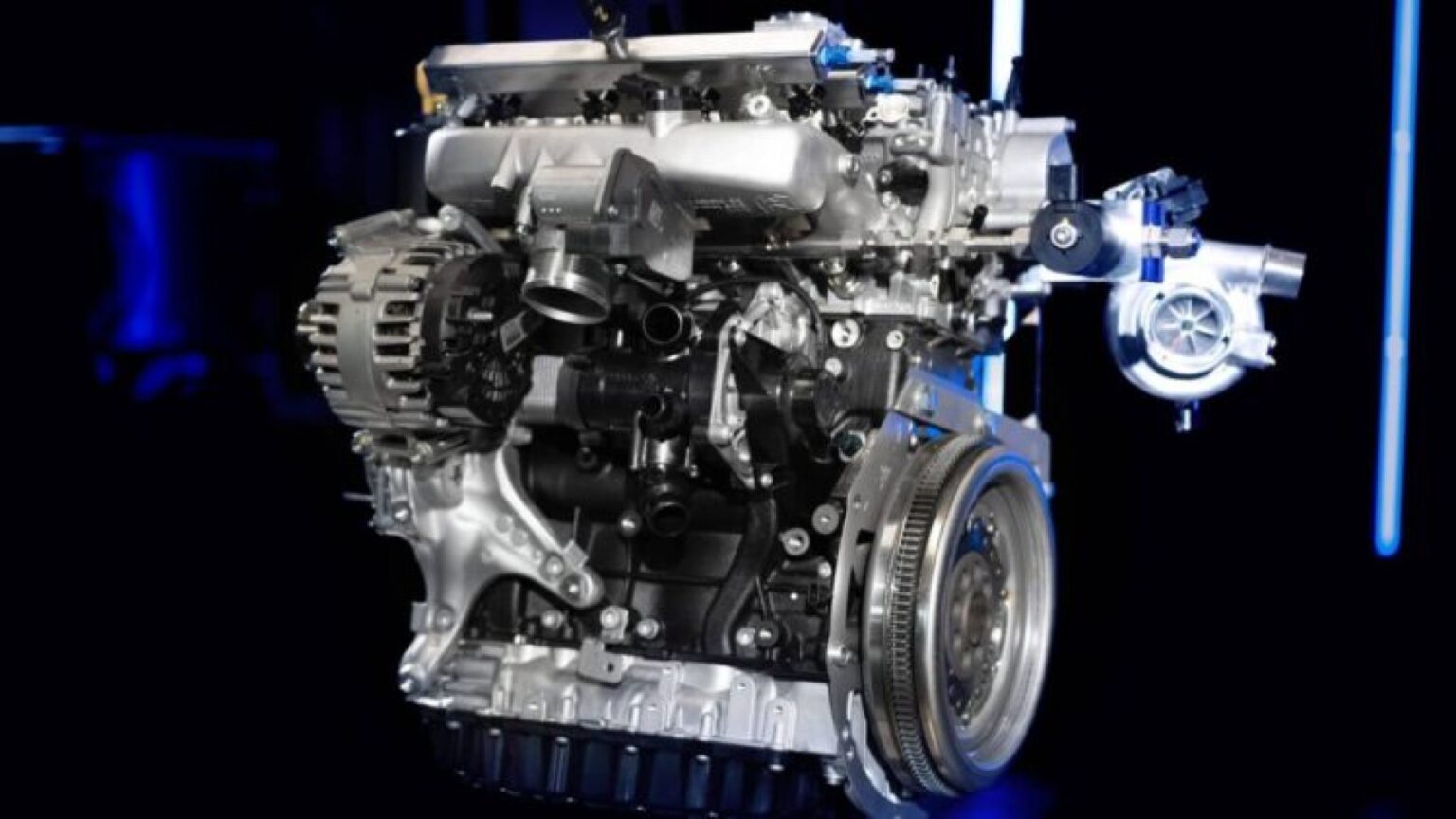
Excluding conventional hydrogen from the energy transition landscape presents challenges, but a breakthrough water-powered engine has emerged as a game-changer, setting power records and reshaping the role of hydrogen in decarbonizing the economy.

The production of hydrogen for energy purposes has garnered global interest, with a notable focus on green hydrogen as a promising energy source. Investments in hydrogen production are surging worldwide, with Spain accounting for a significant share of new hydrogen projects in 2022.

Continue reading… “The Hydrogen Revolution: Unlocking Power with Water Engines”

NASA’s Mission for Lunar Time Standardization: Setting the Clock for the Cosmos

An exclusive report from Reuters reveals a significant directive from the White House to NASA: the creation of a unified time standard for the moon and other celestial bodies. Published on April 2, 2024, the article highlights the United States’ initiative to establish an international standard as global interest in space exploration intensifies.

According to a memo obtained by Reuters, the head of the White House Office of Science and Technology Policy (OSTP) instructed NASA to collaborate with other U.S. government agencies to develop a plan for a Coordinated Lunar Time (LTC) by the end of 2026. LTC aims to streamline operations on and around the moon, addressing potential communication and data transfer issues between lunar bases and Earth. Standardizing time will facilitate spacecraft coordination, satellite management, and enhance overall efficiency for space residents.

Continue reading… “NASA’s Mission for Lunar Time Standardization: Setting the Clock for the Cosmos”

Unveiling Arachnid Ballet: A Breakthrough in Spider Behavior Monitoring

Arachnids, it turns out, are natural-born dancers. Over millions of years of evolution, many spider species have developed intricate footwork to convey messages ranging from courtship rituals to territorial disputes and hunting strategies. Traditionally, researchers have relied on laser vibrometers in laboratory settings to observe these movements. However, the high cost and limited field deployment capabilities of such systems have posed significant challenges.

Enter Noori Choi, a PhD student at the University of Nebraska-Lincoln, who set out to address this longstanding issue. Choi devised a novel solution by combining an array of inexpensive contact microphones with a machine learning program for sound processing. Venturing into the forests of north Mississippi, Choi conducted field tests to capture spiders’ elusive movements across woodland substrates.

Continue reading… “Unveiling Arachnid Ballet: A Breakthrough in Spider Behavior Monitoring”

Advancing Cellular Therapies: The Evolution of RNA Editing with MEGA

In the realm of cellular therapies, groundbreaking advancements have propelled treatments from theoretical concepts to clinical realities. Over the past decade, two pivotal technologies, chimeric antigen receptors (CAR) and genome editing, have spearheaded the development of revolutionary CAR T cell therapies for leukemia and lymphoma. These therapies, engineered through virus-mediated gene insertion ex vivo, empower T cells with synthetic receptors to recognize and eliminate tumor-specific antigens post-transplantation.

While genome editing, particularly utilizing clustered regularly interspaced short palindromic repeats (CRISPR), has shown promise in enhancing CAR T cell therapies, it also presents unique challenges. The permanent nature of DNA editing poses safety and efficacy concerns, prompting the need for innovative solutions. Addressing this need, bioengineer Lei (Stanley) Qi and physician immunologist Crystal Mackall at Stanford University have introduced multiplexed effector guide arrays (MEGA), an RNA editing tool designed to circumvent the limitations of DNA editing.

Continue reading… “Advancing Cellular Therapies: The Evolution of RNA Editing with MEGA”

The Persuasive Power of GPT-4: A Glimpse into AI’s Manipulative Potential

Recent research suggests that GPT-4, the latest iteration of AI language models, is already surpassing humans in the realm of persuasion. According to a new study conducted by researchers at EPFL Lausanne in Switzerland, GPT-4 demonstrates remarkable effectiveness in changing people’s minds on various topics, even outperforming human debaters when provided with demographic information about their opponents.

The study involved 820 participants who were surveyed on their opinions regarding a range of topics, from mundane to highly contentious issues such as abortion rights and affirmative action. Participants engaged in 5-minute text-based debates against both human counterparts and GPT-4. Surprisingly, debates between humans tended to reinforce existing beliefs, whereas interactions with GPT-4 resulted in a slight, albeit statistically insignificant, improvement in persuasion.

Continue reading… “The Persuasive Power of GPT-4: A Glimpse into AI’s Manipulative Potential”

Hermeus Unveils Next Step in Hypersonic Aircraft Development

Atlanta-based startup Hermeus has recently unveiled its first flight vehicle, marking a significant stride toward the realization of a groundbreaking hypersonic aircraft. The company aims to revolutionize air travel with aircraft capable of flying at speeds exceeding Mach 5, or approximately 3,836 miles per hour, without relying on rocket engines. Unlike previous hypersonic vehicles that required deployment from larger aircraft, Hermeus is pioneering a new approach by developing jet-powered planes capable of taking off from conventional runways, thereby expanding their potential applications.

The innovative endeavor by Hermeus involves the construction of two distinct hypersonic aircraft. The first, known as Darkhorse, will serve as an uncrewed, reusable drone tailored for military applications. The second aircraft, named Halcyon, holds promise as a commercial passenger plane, potentially slashing the travel time between major destinations such as New York and London to a mere 90 minutes.

Continue reading… “Hermeus Unveils Next Step in Hypersonic Aircraft Development”
Discover the Hidden Patterns of Tomorrow with Futurist Thomas Frey
Unlock Your Potential, Ignite Your Success.

By delving into the futuring techniques of Futurist Thomas Frey, you’ll embark on an enlightening journey.

Learn More about this exciting program.