Revolutionizing Transportation: The Era of Self-Driving Semis Emerges

In a dramatic evolution of transportation technology, self-driving semi trucks are poised to revolutionize the logistics industry, potentially replacing human drivers on US highways. Pioneering trials of fully autonomous trucks in Texas mark a significant step toward a future where automated rigs dominate the roads.

A new breed of self-driving trucks, developed by tech giants Aurora Innovations and Kodiak Robotics, is set to hit the highways of the Lone Star State without the need for human oversight. Founded by former executives from Uber, Google’s self-driving project, and Tesla, Aurora has been honing its driverless rigs in Texas since 2020. The company plans to deploy 20 autonomous vehicles along a 240-mile stretch between Dallas and Houston, with ambitions to expand the fleet to thousands in the coming years.

Continue reading… “Revolutionizing Transportation: The Era of Self-Driving Semis Emerges”

OpenAI Unveils Voice Engine: A New AI Tool for Natural-Sounding Speech

OpenAI, the creators of ChatGPT, provided a glimpse into their latest artificial intelligence (AI) innovation on Friday—a tool known as Voice Engine, capable of generating “natural-sounding speech” and mimicking human voices with remarkable accuracy. According to OpenAI’s blog post, Voice Engine can produce lifelike speech from just a single 15-second audio sample, closely resembling the original speaker.

This cutting-edge AI tool has far-reaching applications, including reading assistance, content translation, and providing a voice for individuals who are nonverbal or afflicted by speech conditions. Despite its potential benefits, OpenAI acknowledges the serious risks associated with Voice Engine, particularly in an election year.

Continue reading… “OpenAI Unveils Voice Engine: A New AI Tool for Natural-Sounding Speech”

The Rise of Chosen Families: Navigating the Decline of Cousins and Extended Kinship

In my family, the concept of kinship takes on a unique form. Out of my five nieces and nephews, only two share biological ties with me. The rest belong to my “chosen family” – a tight-knit group of close friends who serve as a mutual support system. This arrangement is becoming increasingly common in today’s world, where the traditional nuclear family structure is giving way to smaller familial networks.

A recent international kinship study, published in December, shed light on the diminishing size of the nuclear family and its impact on children worldwide. As the number of relatives dwindles, chosen families step in to fill the void, offering support akin to that of extended family structures of the past. The decline in cousins is particularly striking, with projections indicating a significant decrease in the number of living cousins for future generations.

Continue reading… “The Rise of Chosen Families: Navigating the Decline of Cousins and Extended Kinship”

Revolutionizing 3D Printing with the TIME System: A Leap into the Future

A groundbreaking 6-axis 3D printer, dubbed the TIME system (True Independent Multiple Extrusion), has emerged, heralding a potential paradigm shift in additive manufacturing. This innovative machine enables the independent operation of multiple tools across all three axes, allowing for the simultaneous printing of diverse parts or the combination of various materials within a single print job. Such versatility and efficiency hold the promise of a significant breakthrough in the 3D printing landscape.

At the heart of the TIME system lies a meticulously re-engineered grill plate base, meticulously designed to offer unparalleled stability and optimal heat distribution. This robust foundation serves as the backbone of the printer’s intricate structure, ensuring seamless coordination among its components to deliver exceptional results. Crafted to endure continuous operation, the base guarantees reliable performance even under the most demanding conditions.

Continue reading… “Revolutionizing 3D Printing with the TIME System: A Leap into the Future”

Shedding Light on Brain Oxygen Dynamics: A Bioluminescent Breakthrough

The human brain’s immense energy consumption relies heavily on oxygen-dependent metabolism. The efficient delivery and allocation of oxygen are pivotal for maintaining healthy brain function. However, the intricate mechanisms behind this process have largely remained veiled to scientists.

A groundbreaking bioluminescence imaging technique, unveiled in the journal Science, has now provided vivid and detailed insights into the movement of oxygen within the brains of mice. This method, easily replicable by other laboratories, promises to facilitate precise studies on forms of hypoxia, such as those occurring during strokes or heart attacks, offering crucial understanding. Furthermore, it has already begun unraveling the mysteries behind why a sedentary lifestyle heightens the risk of diseases like Alzheimer’s.

Continue reading… “Shedding Light on Brain Oxygen Dynamics: A Bioluminescent Breakthrough”

Harnessing “Good Vibrations”: A Revolutionary Approach to Combat Cancer

In a groundbreaking revelation, researchers from Rice University and their partners have unveiled an ingenious method to combat cancer cells, drawing inspiration from The Beach Boys’ iconic track, “Good Vibrations.” This pioneering technique leverages the power of molecular vibrations induced by near-infrared light to annihilate cancerous cells, presenting a beacon of hope in the battle against cancer.

The core of this breakthrough lies in the utilization of a small dye molecule commonly utilized in medical imaging. When exposed to near-infrared light, these molecules exhibit synchronized vibrations, known as plasmons, which trigger the rupture of cancer cell membranes. Published in Nature Chemistry, the team’s findings showcased an astounding 99 percent efficacy in eliminating lab-cultured human melanoma cells, with half of the melanoma-afflicted mice experiencing complete remission post-treatment.

Continue reading… “Harnessing “Good Vibrations”: A Revolutionary Approach to Combat Cancer”

Google Enhances Crypto Wallet Balance Searches Across Multiple Blockchains

Google has rolled out a new feature allowing users to search for and view balances of wallets across various blockchain networks, including Bitcoin, Arbitrum, Avalanche, Optimism, Polygon, and Fantom. When users type in wallet addresses, the search results display the remaining token balance per network along with the timestamp indicating the last update of the balance.

The search results provide information solely on the native token for each network, and the timestamp indicates the balance as of the last external transaction. However, Google emphasizes that updates are not instantaneous.

Continue reading… “Google Enhances Crypto Wallet Balance Searches Across Multiple Blockchains”

Diamond Breakthrough: Japan Unveils First N-Channel Transistor, Paving the Way for High-Temperature Processors

In a pioneering achievement, researchers in Japan have developed the world’s first “n-channel” diamond-based transistor, propelling us closer to processors capable of functioning at ultra-high temperatures. This breakthrough not only eliminates the necessity for direct cooling but also expands the operational range of processors to extreme environments.

By integrating diamond into a transistor—a fundamental component responsible for electrical switching between 1s and 0s when voltage is applied—the research heralds the prospect of smaller, faster, and more energy-efficient electronics. Unlike conventional components, diamond-based transistors exhibit resilience in harsh conditions, withstanding temperatures exceeding 572 degrees Fahrenheit (300 degrees Celsius) and enduring higher voltages before reaching breakdown.

Continue reading… “Diamond Breakthrough: Japan Unveils First N-Channel Transistor, Paving the Way for High-Temperature Processors”

Unveiling SCARF: Revolutionizing Ultrafast Imaging with Femtophotography

In the realm of capturing micro-events unfolding at lightning speed, scientists have introduced SCARF—Swept-Coded Aperture Real-time Femtophotography. This groundbreaking camera, developed by the team at Énergie Matériaux Télécommunications at the Research Centre Institut national de la recherche scientifique (INRS) in Quebec, Canada, is designed to observe phenomena too rapid for conventional sensors to detect. From semiconductor absorption to metal alloy demagnetization, SCARF has ventured into the realm of ultrafast imaging with unprecedented accuracy.

Unlike its predecessors, SCARF operates on passive femtosecond imaging principles, enabling the T-CUP system (Trillion-frame-per-second Compressed Ultrafast Photography) to capture trillions of frames per second. Spearheaded by Professor Jinyang Liang, a trailblazer in ultrafast imaging, this breakthrough builds upon his pioneering work in 2018, laying the foundation for the current project.

Continue reading… “Unveiling SCARF: Revolutionizing Ultrafast Imaging with Femtophotography”

Unveiling the Electric Wonders of Geobacter sulfurreducens: A Microbial Marvel

In the vast spectrum of Earth’s inhabitants, humans enjoy a comfortable existence compared to some extreme organisms. While we don’t endure the vacuum of space like tardigrades or cling to scorching hydrothermal vents like extremophile bacteria, one microbe, Geobacter sulfurreducens, thrives in anaerobic environments deep within the Earth, presenting scientists with a captivating puzzle of survival.

Researchers have long been intrigued by Geobacter’s ability to flourish underground, and recent discoveries shed light on its remarkable adaptation—a microbial electric grid beneath our feet. Geobacter employs nanowires, minuscule electric “hairs,” to transfer excess electrons, connecting with minerals and other microbes to create a biological network conducive to life. Yet, the origin of these electric charges has remained a mystery—until now.

Continue reading… “Unveiling the Electric Wonders of Geobacter sulfurreducens: A Microbial Marvel”

Stadler Rail’s Hydrogen-Powered Train Sets Guinness World Record for Longest Journey

Swiss rail vehicle manufacturer Stadler Rail has made headlines with its hydrogen fuel-cell passenger train, setting a new Guinness World Record by traveling almost continuously for nearly two days, covering an impressive distance of 1,741.7 miles.

While efforts to clean up railway transportation are underway worldwide, including electrification projects and the introduction of battery-electric locomotives, not all rail networks can easily support these advancements. For long-haul transportation where electrification is not feasible, hydrogen-powered trains offer a promising solution, emitting only steam and water as byproducts.

Continue reading… “Stadler Rail’s Hydrogen-Powered Train Sets Guinness World Record for Longest Journey”

Introducing Power Mole: The Innovative Solution for Outdoor Device Power

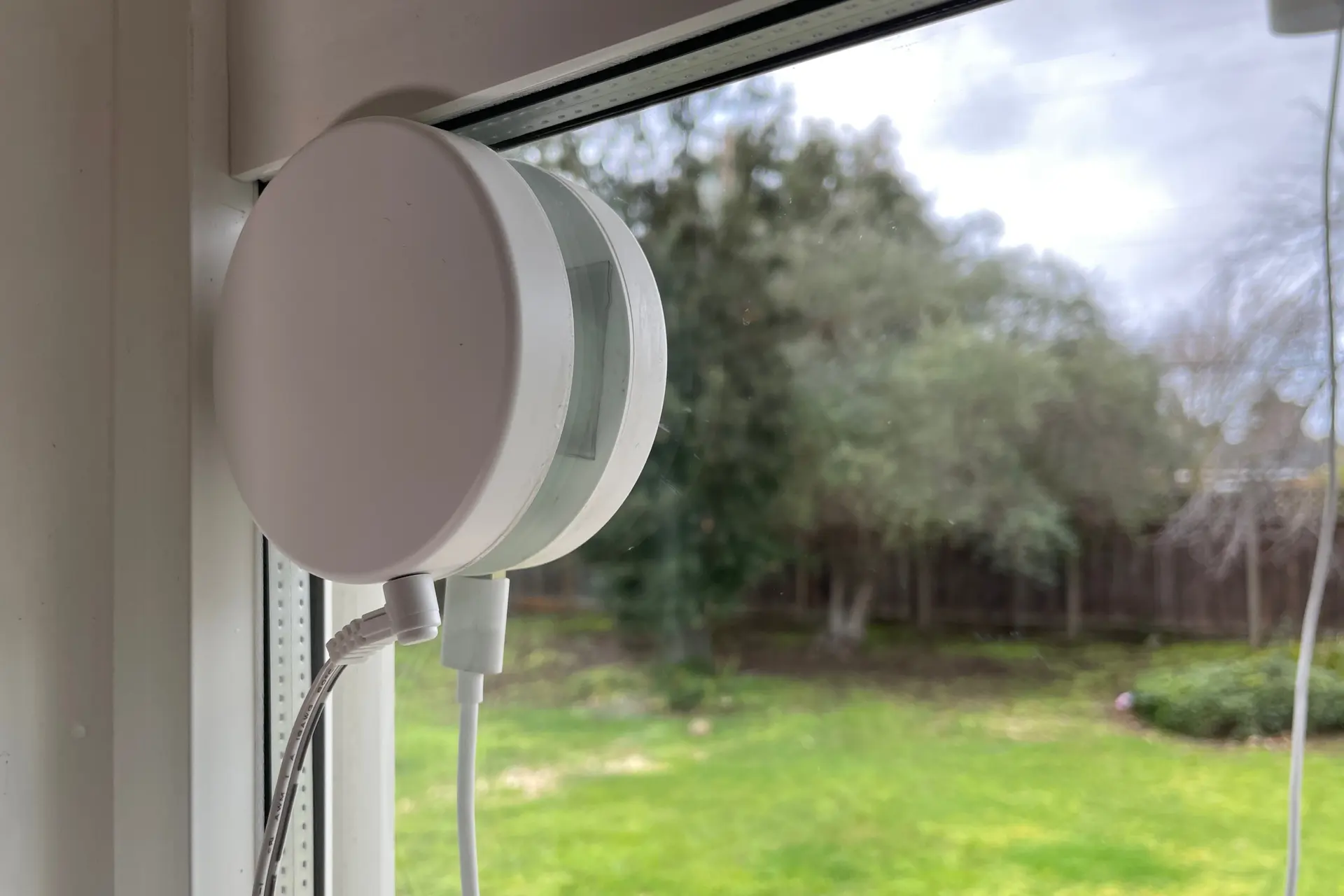
California-based inventor Peter Bevelacqua has launched a Kickstarter campaign for his latest creation, the Power Mole, designed to provide power to outdoor devices such as security cameras and decorative lights when outdoor outlets are unavailable.

The Power Mole comprises two puck-shaped components: the transmitter, affixed to the interior surface of a window pane, and the receiver, mounted on the exterior surface. The transmitter is connected to an indoor household outlet, while the receiver is USB hard-wired to the outdoor device. As an alternating electric current passes through the transmitter’s induction coil, it generates a fluctuating magnetic field that penetrates up to 30 mm of glass, inducing an alternating electric current in the receiver’s coil. A built-in rectifier then converts this AC current to DC, effectively powering the connected device.

Continue reading… “Introducing Power Mole: The Innovative Solution for Outdoor Device Power”
Discover the Hidden Patterns of Tomorrow with Futurist Thomas Frey
Unlock Your Potential, Ignite Your Success.

By delving into the futuring techniques of Futurist Thomas Frey, you’ll embark on an enlightening journey.

Learn More about this exciting program.