

When seeing isn’t believing, truth needs infrastructure. Verification—not perception—becomes the foundation for reality in a world of flawless synthetic media.
When seeing is no longer believing, the infrastructure of truth becomes the most important infrastructure we have
By Futurist Thomas Frey | ImpactLab.com
In 1964, the Supreme Court Justice Potter Stewart famously declined to define obscenity and instead wrote that he knew it when he saw it. For most of human history, that same standard applied to reality itself. You knew what was real when you saw it. The evidence of your own eyes was, if not infallible, at least the most reliable instrument available.
That era is ending. It may already be over.
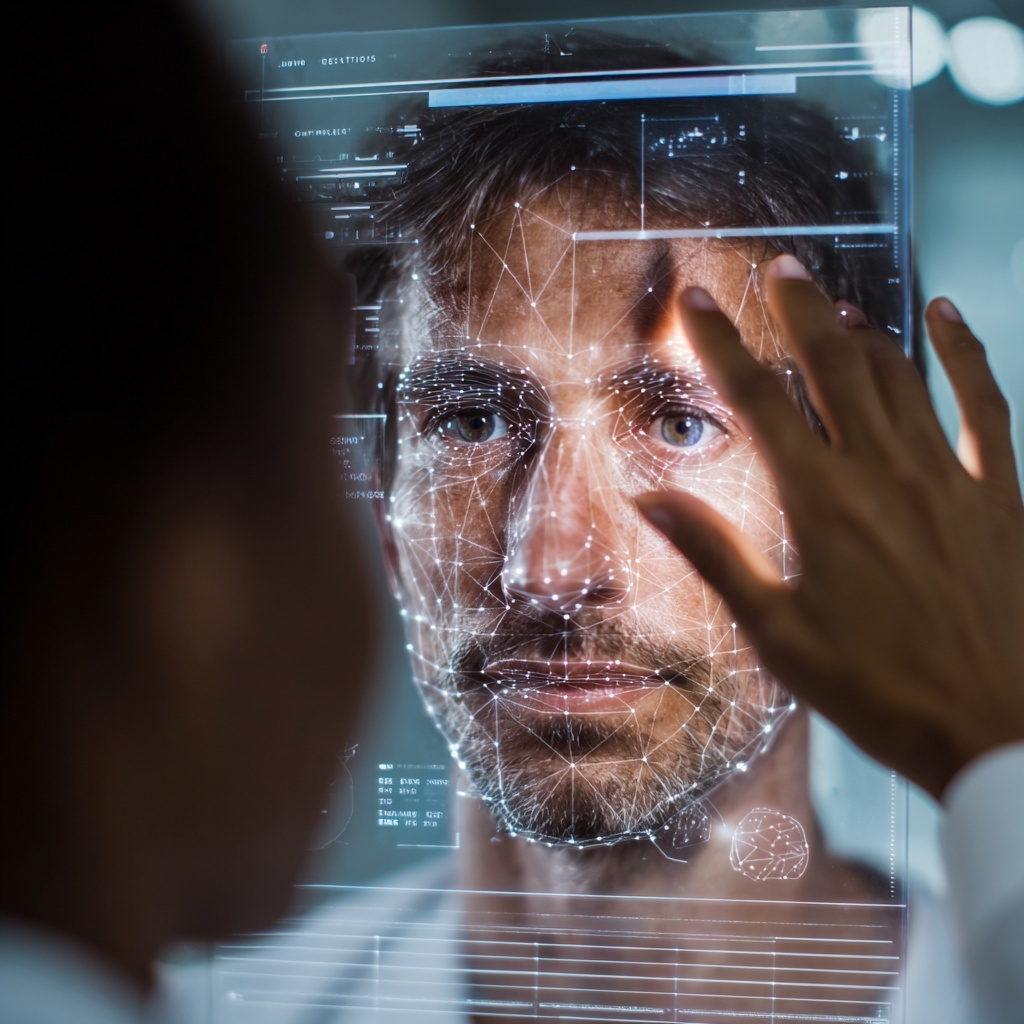
The synthetic media tools now available to anyone with a laptop and an internet connection can place any person’s face on any body, put any words in any mouth, and fabricate any event with a fidelity that is, under normal viewing conditions, indistinguishable from authentic footage. The question is no longer whether a determined adversary can create convincing false video of a public figure, a crime scene, a military incident, or a medical emergency. They can. The question is whether any infrastructure exists to verify that what you are seeing is what actually happened.
Right now, that infrastructure does not exist at scale. The Veritas Node is a proposal for what it would look like if it did.
The Problem Is Bigger Than Deepfakes
When most people hear “deepfake,” they think of celebrity face-swaps and political misinformation — real problems, but ones that feel manageable as long as the fakes are imperfect enough to detect with the right tools. This framing understates the problem significantly.
The deepfake problem is not primarily a detection problem. It is a provenance problem. Even if every piece of synthetic media could be detected with perfect accuracy — which is not currently true and may never be universally true — detection alone doesn’t solve the damage that synthetic media does to the information ecosystem. It solves the problem of the fake that gets caught. It does nothing about the authentic content that gets dismissed as fake.
This is the more insidious half of the crisis. In a world where sophisticated synthetic media exists and is known to exist, every piece of authentic content — a genuine recording of a crime, a real video of a politician, an actual medical image — is vulnerable to being dismissed as fabricated by anyone who finds it inconvenient. The existence of convincing fakes creates a blanket of doubt over all content, authentic or not. Lawyers call this the liar’s dividend: the ability to deny authentic evidence by pointing to the general possibility of fabrication.
The liar’s dividend is already being claimed in courtrooms. It is already being used to undermine journalism. It is already a tool of authoritarian governments who find it useful to cast doubt on footage of their own actions. The problem is not coming. It is here.
What the Veritas Node Does
The Veritas Node approaches this problem from the opposite end. Instead of trying to detect fakes after the fact — which is a perpetual arms race between detection tools and generation tools that the detectors will periodically lose — the Veritas Node establishes provenance at the point of creation and maintains an unbroken chain of custody at every subsequent point of distribution.
The architecture works like this. A camera, microphone, or recording device equipped with a Veritas Node integration generates a cryptographic signature at the moment of capture — a hash of the content that is unique to that specific recording, tied to the specific device, the specific location, the specific time, and the specific sensor data of the moment of capture. That signature is registered on the node network immediately, creating an immutable record that this content existed in this form at this moment.
Every subsequent transmission, edit, or republication of the content generates a new entry in the chain — not replacing the original record but adding to it, so that the full history of the content’s journey from creation to the screen you are watching it on is visible and verifiable. Edits are not disqualifying. Legitimate editing — color correction, audio cleanup, compression for distribution — is recorded as editing, with the nature of the modification logged. What is disqualifying is an unrecorded modification: a change to the content that has no corresponding entry in the chain of custody. That gap is the signal that something has been done to the content that its originator did not authorize and did not disclose.
The Veritas Node doesn’t tell you that a piece of content is true. It tells you that a piece of content is what it claims to be — that it was captured by the device and person claiming to have captured it, at the time and place claimed, and that the version you are seeing has not been materially altered in ways that were not disclosed. That is a different and more achievable standard than truth. And it is the standard that journalism, law enforcement, and democratic institutions actually need.
Where It Matters Most
The applications stack up quickly once you see the architecture.
In journalism, the Veritas Node becomes the chain of custody documentation that distinguishes verified reporting from fabricated content. A news organization that requires Veritas Node provenance for all video it publishes is making a verifiable claim — not just an editorial one — that the footage it is showing is authentic. Readers and viewers can check the chain themselves rather than taking the organization’s word for it.
In law, the Veritas Node addresses the liar’s dividend directly. When authentic evidence carries a verifiable provenance chain — an unbroken cryptographic record from capture device to courtroom — the claim that it might be fabricated requires an explanation of where the chain was broken and how. That is a much higher bar than the current standard, which is essentially “this could theoretically be a deepfake, therefore doubt it.”
In democratic contexts — elections, public protests, government accountability — the Veritas Node is the infrastructure that makes it possible to distinguish authentic documentation of public events from fabricated narratives designed to shape perception of those events. This matters in established democracies facing disinformation campaigns and it matters even more in contexts where governments have historically been able to deny atrocities by controlling the information environment. A cryptographically verified record of what happened, existing on a decentralized network that no single government can delete, is a meaningful constraint on that kind of denial.
In medicine, the provenance of diagnostic images — X-rays, MRIs, pathology slides — is already a legal and regulatory concern. A Veritas Node integration for medical imaging equipment creates an unbroken record from the moment of capture to the moment of diagnosis, making fabricated or altered medical evidence far harder to introduce undetected.
Why This Is a Node and Not a Platform
Every major platform has, at various points, announced initiatives to address synthetic media and content authenticity. Content credentials, provenance labels, watermarking systems — the proposals accumulate. Most of them share a structural flaw: they are owned and operated by the platform, which means the platform controls the standard, the verification process, and the data. If the platform changes its policy, is acquired, or simply decides that its business interests are better served by a different approach, the provenance system changes with it.
This is not a hypothetical concern. It is the history of every platform trust initiative to date.
The Veritas Node operates on a different model. HyperCycle, whose node infrastructure and TODA/IP ledgerless protocol are designed precisely for this kind of authenticated, decentralized exchange, provides the architectural foundation on which a provenance network like this can be built. The provenance record lives on a decentralized network that no single entity controls. The cryptographic standard is open and independently auditable. The chain of custody is not stored in a company’s database — it is distributed across a network of nodes whose collective integrity does not depend on any single participant’s goodwill or continued existence.
Veritas, in Latin, means truth. It is also the root of verify — the act of checking, independently, whether a claim holds. The Veritas Node is named for that act of independent checking, not for the claim of truth itself. It does not promise that content is true. It promises that its provenance is verifiable. In an information environment where the distinction between those two things has become the central challenge of public epistemology, that is not a small thing.
It is, in fact, the infrastructure that makes truth claims arguable at all.
The Window That Is Closing
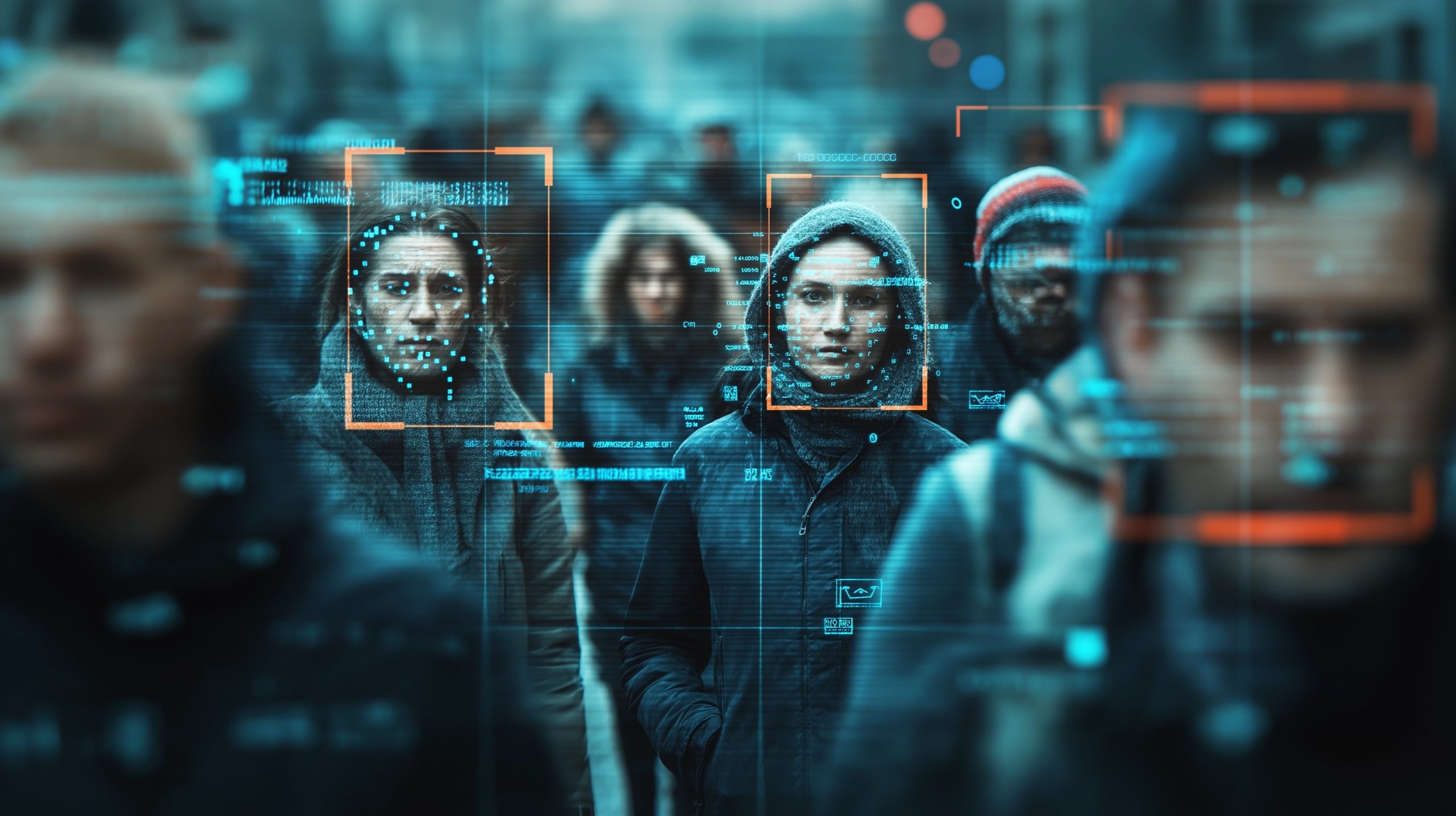
There is a window in which provenance infrastructure can be established before synthetic media becomes so pervasive and so sophisticated that the concept of a verifiable authentic record seems quaint. That window is not unlimited.
The generation tools improve every quarter. The gap between what a well-resourced actor can fabricate and what detection tools can catch is not stable — it opens and closes as each side advances, and there is no reason to assume detection will permanently keep pace. The moment to build provenance infrastructure is before it is desperately needed, not after the information environment has been so thoroughly contaminated that the concept of an authentic record has lost its social meaning.
That moment is now. The tools exist. The protocol exists. The only missing piece is the institutional commitment to make Veritas Node provenance a baseline expectation for content that claims to document reality — in journalism, in law, in medicine, in democratic accountability.
The infrastructure of truth is not a luxury. It is the precondition for everything else.
Thomas Frey is a futurist, author, and founder of the DaVinci Institute. He serves as an advisor to HyperCycle, whose node infrastructure underlies the concepts discussed in this series. He writes regularly at FuturistSpeaker.com and ImpactLab.com.
