Author: admin

Eggshells: The Future of Bone and Cartilage Implants

Eggshells, primarily composed of calcium carbonate, have long been used in various areas such as feed supplements and garden pest control. Now, groundbreaking research is revealing an innovative application: growing tissue for implants that can replace damaged or diseased bone and cartilage. This pioneering approach could revolutionize the field of medicine.

The research, led by Prof. Dr. Gulden Camci-Unal from the Department of Chemical Engineering at the University of Massachusetts Lowell, explores a novel method of repurposing eggshells. Despite their widespread use in other industries, their potential in medicine has been largely untapped until now. Since 2016, Camci-Unal and her team have been dedicated to utilizing finely crushed eggshells to create tiny 3D structures, known as scaffolds, where bone cells can grow and multiply.

Continue reading… “Eggshells: The Future of Bone and Cartilage Implants”

Chinese Researchers Develop Energy-Efficient AI Model Inspired by Human Brain Neurons

Chinese researchers have unveiled a groundbreaking AI model that mimics the behavior of neurons in the human brain, potentially revolutionizing the future of artificial intelligence. This new model, developed by a team from the Chinese Academy of Sciences’ Institute of Automation and Peking University, promises to deliver powerful computational abilities without the high energy consumption associated with traditional silicon-based processors.

The research team aimed to bridge the gap between the complex workings of large AI models and the intricate, yet energy-efficient, operations of the human brain. While AI systems have rapidly expanded in capability, their increasing demand for energy has become a growing concern. In contrast, the human brain, which is far more complex than any existing AI model, operates on a mere fraction of the energy.

Continue reading… “Chinese Researchers Develop Energy-Efficient AI Model Inspired by Human Brain Neurons”

Novel CART Neuropeptide Shows Promise in Weight Loss and Alzheimer’s Protection

A newly modified CART neuropeptide has demonstrated remarkable stability, appetite reduction, and brain protection against harmful tau proteins linked to Alzheimer’s disease. This breakthrough research, recently published in the European Journal of Pharmacology, has shown promising results in both cellular and animal tests.

In experiments, the modified compound led to significant weight loss in higher-weight mice and reduced the presence of tau protein in their brains—a key marker associated with Alzheimer’s. The success of this compound lies in its modification with fatty acids, which enhance its ability to cross the blood-brain barrier. This improved delivery allows the neuropeptide to effectively reduce appetite and offer neuroprotective benefits, making it a potential candidate for treating or preventing neurodegenerative diseases, according to researcher Vilém Charvát.

Continue reading… “Novel CART Neuropeptide Shows Promise in Weight Loss and Alzheimer’s Protection”

Revolutionary 3D Printing System Safely Assembles Living Organisms in Real-Time

Researchers at the University of Minnesota have developed a groundbreaking adaptive 3D printing system that can autonomously recognize and position randomly distributed organisms with precision. This innovative technology, a first of its kind, offers substantial benefits in fields such as bioimaging, cybernetics, cryopreservation, and the integration of living organisms into technical devices. The research findings, recently published in Advanced Science, have already led to a pending patent for the technology.

How the System Works

The system operates by detecting organisms, whether they are stationary, enclosed in droplets, or in motion, and accurately positioning them in designated locations. It employs a pick-and-place method that leverages real-time visual and spatial data to identify and safely place the organisms. This level of precision and adaptability is a significant improvement over traditional methods, which require manual intervention. Manual handling is not only time-consuming but can also result in inconsistent outcomes. The new system streamlines this process, reducing the time required for these tasks while ensuring consistent and reliable results.

Continue reading… “Revolutionary 3D Printing System Safely Assembles Living Organisms in Real-Time”

Breakthrough in Cellular Agriculture: Continuous Manufacturing Method Could Make Cultivated Meat Affordable and Scalable

As the demand for animal products continues to rise, cellular agriculture offers a promising solution. However, current production technologies for cultivated meat face significant challenges, particularly in achieving scalability and cost-effectiveness. A groundbreaking study from the Hebrew University of Jerusalem, in collaboration with the cultivated meat industry, has introduced an innovative continuous manufacturing process that could overcome these hurdles, potentially making cultivated meat accessible to everyday consumers and contributing to a more sustainable and ethical food system.

Innovative Production Method

The researchers employed tangential flow filtration (TFF) to continuously produce cultivated meat, achieving an impressive biomass density of up to 130 billion cells per liter and a yield of 43% weight per volume. This process was maintained over a 20-day period, allowing for daily biomass harvests. Crucially, the study also developed a growth medium free of animal components, costing just $0.63 per liter. This medium is specifically designed to support the high-density, long-term culture of chicken cells, making the process both more affordable and scalable.

Continue reading… “Breakthrough in Cellular Agriculture: Continuous Manufacturing Method Could Make Cultivated Meat Affordable and Scalable”

Korean Researchers Engineer Bacteria to Produce Biodegradable Plastics with Enhanced Properties

Researchers in Korea have made a groundbreaking advancement in the quest to develop eco-friendly plastics by engineering bacteria to produce polymers with ring-like structures. These structures significantly enhance the rigidity and thermal stability of the resulting plastics, offering a promising alternative to traditional petroleum-based plastics.

Senior author Sang Yup Lee emphasized the potential impact of this innovation, stating, “I think biomanufacturing will be key to mitigating climate change and addressing the global plastic crisis.”

Continue reading… “Korean Researchers Engineer Bacteria to Produce Biodegradable Plastics with Enhanced Properties”

Stanford’s Electrified Reactor: A Game-Changer for Reducing Industrial Carbon Emissions

Researchers at Stanford have developed a groundbreaking reactor that uses electricity instead of fossil fuels to generate the high temperatures needed for industrial processes. This innovation offers a cleaner, more efficient alternative to traditional methods, with the potential to significantly reduce carbon emissions.

Industrial activities in the United States account for about one-third of the nation’s carbon dioxide emissions, surpassing the combined emissions from all passenger vehicles, trucks, and airplanes. Decarbonizing this sector is essential for mitigating climate change, but it has proven to be a complex challenge.

Continue reading… “Stanford’s Electrified Reactor: A Game-Changer for Reducing Industrial Carbon Emissions”

Powering the Future: New Nanotechnology Converts Everyday Motion into Electricity

Your early morning run might soon do more than just boost your health—it could also help power your wearable devices, thanks to groundbreaking nanotechnology developed at the University of Surrey. The Advanced Technology Institute (ATI) at Surrey has created highly energy-efficient, flexible nanogenerators that boast a 140-fold increase in power density compared to conventional models. This innovation could lead to nano-devices with efficiency levels comparable to today’s solar cells.

Published in the journal Nano Energy, the research highlights how Surrey’s devices can convert small amounts of everyday mechanical energy, such as motion, into significantly higher electrical power. This process is akin to how an amplifier boosts sound in an electronic system. For example, if a traditional nanogenerator produces 10 milliwatts of power, this new technology could enhance that output to over 1,000 milliwatts, making it highly suitable for various energy-harvesting applications.

Continue reading… “Powering the Future: New Nanotechnology Converts Everyday Motion into Electricity”

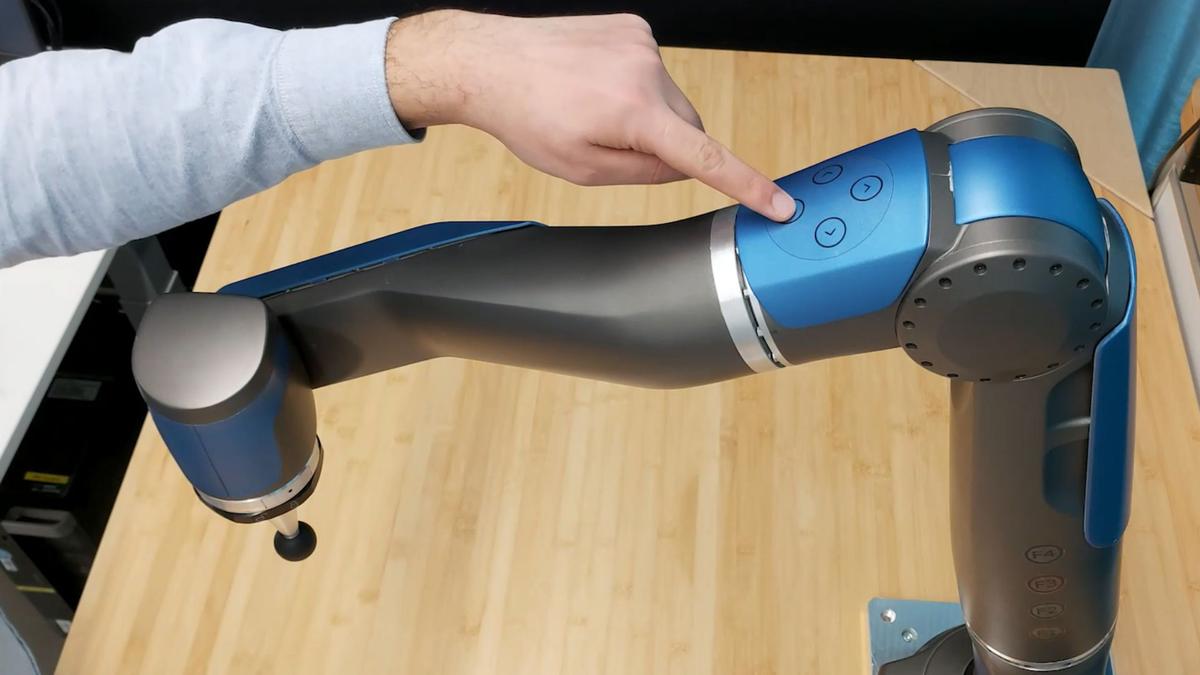
Robots Gain an Innate Sense of Touch Through Advanced Sensor Integration

Researchers in Germany have developed a groundbreaking method that equips robots with an innate sense of touch by integrating their existing internal force-torque sensors with machine learning algorithms. This innovative approach, developed by a team at the Deutschen Zentrums für Luft- und Raumfahrt (DLR), allows robots to sense and interpret human touch without the need for expensive synthetic skins or additional external sensors.

“The intrinsic sense of touch we proposed in this work can serve as the basis for an advanced category of physical human-robot interaction that has not been possible yet, enabling a shift from conventional modalities towards adaptability, flexibility, and intuitive handling,” the researchers stated.

Continue reading… “Robots Gain an Innate Sense of Touch Through Advanced Sensor Integration”

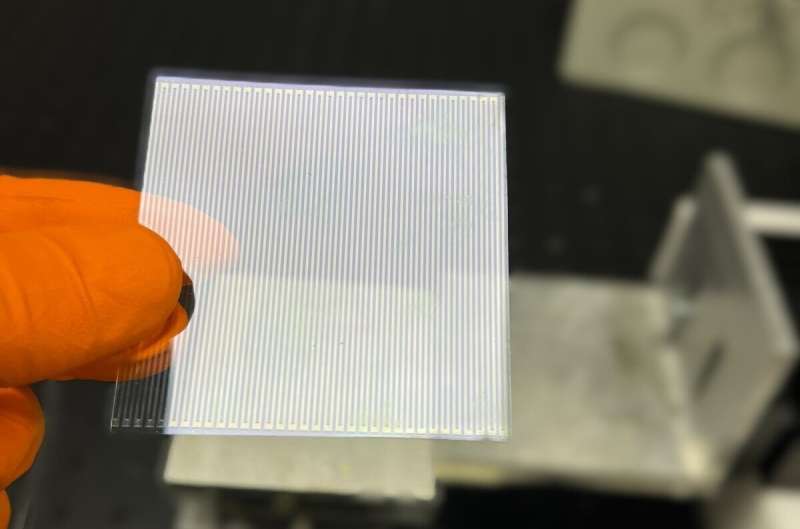
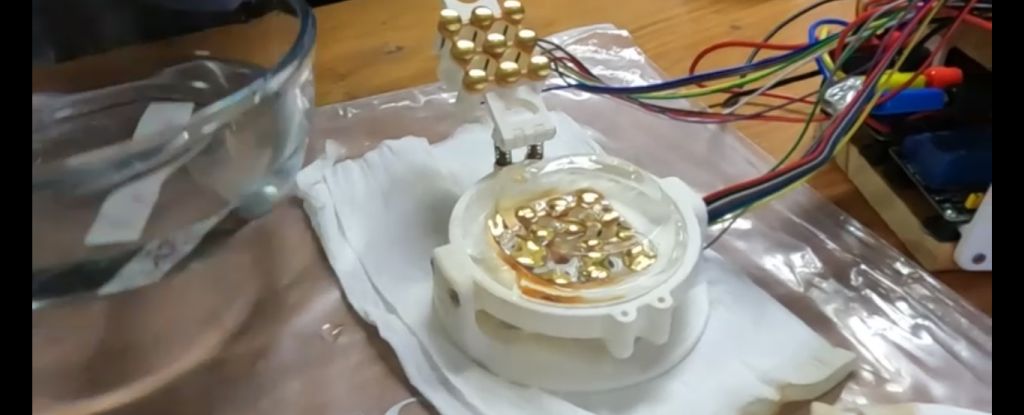
Hydrogel Shows Potential to Learn: A Simple Material Plays and Improves at Pong

A small blob of squishy, transparent gel has recently demonstrated an impressive feat: it can play the classic video game Pong, and with practice, it even gets better at it. When connected to an adapted version of the game via an electrode array, this simple polymer hydrogel showed a marked improvement in accuracy, leading to longer rallies. This discovery reveals that even a basic material like hydrogel can exhibit a form of memory—a finding that could open new avenues for research and development.

Although the gel is far from being an artificial brain, its newfound ability hints at exciting possibilities. “Our research shows that even very simple materials can exhibit complex, adaptive behaviors typically associated with living systems or sophisticated AI,” said biomedical engineer Yoshikatsu Hayashi of the University of Reading in the UK. “This opens up exciting possibilities for developing new types of ‘smart’ materials that can learn and adapt to their environment.”

Continue reading… “Hydrogel Shows Potential to Learn: A Simple Material Plays and Improves at Pong”

Elon Musk’s Vision for the Tesla RoboTaxi: A Glimpse into the Future of Transportation

Elon Musk’s ambitious vision for Tesla’s RoboTaxi is set to revolutionize transportation as we know it. The RoboTaxi concept reimagines cars from the ground up, eliminating the need for human intervention, steering wheels, or pedals. Musk has emphasized that the goal is not just to enhance existing automotive technology but to redefine it entirely. “We make a car that has no steering wheels or pedals, and if we need to accelerate that time, we can always just delete parts—easy,” Musk said, underscoring Tesla’s commitment to building vehicles designed for full autonomy.

The RoboTaxi, as envisioned by Musk, will have a futuristic design that reflects the advanced technology behind it. “It’s going to look pretty,” Musk remarked, indicating that the design will be unlike anything currently on the road. This aesthetic leap isn’t just about appearances; it symbolizes the technological revolution that Tesla is leading. The RoboTaxi will embody the future of transportation, where autonomous vehicles become the norm.

Continue reading… “Elon Musk’s Vision for the Tesla RoboTaxi: A Glimpse into the Future of Transportation”

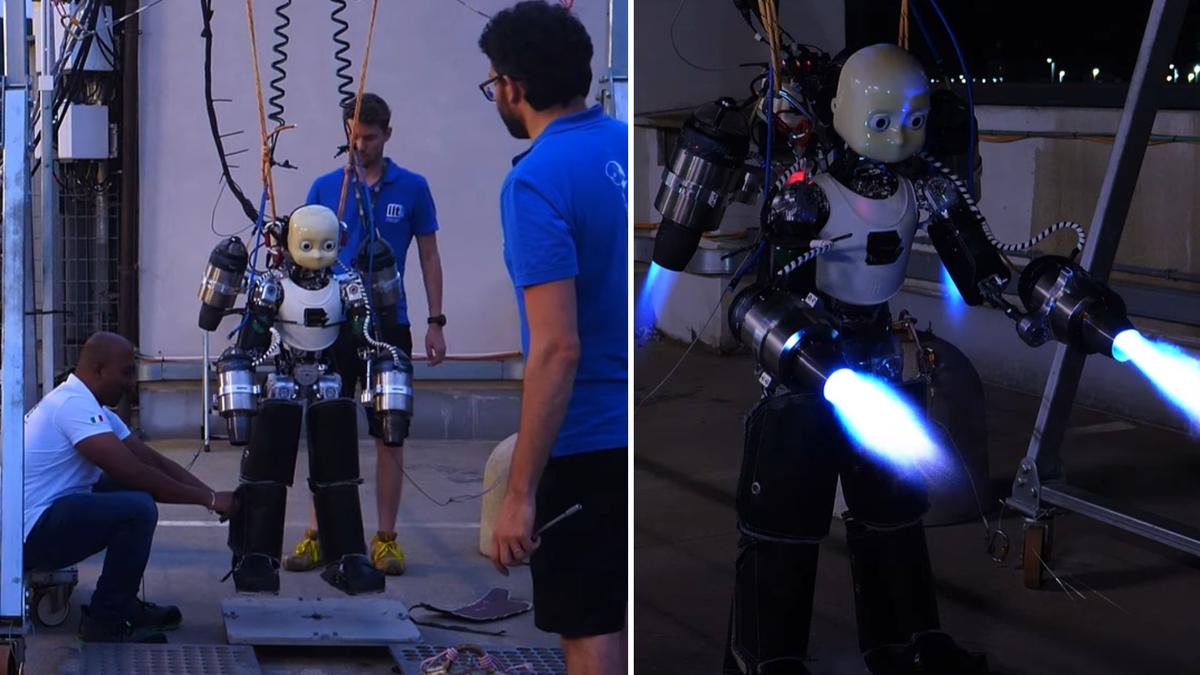
Unveiling iRonCub: The World’s First Jet-Powered Humanoid Robot

Roboticists at the Italian Institute of Technology (IIT) have revealed groundbreaking developments in the world of humanoid robotics, showcasing the experimental progress and preliminary validations of the iRonCub, the first jet-powered humanoid robot.

Equipped with four compact jet engines, iRonCub has the unique ability to fly, positioning it as a potential game-changer in advanced mission scenarios, particularly in disaster relief where aerial capabilities in humanoids remain largely unexplored.

Continue reading… “Unveiling iRonCub: The World’s First Jet-Powered Humanoid Robot”
Discover the Hidden Patterns of Tomorrow with Futurist Thomas Frey
Unlock Your Potential, Ignite Your Success.

By delving into the futuring techniques of Futurist Thomas Frey, you’ll embark on an enlightening journey.

Learn More about this exciting program.