Author: admin

Gallium-Carbon Composites: Revolutionizing 3D Printing for Wearable Electronics

Researchers in Portugal are pioneering the use of gallium–carbon composites for 3D printing sensor-heater-battery systems in wearable electronics. These applications demand flexible, durable materials that maintain their functionality under strain. Gallium-based liquid metals (LMs) are ideal due to their high conductivity and fluidic deformability, but their low viscosity and high surface tension present significant printing challenges.

To address these issues, the team developed a gallium-carbon black-styrene isoprene block copolymer (Ga–CB–SIS) composite. This cost-effective and sustainable material substitutes traditional metals like silver with carbon. The Ga–CB–SIS composite is digitally printable and sinter-free, which eliminates the need for thermal sintering and enables multilayer 3D printing. It also exhibits excellent adhesion to various substrates, including heat-sensitive materials.

Continue reading… “Gallium-Carbon Composites: Revolutionizing 3D Printing for Wearable Electronics”

University of Bonn Develops AI Software to Predict Crop Growth

Researchers at the University of Bonn have developed innovative software that simulates the growth of field crops using artificial intelligence. By feeding thousands of photos from field experiments into a learning algorithm, the software can predict the future development of cultivated plants based on a single initial image. This technology allows for accurate estimation of parameters such as leaf area and yield.

This breakthrough offers significant benefits for farmers, helping them determine optimal plant combinations and fertilizer choices to maximize yield. In the future, farmers will increasingly rely on computer support to answer critical questions about crop management.

Continue reading… “University of Bonn Develops AI Software to Predict Crop Growth”

Meaty Rice: An Eco-Friendly Protein Solution for the Future

From preventing famines to feeding astronauts in space, team leader and professor Hong Jin-kee believes his innovative “meaty rice” could provide an eco-friendly, ethical way for people to obtain their protein. This novel dish, which resembles a regular bowl of rice but has a pink hue and a faint buttery aroma, is made with beef muscle and fat cell cultures.

“No animals were harmed in the creation of this dish,” said Hong of Seoul’s Yonsei University. Using cultured meat, “we can obtain animal protein without the slaughter of livestock,” he told AFP. This aligns with a global trend towards meat alternatives, driven by ethical concerns over industrial livestock rearing and the environmental impact of greenhouse gas emissions from animal farming.

Continue reading… “Meaty Rice: An Eco-Friendly Protein Solution for the Future”

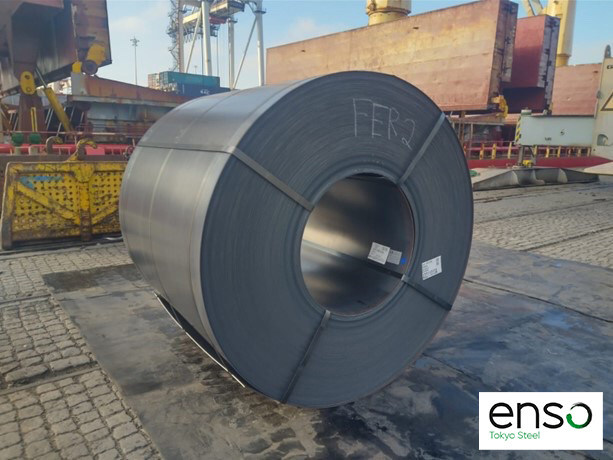
Tokyo Steel Launches Enso: A New Green Steel Brand

Tokyo Steel Japan has unveiled its new proprietary green steel brand, Enso. The Enso circle, a symbol deeply rooted in Japanese culture, represents eternity, infinity, harmony, balance, and the cyclical nature of life. This emblem reflects Tokyo Steel’s commitment to the circular economy through its products. The Enso logo, transitioning from charcoal to green, signifies the company’s shift from carbon-intensive production to sustainable green steel.

Tokyo Steel reduces embodied carbon emissions by using electric arc production with recycled steel scrap and highly efficient operating processes, bypassing the emission-intensive steps typical in traditional blast furnace methods. The initial Enso product range includes Hot Rolled Coil (HRC) and Hot Rolled Plate (HRP), with plans for downstream expansion in the future.

Continue reading… “Tokyo Steel Launches Enso: A New Green Steel Brand”

Researchers Discover Thinnest Metallic Nanowire Ever Created

A group of researchers from Switzerland’s École Polytechnique Fédérale de Lausanne (EPFL) believes they have designed the thinnest metallic nanowire ever created. Remarkably, this wire remains stable even at 0 Kelvin.

The team, led by Chiara Cignarella with members Davide Campi and Nicola Marzari, devised an innovative approach to discover this nanowire. They aimed to leverage crystalline structures to identify suitable candidates without the need to build thousands in a lab.

Continue reading… “Researchers Discover Thinnest Metallic Nanowire Ever Created”

ask Force 99: Revolutionizing Drone Technology with 3D Printing

Task Force 99, a small U.S. Air Force (USAF) unit based in Qatar, was established as an experimental group in October 2022. Operating under USAF Central (USAFCENT), the Air Force Service component of U.S. Central Command (CENTCOM), Task Force 99 plays a crucial role in the Middle East and parts of Northern Africa and Central Asia.

In March 2024, Task Force 99 conducted a flight assessment of a 3D-printed drone designed using software from Texas-based Titan Dynamics, a company specializing in aerospace battlefield simulation software and unmanned aerial vehicle (UAV) designs. Remarkably, the drone prototype was developed just a month earlier in collaboration with Blue Horizons, an elite Air Force research organization.

Continue reading… “ask Force 99: Revolutionizing Drone Technology with 3D Printing”

Stanford’s Liquid Battery: Revolutionizing Renewable Energy Storage

In a major development for renewable energy storage, researchers at Stanford University have unveiled a novel technology poised to transform how we harness and utilize clean energy. Dubbed the “liquid battery,” this innovation addresses the intermittent nature of renewable sources like solar and wind power, promising more sustainable and reliable energy grids that currently rely heavily on lithium-ion technologies.

The research team, led by Robert Waymouth, the Robert Eckles Swain Professor in Chemistry, has developed an efficient method to store hydrogen in a liquid form, overcoming the challenges associated with traditional hydrogen storage, which often involves bulky and complex infrastructure.

Continue reading… “Stanford’s Liquid Battery: Revolutionizing Renewable Energy Storage”

MIT Researchers Pioneer Room-Temperature DNA Storage with Amber-Like Polymer

Inspired by the movie Jurassic Park, a team of MIT researchers has developed a groundbreaking method to store DNA for extended periods using a glassy, amber-like polymer. This innovative approach allows for the preservation of DNA at room temperature, circumventing the need for energy-intensive freezing methods.

Traditional DNA storage methods require freezing temperatures, which consume substantial energy and are impractical in many regions. The new method developed by the MIT team stores DNA at room temperature, protecting it from damage caused by heat or moisture.

Continue reading… “MIT Researchers Pioneer Room-Temperature DNA Storage with Amber-Like Polymer”

New AI Framework Revolutionizes Wearable Exoskeletons for Enhanced Human Mobility

“This work proposes and demonstrates a new machine-learning framework that bridges the gap between simulation and reality to autonomously control wearable robots to improve mobility and health of humans,” says Hao Su, an associate professor of mechanical and aerospace engineering at North Carolina State University.

“Exoskeletons have enormous potential to improve human locomotive performance,” Su, the corresponding author of a new study published in Nature, explains. “However, their development and broad dissemination are limited by the requirement for lengthy human tests and handcrafted control laws.”

Continue reading… “New AI Framework Revolutionizes Wearable Exoskeletons for Enhanced Human Mobility”

MASH Makes’ Waste-Based Biofuel Demonstrates Viability as Fossil Fuel Replacement in Shipping Industry

Recent tests have shown that MASH Makes’ waste-based biofuel is a viable ‘drop-in’ replacement for fossil fuels in the shipping sector. In collaboration with the global shipping company NORDEN, this innovative biofuel will now be trialed in live vessels. These trials mark a significant step towards achieving net-zero emissions, with biofuel poised to play a crucial role in decarbonizing shipping and heavy industry.

Shipping, which facilitates over 80% of global trade, consumes more than 330 million tons of fossil fuel annually, accounting for over 3% of global CO2 emissions—more than the entire country of Germany. Decarbonizing this essential part of the global economy is vital to meeting climate goals, but traditional green technologies have struggled to achieve this.

Continue reading… “MASH Makes’ Waste-Based Biofuel Demonstrates Viability as Fossil Fuel Replacement in Shipping Industry”

Revolutionary Photonic Chip from Tsinghua University Processes Images in Nanoseconds

Researchers at Tsinghua University in China have developed a groundbreaking photonic chip that can process, transmit, and reconstruct images in mere nanoseconds. This innovative chip bypasses the traditional optical-to-electronic data conversion used by conventional chips, significantly enhancing the speed and efficiency of image processing.

Machine vision, a rapidly evolving field where cameras, sensors, and algorithms collaborate to interpret the world and execute specific tasks, has traditionally relied on transferring data over long distances for analysis. This process, however, is too slow for many real-time applications. “The world is entering an AI era, but AI is very time- and energy-exhaustive,” said Lu Fang, associate professor at Tsinghua University’s Department of Electronic Engineering. In today’s fast-paced world, machine vision now requires on-device data processing, known as edge computing, to enable quicker decision-making.

Continue reading… “Revolutionary Photonic Chip from Tsinghua University Processes Images in Nanoseconds”

Revolutionizing Solar Energy: The Promise of Perovskite Cells

The solar energy world is on the brink of a revolution as scientists race to develop a new type of solar cell that promises to convert electricity more efficiently than today’s panels. In a recent paper published in the journal Nature Energy, a researcher from CU Boulder and his international collaborators unveiled an innovative method to manufacture these next-generation solar cells, known as perovskite cells, a critical step towards their commercialization.

Currently, nearly all solar panels are made from silicon, which has an efficiency of 22 percent, meaning they convert only about one-fifth of the sun’s energy into electricity. Additionally, producing silicon is both expensive and energy-intensive.

Continue reading… “Revolutionizing Solar Energy: The Promise of Perovskite Cells”
Discover the Hidden Patterns of Tomorrow with Futurist Thomas Frey
Unlock Your Potential, Ignite Your Success.

By delving into the futuring techniques of Futurist Thomas Frey, you’ll embark on an enlightening journey.

Learn More about this exciting program.