Author: admin

Aetherflux’s Bold Vision: Bringing Space-Based Solar Power to Earth

The European Space Agency (ESA) has long explored space-based solar power as a potential energy solution, theorizing that solar collection in space—where sunlight is over 10 times more intense than on Earth’s surface—could eventually meet one-third of the EU’s energy needs. ESA’s studies, however, concluded that creating the necessary infrastructure would be astronomically expensive, requiring a geostationary satellite network positioned 36,000 kilometers above Earth and costing hundreds of billions of dollars.

Despite these daunting challenges, one tech entrepreneur, Baiju Bhatt, believes he’s found a more feasible path forward. Bhatt, co-founder of the Robinhood trading app, launched a new venture called Aetherflux after stepping down from Robinhood’s CEO role in 2020. His goal: make space-based solar power affordable and practical, with plans to begin beaming solar energy down to Earth in as little as a year.

Continue reading… “Aetherflux’s Bold Vision: Bringing Space-Based Solar Power to Earth”


Navigating the AI Data Dilemma: Appen’s Report on Data Challenges in Generative AI

A new report from AI data provider Appen highlights that companies are increasingly facing challenges in sourcing and managing the high-quality data essential for powering AI systems. Appen’s 2024 State of AI report, surveying over 500 U.S. IT decision-makers, reveals a 17% increase in generative AI adoption over the past year. However, organizations now confront significant hurdles in data preparation and quality, with a 10% rise in bottlenecks related to data sourcing, cleaning, and labeling.

“As AI models take on more complex and specialized tasks, their data needs also shift,” said Si Chen, Head of Strategy at Appen, in an interview with VentureBeat. “Companies are realizing that it’s no longer enough to have lots of data. For optimal model performance, data must be high-quality, meaning accurate, diverse, well-labeled, and tailored to specific AI applications.”

Continue reading… “Navigating the AI Data Dilemma: Appen’s Report on Data Challenges in Generative AI”

SpinLaunch: Revolutionizing Satellite Launches with Kinetic Energy

A California-based company, SpinLaunch, is turning heads with its groundbreaking satellite launch system, capturing the imagination of space enthusiasts and even Punkin Chunkin fans. SpinLaunch’s innovative approach uses a massive rotating arm to hurl satellites into low Earth orbit, eliminating the need for traditional rocket fuel and relying solely on electricity.

The company has already achieved multiple successful test launches. “This is not a rocket, and clearly our ability to perform this many tests within 11 months, all functioning as planned, really showcases the power of our technology,” said Jonathan Yaney, founder and CEO of SpinLaunch, in a 2022 interview with Space.com after the company’s 10th successful test launch. SpinLaunch aims to deploy satellite constellations into orbits below 600 miles by 2026.

Continue reading… “SpinLaunch: Revolutionizing Satellite Launches with Kinetic Energy”

New Therapy Offers Hope for Insulin-Free Type 2 Diabetes Treatment

A groundbreaking treatment for Type 2 diabetes may eliminate the need for insulin injections, offering new hope for patients. In a recent clinical trial, 86% of participants were able to stop using insulin after just a few weeks of therapy. The promising results were presented at the United European Gastroenterology’s annual conference.

The innovative treatment combines an existing drug, semaglutide, with a novel procedure known as re-cellularization via electroporation therapy (ReCET). Semaglutide, a medication used to mimic the effects of the GLP-1 hormone, helps regulate blood sugar levels in Type 2 diabetes patients. ReCET, performed via endoscopy, delivers small electrical pulses to the stomach’s mucosal lining, improving the body’s sensitivity to naturally-occurring insulin.

Continue reading… “New Therapy Offers Hope for Insulin-Free Type 2 Diabetes Treatment”

The Great Green Wall: Africa’s Bold Initiative to Combat Desertification and Climate Change

In the heart of Africa, an ambitious and visionary project is underway to tackle the pressing challenges of desertification, climate change, and biodiversity loss. This initiative, known as the Great Green Wall, aims to plant an 8,000-kilometer-long and 15-kilometer-wide wall of trees across the continent, stretching from Senegal in the west to Djibouti in the east. Beyond reforestation, the Great Green Wall is a symbol of hope and resilience for Africa, with a mission to restore degraded land, sequester carbon, and create green jobs.

Conceived in 2007 by the African Union, the project addresses the threat of the expanding Sahara Desert, which has swallowed fertile land and displaced communities across the Sahel region. The initiative aims to restore 100 million hectares of degraded land, capture 250 million tons of carbon, and create 10 million jobs by 2030. Through planting trees, shrubs, and grasses, the project seeks to reverse land degradation and desertification in one of the poorest and most vulnerable regions of the world.

Continue reading… “The Great Green Wall: Africa’s Bold Initiative to Combat Desertification and Climate Change”

Beam Unveils World’s First AI-Driven Autonomous Underwater Vehicle for Offshore Inspections

Deep technology company Beam has launched the world’s first AI-powered autonomous underwater vehicle (AUV), revolutionizing underwater inspections by improving efficiency and reducing costs in sectors like offshore wind energy. The AUV operates autonomously to perform complex underwater inspections, enhancing the speed and accuracy of offshore surveys.

Beam’s innovative AUV has already been successfully deployed at the Seagreen wind farm, Scotland’s largest offshore site, a joint venture between SSE Renewables, TotalEnergies, and PTTEP. Brian Allen, CEO of Beam, said, “Automation can revolutionize how we carry out inspection and maintenance of offshore wind farms, helping to reduce both costs and timelines.”

Continue reading… “Beam Unveils World’s First AI-Driven Autonomous Underwater Vehicle for Offshore Inspections”

UCL Sets New Wireless Transmission Speed Record, Paving the Way for Faster Networks

Researchers from University College London (UCL) have shattered the world record for wireless transmission speed, marking a significant step toward faster, more reliable wireless communication. The UCL team successfully transmitted data over the air at an astonishing speed of 938 Gigabits per second (Gb/s) across a frequency range of 5-150 Gigahertz (GHz). This speed is nearly 9,380 times faster than the current average 5G download speed in the UK, which stands at around 100 Megabits per second (Mb/s). The breakthrough comes with a total bandwidth of 145GHz, more than five times the previous world record.

Currently, wireless networks transmit data using a narrow range of radio frequencies, typically below 6GHz. This has led to congestion and limited the speed of wireless communication technologies such as Wi-Fi and 5G. The UCL team, however, overcame this bottleneck by utilizing a much wider range of frequencies, combining both radio and optical technologies for the first time.

Continue reading… “UCL Sets New Wireless Transmission Speed Record, Paving the Way for Faster Networks”

Nuclear Power’s Role in Revolutionizing Data Centers with Microreactors

As artificial intelligence drives exponential growth in data demand, nuclear power is emerging as a key player in revolutionizing energy supply for data centers. Tech giants like Oracle and Microsoft, alongside influential figures such as Bill Gates, have begun exploring nuclear energy solutions. In a notable move, Microsoft has secured an agreement to purchase power from the Three Mile Island reactor, signaling a shift toward clean, reliable energy sources for its data operations.

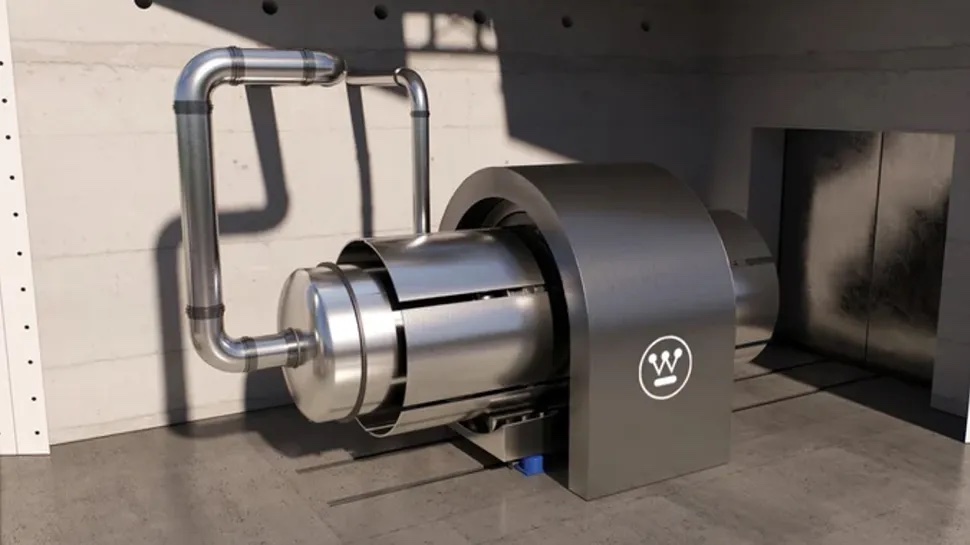
One of the most promising developments in this field is the advent of micro nuclear reactors. These compact reactors offer a safe, sustainable, and efficient way to meet the growing energy needs of data centers and other industries. Companies like Nano Nuclear Energy are making strides in this area, aiming to deliver commercial microreactors by the early 2030s, with prototypes expected as soon as 2027.

Continue reading… “Nuclear Power’s Role in Revolutionizing Data Centers with Microreactors”

Quantum Computing Threatens Encryption: Chinese Researchers Crack RSA with D-Wave Technology

In a groundbreaking yet concerning development for global cybersecurity, Chinese researchers have demonstrated how quantum computing could accelerate the downfall of current encryption methods. Using D-Wave’s quantum annealing systems, the researchers have successfully cracked classic encryption techniques, potentially fast-tracking the timeline for when quantum computers could undermine the cryptographic systems that protect sensitive information worldwide.

The research, published in the Chinese Journal of Computers under the title “Quantum Annealing Public Key Cryptographic Attack Algorithm Based on D-Wave Advantage,” highlights how D-Wave’s quantum machines were able to break RSA encryption and launch attacks on symmetric encryption algorithms. These findings pose serious questions about the future of cybersecurity.

Continue reading… “Quantum Computing Threatens Encryption: Chinese Researchers Crack RSA with D-Wave Technology”

The Future of Water-Based Fuel: Is Hydrogen Being Left Behind?

Water has always been a source of life, but now, it’s set to power cars, reshaping the future of clean energy. While hydrogen has long been hailed as the primary clean fuel for the automotive sector, recent developments suggest that water-based fuel might take the lead. The introduction of the first water-powered car has sparked discussions among experts, with some even suggesting that this breakthrough could mark “the end of hydrogen” as the go-to clean fuel.

Electriq Global, an Australian-Israeli company, has developed a revolutionary fuel that is 60% water-based. Using innovative technology, Electriq extracts hydrogen from water and uses it to power vehicles, offering a cheap, clean, and safe fuel alternative. The potential impact on global energy consumption and the automotive industry is immense.

Continue reading… “The Future of Water-Based Fuel: Is Hydrogen Being Left Behind?”

Reaction Engines Seeks £20M Lifeline for Hypersonic Jet-Rocket Engine Development

Reaction Engines, a UK-based aerospace company, is in discussions with Whitehall to secure a £20 million financial boost to support the continued development of its revolutionary hybrid jet-rocket engine amid mounting losses and slow revenue growth. The company aims to pioneer a new era of hypersonic flight, promising that its engines could one day reduce travel time across the globe to just a few hours.

The company’s flagship technology, the “Sabre” engine (Synergetic Air Breathing Rocket Engine), has been under development for years and is designed to achieve speeds of Mach 5 within Earth’s atmosphere and potentially Mach 25 in space. To put that into perspective, Mach 5 is more than three times faster than the iconic Concorde and over twice the speed of the SR-71 Blackbird, the world’s fastest jet-powered aircraft. These advances could enable the creation of high-speed planes, referred to as the “Sons of Concorde.”

Continue reading… “Reaction Engines Seeks £20M Lifeline for Hypersonic Jet-Rocket Engine Development”

China Unveils AI-Driven ‘Agent Hospital’ for Virtual Healthcare Innovation

Chinese researchers from Tsinghua University have developed “Agent Hospital,” an AI-powered virtual hospital town similar to Stanford’s AI town, which gained widespread attention last year. The innovative system features AI doctors and nurses autonomously treating virtual patients, with the goal of improving medical expertise through continuous evolution.

The AI agents, powered by large language models (LLMs), autonomously interact within the virtual hospital environment. According to the researchers, the AI doctors can treat up to 10,000 patients in a few days, a task that would take human doctors at least two years. These AI doctors have demonstrated impressive accuracy, achieving a 93.06% success rate on the MedQA dataset, which involves the full process of patient care, from diagnosis to follow-up.

Continue reading… “China Unveils AI-Driven ‘Agent Hospital’ for Virtual Healthcare Innovation”
Discover the Hidden Patterns of Tomorrow with Futurist Thomas Frey
Unlock Your Potential, Ignite Your Success.

By delving into the futuring techniques of Futurist Thomas Frey, you’ll embark on an enlightening journey.

Learn More about this exciting program.