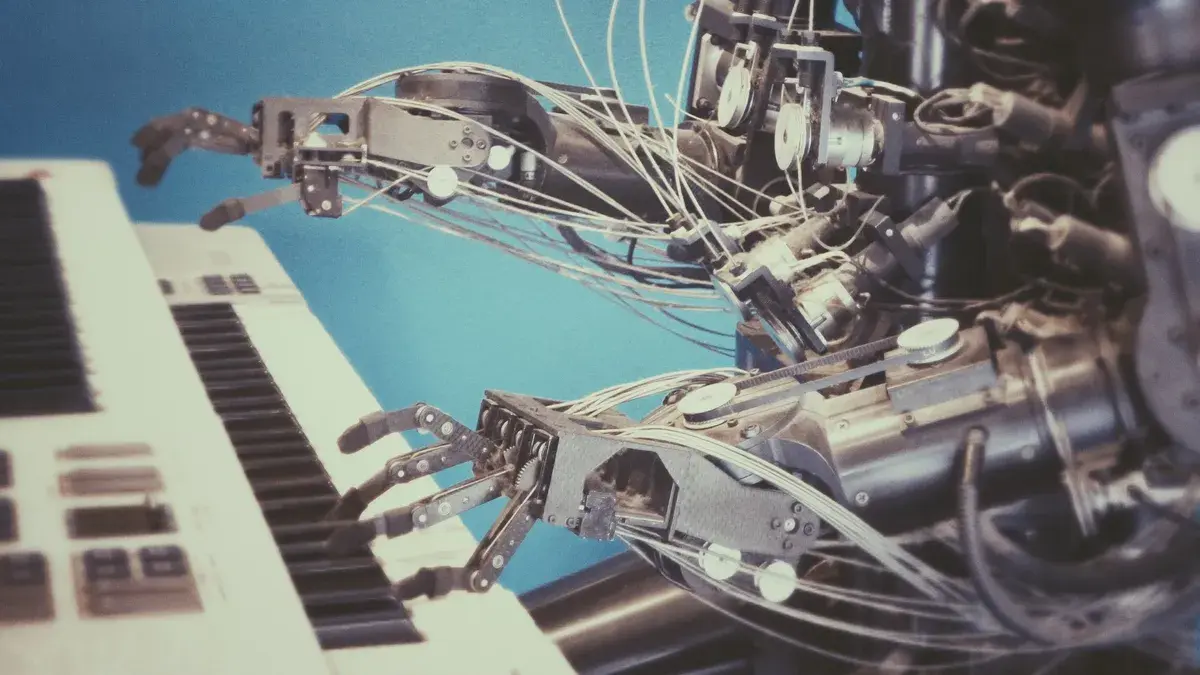
AI-Powered Robotic Vehicles to Revolutionize Humanitarian Aid Delivery

AI-driven robotic vehicles could revolutionize the delivery of food parcels to conflict and disaster zones, potentially saving the lives of humanitarian workers. The World Food Programme (WFP) revealed plans to deploy these autonomous vehicles as early as next year, offering a significant step forward in reaching UN global goals, particularly in the fight against hunger.

Amid the highest number of violent conflicts since World War Two, attacks against aid workers have escalated in recent years. The WFP alone lost three workers earlier this year during Sudan’s conflict. In response to such dangers faced by humanitarian staff, the WFP’s innovation department head, Bernhard Kowatsch, expressed optimism about the potential of AI-powered robotic vehicles to bring about a “step change” in the aid delivery process.

Continue reading… “AI-Powered Robotic Vehicles to Revolutionize Humanitarian Aid Delivery”
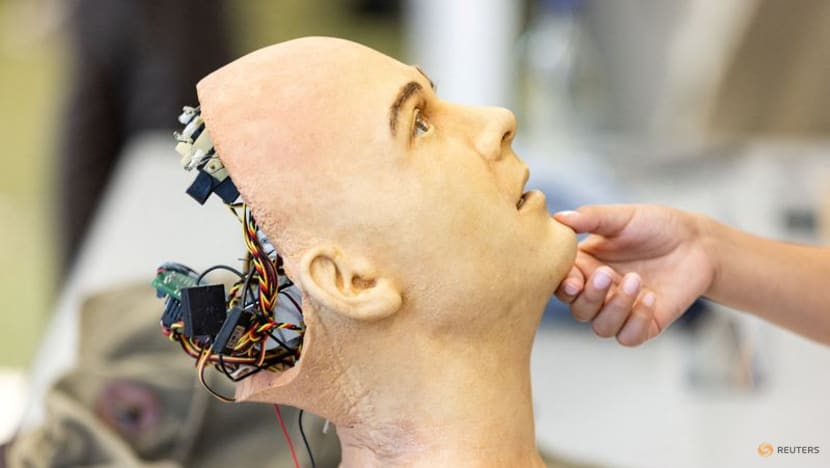
OpenAI Takes Proactive Approach to Superintelligent AI Risks

OpenAI, the organization behind the widely-used AI chatbot ChatGPT, has announced its plans to establish a team dedicated to mitigating the risks associated with superintelligent AI systems, which it expects to emerge within the next decade.

In a blog post on July 5, OpenAI emphasized the need for this new team to “steer and control AI systems much smarter than us.” The nonprofit firmly believes that superintelligence will be a groundbreaking technology, capable of solving numerous challenges, but acknowledges the potential risks that come with it.

Continue reading… “OpenAI Takes Proactive Approach to Superintelligent AI Risks”

Nadine, the AI-powered Social Robot, Revolutionizing Care for the Sick and Elderly

In Geneva, Nadine, a remarkable social robot equipped with Artificial Intelligence (AI) capabilities and human-like gestures, holds the potential to play a crucial role in tending to the sick and elderly, as suggested by the professor who contributed to its creation.

Nadia Magnenat Thalmann, an expert in robotics from the University of Geneva, served as the inspiration for Nadine’s dark brown eyes and auburn hair. Thalmann believes that robots like Nadine could surpass human caregivers in effectiveness due to their round-the-clock availability. “She (Nadine) has time 24 hours a day. The others have no time,” Thalmann emphasized.

Continue reading… “Nadine, the AI-powered Social Robot, Revolutionizing Care for the Sick and Elderly”

Accelerating Innovation: Embracing AI to Drive Job Creation

Introduction: After extensive discussions, the debate surrounding job displacement caused by artificial intelligence (AI) is converging toward a consensus. Contrary to concerns about widespread unemployment, historical evidence suggests that macro-level technological advancements have not led to long-term job losses. Additionally, the declining working-age populations in most advanced countries further mitigate the risk of significant job displacement. However, the rapid adoption of ChatGPT and other generative AI technologies by companies could result in substantial short-term job displacement. By comparing AI with the rise of electricity in the early 20th century, we can draw lessons on how to manage this transition effectively.

The Slow Integration of Previous Technologies: Historically, the transition from old technologies to new ones occurred gradually, allowing the economy time to adapt. For example, when factories shifted from steam-powered central driveshafts to electric motors, it took decades for the transformation to complete. This slow process enabled the absorption of displaced workers into new industries and the creation of entirely new job opportunities. Similarly, the spread of computing in the mid-20th century, though faster than electrification, still occurred at a pace that prevented mass unemployment.

Continue reading… “Accelerating Innovation: Embracing AI to Drive Job Creation”

Chinese Researchers Harness AI to Rapidly Design Functional Computers

In a groundbreaking achievement, a team of 19 computer scientists from five institutions in China has developed an artificial intelligence (AI) tool capable of designing a working computer within a remarkably short timeframe of under five hours. Their research aimed to demonstrate that machines can create computer chips in a manner similar to human designers.

The researchers asserted that their AI system accomplished the feat at a speed approximately 1,000 times faster than a human team could have achieved, representing a significant stride towards constructing self-evolving machines. In a research paper detailing their findings, the scientists emphasized the significance of design activity as a distinguishing factor of humanity and traditional machines. They stated, “Endowing machines with design abilities at the human level or beyond has been a long-term pursuit.”

Continue reading… “Chinese Researchers Harness AI to Rapidly Design Functional Computers”

AI-Powered Robotic Glove Offers Hope for Stroke Survivors to Play Music Again

Strokes are a leading cause of long-term disability, often diminishing mobility in more than half of stroke survivors aged 65 and older. Rehabilitation becomes crucial for these patients to regain the ability to walk, talk, and perform daily tasks. For those with a passion for music, playing an instrument might seem like an unattainable dream. However, a new AI-powered soft robotic glove is offering hope, enabling individuals trained in music who have suffered a stroke to play again and engage in tasks requiring dexterity and coordination.

Developed by Dr. Maohua Lin, a professor at the Department of Ocean & Mechanical Engineering at Florida Atlantic University, the smart exoskeleton glove integrates tactile sensors, soft actuators, and artificial intelligence to aid in relearning manual tasks post-neurotrauma. Weighing only 191 grams, the glove is designed as a flexible, multi-layered 3D-printed robo-glove, intended to be gentle on the skin of the palm and wrist area. It can be customized to fit each patient’s hand and facilitates natural hand movements.

Continue reading… “AI-Powered Robotic Glove Offers Hope for Stroke Survivors to Play Music Again”

AI Foundation Launches AI.XYZ: Your Personal AI Assistant for Work-Life Balance

AI Foundation, the AI research lab known for creating virtual personalities like Deepak Chopra, has introduced AI.XYZ, a groundbreaking platform that allows users to create their own AI assistants. The aim is to enhance productivity and promote a healthier work-life balance for individuals. The platform empowers users to design personalized AI assistants capable of providing support in both personal and professional settings.

Unlike generic AI assistants from major tech companies, AI.XYZ enables users to create AI assistants exclusive to their needs. Each assistant is tailored to its creator, understanding their values, goals, and preferences. These AI assistants can assist with a variety of tasks such as note-taking, email writing, brainstorming, and providing personalized advice and perspectives.

Continue reading… “AI Foundation Launches AI.XYZ: Your Personal AI Assistant for Work-Life Balance”

Apple Plans to Launch AI-Powered Health Coach, Codenamed “Quartz”

Apple is reportedly developing a paid health coach service called “Quartz,” which utilizes AI and data from the Apple Watch to offer personalized suggestions and create tailored coaching programs for users. According to Bloomberg, the service aims to help individuals improve their exercise routines, sleep patterns, and eating habits. While Quartz is not expected to be announced this year, it is slated for release next year.

Bloomberg’s report also highlights additional health-focused initiatives from Apple. For instance, iPadOS 17 will introduce a dedicated version of the Health app for iPads. Furthermore, Apple is said to be working on an emotion tracker (distinct from the rumored journaling app) and new features to assist users with nearsightedness. Apple has not yet responded to requests for comment regarding these developments.

Continue reading… “Apple Plans to Launch AI-Powered Health Coach, Codenamed “Quartz””

AI Tool Offers Hope to Infertile Men in Sperm Identification

A new artificial intelligence (AI) tool has the potential to revolutionize the process of identifying viable sperm, offering hope to severely infertile men seeking to father biological children. Developed by researchers from the University of Technology Sydney, this algorithm can significantly improve the efficiency and accuracy of sperm identification, replacing the time-consuming manual methods used by embryologists.

Lead author Dale Goss explains that the AI tool has the capability to provide increased chances for patients with minimal prospects of fathering their own biological children. By streamlining the identification of sperm in samples, the algorithm not only enhances the chances of conception but also reduces stress on sperm and improves laboratory efficiency.

Continue reading… “AI Tool Offers Hope to Infertile Men in Sperm Identification”

The Evolving Landscape of AI and NLP: Transforming Human-Machine Interaction

Over the past year, the global digital paradigm has experienced a remarkable evolution, particularly in how humans engage with machines. One standout element of this transformation is the growing familiarity people of all ages have developed with artificial intelligence (AI) models, with OpenAI’s ChatGPT being a prime example.

Driving this revolution are the advancements in natural language processing (NLP) and conversational AI. NLP, a subfield of AI, focuses on the interaction between computers and humans using everyday language and speech patterns. Its primary goal is to read, decipher, understand, and make human language understandable and accessible to users.

NLP combines computational linguistics, machine learning, statistics, and deep learning to enable machines to comprehend, interpret, generate, and respond to human language in a meaningful and contextually appropriate manner.

Continue reading… “The Evolving Landscape of AI and NLP: Transforming Human-Machine Interaction”

Exploring the Intersection of AI, Blockchain, and Gaming: An Interview with Animoca Brands CEO

The convergence of artificial intelligence (AI), blockchain technology, and gaming has become a prominent topic of discussion within the tech industry. Cointelegraph had the opportunity to sit down with Robbie Yung, the CEO of Animoca Brands, during the Proof of Talk 2023 conference in Paris. Yung shed light on the relationship between AI, blockchain, and gaming, emphasizing the transformative impact of generative AI on art teams and the immersive experiences it brings to players.

AI’s Influence in the Gaming Industry: Yung revealed that Animoca Brands has been involved with AI for a significant period, both by incubating AI companies and integrating AI into game development. He highlighted the game-changing impact of generative AI on art teams, greatly enhancing productivity and development processes. The gaming industry, in particular, has seen a pervasive use of AI. Nvidia recently introduced Nvidia ACE for Games, an AI tool suite that empowers nonplayer characters (NPCs) or background players in games with enhanced character capabilities.

Continue reading… “Exploring the Intersection of AI, Blockchain, and Gaming: An Interview with Animoca Brands CEO”

Unleashing Creativity: How Generative AI Empowers Artistic Expression

Many individuals, like myself, often feel limited by their artistic abilities when trying to bring their creative ideas to life. However, the emergence of generative AI has transformed the landscape, enabling people with grand visions but limited skills to manifest their concepts in the physical world. Through the power of machine learning and AI, innovative tools are emerging that make art more accessible than ever before.

The Potential of Generative AI: While AI has already made significant strides in natural language processing, companies are now harnessing its potential in the visual realm. From generating images based on textual descriptions to adapting and manipulating photos, generative AI is revolutionizing the art world. These advancements offer a unique opportunity to bridge the gap between imaginative ideas and tangible creations.

Continue reading… “Unleashing Creativity: How Generative AI Empowers Artistic Expression”
Discover the Hidden Patterns of Tomorrow with Futurist Thomas Frey
Unlock Your Potential, Ignite Your Success.

By delving into the futuring techniques of Futurist Thomas Frey, you’ll embark on an enlightening journey.

Learn More about this exciting program.