The companies intend to launch this technology when electric vehicles reach level 4 autonomy, which is expected around 2025. — Hyundai
This week Hyundai Motor Company and Kia Motors Corporation shared a video outlining the features of EV wireless charging and automated valet parking concept systems that could park your car without you or any other driver.
It seems clear that driverless vehicles are coming, although the timeline for their arrival remains unclear. David Beede, Regina Powers and Cassandra Ingram of the Economics and Statistics Administration at the US Department of Commerce look at one aspect, “The Employment Impact of Autonomous Vehicles,” in ESA Issue Brief #05-17 (August 11, 2017). They set the stage this way:
“In September 2016, the U.S. Department of Transportation and the National Highway Traffic Safety Administration (NHTSA) published policy guidelines for AVs [autonomous vehicles], recognizing their potential as “the greatest personal transportation revolution since the popularization of the personal automobile nearly a century ago” (NHTSA 2016). … The worldwide number of advanced driver-assistance systems (ADAS), such as backup cameras and adaptive cruise control, increased from 90 million to 140 million units between 2014 and 2016. Consumers have indicated a willingness to pay $500-$2,500 per vehicle for ADAS. Sensor technologies are rapidly advancing to provide sophisticated information to vehicle operating systems about the surrounding environment, such as road conditions and the location of other nearby vehicles. However, slower progress has been made in developing software that can mimic human driver decision-making, so that fully autonomous vehicles may not be introduced for another ten or more years …”
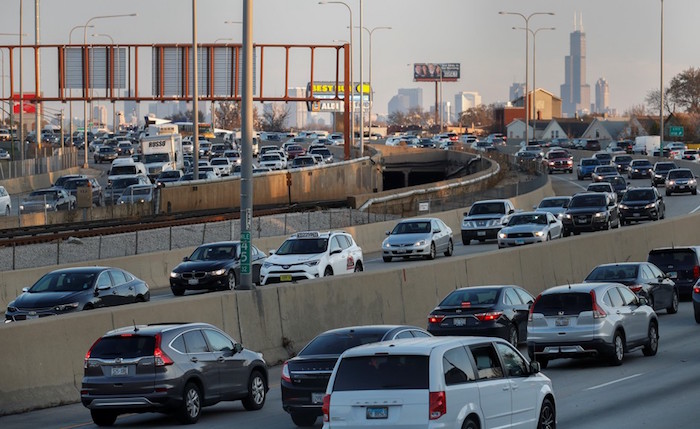
Despite ride-hailing’s promise, vehicle ownership (and traffic) is on the rise in America’s biggest, most transit-oriented cities. So how is mobility really changing?
There is no doubt that ride-hailing services like Uber and Lyft are remaking how people get around major American cities. The growing availability of shared bikes, e-bikes, and e-scooters is further changing the personal mobility story. The transformation is partly personal, offering a wealth of options for getting around town. It’s also supposed to be societal, ameliorating clogged traffic and boosting transit ridership.
It’s clear at this point that the future of the automotive world revolves around bleeding edge technology that’s self-driving or, perhaps, even flying. But what if it’s none of those things? What if it’s a car that walks on four legs?
Hyundai puzzled CES audiences the world over at this year’s event with a concept that focused on exactly this. It’s on-trend, with an electric power plant. But unlike the Tesla’s of the world, Hyundai’s “Elevate” concept ditches the wheels in favor of four legs capable of navigating nearly any type of terrain.
The Bell Nexus hybrid electric air taxi concept is on display at the Bell booth at CES International
From a one-person flying car to a luxurious five seater, companies are racing to launch the first flying car.
LAS VEGAS — While CES attendees are still quite a few years away from being able to hop in a flying car and travel to the annual technology show, several concepts displayed at the 2019 event this week provided a glimpse of what the future could look like.
That starts with hailing an Uber copter — possibly as soon as the mid 2020s. At CES, Textron’s Bell division, a partner in the Uber Elevate flying car initiative, showed off its new air taxi concept called the Nexus.
While it may fly, make no mistake, the Nexus looks more like a car than an airplane. The concept uses six tilted fans to aid in takeoffs and landings, which are powered by a hybrid-electric propulsion system. Inside the vehicle, four passengers and a pilot can see their flight path projected onto a screen.
Uber has said it’s planning to roll out its air vehicles by 2023 in certain cities, targeting the Dallas-Fort Worth area and Los Angeles as its first domestic markets.
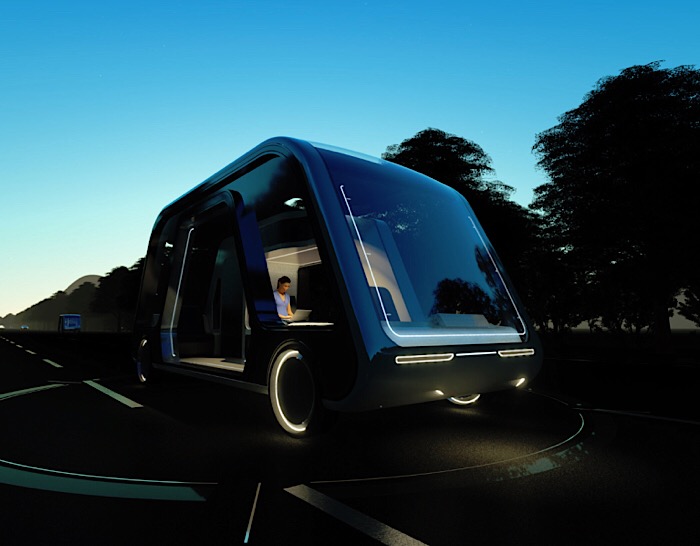
The “Uber for everything” boom in tech has led to plenty of on-demand solutions for everyday life, but one problem we didn’t even know existed is apparently mobile hotel rooms. A new concept for a rolling room just won an award for its forward thinking, but will it ever become a reality? We have out doubts.
The concept is called the Autonomous Travel Suite, or ATS for short. It comes from the mind of Steve Lee of the Aprilli Design Studio and it’s largely based on the self-driving vehicle technology of the future. The idea here is that instead of riding along in a car-like seat while a computer takes you to your destination, you’re actually free to move around the over-sized cabin.
For the first time in more than a decade, palladium is rivaling gold in value. A key component in pollution-control devices for cars and trucks, the metal’s price has surged as much as 50 percent in about four months, making it at times more expensive than gold. The rally shows few signs of fizzling.
It was a game of Dots that pushed Erik Coelingh to rethink his entire approach to self-driving cars. Coelingh, Volvo’s head of safety and driver assist technologies, was in a simulator, iPad in hand, swiping this way and that as the “car” drove itself, when he hear an alert telling him to take the wheel. He found the timing less than opportune.
“They gave the message when I was close to getting a high score,” he says. Jolted away from the absorbing task, he had no idea of what was happening on the “road,” or how to handle it. “I just realized,” he says, “it’s not so easy to put the game away.”
The experience helped confirm a thesis Coelingh and Volvo had been testing: A car with any level of autonomy that relies upon a human to save the day in an emergency poses almost insurmountable engineering, design, and safety challenges, simply because humans are for the most part horrible backups. They are inattentive, easily distracted, and slow to respond. “That problem’s just too difficult,” Coelingh says.
And so Volvo, and a growing number of automakers, are taking you out of the equation entirely. Instead of developing autonomous vehicles that do their thing under most circumstances but rely upon you take the wheel in an emergency—something regulators call Level 3 autonomous capability—they’re going straight to full autonomy where you’re simply along the ride.
Self-driving cars are an inevitability and will unlock the potential for cars to transform beyond a simple means of transport.
In the not too distant future, drivers will find themselves with a great deal of free time in-car. Rather than having to focus on driving, time can be spent on working, being entertained, or simply relaxing.
In the near future, driving yourself will be about as popular as riding horses for transportation, according to Tesla Inc. CEO Elon Musk.
An interesting opinion on where Formula 1 is heading into the future by George Woods Baker, writing for Paddock Magazine, painting a bleak picture as the world moves towards electric cars rendering the pinnacle of the sport as we know it redundant in years to come.
Baker wrote: “When Alejandro Agag launched Formula E in 2014 as the first electric-powered championship, he did so as an alternative to what he saw as a wounded buck. He was dismissed by the Formula 1 paddock. He won’t last, they crowed. The cars were slow and required a lengthy pitstop halfway through the race to change cars!
Alphabet’s self-driving car unit Waymo today took a huge step toward launching its first public self-driving taxi service.
Waymo has been testing a driverless car service in Phoenix for a while already, but today the company officially lifted the lid on its first commercial service that riders can actually pay for.
Waymo One, as the service is called, will work much like Uber and other popular ride-hailing apps. After Waymo One gives you a price estimate based on your starting and end points, you can beckon a car that will transport you from A to B.
However, Waymo One isn’t yet available for everyone. Initially, only riders who were involved in the early stages of the trial program will have access, though plans are afoot to extend the service to more people in the future.
Self-driving vehicles delivering groceries in Miami
Ford is joining forces with Walmart and Postmates to create a grocery delivery service using self-driving vehicles in Miami, the companies announced Wednesday.
Ford has been using Miami as a test bed for its self-driving vehicles since earlier this year. And more recently, the auto giant joined with Postmates to see how people ordering takeout food would interact with an autonomous delivery van.
Now Ford is moving to the next stage: grocery delivery. The company says it will experiment with different vehicle types, as well as modifications to those vehicles needed to keep perishable food items fresh. It will also experiment with a variety of scenarios, such as multiple deliveries on one trip and the user experience of retrieving delivery items from a fully driverless vehicle.