The First Artificial Wombs: Researchers grow human embryos in a laboratory

original

We all know how to get pregnant or at least should know, but despite so many tips out there boosting the chances of conceiving, the actual first 2 weeks of pregnancy remain an undetectable mystery to science.

Continue reading… “The First Artificial Wombs: Researchers grow human embryos in a laboratory”

Scientists Use Swarms of Nanorobots to Precisely Target Cancer Cells

new_version-b-low

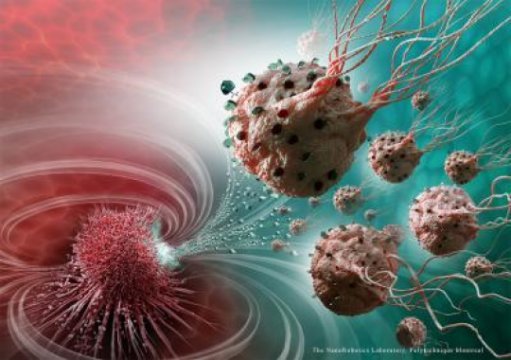
Nanotechnology has always been something more out of the future than the present. It’s very promising tech with a variety of exciting applications that haven’t yet come to our everyday lives. Now scientists from several universities announced a breakthrough in cancer research that may truly fulfill the promise of nano tech. They developed nanorobots that can navigate through the bloodstream to precisely deliver the drug to the cancerous cells.

Continue reading… “Scientists Use Swarms of Nanorobots to Precisely Target Cancer Cells”

Out-of-Body Experiences Triggered by Synchronized Virtual Reality Heartbeat

virtual-reality-trgiggers-out-of-body-experience

New research demonstrates that triggering an out-of-body experience (OBE) could be as simple as getting a person to watch a video of themselves with their heartbeat projected onto it. According to the study, it’s easy to trick the mind into thinking it belongs to an external body and manipulate a person’s self-consciousness by externalizing the body’s internal rhythms. The findings could lead to new treatments for people with perceptual disorders such as anorexia and could also help dieters too.

Continue reading… “Out-of-Body Experiences Triggered by Synchronized Virtual Reality Heartbeat”

WiFi Signals Can ID You by Your Body Shape

With the Internet of Things slated to have tens of billions of connected devices by 2020, one of the most crucial design considerations for internet-connected products is figuring out how to seamlessly integrate these devices into everyday life. In this respect, teaching machines how to identify the individuals they are interacting with is paramount—it will allow for the total personalization of everything that is promised by the IoT. Rather than just having internet-connected light bulbs and refrigerators that are sitting around waiting to get hacked, these devices will be able to recognize you and interface with you according to your preferences (something that devices like the Xbox One are already doing via facial recognition).

Continue reading… “WiFi Signals Can ID You by Your Body Shape”

Nanorobots target cancerous tumors with precision

160815134945_1_540x360

Researchers from Polytechnique Montréal, Université de Montréal and McGill University have just achieved a spectacular breakthrough in cancer research. They have developed new nanorobotic agents capable of navigating through the bloodstream to administer a drug with precision by specifically targeting the active cancerous cells of tumours. This way of injecting medication ensures the optimal targeting of a tumour and avoids jeopardizing the integrity of organs and surrounding healthy tissues. As a result, the drug dosage that is highly toxic for the human organism could be significantly reduced.

Continue reading… “Nanorobots target cancerous tumors with precision”

AI’s Healing Power

Arteriosclerosis, artwork

Artificial intelligence originally aspired to replace doctors. Researchers imagined robots that could ask you questions, run the answers through an algorithm that would learn with experience and tell whether you had the flu or a cold. However, those promises largely failed, as artificial intelligent algorithms were too rudimentary to perform those functions.

Continue reading… “AI’s Healing Power”

Scientists Regrow Teeth With New Technologies

56892

All people would prefer a 5-minute oral session that will permit our dental practitioner to regrow our organic tooth, right?

This can all be extremely feasible soon thanks to the Harvard-led team that effectively utilized low-powered laser lights to coax stem cells to develop brand-new dentine – the difficult core of the tooth.

Continue reading… “Scientists Regrow Teeth With New Technologies”

IBM’s Watson saves a woman from leukemia

ibmwatson

IBM’s Watson has done everything from winning at Jeopardy to cooking exotic meals, but it appears to have accomplished its greatest feat yet: saving a life. University of Tokyo doctors report that the artificial intelligence diagnosed a 60-year-old woman’s rare form of leukemia that had been incorrectly identified months earlier. The analytical machine took just 10 minutes to compare the patient’s genetic changes with a database of 20 million cancer research papers, delivering an accurate diagnosis and leading to proper treatment that had proven elusive. Watson has also identified another rare form of leukemia in another patient, the university says.

Continue reading… “IBM’s Watson saves a woman from leukemia”

Ray Kurzweil: Radical Life Extension Will Be Better Than You Think

According to Ray Kurzweil, we’re approaching a time when humans will begin to radically extend their lifespans. This sounds good on the surface, but will we have enough resources to support everyone? And won’t living indefinitely get boring eventually? Not so much, Kurzweil says.

Continue reading… “Ray Kurzweil: Radical Life Extension Will Be Better Than You Think”

‘Neural Dust’ Could Monitor Your Brain Wirelessly

neural-dust-fingertip-ryan-neely-berkeley_1

Science fiction that features wires connecting brains to computers might now be obsolete. Wireless powered implants, each smaller than a grain of rice, could serve as “neural dust” that can one day scan and stimulate brain cells. Such research could one day help lead to next-generation brain-machine interfaces for controlling prosthetics, exoskeletons and robots, as well as “electroceuticals” to treat disorders of the brain and body.

Continue reading… “‘Neural Dust’ Could Monitor Your Brain Wirelessly”

Wearable Patch Can Help Monitor Health. No batteries required.

Mjc5NTY2Ng

A battery-free electronic patch that sticks onto skin like a temporary tattoo can be powered wirelessly by smartphones to help monitor health, researchers say.

A variety of  wearable technology is on the market to monitor life signs, but these mostly possess hard components that have to be strapped onto the body. Scientists have been developing stretchable electronics that can fit better onto people, but these were limited by the size and weight of their batteries.

Continue reading… “Wearable Patch Can Help Monitor Health. No batteries required.”

‘Smart’ Thread Could Be a Game-Changer for Doctors

getty_493216361_100780

Scientists are working to take “wearable” technology to a whole new level. Or, more accurately, to new depths.

A group of Tufts University-led researchers recently announced that it created a first-of-its kind “smart” thread that can be sutured into human tissues. The goal? To collect data on tissue health, as well as monitor wounds or infections, all of which can be sent to a computer or phone.

Continue reading… “‘Smart’ Thread Could Be a Game-Changer for Doctors”

Discover the Hidden Patterns of Tomorrow with Futurist Thomas Frey
Unlock Your Potential, Ignite Your Success.

By delving into the futuring techniques of Futurist Thomas Frey, you’ll embark on an enlightening journey.

Learn More about this exciting program.