The Dark Forest Theory of the Internet

819C7093-F759-432A-8CA3-E969918EEBF7

This is also what the internet is becoming: a dark forest

In his sci-fi trilogy The Three Body Problem, author Liu Cixin presents the dark forest theory of the universe.

When we look out into space, the theory goes, we’re struck by its silence. It seems like we’re the only ones here. After all, if other forms of life existed, wouldn’t they show themselves? Since they haven’t, we assume there’s no one else out there.

Liu invites us to think about this a different way.

Imagine a dark forest at night. It’s deathly quiet. Nothing moves. Nothing stirs. This could lead one to assume that the forest is devoid of life. But of course, it’s not. The dark forest is full of life. It’s quiet because night is when the predators come out. To survive, the animals stay silent.

Is our universe an empty forest or a dark one? If it’s a dark forest, then only Earth is foolish enough to ping the heavens and announce its presence. The rest of the universe already knows the real reason why the forest stays dark. It’s only a matter of time before the Earth learns as well.

This is also what the internet is becoming: a dark forest.

Continue reading… “The Dark Forest Theory of the Internet”

Japan plans for 10 billion 5G devices by adding 14-digit phone numbers

04F5B6D6-0369-426E-A298-DF2690BD7D21

Increased data bandwidth might be the best-known advantage of 5G cellular technology, but new 5G networks will also support billions of newly connected devices, ranging from cars to internet of things sensors — each with their own telephone number. With its 5G rollout just around the corner, Japan is preparing for a surge in demand for new phone numbers by expanding the maximum number of digits from 11 to 14, a change that will enable mobile carriers to offer 10 billion new numbers starting with the 020 prefix.

In the United States, seven-digit local numbers are always preceded by three-digit geographic area codes, and while Japan has a similar 10-digit system for geographic numbers, it has used either 10- or 11-digit numbers for non-geographic numbers. Japanese mobile phones and other wireless devices are assigned non-geographic numbers.

Continue reading… “Japan plans for 10 billion 5G devices by adding 14-digit phone numbers”

What is Web 3.0 ?


8F5D09E9-C3B8-44A4-B5AB-77B9E43274D4

Have You Been Wondering What Web 3.0 Is?

If you’ve been hanging out with techie friends at a conference lately, you’ve probably heard the term “Web 3.0.” And if you haven’t yet, you probably will soon. But if it’s one of those questions you’re a little ashamed to ask, don’t be. Not many people know what Web 3.0 is, so it’s understandable if you’re confused.

On top of that, a really succinct description and tight enough narrative have yet to emerge, making its definition open to interpretation. Experts are also still arguing over what pertains to Web 3.0 and what will come way in the future.

Continue reading… “What is Web 3.0 ?”

This map showing the fastest and slowest internet speeds in the US could predict the path of a Silicon Valley startup exodus

12309ADB-A450-4018-8750-46F5F02A788E

With an average internet speed of 65.02 Mbps, Maryland has the best environment for multi-person streaming and gaming.

This map by HighSpeedInternet.com shows the states with the fastest and slowest internet connections across the United States.

Continue reading… “This map showing the fastest and slowest internet speeds in the US could predict the path of a Silicon Valley startup exodus”

Americans spend far more time on their smartphones than they think

60374A02-097C-4DDE-A5C9-596665842827

If you wonder why you never have any time to do anything, you might want to look at the culprit that is causing the time suck: Your smartphone.

Almost everyone uses smartphones nowadays, they have become a major, vital part of our lives. They help us stay connected to everyone we need to. But how do our smartphone screen time habits vary across the US, and across different age groups?

A new study by St Louis-based senior living community provider Provision Living took a look at American’s smartphone habits.

Continue reading… “Americans spend far more time on their smartphones than they think”

Breakthrough research to revolutionize internet communication

6A8628CD-B425-4A80-9EC8-A59409408194

Breakthrough research to revolutionize internet communication

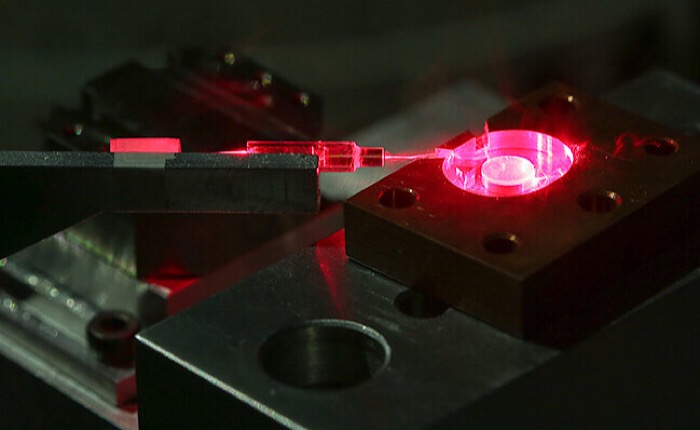
A team of University of Otago/Dodd-Walls Centre scientists have created a novel device that could enable the next generation of faster, more energy efficient internet. Their breakthrough results have been published in the world’s premiere scientific journal Nature this morning.

The internet is one of the single biggest consumers of power in the world. With data capacity expected to double every year and the physical infrastructure used to encode and process data reaching its limits, there is huge pressure to find new solutions to increase the speed and capacity of the internet.

Principal Investigator Dr. Harald Schwefel and Dr. Madhuri Kumari’s research has found an answer. They have created a device called a microresonator optical frequency comb made out of a tiny disc of crystal. The device transforms a single color of laser light into a rainbow of 160 different frequencies – each beam totally in sync with each other and perfectly stable. One such device could replace hundreds of power-consuming lasers currently used to encode and send data around the world.

Continue reading… “Breakthrough research to revolutionize internet communication”

The Weaponization of the electromagnetic spectrum

42B861DA-5717-4DE4-AE3A-942CE9F40082

The information age is evolving the very nature of warfare. Today, each nation increasingly depends on closely integrated, high-speed electronic systems across cyberspace, geospace, and space (CGS). But, it’s a cause of great concern if an enemy can easily use a weapon like a small, inexpensive EMP device. An EMP weapon can deny any individual or entity across a nation the ability to use electromagnetic waves for their digital infrastructure and digital connectivity, e.g. radio, infrared, and radar. Moreover, a nuclear blast can also trigger an EMP effect, as can a solar storm. Individually and collectively, this emerging reality understandably changes the nature of warfare, the focus of the war, and the target of warfare, shaking up the very foundation of security.

Electronic warfare is on our doorstep, and no nation seems to be fully prepared. Since electronic warfare appears to already be on our doorstep, in order to meet the complex EMP warfare challenges that are seriously threatening the very progress and advances nations have made in CGS, it is essential to evaluate how prepared each nation is today in their defensive as well as offensive capabilities. How are nations addressing the security challenges to their CGS?

The weaponization of the electromagnetic spectrum is becoming a reality. Acknowledging this emerging reality, Risk Group initiated a much-needed discussion on Electromagnetic Warfare with Colonel Avraham Cohen, Head of National Security Cyber Research Group and the Co-Founder and Chief Technology Officer (CTO) of Sphere-SOC based in Israel on Risk Roundup.

Continue reading… “The Weaponization of the electromagnetic spectrum”

Mark Zuckerberg: The Internet needs new rules. Let’s start in these four areas.

DE14DAA0-C1E2-44F0-B32C-8523D9448956

Mark Zuckerberg is founder and chief executive of Facebook.

Technology is a major part of our lives, and companies such as Facebook have immense responsibilities. Every day, we make decisions about what speech is harmful, what constitutes political advertising, and how to prevent sophisticated cyberattacks. These are important for keeping our community safe. But if we were starting from scratch, we wouldn’t ask companies to make these judgments alone.

I believe we need a more active role for governments and regulators. By updating the rules for the Internet, we can preserve what’s best about it — the freedom for people to express themselves and for entrepreneurs to build new things — while also protecting society from broader harms.

From what I’ve learned, I believe we need new regulation in four areas: harmful content, election integrity, privacy and data portability.

Continue reading… “Mark Zuckerberg: The Internet needs new rules. Let’s start in these four areas.”

Two-thirds of all Android antivirus apps are frauds

87A6B147-E295-493B-9723-48EC5E0596FF

Only 23 Android antivirus apps had a 100 percent detection rate with no false positives.

An organization specialized in testing antivirus products concluded in a report published this week that roughly two-thirds of all Android antivirus apps are a sham and don’t work as advertised.

The report, published by Austrian antivirus testing outfit AV-Comparatives, was the result of a grueling testing process that took place in January this year and during which the organization’s staff looked at 250 Android antivirus apps available on the official Google Play Store.

The report’s results are tragicomical –with antivirus apps detecting themselves as malware– and come to show the sorry state of Android antivirus industry, which appears to be filled with more snake-oilers than actual cyber-security vendors.

Continue reading… “Two-thirds of all Android antivirus apps are frauds”

More than a game, Fortnite is emerging as the best new social network

FFF11083-64A6-42CC-91B7-1D767B87E496

The wild popularity of the shooter game is a reminder that socializing is way more fun when you’re actually doing something with your friends.

It has more than 200 million users, up to 8 million of whom are online at any one time. Most spend six to 10 hours a week on the platform. And half of teens say they use it to keep up with friends.

Snapchat? Instagram? Twitch?

Nope. Fortnite. The wildly popular online video game has quietly become one of the planet’s biggest social networks. Not in a traditional sense, of course. Fortnite Battle Royale is, first and foremost, a last-man-standing, shooter-style game, especially popular among teens and twentysomethings. (Disclaimer here: I’m not a hardcore Fortnite player, though I know plenty of people who are.) In the game, 100 players at a time jump out of a flying bus and onto an island. Combatants are left to duke it out, Hunger Games-style, with a variety of weapons, armor, “healables,” and other tools at their disposal. Though the premise is violent, the game itself really isn’t, with none of the gore or blood of more graphic offerings. Eventually, the final combatant claims the coveted “Victory Royale.” All told, each match lasts around 20 minutes.

Continue reading… “More than a game, Fortnite is emerging as the best new social network”

5G is coming fast and it’s a game-changer

43F29711-18FD-46A5-BD50-C814BA37B9A5

The blistering speed and versatility of the coming 5G network herald a quantum leap for mobile technology – here are the fast facts.

What is 5G?

5G is the fifth generation of mobile networks, following on from 2G, 3G and 4G. But while the move from 3G to 4G was all about speeds, 5G is about so much more.

Sure, 5G is extremely quick, but it’s also stable and reliable, with characteristics that will allow it to form the underlying communication networks for connected vehicles, virtual reality worlds and robotics systems.

The new network’s greater capacity will allow these bandwidth-hungry applications to run simultaneously, without having the knock-on effect of slowing down the network for other users.

Continue reading… “5G is coming fast and it’s a game-changer”

What the hell is a blockchain phone—and do I need one?

03D10A9A-5E81-45D7-B17C-0C60F1A3BA9B

The first wave of crypto-focused smartphones from big players like Samsung is a small step toward a decentralized web.

The crypto world is full of buzzwords, but if you can peel away the marketing fluff, you sometimes find innovation beneath the surface. You are often also reminded just how early it is in the history of this technology. Case in point: the blockchain phone.

All of a sudden, several crypto-focused handsets are hitting the market, or will soon. The biggest player in the new game is Samsung, which confirmed this month that the Galaxy S10 will include a secure storage system for cryptocurrency private keys. It joins HTC, which for months has been touting the Exodus 1; Sirin Labs, which used proceeds from a huge ICO to build the Finney; and Electroneum, which this week began selling an $80 Android phone that can mine cryptocurrency.

Continue reading… “What the hell is a blockchain phone—and do I need one?”

Discover the Hidden Patterns of Tomorrow with Futurist Thomas Frey
Unlock Your Potential, Ignite Your Success.

By delving into the futuring techniques of Futurist Thomas Frey, you’ll embark on an enlightening journey.

Learn More about this exciting program.